

Как выбрать подходящую петлю для промышленных дверей и крышек
Инженерная методология для предотвращения отказов, обеспечения безопасности и оптимизации эргономики.
Крышки и панели для тяжелых условий эксплуатации - например, защитные кожухи промышленных машин, крышки больших контейнеров для хранения, люки для доступа к оборудованию и двери шкафов - представляют собой серьезную инженерную задачу. Они не только тяжелые. Они опасны по своей сути, если неправильно выбрана система петель.
Выбор правильного сверхпрочные петли это не просто вопрос номинальной нагрузки. Инженеры должны оценить крутящий момент, центр тяжести, угол открытия, условия эксплуатации, вибрацию, коррозию, геометрию установки, а также то, требуется ли системе чистый шарнир, помощь при подъеме, противовес или демпфирование.
Стоимость неправильного выбора
Выбор неправильного шарнира приводит к предсказуемым сбоям в работе. Вот некоторые из наиболее распространенных и дорогостоящих последствий:
- Риски для безопасности оператора: Внезапное закрытие крышки может привести к травмам пальцев, конечностей или головы.
- Усталость оператора и травмы: Чрезмерное усилие при открывании повышает эргономический риск и длительную нагрузку.
- Повреждение оборудования: Хлопающие крышки деформируют рамы, повреждают уплотнения и смещают прецизионные компоненты.
- Преждевременный отказ: шарнир изнашивается, гнется, ослабевает или ломается задолго до окончания ожидаемого срока службы.
- Увеличение затрат на техническое обслуживание: Как только начинается ремонт на месте, быстро увеличивается количество проверок центровки ворот, переделок и незапланированных простоев.
Цель данного руководства не в том, чтобы служить каталогом продукции. Это методология решения проблем. Правильный выбор петли для тяжелых условий эксплуатации должен осуществляться на основе структурированного процесса проектирования, чтобы система была безопасной, надежной и простой в эксплуатации с самого начала.
Шаг первый: сбор критических данных (определение параметров приложения)
6 основных параметров, которые вы должны собрать
- Точная геометрия крышки или панели: длина, ширина и толщина.
- Точный вес крышки или панели: реальный измеренный вес, а не приблизительный.
- Центр тяжести (COG): это определяет истинную моментную нагрузку на шарнир.
- Материал крышки или панели: углеродистая сталь, нержавеющая сталь, алюминий или композитные материалы. Это влияет как на вес, так и на способ крепления.
- Геометрия и материал монтажной рамы: От того, к чему крепится шарнир, зависит стратегия крепления и жесткость конструкции.
- Требования к движению и позиционированию: Необходимый угол открывания, ориентация установки, а также то, нужна ли пользователю функция свободного останова, подъема, противовеса или плавного закрывания.
Без этих шести параметров выбор шарнира для тяжелых условий эксплуатации является догадкой. В случае неудач на производстве корень проблемы часто заключается не в самом шарнире, а в том, что он был выбран до того, как была правильно определена область его применения.
Шаг второй: основные расчеты (количественная оценка потребностей в ассистентах)
Выбор петли для тяжелых условий эксплуатации - это в основном проблема крутящего момента. Прежде чем выбрать тип петли, необходимо рассчитать максимальный крутящий момент на крышке.
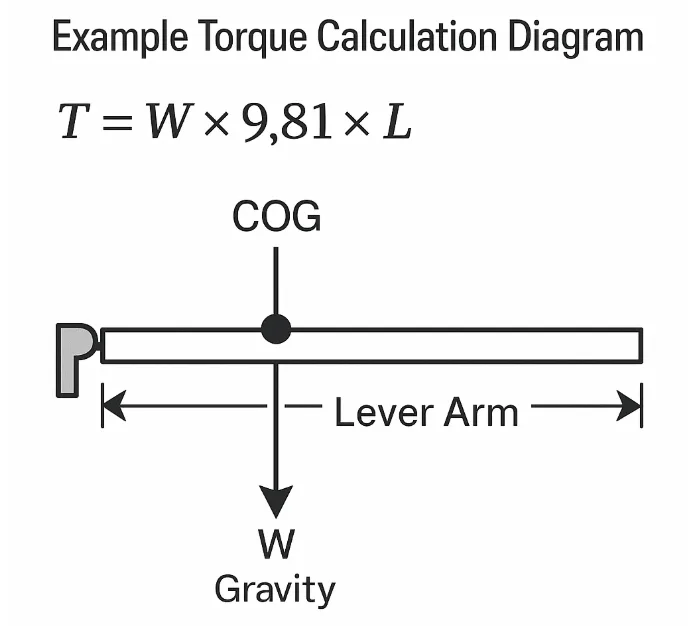
Расчет максимального крутящего момента крышки
- Определите плечо рычага: горизонтальное расстояние от точки поворота шарнира до центра тяжести, когда крышка находится в закрытом или наихудшем положении.
- Используйте расчеты: Крутящий момент (Н-м) = Вес (кг) × 9,81 × Плечо рычага (м)
Когда максимальный крутящий момент известен, следующим шагом будет определение эксплуатационной цели системы.
Четыре общие оперативные цели
- Чистый шарнир: шарнир обеспечивает только опору для поворота. Оператор поднимает весь груз.
- Подъемный механизм: система уменьшает воспринимаемую оператором силу подъема.
- Противовес: крышка удерживается или парит в разных положениях с минимальными усилиями.
- Демпфирование / мягкое закрытие: петля или система контролирует скорость закрытия, но не обеспечивает подъем.
Если вам нужна более подробная логика крутящего момента для крышек, панелей и систем управления положением, ознакомьтесь с более широкой информацией руководство по выбору динамометрических петель для ознакомления с соответствующими принципами расчета.
Шаг третий: Классификация и выбор решений для петель
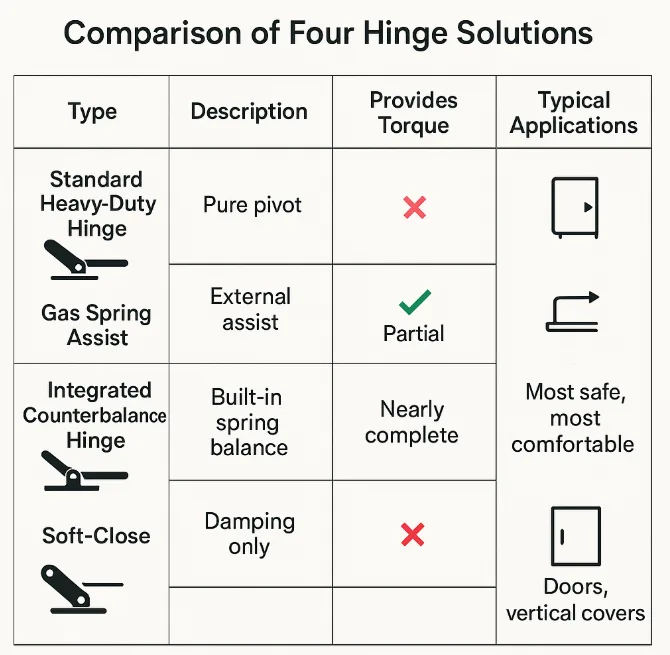
Стандартные петли для тяжелых условий эксплуатации (без помощи)
- Типы: приварные петли, сверхпрочные сплошные петли и шарнирные петли.
- Функция: обеспечивают только структурную поддержку. Весь крутящий момент на крышку приходится на оператора.
- Лучшее для: чистые шарниры или системы, использующие отдельные вспомогательные устройства.
Если для обеспечения максимальной надежности конструкции предпочтительнее сварное крепление, см. наш соответствующий ресурс о приварные петли.
Противовесные петли (встроенный ассистент)
- Типы: пружинные противовесные петли, петли с торсионными пружинами и интегрированные системы помощи.
- Как они работают: Крутящий момент пружины рассчитан таким образом, чтобы компенсировать крутящий момент крышки, рассчитанный на втором этапе.
- Лучшее для: крышки с верхним открытием, которые требуют более безопасного, легкого и эргономичного управления.
Внешние подъемно-транспортные системы
- Типы: газовые пружины или стойки, используемые наряду с конструкционными петлями.
- Вызов: геометрия крепления имеет решающее значение. Неправильно выбранная точка крепления может сделать систему неэффективной или неустойчивой.
- Лучшее для: подъемный механизм, когда встроенные противовесные петли нецелесообразны.
Для прямого сравнения стратегий ассистирования вы также можете просмотреть динамометрические петли vs газовые пружины vs пружины.
Демпфирование и плавное закрытие
- Типы: демпферы или петли со встроенным демпфером.
- Функция: уменьшают скорость закрывания и предотвращают захлопывание.
- Лучшее для: защита оборудования и пользователей от неконтролируемого движения.
Специальный выбор для работы в условиях повышенной вибрации
Одна из самых больших ошибок при выборе шарнира для тяжелых условий эксплуатации - предположение, что любой "достаточно прочный" шарнир подходит для работы в условиях повышенной вибрации. На самом деле вибрация создает другой путь разрушения, особенно для шарниров с ослабленным штифтом.
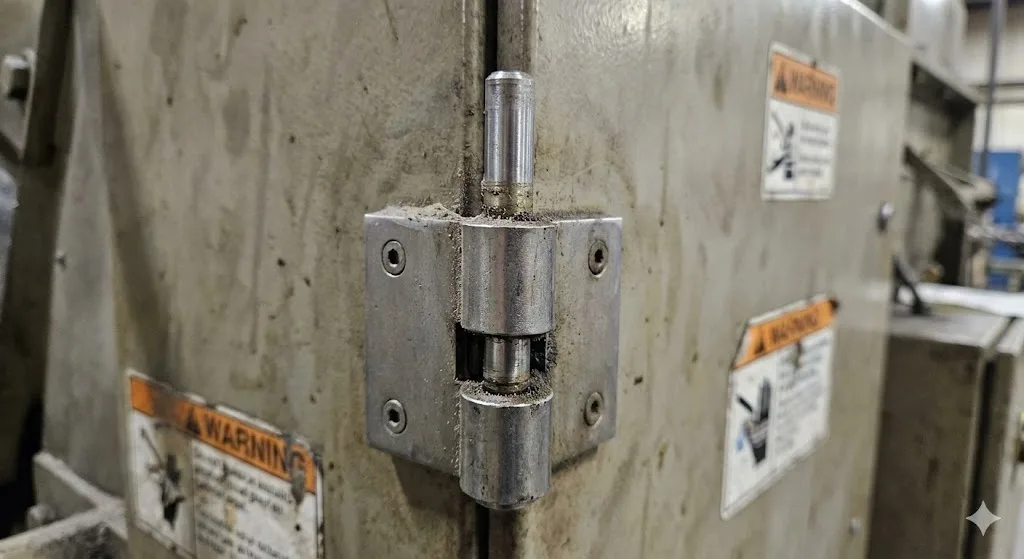
В корпусах генераторов, железнодорожном оборудовании, внедорожной технике, передвижных компрессорах, горных машинах и промышленных системах отопления, вентиляции и кондиционирования воздуха двери шкафов подвергаются длительному воздействию вибрации и ударов. В этих условиях распространенным способом отказа является ползучесть штифтаПри этом штифт шарнира со временем постепенно смещается в осевом направлении.
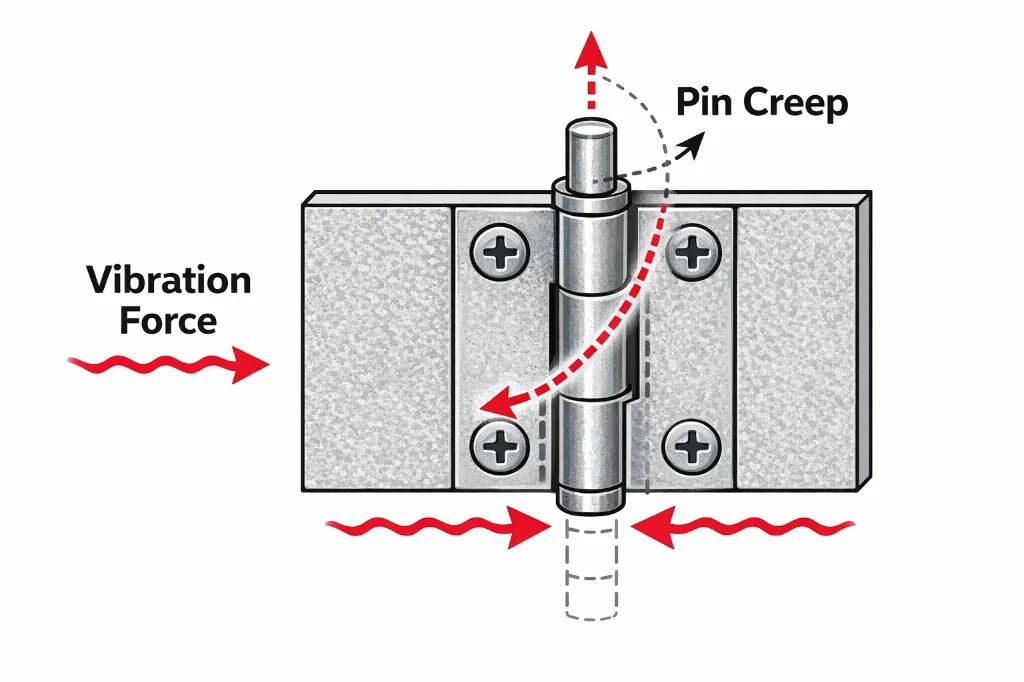
Важнейший момент заключается в том, что это не просто материальный вопрос. Это структурный риск. Конструкция шарнира с ослабленным штифтом позволяет удалить штифт, а при длительной вибрации эта свобода может стать причиной отказа.
В таких условиях, Прочные клепаные петлиТакже называемые шарнирами со спиральным штифтом, часто являются более безопасным инженерным решением, поскольку штифт постоянно зафиксирован и не может выйти из осевого положения под воздействием вибрации. При выборе шарнира в условиях повышенной вибрации следует оценивать не только грузоподъемность, но и конструктивную надежность метода фиксации штифта.
Здесь пригодится простой взгляд на риск, связанный с высокой вибрацией, в стиле FMEA:
| Режим отказа | Главная причина | Типичное последствие | Направление профилактики |
|---|---|---|---|
| Миграция штифта (ползучесть) | Микроподвижность под действием вибрации в конструкциях со свободными штифтами | Провисание или отсоединение двери | Используйте заклепочные или штифтовые петли |
| Усталостное растрескивание створки шарнира | Большая нагрузка, недостаточный размер петель, слишком мало петель | Перекос или разрушение конструкции | Увеличение размера, толщины или количества петель |
| Ослабление крепления | Крепеж отходит под воздействием вибрации | Смещение петель, ненормальное напряжение, перекос двери | Используйте стопорные гайки, фиксатор резьбы и жесткое крепление |
Для команд, работающих со шкафными системами, подверженными сильной вибрации, эта специальная проверка при выборе часто оказывается более ценной, чем простой вопрос о том, является ли петля "сверхпрочной".
Шаг четвертый: Оценка материалов, покрытий и окружающей среды
Функционально правильный шарнир, который выходит из строя из-за коррозии, все равно является неправильным выбором. Окружающая среда всегда влияет на правильный выбор материала.
| Материал | Типичное использование | Лучшее для |
| Углеродистая сталь | Экономичные конструктивные решения | Использование в сухих помещениях, необходимо защищать покрытием |
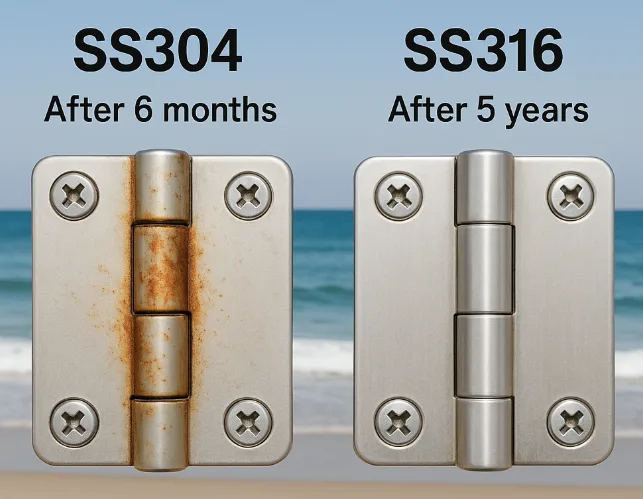
| Нержавеющая сталь 304 | Общепромышленный вариант из нержавеющей стали | На открытом воздухе, в общепромышленных условиях и в условиях умеренной коррозии |
| Нержавеющая сталь 316 | Повышенная коррозионная стойкость | Прибрежная, морская, химическая или агрессивная наружная эксплуатация |
| Алюминий | Легкие приложения | Системы с меньшей нагрузкой, не идеальны в качестве основного конструктивного шарнира в экстремально тяжелых условиях эксплуатации |
Для получения более широкой информации о коррозии и компромиссах между сплавами вы также можете обратиться к нашему руководству по материалам выбор материала петли.
Покрытия и отделка для углеродистой стали
- Цинковое покрытие: базовая защита для использования в сухих помещениях.
- Горячее цинкование: Толстая защита от коррозии для эксплуатации на открытом воздухе.
- Порошковое покрытие: Хорошая общая защита с преимуществами внешнего вида.
Детали штифтов и втулок
Для тяжелых условий эксплуатации закаленные штифты и бронзовые или нейлоновые втулки могут значительно улучшить характеристики износа и уменьшить разрушение металла о металл.
Где эти правила отбора имеют наибольшее значение
Эти принципы выбора особенно важны в условиях, где одновременно присутствуют высокая нагрузка, многократный доступ и стресс от окружающей среды.
- Оборудование для производства электроэнергии: Кожухи дизельных и газовых генераторов работают в условиях постоянной вибрации и на открытом воздухе.
- Транспорт и мобильное оборудование: В кузовах грузовиков, железнодорожных шкафах и отсеках внедорожной техники оторвавшиеся двери создают угрозу ударам, толчкам и безопасности.
- Системы отопления, вентиляции и кондиционирования воздуха: Большие сервисные двери сочетают в себе большой вес и внутреннюю вибрацию вращающегося оборудования.
- Горно-шахтное и полевое оборудование: Двери для удаленного доступа часто нуждаются как в коррозионной стойкости, так и в долговременной устойчивости к смещению под воздействием вибрации.
При модернизации в реальных условиях замена петель со свободными штырями на заклепанные петли для тяжелых условий эксплуатации в высоковибрационном оборудовании позволяет значительно уменьшить количество проблем с выравниванием дверей и сократить частоту технического обслуживания с течением времени.
Шаг пятый: Установка, обслуживание и техника безопасности
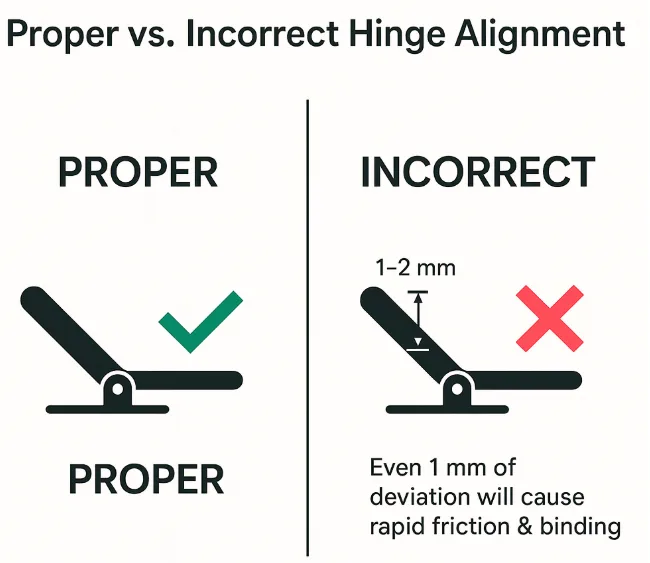
Даже правильная петля выйдет из строя раньше времени, если она установлена некачественно. При использовании двух или более шарниров оси вращения должны быть соосными. Даже незначительное смещение резко увеличивает сцепление, неравномерную нагрузку, шум и износ.
Совет по установке: Используйте прямую линейку, уровень или лазер для проверки правильности выравнивания всех шарниров перед окончательным закреплением или сваркой.
Монтажная поверхность и крепеж
Монтажная поверхность должна быть достаточно жесткой, чтобы надежно передавать полную крутящую нагрузку.
- Предпочтительно: сквозные болты с гайками и шайбами, где это возможно.
- Качество крепежа: используйте крепеж с градацией, соответствующей требованиям конструкции.
- Совместимость материалов: подбирайте материал крепежа и петель, чтобы избежать гальванической коррозии, если это необходимо.
- В условиях вибрации: используйте гайки Nyloc, фиксатор резьбы или эквивалентные средства защиты от ослабления в качестве стандартной практики.
Дополнительные приемы установки в условиях повышенной вибрации
- Не полагайтесь только на фрикционную посадку для обеспечения надежной фиксации двери.
- При эксплуатации в условиях сильной вибрации клепаные конструкции или конструкции с фиксированными штифтами обычно более надежны, чем конструкции со съемными штифтами.
- При использовании сварных шарниров крепление и выравнивание перед сваркой имеют решающее значение для предотвращения заедания шарнира или перекоса оси.
Если требуется съемный доступ для обслуживания, а не максимальная защита штырьков, сравните компромисс с подъемные петли перед окончательной доработкой дизайна.
Обслуживание и проверка
- Изучите данные производителя о сроке службы, но всегда сравнивайте их с реальной нагрузкой и условиями эксплуатации.
- При наличии втулок многие петли можно практически не обслуживать, но все же рекомендуется проводить осмотр на месте на предмет провисания, выравнивания, коррозии и смещения крепежа.
- В оборудовании с высокой вибрацией периодические проверки на осевое перемещение штифта, провисание двери и отваливание крепежа должны быть частью плана технического обслуживания.
Заключение: Контрольный список для выбора петли для тяжелых условий эксплуатации
Прежде чем окончательно выбрать систему шарниров для тяжелых условий эксплуатации, убедитесь, что на все следующие вопросы есть четкие ответы:
- Вы четко определили цель эксплуатации: чистый шарнир, подъемный механизм, противовес или демпфирование?
- Соответствует ли петля или система "петля плюс ассистент" расчетному моменту затяжки крышки?
- Подходит ли материал петли для реальных условий эксплуатации?
- Будет ли приложение подвергаться сильной вибрации, ударам или частым транспортным нагрузкам?
- Если да, то требуется ли клепаная конструкция или конструкция с фиксированными штифтами вместо конструкции со свободными штифтами?
- Существует ли четкий план установки для поддержания выравнивания оси и надежности крепежа?
- Правильно ли вы указали крепеж, способ фиксации и количество петель?
Не угадывайте. Время, потраченное на правильный расчет крутящего момента, оценку условий эксплуатации, анализ структурных рисков и планирование установки, предотвращает травмы, простои, поломки уплотнений и дорогостоящие переделки в дальнейшем.
Безопасная и надежная крышка или дверь, рассчитанная на тяжелые условия эксплуатации, никогда не является результатом использования петли, которая просто "выглядит прочной". Это результат правильного инженерного решения.
ЧАСТО ЗАДАВАЕМЫЕ ВОПРОСЫ
Можно ли заменить петлю со свободным штифтом на клепаную петлю?
Да, во многих случаях можно, но при модернизации необходимо сначала проверить расположение отверстий, смещение петель, толщину створок и зазоры в дверях. Модернизация клепаных петель наиболее полезна в тех случаях, когда исходной причиной отказа является смещение штифта под действием вибрации, а не тогда, когда основная проблема заключается в заниженных размерах створок или слабой конструкции крепления.
Что лучше для наружных шкафов: прикручиваемые или привариваемые петли для тяжелых условий эксплуатации?
Это зависит от приоритета конструкции. Сварные петли часто предпочтительнее для обеспечения максимальной жесткости конструкции, в то время как болтовые петли легче заменить и обслуживать в полевых условиях. Для оборудования, устанавливаемого вне помещений, необходимо учитывать такие факторы, как защита от коррозии, доступ для обслуживания и прочность крепления.
Нужно ли смазывать петли для тяжелых условий эксплуатации?
Некоторые из них подходят, а некоторые - нет. Петли с бронзовыми или нейлоновыми втулками во многих случаях практически не требуют обслуживания, в то время как металлические петли с простыми подшипниками могут нуждаться в периодической смазке. Реальный ответ зависит от конструкции петли, частоты эксплуатации, подверженности загрязнениям и рекомендаций производителя.
Как узнать, нужны ли мне три петли или четыре?
При принятии решения учитывайте высоту ворот, общий вес, центр тяжести, частоту эксплуатации и жесткость крепления. Три петли часто являются практичной отправной точкой для многих промышленных ворот, но для более высоких или тяжелых панелей может потребоваться четыре или более, чтобы контролировать провисание и снизить нагрузку на петли.
Лучше ли сплошные петли, чем раздельные петли для длинных дверей?
Непрерывные петли могут более равномерно распределять нагрузку по всей длине двери, что полезно для длинных или тонких дверей. Дискретные петли для тяжелых условий эксплуатации часто лучше, когда требуется более высокая локальная грузоподъемность, простота обслуживания или специальные монтажные конфигурации. Выбор лучшего варианта зависит от геометрии двери и конструктивных особенностей окружающей рамы.
Что приводит к нарушению центровки ворот для тяжелого оборудования после установки?
К распространенным причинам относятся смещение оси петли при установке, недостаточная жесткость крепления, ослабление крепежа, сползание штифта в условиях вибрации и занижение размеров петли по отношению к реальной нагрузке на дверь. В большинстве случаев перекос двери является проблемой системы, а не отдельной детали.

 Русский
  English
  한국어
한국어  Español
  Italiano
  Deutsch
  Français
  Português