

Food Processing Hinges: Washdown & Corrosion Guide
Food processing equipment hinges must do more than support a door, guard, cover, or access panel. In washdown areas, dairy lines, seafood processing zones, meat equipment, beverage facilities, packaging rooms, and sanitary access panels, the hinge can affect cleaning efficiency, residue control, corrosion resistance, and long-term equipment reliability.
A poorly selected hinge can become a hidden hygiene risk. Exposed threads, sharp corners, open crevices, trapped water, incompatible fasteners, or rough surfaces can collect food residue, cleaning chemicals, salt, moisture, or biofilm. Even when the hinge still opens and closes, the hinge area may become difficult to inspect and clean.
This guide explains how to evaluate food processing equipment hinges based on four practical requirements: hygienic design, washdown exposure, Korrosionsbeständigkeitund inspection and maintenance. When hinges must work together with locks, handles, seals, equipment frames, and maintenance access, they should be reviewed as part of the complete enclosure hardware system instead of being selected as a separate accessory.
Why Food Processing Equipment Hinges Need a Hygienic Design Approach
Food processing equipment is often exposed to moisture, cleaning chemicals, temperature changes, food particles, salt, oils, proteins, sugars, and repeated sanitation procedures. These conditions are more demanding than ordinary industrial cabinet applications.
The hinge area is especially important because it combines movement, fasteners, metal contact, gaps, and access points. If the hinge geometry creates water traps or residue pockets, the equipment may become harder to clean even when the rest of the panel surface is smooth.
For this reason, food processing hinge selection should be reviewed together with the cleaning method, food contact risk, washdown frequency, stainless steel grade, surface finish, fastener design, and surrounding equipment structure.
Hygienic Hinge Design for Food Processing Equipment
Smooth Surfaces and Reduced Food Residue Traps
A hygienic hinge should reduce the number of places where food residue, moisture, or cleaning chemicals can collect. Smooth surfaces, rounded edges, minimal exposed gaps, controlled fastener areas, and accessible hinge geometry can make cleaning and inspection easier.
In food processing equipment, small details matter. A hinge knuckle with open gaps, an exposed thread, a rough stamped edge, or a screw recess that traps residue can become a cleaning problem. The hinge should support the sanitation process instead of becoming a difficult-to-clean component.
When reviewing hinge samples, check not only the hinge body but also the pin area, mounting holes, underside surfaces, fasteners, and the space between the hinge and equipment frame.
Drainable Geometry and Water Pooling Prevention
Washdown cleaning can leave water, foam, sanitizer, or food residue around the hinge area. If the hinge creates horizontal pockets or hidden cavities, liquid can remain after cleaning and increase the risk of staining, odor, corrosion, or microbial growth.
Drainable geometry is especially important on equipment covers, processing line doors, conveyor access panels, and stainless steel machine guards. The hinge area should allow water to run off instead of collecting behind the hinge leaf or inside the mounting interface.
During prototype review, check whether the hinge area can be cleaned from the normal operator position and whether water remains after rinsing. If the hinge requires special tools or unusual cleaning angles, it may create unnecessary maintenance burden.
Why Exposed Threads and Crevices Increase Cleaning Risk
Exposed threads, loose washers, open screw holes, and sharp internal corners can trap residue and make sanitation less predictable. In dry processing areas, these risks may be lower, but in wet washdown zones they become more important because water and chemicals can carry residue into small gaps.
If threaded fasteners are required, they should be positioned and selected so the area remains cleanable. In some equipment designs, welded mounting, sealed fastener zones, or covered screw areas may be considered to reduce residue traps.
Washdown and Cleaning Chemical Exposure
Wet Zones vs Dry Processing Areas
The first step is to separate wet washdown zones from dry or low-moisture processing areas. A hinge used in a packaging room with occasional wipe-down does not face the same risk as a hinge used near seafood brine, dairy residue, meat processing equipment, or high-pressure cleaning.
In dry areas, 304 stainless steel or protected hinge designs may be acceptable depending on the environment. In wet zones, frequent washdown and chemical exposure usually require stronger corrosion resistance, better drainage, and more attention to fastener compatibility.
Food processing plants should evaluate each hinge location by exposure level instead of specifying the same hinge for the entire facility. Doors near splash zones, floor-level equipment, conveyor cleaning points, or open product areas usually need a more conservative hinge design.
Caustic Foam, Acidic Sanitizers, Salt, and Moisture
Food plants often use caustic cleaners, acidic sanitizers, rinse water, steam, salt, brine, or chlorinated cleaning agents. These substances can affect the hinge body, pin, fasteners, weld zones, and surface finish over time.
Seafood, dairy, beverage, meat, and pickled or salted food applications may create different corrosion challenges. A hinge that performs well in a dry bakery packaging area may not perform well near salt spray, acidic cleaning, or daily high-pressure washdown.
When the hinge must tolerate strong cleaning chemicals, wet residue, or chloride exposure, the material decision should account for warum rostfreie Beschläge trotzdem korrodieren können even when it is used inside a sanitary facility.
Why Cleaning Frequency Changes Hinge Selection
Cleaning frequency changes the real operating condition of the hinge. A hinge cleaned once a month will not experience the same chemical and moisture exposure as a hinge cleaned multiple times per shift. Frequent cleaning also increases the importance of surface finish, residue control, and fastener retention.
For high-cleaning-frequency equipment, the hinge should be easy to inspect and should not require excessive disassembly. If cleaning staff cannot see or reach the hinge interface properly, residue may remain even when the equipment appears clean from the outside.
Stainless Steel Selection for Food Processing Hinges
When 304 Stainless Steel May Be Acceptable
304 stainless steel may be acceptable in dry food processing areas, packaging zones, light-duty cabinet doors, or applications with mild cleaning exposure. It provides good strength and general corrosion resistance for many indoor food equipment applications.
However, 304 stainless steel should not be selected only because it looks clean. If the hinge is exposed to chlorides, acidic cleaners, salt, brine, repeated wet cleaning, or aggressive sanitation chemicals, 304 may stain, pit, or become harder to clean over time.
In projects where coated steel, 304 stainless steel, and 316 stainless steel are being compared, the final decision should not stop at purchase cost. The real question is whether Materialauswahl aus rostfreiem Stahl support the cleaning environment, corrosion exposure, and expected service life.
Wenn Edelstahl 316L sicherer ist
316L stainless steel is usually safer for wet washdown zones, seafood processing, dairy equipment, brine exposure, acidic cleaning, high humidity, and applications where corrosion or staining would create a hygiene concern. Its improved resistance to chloride-related corrosion makes it a more conservative option in demanding environments.
For food processing hinges, corrosion is not only a surface appearance issue. Pitting, staining, roughness, or fastener corrosion can make the hinge area harder to clean and inspect. If corrosion begins around the hinge pin or mounting screws, the equipment may require earlier replacement or more frequent maintenance.
316L is not automatically required for every food processing cabinet, but it should be strongly considered when washdown frequency, chemical exposure, or salt conditions are high.
Surface Finish, Passivation, and Fastener Compatibility
Surface finish affects both cleanability and corrosion resistance. A smoother hinge surface is easier to wipe and less likely to hold residue. Rough edges, scratches, unfinished welds, or damaged surfaces can increase cleaning difficulty even when the base material is stainless steel.
Passivation, electropolishing, or other surface treatments may be considered when the hinge is used in more aggressive washdown environments. These processes are not substitutes for good geometry, but they can support corrosion resistance and cleaning performance when applied correctly.
Fastener compatibility is also important. A 316L hinge installed with lower-grade screws or incompatible washers can still develop corrosion around the mounting area. The hinge body, screws, frame, washers, and any welded or threaded inserts should be reviewed together.
Food Processing Hinge Selection Table
| Food Processing Condition | Empfohlene Richtung der Scharniere | Warum es passt | Zu prüfendes Schlüsselrisiko |
|---|---|---|---|
| Dry packaging or light-duty storage area | 304 stainless steel hinge with cleanable geometry | Provides basic corrosion resistance and clean appearance | Dust buildup, exposed fasteners, and poor inspection access |
| Wet washdown zone | 316L stainless steel hinge with smooth surfaces | Improves resistance to moisture and cleaning chemicals | Water traps, pitting, and fastener corrosion |
| Seafood, brine, or salt exposure | 316L hinge with compatible stainless fasteners | Supports better resistance to chloride-related corrosion | Crevice corrosion around pins, screws, and mounting interfaces |
| Dairy, beverage, or acidic cleaning environment | 316L hinge with polished or treated surface finish | Reduces staining and supports repeated sanitation cycles | Surface roughness, chemical residue, and hidden gaps |
| Frequent access panel opening | Hinge with controlled fasteners and easy inspection access | Supports maintenance without creating loose parts or cleaning blind spots | Loose washers, exposed threads, and alignment changes |
| Heavy machine guards or large equipment covers | Reinforced stainless hinge layout | Supports load while maintaining cleanable mounting areas | Door sag, gasket misalignment, and weak mounting plates |
Common Design Mistakes in Food Processing Equipment Hinges
Choosing Hinges Only by Material Grade
Material grade matters, but it is not the only factor. A 316L hinge with poor geometry, exposed crevices, rough edges, or incompatible fasteners may still create cleaning problems. A food processing hinge should be evaluated by material, finish, shape, fastener design, drainage, and cleaning access together.
Ignoring Water Traps Around the Hinge Area
Water traps around the hinge area can increase corrosion and sanitation risk. These traps may appear behind the hinge leaf, around screw heads, inside the hinge knuckle, or between the hinge and equipment frame. If water remains after washdown, the hinge design should be reviewed.
Using Exposed Threads in Washdown Zones
Exposed threads are difficult to clean and can hold moisture or residue. In washdown zones, fastener design should be reviewed carefully. Captive fasteners, covered mounting areas, welded attachment, or cleanable screw geometry may reduce sanitation risk depending on the equipment design.
Overlooking Food-Grade Lubrication and Maintenance
Some hinge designs may require lubrication, while others use low-maintenance or sealed designs. If lubrication is needed, the maintenance procedure should match the food processing environment. Excess lubricant can collect residue, while the wrong lubricant may create contamination concerns.
Using the Same Hinge Across Wet and Dry Zones
Using one hinge specification across the entire facility may seem efficient, but it can lead to under-specification in wet zones or over-specification in dry zones. Food processing equipment should be reviewed by exposure area so that each hinge matches its cleaning and corrosion environment.
Empfehlungen für Inspektion und Wartung
Food processing equipment hinges should be included in routine inspection and sanitation checks. The inspection should focus not only on movement, but also on cleanability, surface condition, fastener condition, residue buildup, drainage, and corrosion signs.
- Check whether the hinge area can be cleaned and inspected from normal working positions.
- Look for water pooling behind the hinge leaf, around screws, or inside hinge gaps.
- Inspect hinge pins, knuckles, fasteners, and mounting areas for pitting, staining, or rust.
- Confirm that food residue, foam, or sanitizer does not remain around the hinge after cleaning.
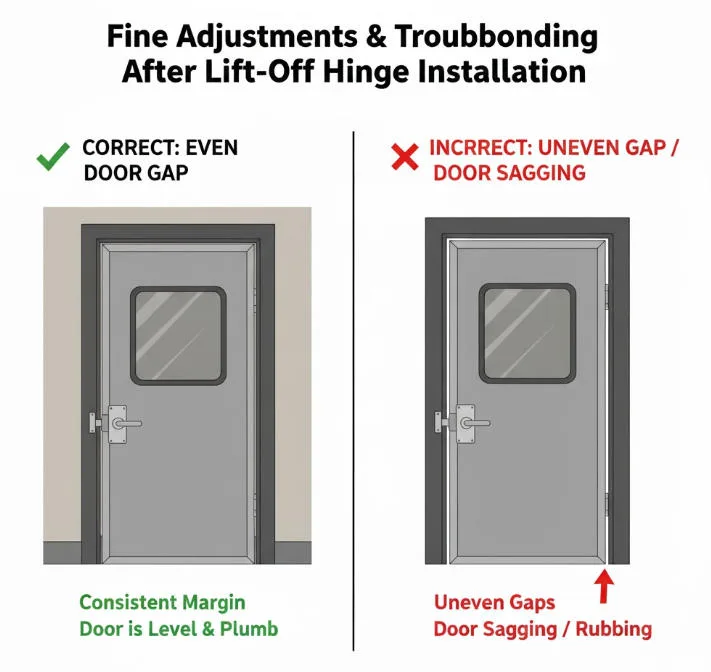
- Check whether the door, guard, or access panel returns to the correct position after opening.
- Review whether fasteners remain tight and compatible with the hinge material.
- Replace hinges that show corrosion, rough surfaces, binding, or cleaning difficulty in high-risk zones.
Inspection frequency should match the environment. Hinges in dry packaging areas may need less frequent review than hinges in seafood, dairy, meat, beverage, or wet washdown areas. The more aggressive the cleaning process, the more important hinge inspection becomes.
Schlussfolgerung
Food processing equipment hinges should be selected as part of the sanitary design strategy, not only as mechanical hardware. The hinge must support the door or access panel, resist washdown exposure, reduce residue traps, and remain easy to inspect and maintain.
Die Wahl des besten Scharniers hängt von vier Fragen ab:
- Is the hinge used in a wet washdown zone or a dry processing area?
- Can the hinge area drain and be cleaned easily?
- Does the stainless steel grade match the cleaning chemicals and corrosion exposure?
- Will the hinge remain inspectable and reliable after repeated sanitation cycles?
When these questions are answered together, food processing equipment hinges can support both mechanical reliability and hygienic operation. A well-selected hinge helps reduce cleaning difficulty, corrosion risk, residue buildup, and unnecessary downtime throughout the equipment’s service life.
Need Help Selecting Food Processing Equipment Hinges?
If your food processing equipment requires hygienic hinges, washdown-resistant materials, stainless steel construction, or a cleaner hinge geometry, HTAN can help review the application conditions before selection. Share your equipment type, washdown frequency, cleaning chemicals, door or panel size, stainless steel grade requirement, and installation environment, and our engineering team can help recommend a hinge direction that supports hygiene, corrosion resistance, and maintenance efficiency.
For OEM food equipment projects, custom hinge options can also be evaluated based on mounting space, surface finish, water drainage, fastener control, and cleaning procedure requirements.
FAQ
What makes a hinge suitable for food processing equipment?
A food processing equipment hinge should have a cleanable design, corrosion-resistant material, controlled fasteners, minimal residue traps, and geometry that supports drainage and inspection after washdown or sanitation.
Is 304 or 316L stainless steel better for food processing hinges?
304 stainless steel may be acceptable in dry or mild environments. 316L stainless steel is usually safer for wet washdown zones, salt exposure, acidic cleaning, seafood, dairy, or other aggressive food processing environments.
Why are water traps around hinges a problem in washdown areas?
Water traps can hold moisture, cleaning chemicals, and food residue after washdown. This can increase corrosion risk, make sanitation less predictable, and create areas that are harder to inspect.
Can standard cabinet hinges be used on food processing equipment?
Standard cabinet hinges may be acceptable only in low-risk dry areas. In washdown zones or open food processing areas, hinges should be selected for cleanability, corrosion resistance, drainage, fastener control, and sanitation procedures.
How often should food processing equipment hinges be inspected?
Inspection frequency depends on washdown frequency, cleaning chemicals, food residue exposure, and plant procedures. Hinges in wet, salty, acidic, or high-cleaning-frequency areas should be inspected more often for pitting, staining, residue buildup, loose fasteners, and water traps.

 Deutsch
  English
  한국어
한국어  Русский
  Español
  Italiano
  Français
  Português