

Food Processing Hinges: Washdown & Corrosion Guide
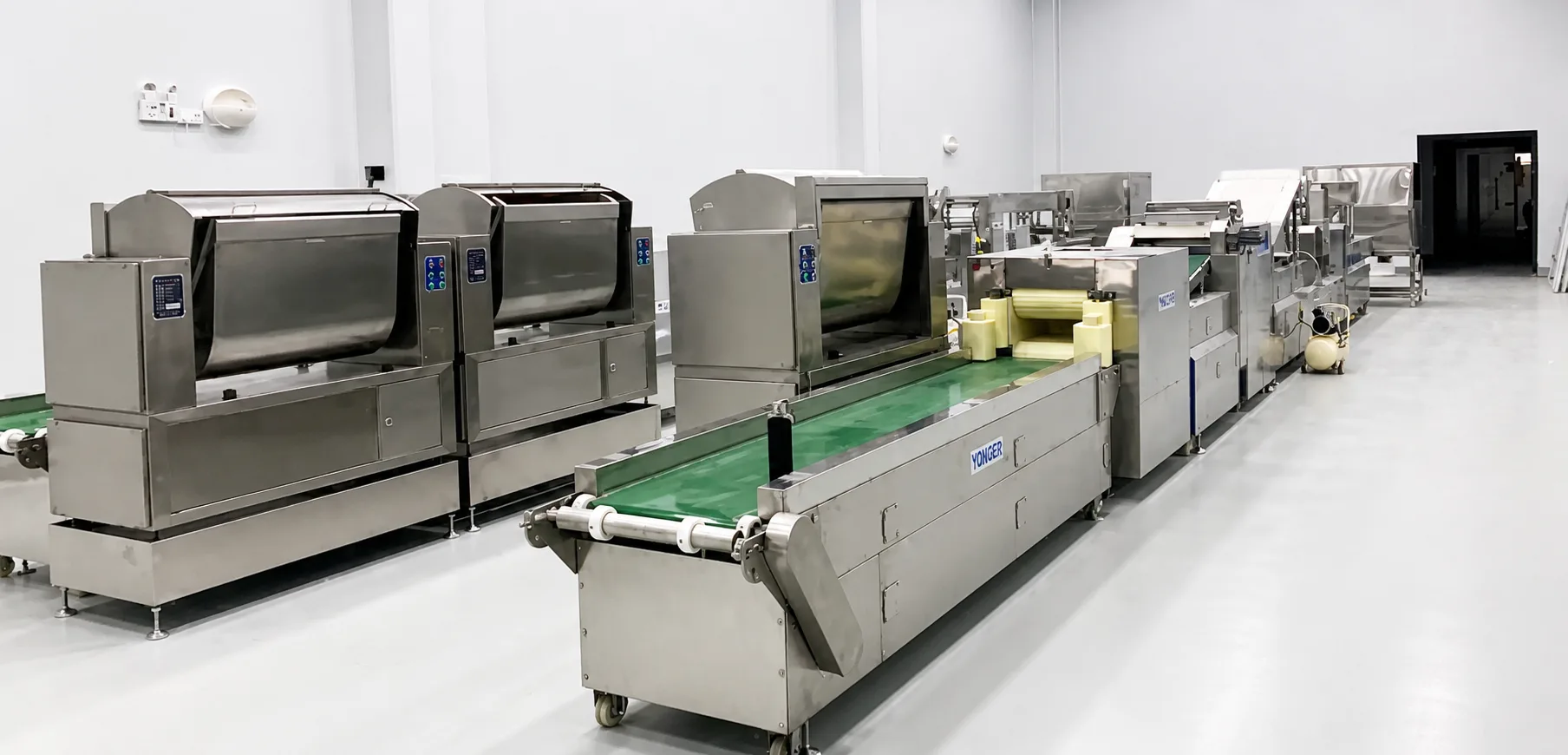
In food processing equipment, hinges are often located exactly where sanitation teams need reliable access: conveyor covers, machine guards, inspection doors, stainless steel cabinets, washdown panels, ingredient hoppers, and service covers. If the hinge area traps food residue, rinse water, foam cleaner, salt, grease, or cleaning chemicals, it can become harder to inspect than the flat stainless steel panel around it.
A hinge that works well mechanically may still be unsuitable for food processing equipment if it creates residue traps, water pockets, exposed threads, sharp corners, or corrosion points. In wet washdown zones, these small hinge details can affect cleaning time, sanitation consistency, equipment reliability, and long-term maintenance cost.
This guide explains how to select food processing equipment hinges by looking at the real conditions around the hinge: where residue collects, how often the equipment is washed down, which cleaning chemicals are used, whether the area is wet or dry, and whether the hinge material can resist corrosion over time. When hinges must work together with locks, handles, seals, equipment frames, and access panels, they should be reviewed as part of the complete enclosure hardware system instead of being selected as a separate accessory.
Where Hinges Become Hygiene Risks in Food Processing Equipment
Food processing equipment is exposed to moisture, proteins, oils, sugars, salt, brine, acidic residues, caustic cleaners, sanitizers, temperature changes, and repeated washdown procedures. These conditions make hinge design more demanding than ordinary industrial cabinet hardware.
The hinge area combines movement, fasteners, metal contact, mounting gaps, and operator access. That combination makes it one of the first areas to check when equipment is difficult to clean or when corrosion appears around a door, cover, or access panel.
Residue Traps Around Pins, Screws, and Mounting Gaps
Food residue can collect around hinge pins, screw heads, washers, knuckles, and the gap between the hinge leaf and equipment frame. In meat, dairy, seafood, and beverage equipment, protein residue, sugar residue, salt, or cleaning foam can settle into small spaces that are difficult to see during routine sanitation.
A hygienic hinge should reduce unnecessary cavities and make the hinge area easy to rinse, wipe, and inspect. The goal is not only to use stainless steel, but to make sure the geometry does not create a hidden cleaning problem.
Water Pooling After Washdown Cleaning
After washdown, water and sanitizer should not remain trapped behind the hinge leaf, inside a horizontal pocket, or around exposed screw holes. Standing liquid can increase staining, odor, corrosion, and sanitation risk, especially in wet processing zones where equipment is cleaned frequently.
Drainable hinge geometry is especially important on conveyor covers, processing line doors, stainless steel machine guards, and equipment panels near splash zones. If water remains around the hinge after rinsing, the hinge layout should be reviewed before production.
Corrosion Around Fasteners and Hinge Knuckles
Corrosion often begins around the hinge pin, knuckle, screw head, mounting slot, or contact point between dissimilar metals. In food plants, corrosion is not only a surface appearance issue. Pitting, roughness, or rust staining can make cleaning more difficult and may shorten equipment service life.
If the hinge is exposed to strong cleaning chemicals, wet residue, salt, brine, or chloride-containing sanitation conditions, the material decision should account for why stainless hardware can still corrode even when it is installed inside a sanitary facility.
Match the Hinge to the Food Processing Zone
A common mistake is specifying one hinge for the entire facility. Food processing plants usually contain different exposure zones, and the hinge should match the cleaning intensity and corrosion risk of each location.
Dry Packaging and Storage Areas
Dry packaging rooms, ingredient storage cabinets, light-duty access doors, and low-moisture areas may not require the same hinge specification as wet washdown equipment. In these areas, 304 stainless steel or a protected hinge design may be acceptable when cleaning exposure is mild and residue risk is low.
Even in dry areas, hinge geometry still matters. Dust, powder, flour, sugar, or dry ingredients can collect around screw heads and hinge gaps. The hinge should remain easy to inspect and should not create unnecessary ledges or hidden pockets.
Wet Washdown Zones
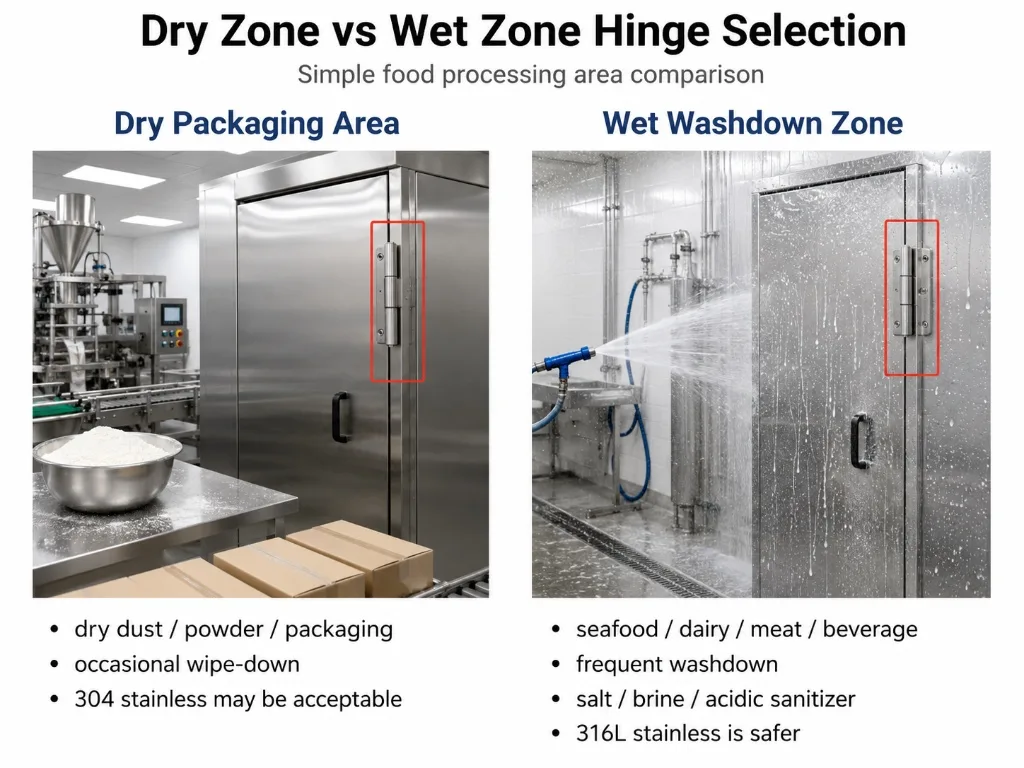
Wet washdown zones require more conservative hinge selection. Equipment near open product areas, floor-level cleaning points, splash zones, conveyor wash areas, and sanitation stations is exposed to repeated moisture and cleaning chemicals.
For these locations, the hinge should be evaluated for drainage, smooth surfaces, corrosion resistance, compatible fasteners, and easy inspection. A hinge that is acceptable in a dry packaging room may stain, pit, bind, or trap water in a wet zone.
Seafood, Dairy, Meat, Beverage, and Brine Exposure
Different food processing environments create different hinge risks. Seafood and brine areas can increase chloride exposure. Dairy and beverage equipment may involve acidic cleaning or frequent wet sanitation. Meat processing equipment may expose hinges to proteins, fats, warm water, and intensive cleaning routines.
Instead of asking only whether the hinge is stainless steel, engineers should ask what the hinge will actually contact: salt, foam cleaner, acidic sanitizer, rinse water, oils, sugars, proteins, or high-pressure washdown. The more aggressive the exposure, the more important material grade, surface finish, drainage, and fastener compatibility become.
Hygienic Hinge Design Details That Matter
Smooth Surfaces and Rounded Edges
A food processing hinge should reduce the number of places where residue, moisture, or cleaning chemicals can collect. Smooth surfaces, rounded edges, minimal exposed gaps, and controlled fastener areas make the hinge easier to clean and inspect.
Rough stamped edges, sharp corners, exposed threads, and deep screw recesses can turn the hinge area into a sanitation weak point. When reviewing hinge samples, inspect the hinge leaf, pin area, underside, screw holes, and mounting interface—not only the visible front face.
Drainable Geometry and No Horizontal Pockets
Drainable geometry helps reduce standing water after washdown. Hinges installed on equipment covers, access doors, and machine guards should avoid horizontal pockets where water, sanitizer, or food residue can collect.
During prototype review, rinse the equipment in the same direction sanitation teams will use in the plant. Then check whether liquid remains behind the hinge leaf, around fasteners, or inside the hinge knuckle. If water remains after normal cleaning, the hinge orientation or mounting design may need to change.
Controlled Fasteners and Cleanable Mounting Areas
Fasteners are often the weak point in washdown hinge design. Loose washers, exposed threads, low-grade screws, and open mounting holes can trap residue and accelerate corrosion. If threaded fasteners are required, they should be positioned so the area remains cleanable.
Depending on the equipment design, welded mounting, sealed fastener zones, covered screw areas, or cleanable fastener geometry may help reduce sanitation risk. The hinge body and mounting method should be reviewed together because a hygienic hinge can still fail if the mounting area creates a residue trap.
304 vs 316L Stainless Steel for Food Processing Hinges
Stainless steel selection should be based on the actual cleaning environment, not only on appearance. A hinge that looks clean at installation may still stain, pit, or become difficult to clean if the material does not match the washdown conditions.
When 304 Stainless Steel May Be Acceptable
304 stainless steel may be acceptable in dry food processing areas, packaging zones, light-duty cabinet doors, or applications with mild cleaning exposure. It provides good strength and general corrosion resistance for many indoor food equipment applications.
However, 304 stainless steel should not be selected only because it looks clean. If the hinge is exposed to chlorides, acidic cleaners, salt, brine, repeated wet cleaning, or aggressive sanitation chemicals, 304 may stain, pit, or become harder to clean over time.
When 316L Stainless Steel Is Safer
316L stainless steel is usually safer for wet washdown zones, seafood processing, dairy equipment, brine exposure, acidic cleaning, high humidity, and applications where corrosion or staining would create a hygiene concern. Its improved resistance to chloride-related corrosion makes it a more conservative option in demanding environments.
316L is not automatically required for every food processing cabinet, but it should be strongly considered when washdown frequency, chemical exposure, or salt conditions are high. The higher the sanitation intensity, the more important corrosion resistance and cleanable surface condition become.
Why Fasteners and Surface Finish Matter Too
The hinge material is only one part of the system. A 316L hinge installed with lower-grade screws or incompatible washers can still develop corrosion around the mounting area. The hinge body, screws, frame, washers, welded areas, and threaded inserts should be reviewed together.
Surface finish also affects cleanability. Rough edges, scratches, unfinished welds, or damaged surfaces can hold residue even when the base material is stainless steel. In projects where coated steel, 304 stainless steel, and 316 stainless steel are being compared, the final decision should consider whether stainless steel material choices support the cleaning environment, corrosion exposure, and expected service life.
Food Processing Hinge Selection by Washdown Zone
| Food Processing Area | Recommended Hinge Direction | Why It Fits | Key Risk to Check |
|---|---|---|---|
| Dry packaging or ingredient storage | 304 stainless steel hinge with cleanable geometry | Provides general corrosion resistance for lower-moisture areas | Dust buildup, exposed fasteners, and poor inspection access |
| Wet washdown equipment | 316L stainless steel hinge with smooth surfaces | Improves resistance to moisture and cleaning chemicals | Water traps, pitting, and fastener corrosion |
| Seafood, brine, or salted product zones | 316L hinge with compatible stainless fasteners | Supports better resistance to chloride-related corrosion | Crevice corrosion around pins, screws, and mounting interfaces |
| Dairy, beverage, or acidic cleaning areas | 316L hinge with polished or treated surface finish | Reduces staining and supports repeated sanitation cycles | Surface roughness, chemical residue, and hidden gaps |
| Frequent access panels or inspection doors | Hinge with controlled fasteners and easy inspection access | Supports maintenance without creating loose parts or cleaning blind spots | Loose washers, exposed threads, and alignment changes |
| Heavy machine guards or large covers | Reinforced stainless hinge layout | Supports load while maintaining cleanable mounting areas | Door sag, gasket misalignment, and weak mounting plates |
Sanitation Inspection Checklist for Food Processing Hinges
Food processing equipment hinges should be included in routine inspection and sanitation checks. The inspection should focus not only on movement, but also on cleanability, drainage, surface condition, fastener condition, residue buildup, and corrosion signs.
- Check whether the hinge area can be cleaned and inspected from normal working positions.
- Look for water pooling behind the hinge leaf, around screws, or inside hinge gaps.
- Inspect hinge pins, knuckles, fasteners, and mounting areas for pitting, staining, or rust.
- Confirm that food residue, foam, or sanitizer does not remain around the hinge after cleaning.
- Check whether the door, guard, or access panel returns to the correct position after opening.
- Review whether fasteners remain tight and compatible with the hinge material.
- Replace hinges that show corrosion, rough surfaces, binding, or cleaning difficulty in high-risk zones.
Inspection frequency should match the environment. Hinges in dry packaging areas may need less frequent review than hinges in seafood, dairy, meat, beverage, or wet washdown areas. The more aggressive the cleaning process, the more important hinge inspection becomes.
Common Selection Mistakes in Food Plants
Choosing Hinges Only by Material Grade
Material grade matters, but it is not the only factor. A 316L hinge with poor geometry, exposed crevices, rough edges, or incompatible fasteners may still create cleaning problems. A food processing hinge should be evaluated by material, finish, shape, fastener design, drainage, and cleaning access together.
Ignoring Water Traps Around the Hinge Area
Water traps around the hinge area can increase corrosion and sanitation risk. These traps may appear behind the hinge leaf, around screw heads, inside the hinge knuckle, or between the hinge and equipment frame. If water remains after washdown, the hinge design should be reviewed.
Using Exposed Threads in Washdown Zones
Exposed threads are difficult to clean and can hold moisture or residue. In washdown zones, fastener design should be reviewed carefully. Captive fasteners, covered mounting areas, welded attachment, or cleanable screw geometry may reduce sanitation risk depending on the equipment design.
Overlooking Food-Grade Lubrication and Maintenance
Some hinge designs may require lubrication, while others use low-maintenance or sealed designs. If lubrication is needed, the maintenance procedure should match the food processing environment. Excess lubricant can collect residue, while the wrong lubricant may create contamination concerns.
Using the Same Hinge Across Wet and Dry Zones
Using one hinge specification across the entire facility may seem efficient, but it can lead to under-specification in wet zones or over-specification in dry zones. Food processing equipment should be reviewed by exposure area so that each hinge matches its cleaning and corrosion environment.
Conclusion
Food processing equipment hinges should be selected as part of the sanitary design strategy, not only as mechanical hardware. The hinge must support the door or access panel, resist washdown exposure, reduce residue traps, and remain easy to inspect and maintain.
The best hinge choice depends on four questions:
- Is the hinge used in a wet washdown zone or a dry processing area?
- Can the hinge area drain and be cleaned easily?
- Does the stainless steel grade match the cleaning chemicals and corrosion exposure?
- Will the hinge remain inspectable and reliable after repeated sanitation cycles?
When these questions are answered together, food processing equipment hinges can support both mechanical reliability and hygienic operation. A well-selected hinge helps reduce cleaning difficulty, corrosion risk, residue buildup, and unnecessary downtime throughout the equipment’s service life.
Need Help Selecting Food Processing Equipment Hinges?
If your food processing equipment requires hygienic hinges, washdown-resistant materials, stainless steel construction, or a cleaner hinge geometry, HTAN can help review the application conditions before selection. Share your equipment type, washdown frequency, cleaning chemicals, door or panel size, stainless steel grade requirement, and installation environment, and our engineering team can help recommend a hinge direction that supports hygiene, corrosion resistance, and maintenance efficiency.
For OEM food equipment projects, custom hinge options can also be evaluated based on mounting space, surface finish, water drainage, fastener control, and cleaning procedure requirements.
FAQ
What makes a hinge suitable for food processing equipment?
A food processing equipment hinge should have a cleanable design, corrosion-resistant material, controlled fasteners, minimal residue traps, and geometry that supports drainage and inspection after washdown or sanitation.
Is 304 or 316L stainless steel better for food processing hinges?
304 stainless steel may be acceptable in dry or mild environments. 316L stainless steel is usually safer for wet washdown zones, salt exposure, acidic cleaning, seafood, dairy, or other aggressive food processing environments.
Why are water traps around hinges a problem in washdown areas?
Water traps can hold moisture, cleaning chemicals, and food residue after washdown. This can increase corrosion risk, make sanitation less predictable, and create areas that are harder to inspect.
Can standard cabinet hinges be used on food processing equipment?
Standard cabinet hinges may be acceptable only in low-risk dry areas. In washdown zones or open food processing areas, hinges should be selected for cleanability, corrosion resistance, drainage, fastener control, and sanitation procedures.
How often should food processing equipment hinges be inspected?
Inspection frequency depends on washdown frequency, cleaning chemicals, food residue exposure, and plant procedures. Hinges in wet, salty, acidic, or high-cleaning-frequency areas should be inspected more often for pitting, staining, residue buildup, loose fasteners, and water traps.


 English
  한국어
한국어  Русский
  Español
  Italiano
  Deutsch
  Français
  Português