

Pourquoi les charnières en acier inoxydable se corrodent-elles ? 5 causes, vérification, prévention
Pourquoi les charnières en acier inoxydable se corrodent-elles toujours ?
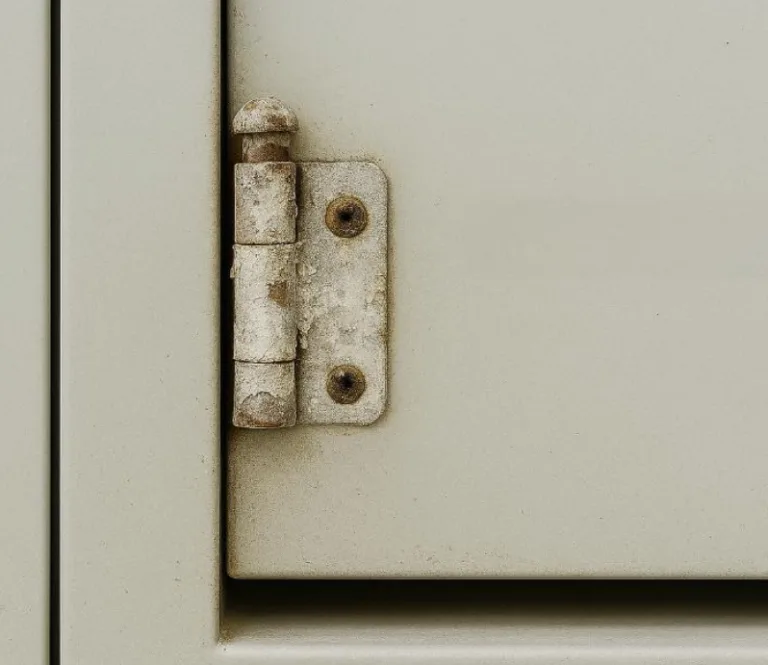
Les charnières en acier inoxydable sont résistantes à la corrosion, mais elles ne sont pas à l'épreuve de la corrosion. Leur durabilité dépend d'un film passif très fin à la surface. Lorsque ce film est endommagé plus rapidement qu'il ne peut se réparer, l'oxydation commence et de la rouille visible peut apparaître. Dans les projets réels, c'est la raison pour laquelle une charnière en acier inoxydable peut encore tomber en panne bien plus tôt que prévu.
D'après l'analyse des défaillances, la corrosion des charnières en acier inoxydable est généralement liée à cinq causes techniques : la rupture du film passif, l'attaque par les chlorures, la substitution des matériaux, la contamination du processus et l'incompatibilité du matériel ou des conditions d'installation. Ces problèmes s'aggravent dans les environnements de fabrication humides, côtiers, lavés ou mal contrôlés.
Si votre application fonctionne également dans des conditions de condensation importante ou dans des conditions de service froides et humides, consultez notre site Web. charnières pour entrepôts frigorifiques page pour comprendre pourquoi le contrôle de l'humidité et les conditions d'étanchéité accélèrent la corrosion du matériel dans des installations réelles.
Limites fonctionnelles du film passif
La résistance à la corrosion de l'acier inoxydable dépend du chrome. Lorsque la teneur en chrome dépasse environ 10,5%, la surface forme un film dense d'oxyde de chrome qui empêche l'oxygène et l'humidité d'attaquer le métal de base. Cette couche se répare d'elle-même dans de bonnes conditions, mais elle a des limites.
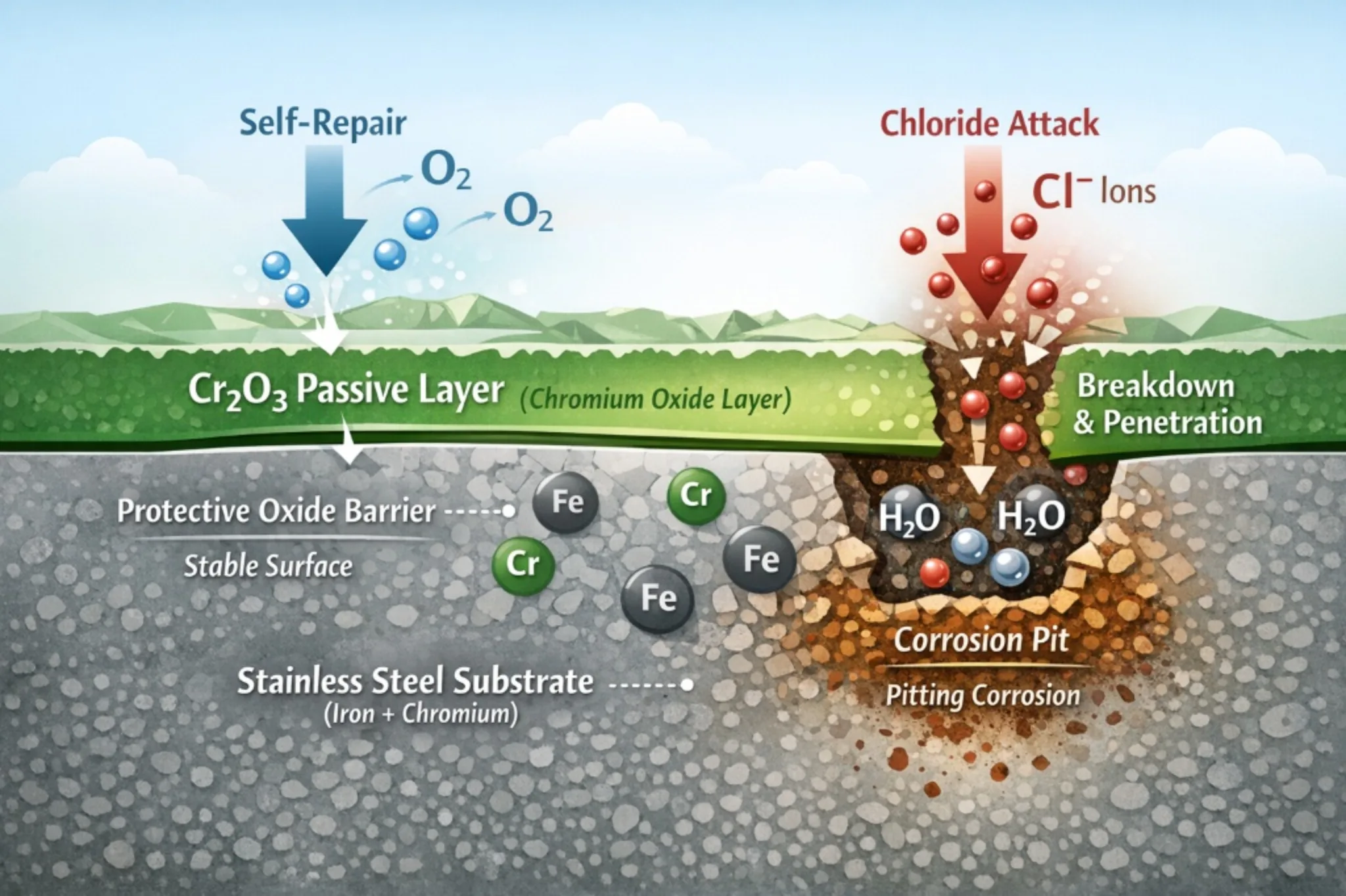
Lorsque les dommages environnementaux dépassent le taux d'autoréparation du film passif, les atomes de fer exposés commencent à s'oxyder. À ce stade, la charnière n'est plus protégée par de l'acier inoxydable au sens pratique du terme. Elle devient vulnérable aux taches, aux piqûres et finalement à la rouille rouge.
Les 5 principales causes de la corrosion des charnières en acier inoxydable
Cause 1 : Défaillance du film passif
Le film passif peut se détériorer lorsque l'acier inoxydable n'est pas correctement nettoyé, passivé ou protégé après la fabrication. C'est l'une des raisons les plus courantes pour lesquelles les "nouvelles charnières en acier inoxydable" commencent à se tacher ou à rouiller de manière inattendue peu de temps après leur installation.
- Le fer libre résiduel reste sur la surface après la fabrication.
- Le post-traitement omet une passivation chimique adéquate.
- La surface endommagée n'est pas nettoyée avant d'être exposée à l'humidité.
Résultat typique : des taches précoces, un aspect de surface irrégulier ou une rouille localisée rapide en cas d'humidité.
Cause 2 : Piqûres induites par les chlorures
Dans les environnements côtiers, les embruns salés ou les lavages riches en chlorure, les ions de chlorure attaquent les points faibles du film passif et déclenchent une corrosion par piqûres. Cela commence souvent par de petites taches sombres, de fines piqûres ou des points de rouille isolés qui se propagent à partir des zones endommagées ou moins résistantes.
- L'air marin et le brouillard salin augmentent l'exposition aux chlorures.
- Les produits chimiques de nettoyage peuvent concentrer les chlorures sur la surface.
- L'acier inoxydable de qualité inférieure est beaucoup plus vulnérable dans ces environnements.
Lorsque la corrosion des boîtiers côtiers ou extérieurs est un problème, comparez votre conception à la norme Charnières NEMA 4X pour les projets côtiers pour comprendre quand les exigences en matière de protection de l'environnement vont au-delà de la sélection de base des matériaux inoxydables pour l'intérieur.
Cause 3 : Substitution de grade et fraude sur les matériaux
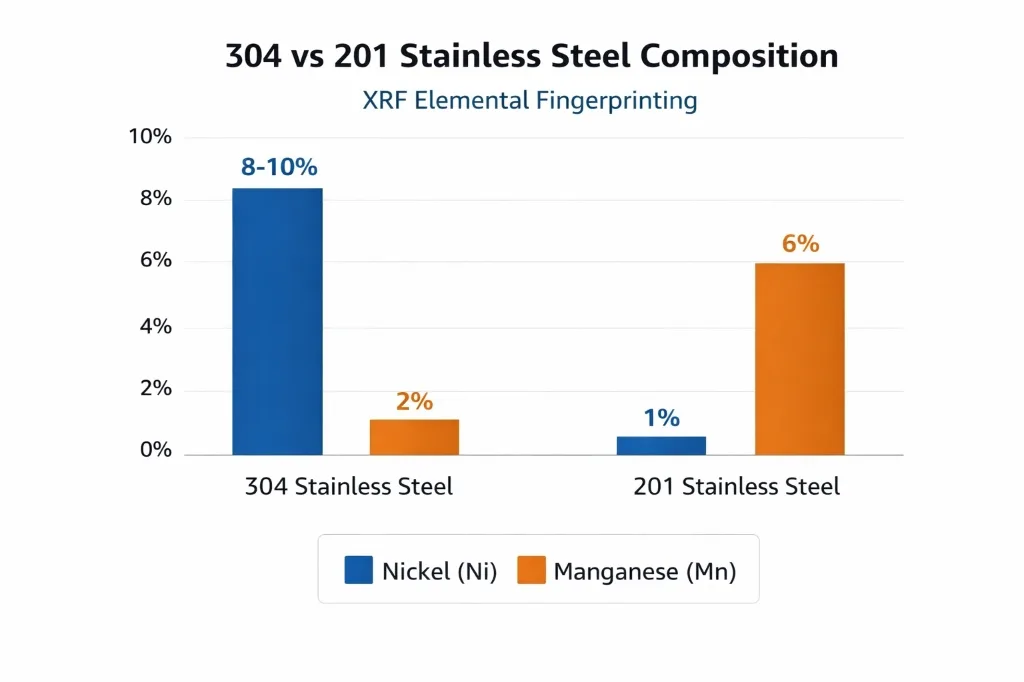
L'un des risques les plus graves pour la chaîne d'approvisionnement est le remplacement de la nuance 304 par la nuance 201. Cela est souvent fait pour réduire le coût des matériaux, mais cela crée un risque beaucoup plus élevé de rouille rouge rapide, en particulier dans les services humides ou après un endommagement de la surface.

Signal de champ : L'apparition de rouille en l'espace d'une semaine est souvent le signe d'un matériau de mauvaise qualité, d'une passivation inadéquate ou d'une contamination importante plutôt qu'un problème normal de performance de l'acier inoxydable.
Indicateurs techniques typiques de fraude ou de substitution :
- Nickel (Ni) : L'authentique 304 contient typiquement 8,0% à 10,5% de Ni.
- Manganèse (Mn) : Le 201 présente généralement un Mn beaucoup plus élevé que le 304.
- Chrome (Cr) : la réduction du Cr affaiblit les performances des films passifs.
Pour des décisions de projet plus larges concernant les cas où l'acier inoxydable se justifie par rapport à des solutions moins coûteuses, consultez le site suivant charnières en acier au carbone ou en acier inoxydable plutôt que de considérer cette page sur la corrosion comme un guide de sélection des matériaux.
Cause 4 : Contamination du processus
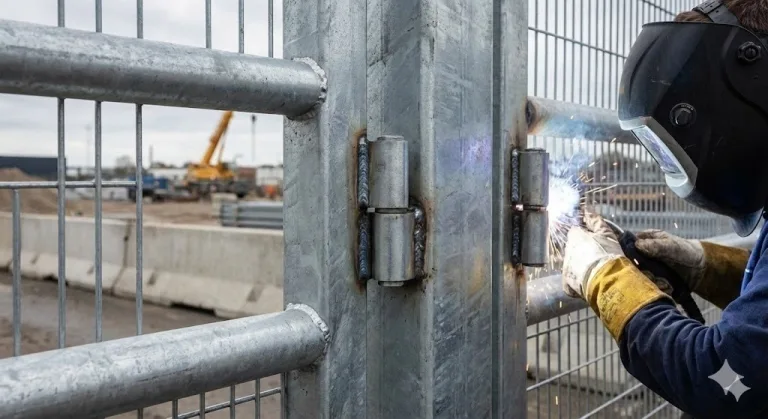
L'acier inoxydable peut se corroder même si l'alliage lui-même est correct, si le processus de fabrication contamine la surface. Un exemple courant est le perçage ou le meulage de l'acier inoxydable avec des outils précédemment utilisés sur de l'acier au carbone. Les particules de fer incrustées créent des cellules de corrosion qui se transforment ensuite en taches de rouille.
- Des particules d'acier au carbone s'incrustent dans la surface inoxydable.
- La contamination croisée est fréquente sur les lignes de production de matériaux mixtes.
- La contamination apparaît souvent près des trous percés, des bords coupés ou des marques d'usinage.
Symptôme courant : rouille concentrée autour des trous d'installation ou des zones fraîchement usinées.
Cause 5 : Mauvaise adaptation du matériel et conditions d'installation
Même les charnières en acier inoxydable correctement fabriquées peuvent se corroder si elles sont associées à des fixations incompatibles ou si elles sont installées dans des environnements qui créent des conditions galvaniques ou des pièges à humidité.
- Les fixations galvanisées ou différentes peuvent créer une corrosion galvanique.
- La géométrie de l'installation du piège à eau fait que la charnière reste humide trop longtemps.
- Les conditions de faible teneur en oxygène ou de crevasses empêchent une réparation efficace du film passif.
C'est l'une des raisons pour lesquelles l'environnement d'installation est presque aussi important que la qualité du matériau.
Les endroits où les charnières en acier inoxydable se détériorent le plus rapidement
| Environnement | Risque principal | Schéma de défaillance typique |
|---|---|---|
| Littoral / embruns salés | Piqûres de chlorure | Piqûres de surface, taches sombres, rouille localisée rapide |
| Zones intérieures à forte humidité | Rupture du film passif et condensation | Taches précoces, corrosion des coutures, rouille rouge dans les zones fragiles |
| Zones de lavage / nettoyage chimique | Chlorures, nettoyants et rétention d'humidité | Corrosion ponctuelle, attaque par crevasses, dégradation de la finition |
| Installations forées ou fabriquées sur le terrain | Contamination croisée et film de surface endommagé | Rouille autour des trous, des bords coupés ou des marques d'usinage |
| Assemblages métalliques mixtes | Désadaptation galvanique | Corrosion localisée près des vis, des supports ou des points de contact |
Dans les installations réfrigérées à forte humidité ou sujettes à la condensation, le risque de corrosion se superpose souvent à l'étanchéité de l'enceinte et à la gestion de l'humidité. C'est pourquoi les défaillances de la quincaillerie en acier inoxydable sont fréquentes dans certaines applications de charnières d'entrepôts frigorifiques, même lorsque le matériau de base semble correct sur le papier.
Matrice de diagnostic de la corrosion : Cause, Symptôme, Vérification, Prévention
| Cause | Symptôme typique | Méthode de vérification | La prévention |
|---|---|---|---|
| Défaillance du film passif | Taches précoces, mauvaise récupération de la surface | Test de sulfate de cuivre, révision du processus | Passivation ASTM A967, finition propre |
| Attaque au chlorure | Piqûres, taches sombres, rouille en utilisation côtière ou en lavage à grande eau | Classification environnementale, logique ASTM G48 | Amélioration de la qualité, réduction de l'exposition aux chlorures, amélioration du rinçage |
| Remplacement de l'année 201 | Rouille rouge rapide, faible résistance à la corrosion | Analyse élémentaire XRF, examen MTR | Vérification du matériel entrant, fournisseurs agréés |
| Contamination du processus | Rouille à proximité de trous, de coupures ou de marques de fabrication | Inspection de la surface, traçage de l'outil, examen du nettoyage ASTM A380 | Outils dédiés, nettoyage post-perçage et passivation |
| Inadéquation du matériel | Corrosion localisée près des vis ou des supports | Vérification de la compatibilité de l'assemblage | Utiliser des fixations compatibles et éviter les paires galvaniques |
Des méthodes de vérification qui ont de l'importance
Vérification élémentaire par XRF
Le test XRF est l'un des moyens les plus efficaces de vérifier si une charnière 304 revendiquée contient réellement les niveaux de nickel, de chrome et de manganèse attendus. Cette méthode est particulièrement utile lorsque vous soupçonnez une substitution du grade 201 ou une qualité instable de la part du fournisseur.
Essai au brouillard salin neutre
Les essais au brouillard salin neutre (NSS) fournissent une méthode contrôlée pour comparer la résistance à la corrosion dans des environnements chlorés. Pour la passation de marchés ou l'examen technique, cette méthode est souvent plus pertinente que de se fier aux affirmations génériques "acier inoxydable" d'un catalogue.
Test de sulfate de cuivre
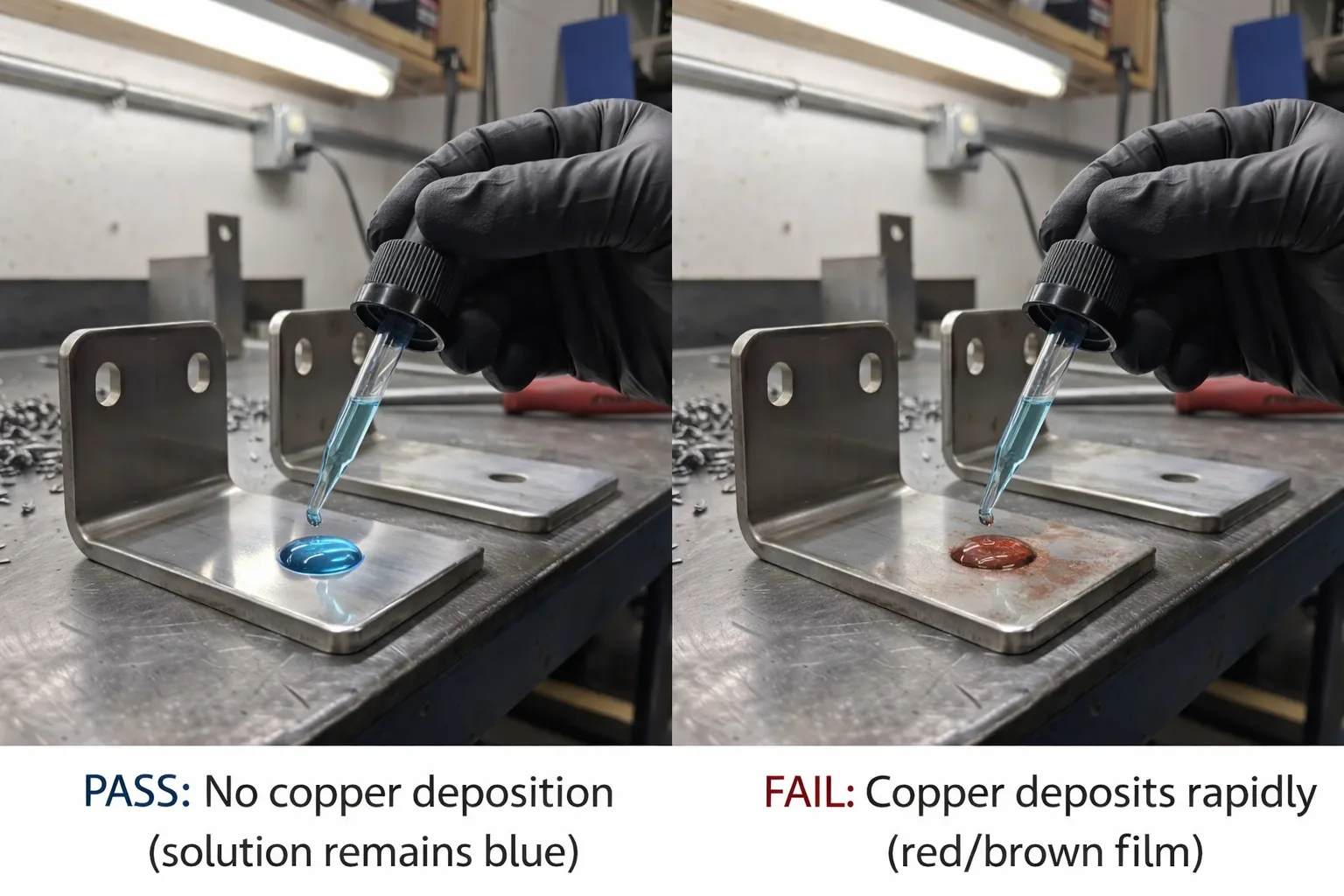
Le test au sulfate de cuivre est une méthode pratique de dépistage d'une passivation inadéquate. Si un dépôt de cuivre apparaît, l'état de la surface n'est pas acceptable pour la résistance à la corrosion à long terme.
Stratégie de prévention : Comment réduire les risques de corrosion
- Spécifiez la qualité d'acier inoxydable adaptée à l'environnement réel plutôt que d'utiliser le terme "inoxydable" comme étiquette générique.
- Exiger une vérification documentée des matériaux pour les projets critiques.
- Utiliser des outils dédiés à la fabrication de l'acier inoxydable ou nettoyer correctement la surface après l'usinage.
- Appliquer une passivation appropriée après la fabrication ou le perçage.
- Évitez les combinaisons de métaux mixtes qui favorisent la corrosion galvanique.
- Réduire les pièges à humidité et les crevasses dans la géométrie des charnières installées.
Si votre décision dépend fortement de la classe d'environnement, de l'exposition du boîtier et des attentes en matière d'étanchéité, comparez votre logique de spécification aux éléments suivants Exigences de la charnière NEMA 4X avant de verrouiller l'ensemble du matériel final.
Liste de contrôle pour la passation de marchés de charnières en acier inoxydable
- [Le fournisseur fournit-il un MTR ou un document d'inspection pour le lot ?
- [La qualité est-elle clairement spécifiée comme 304 ou 316 plutôt que comme "inoxydable" ?
- [La surface a-t-elle été nettoyée et passivée après la fabrication ?
- [Les fixations et le matériel d'assemblage sont-ils compatibles avec l'alliage de la charnière ?
- [L'environnement a-t-il été classé en fonction du risque de chlorure, d'humidité, de lavage ou de galvanisation ?
- [Des méthodes de vérification telles que XRF ou NSS sont-elles disponibles en cas de besoin ?
FAQ
Q1 : Pourquoi les charnières en acier inoxydable rouillent-elles alors qu'elles sont censées résister à la corrosion ?
A1 : Parce que l'acier inoxydable dépend d'un film de surface passif, et que ce film peut se détériorer sous l'effet des chlorures, de la contamination, d'une mauvaise passivation, d'un matériau de mauvaise qualité ou de conditions d'installation incompatibles.
Q2 : La présence de rouille après une semaine est-elle le signe d'un faux acier inoxydable ?
A2 : C'est possible. Une rouille rouge extrêmement rapide suggère souvent une substitution du grade 201, une mauvaise passivation ou une contamination grave plutôt qu'une performance normale de l'acier inoxydable 304.
Q3 : Pourquoi les charnières en acier inoxydable rouillent-elles autour des trous percés ?
A3 : Le perçage peut endommager le film passif et incruster des particules d'acier au carbone si l'on n'utilise pas les bons outils, ce qui crée des cellules de corrosion locales.
Q4 : La norme 316 est-elle toujours meilleure que la norme 304 pour les charnières ?
A4 : Dans les environnements riches en chlorures ou côtiers, souvent oui. Mais le bon choix dépend de l'environnement de service réel, de la chimie de nettoyage et de l'objectif de coût-performance.
Q5 : Comment puis-je vérifier si une charnière en acier inoxydable est réellement en 304 ?
R5 : La méthode la plus fiable est l'analyse élémentaire par fluorescence X, étayée par une documentation d'inspection appropriée, plutôt que de se fier uniquement à l'apparence ou à l'affirmation du vendeur.
Conclusion
La corrosion des charnières en acier inoxydable est rarement due à un seul facteur. La plupart des défaillances sont dues au fait que la protection de la surface, la qualité du matériau, le contrôle de la fabrication et l'environnement d'installation ne correspondent pas aux conditions de service réelles. En d'autres termes, la charnière est défaillante en tant que système, et pas seulement en tant que pièce métallique.
Le moyen le plus pratique de réduire le risque d'échec est de vérifier la qualité, le processus, l'environnement et de prévenir la corrosion au stade de la conception plutôt que de réagir après l'apparition de rouille rouge sur le terrain.

 Français
  English
  한국어
한국어  Русский
  Español
  Italiano
  Deutsch
  Português