

Water Treatment Plant Cabinet Hinges: Corrosion & RFQ Guide
For water treatment plants, cabinet hinges are not a small hardware detail. They affect enclosure access, maintenance speed, corrosion resistance, door alignment, gasket sealing, and long-term service cost. A hinge that works well in a dry electrical room may fail early near a chemical dosing area, pump station, outdoor basin, or wastewater process zone.
That is why water treatment plant cabinet hinges should be specified by real site conditions, not by generic cabinet-hardware assumptions. Moisture, washdown, chemical splash, airborne contaminants, repeated access, and mixed-metal fasteners can all change the correct hinge choice.
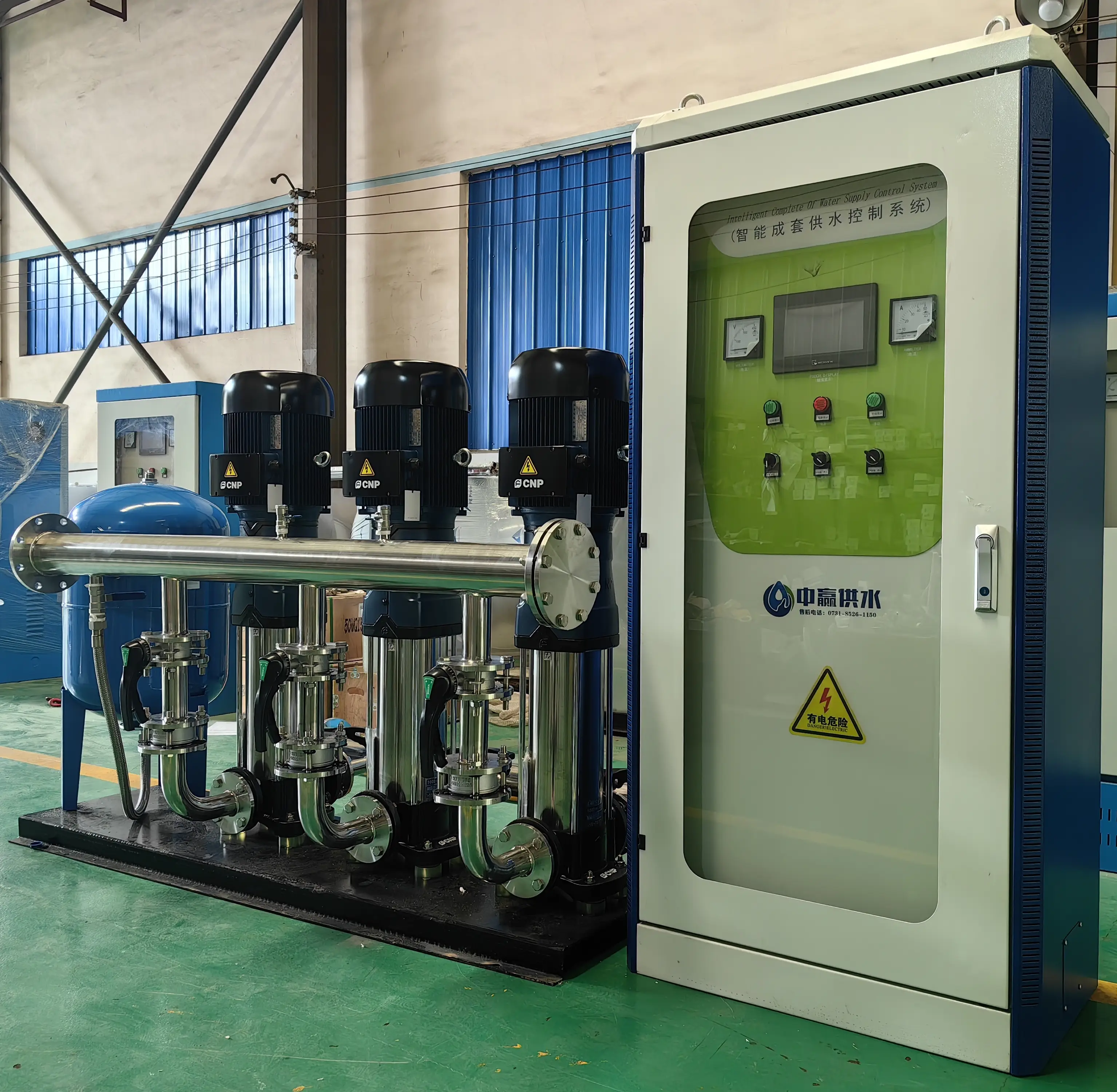
What Hinges Work Best for Water Treatment Plant Cabinets?
For most water treatment plant cabinets, the hinge should be selected by exposure zone, access frequency, and corrosion risk. Dry electrical rooms may use coated steel or standard stainless hinges when the maintenance plan is controlled. Pump stations, outdoor basin-side cabinets, chemical dosing areas, and wastewater zones usually require stainless steel hinges, compatible corrosion-resistant fasteners, stable door alignment, and a clear maintenance plan.
In high-splash, humid, chemically active, or wastewater areas, 316 stainless steel or a project-specific corrosion review is usually safer than generic plated steel or light-duty cabinet hinges.
Why Water Treatment Cabinets Need Different Hinge Specifications
A water treatment facility is not a normal indoor industrial building. Even when a cabinet is not directly sprayed, it may still face persistent humidity, condensation, chlorine-bearing air, chemical splash, outdoor exposure, or contamination from nearby tanks and piping.
Cabinet doors may also be opened repeatedly by operators, electricians, instrument technicians, and contractors. This means the hinge must survive both the environment and the cycle count. If the hinge corrodes, binds, loosens, or pulls the door out of alignment, the problem is not only hardware failure. It can delay troubleshooting, compromise gasket sealing, and increase maintenance time.
For this reason, the hinge should be reviewed as part of the complete cabinet door system: hinge material, pin and leaf design, fastener material, door weight, opening frequency, gasket compression, mounting surface thickness, corrosion exposure, replacement access, and inspection plan. The correct hinge is the one that keeps the cabinet accessible, aligned, and serviceable in the actual plant zone where it is installed.
Where the Cabinet Is Installed Matters Most
The most important question is not simply “Which hinge material is best?” The better question is: where is the cabinet installed, and what does the hinge face every day? Different areas of a treatment plant create different hinge risks.
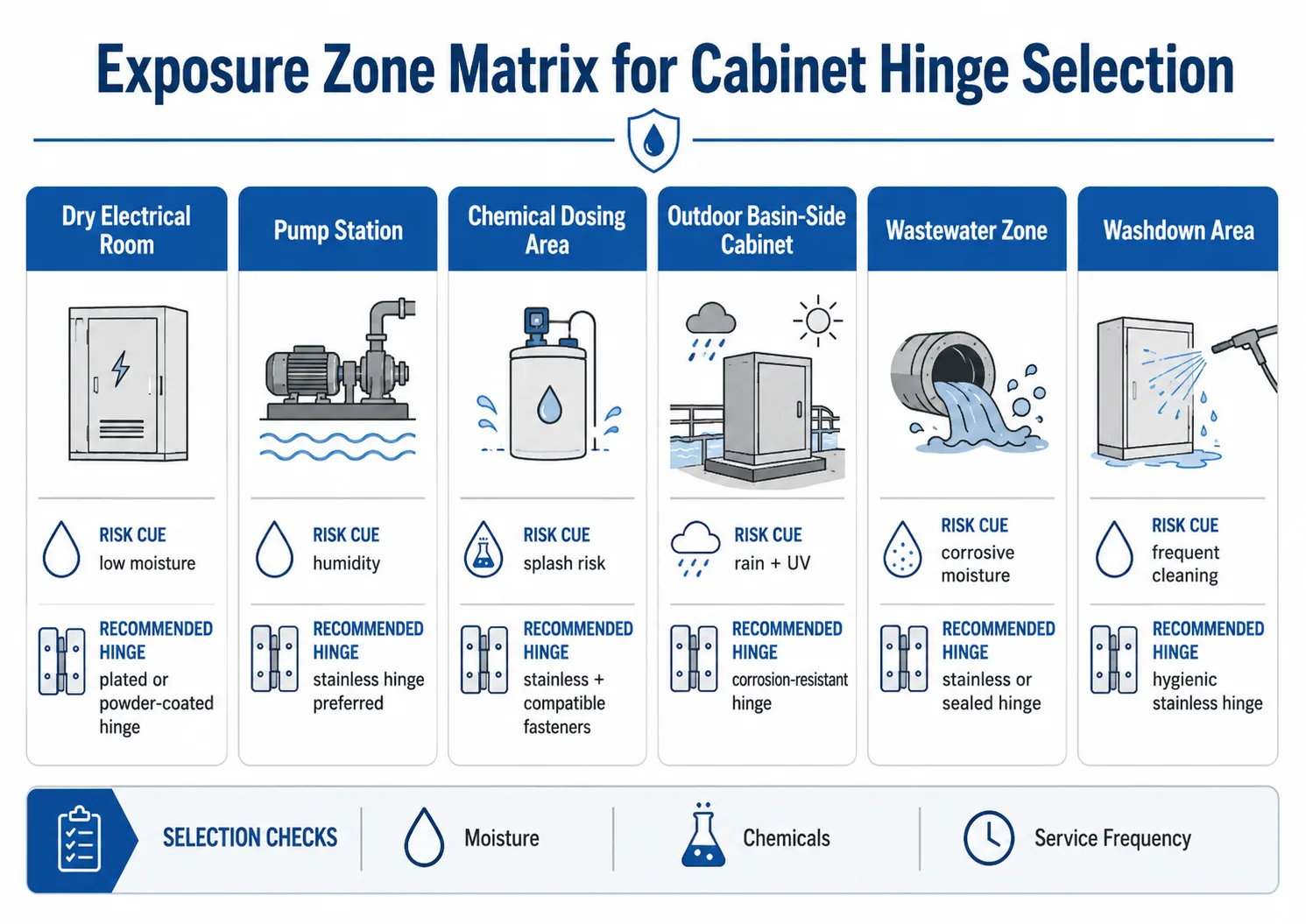
| Plant Area | Typical Exposure | Hinge Specification Direction |
|---|---|---|
| Dry electrical room | Lower humidity, controlled access | Coated steel or stainless hinge may be acceptable |
| Pump station cabinet | Humidity, vibration, frequent access | Stainless hinge with compatible fasteners |
| Chemical dosing area | Chemical splash, fumes, cleaning exposure | 316 stainless or project-specific corrosion review |
| Outdoor basin-side cabinet | Rain, UV, humidity, splash, wind | Stainless hinge, sealed fasteners, stable gasket alignment |
| Wastewater process zone | Moisture, aggressive atmosphere, contamination | 316 stainless, crevice control, periodic inspection |
| Washdown area | Direct water spray or cleaning chemicals | Corrosion-resistant hinge and fastener system |
| Instrumentation cabinet | Frequent access, smaller doors | Smooth operation, stable alignment, corrosion resistance |
This exposure-zone logic helps avoid two common mistakes: over-specifying low-risk indoor cabinets and under-specifying critical wet-area cabinets.
Corrosion Risks: Moisture, Chemicals, Splash and Mixed Metals
Water treatment plants create several corrosion drivers at the same time. A hinge may face standing humidity, splash, chemical residue, cleaning agents, outdoor rain, or condensation. These risks become worse when the hinge, fastener, door skin, and frame are made from incompatible metals. The corrosivity of the surrounding atmosphere can be classified using ISO 9223, la classificazione internazionale per la corrosività atmosferica, which rates environments by time of wetness, airborne salinity, and pollution — a useful baseline before assigning hinge material to each plant zone.
Common hinge corrosion points include around screw holes, behind hinge leaves, at pin and knuckle gaps, between the hinge and painted door surface, around damaged coating edges, where water is trapped behind the hinge, and where stainless hardware contacts coated steel or aluminum without isolation.
A stainless hinge is not automatically corrosion-proof. If moisture is trapped behind the hinge leaf, if fasteners are mismatched, or if the surface is contaminated during installation, corrosion can still appear. Before specifying stainless hardware in splash or chemical areas, review Perché le cerniere in acciaio inossidabile possono ancora corrodersi when moisture is trapped or fasteners are not compatible.
Material Selection: Coated Steel vs 304 Stainless vs 316 Stainless
Material choice should follow exposure level. A dry indoor cabinet and a chemical dosing cabinet should not automatically use the same hinge.
| Materiale della cerniera | Where It May Fit | Rischio principale |
|---|---|---|
| Coated steel | Dry or protected indoor cabinets | Coating damage can expose steel and start rust |
| Acciaio inox 304 | General humid or moderately wet areas | May be insufficient in chemical, chloride, or wastewater zones |
| Acciaio inox 316 | Chemical dosing, outdoor basin-side, coastal, wastewater, high-splash areas | Higher cost, but better corrosion margin |
| Alluminio | Lightweight panels with moderate exposure | Galvanic compatibility and strength must be reviewed |
| Plated steel | Low-cost indoor use only | Usually not suitable for wet or chemically aggressive zones |
The lowest initial hinge cost is often not the lowest lifecycle cost. In a wet plant area, hinge replacement requires labor, access time, possible door realignment, and sometimes enclosure downtime. For high-use or exposed cabinets, material choice should be treated as a lifecycle decision.
Hinge Type by Cabinet Access Pattern
Not every cabinet door needs the same hinge style. The access pattern should drive the hinge type.
Standard Operator Access Doors
For common control cabinets opened by operators or electricians, a corrosion-resistant butt hinge or surface-mounted industrial hinge may be enough if the door is not too heavy and the environment is moderate.
Long Gasketed Cabinet Doors
Long doors place more stress on alignment. If the door has a gasket, the hinge must help maintain even compression over time. A weak hinge can let the door sag, which can reduce sealing performance. Where the cabinet depends on a gasketed door, the Lista di controllo della cerniera dell'involucro con grado di protezione IP helps verify hinge alignment, latch force, and sealing continuity.
Heavy Steel Doors
For heavier cabinet doors, hinge strength should be checked before material is finalized. A corrosion-resistant hinge that is mechanically undersized can still fail by sagging, loosening, or deforming. For heavier steel doors, apply the processo di selezione delle cerniere per impieghi gravosi in base al peso e alla larghezza della porta before choosing material or finish.
Removable Service Panels
If technicians need to remove a panel frequently, lift-off hinges may reduce service time. This can be useful for pump control cabinets, instrumentation panels, or tight mechanical-room installations where door clearance is limited.
High-Frequency Maintenance Doors
Doors opened frequently for inspection, filter checks, or electrical testing need smooth operation and stable alignment. In this case, cycle life and pin wear matter as much as corrosion resistance.
Fasteners, Gaskets and Door Alignment
A hinge specification is incomplete if it only names the hinge material. In wet or chemically active areas, the fasteners can fail before the hinge body. If the screws rust, loosen, or create galvanic corrosion, the whole installation can become unreliable.
The hinge and fastener system should be specified together: hinge leaf material, pin material, screw or bolt material, washer or isolation requirement, door and frame material, coating system, mounting surface thickness, gasket compression requirement, and drainage or moisture-trap risk.
Door alignment is also critical. A hinge that allows the door to sag can reduce gasket compression and create a leak path. For outdoor basin-side cabinets or salt-exposed facilities, use the same material review logic as the Specifiche della cerniera NEMA 4X per progetti costieri.
Specification Matrix for Water Treatment Cabinet Hinges
Use this matrix as a starting point before issuing an RFQ.
| Cabinet Condition | Recommended Review |
|---|---|
| Dry indoor electrical room | Confirm duty cycle, door weight, and basic corrosion requirement |
| Humid pump station | Use stainless hinge and compatible fasteners; check vibration and access frequency |
| Chemical dosing area | Review chemical exposure; consider 316 stainless and isolation details |
| Outdoor basin-side cabinet | Check rain, UV, splash, wind load, gasket alignment, and fastener sealing |
| Wastewater process zone | Use higher corrosion margin; review crevice corrosion and inspection plan |
| Washdown zone | Verify hinge, fastener, lubricant, and finish compatibility with cleaning process |
| Long gasketed door | Check sag, hinge spacing, and latch compression |
| Heavy steel door | Calculate load and select hinge strength before final material choice |
| Frequently opened cabinet | Review cycle life, pin wear, and ease of replacement |
| Hard-to-access location | Prioritize alignment stability and fast replacement method |
This table should not replace engineering review, but it helps procurement and project teams avoid choosing one generic hinge for all cabinet locations.
Procurement Questions That Matter
Procurement teams should evaluate hinge selection as a risk and lifecycle decision, not only a unit-price decision. The best RFQ asks for more than a part number. Important supplier questions include:
- What hinge material grade is supplied?
- What is the pin material?
- What fasteners are recommended?
- Is the hinge suitable for humid, splash, or chemical areas?
- Is the finish compatible with the cabinet coating?
- Is there a risk of galvanic corrosion with the door and frame?
- What cycle-life expectation applies to this hinge?
- Can the hinge maintain alignment on a gasketed door?
- Is the hinge part of a standard hardware family for future replacement?
- Are material certificates, drawings, or sample reports available?
A supplier that asks about exposure zone, door weight, gasket requirement, and access frequency is reviewing the application. A supplier that only quotes a generic stainless hinge may not be solving the real site problem.
OEM and Project Considerations
OEMs and project leaders often face a tradeoff between cost, appearance, corrosion resistance, and serviceability. In water treatment equipment, durability should usually come before appearance. A cabinet hinge that looks acceptable during installation can become a maintenance problem if it corrodes, binds, or lets the door fall out of alignment.
Project teams should also consider replacement access. Some cabinets are mounted near tanks, pipe racks, pumps, or tight mechanical-room walls. If hinge replacement is difficult, a stronger corrosion-resistant hinge may reduce future maintenance disruption. For multi-site projects, it may help to create three hinge specification levels.
| Specification Level | Uso tipico |
|---|---|
| Standard indoor | Dry electrical rooms and low-risk cabinets |
| Wet-area stainless | Pump rooms, humid areas, outdoor covered locations |
| High-corrosion stainless | Chemical dosing, wastewater, high-splash, outdoor exposed areas |
This approach helps standardize purchasing without forcing the same hinge into every environment.
Common Specification Mistakes
Mistake 1: Assuming All Stainless Hinges Perform the Same
304 and 316 stainless steel are not the same in corrosive environments. Finish quality, contamination, fastener choice, and moisture traps can also affect performance.
Mistake 2: Choosing the Hinge but Ignoring the Screws
Fasteners are part of the hinge system. Poor screw selection can create corrosion, loosening, or premature failure even when the hinge body is suitable.
Mistake 3: Using Coated Steel in High-Splash Areas
Coated steel can work in protected zones, but once the coating is damaged at edges, holes, or fastener points, rust can spread quickly in wet environments.
Mistake 4: Ignoring Gasket Alignment
If the cabinet relies on gasket compression, hinge sag or loose fasteners can reduce sealing performance. The hinge should be reviewed with the latch and gasket, not separately.
Mistake 5: Standardizing One Hinge Across All Plant Areas
Standardization is useful, but one hinge specification rarely fits dry electrical rooms, chemical dosing areas, pump stations, and outdoor basin-side cabinets equally well.
Maintenance and Lifecycle Planning
Good hinge selection should be paired with a practical inspection plan. In water treatment facilities, inspection should check for corrosion, loosened fasteners, binding, coating damage, pin wear, and door misalignment. A basic maintenance review should include:
- Check hinge leaf and pin area for rust or staining.
- Inspect screw heads and mounting holes.
- Confirm the door closes evenly.
- Check gasket compression marks.
- Look for coating damage around hinge edges.
- Clean chemical residue where needed.
- Replace damaged fasteners before the hinge loosens.
- Record recurring corrosion locations for future specification updates.
Planned maintenance is usually less expensive than emergency replacement after a cabinet door binds, sags, or fails to close properly.
How to Write a Better RFQ
A strong RFQ should describe the environment, door, access pattern, and documentation needs. This reduces the risk of receiving a hinge that fits physically but fails operationally.
| RFQ Information | Perché è importante |
|---|---|
| Cabinet location | Defines exposure risk |
| Indoor, outdoor, splash, washdown, or chemical zone | Guides material choice |
| Altezza, larghezza, spessore e materiale della porta | Supports hinge strength review |
| Peso della porta | Determines load requirement |
| Gasket requirement | Affects alignment and compression |
| Opening frequency | Defines cycle-life need |
| Angolo di apertura richiesto | Affects hinge style |
| Mounting surface thickness | Guides fastener choice |
| Frame material | Helps avoid galvanic corrosion |
| Fastener requirement | Prevents weak installation |
| Maintenance access limits | Affects removable or service-friendly hinge choice |
| Documentation requirement | Supports OEM and project approval |
Raccomandazione finale
Water treatment plant cabinet hinges should be specified by exposure zone, access frequency, door load, fastener compatibility, gasket alignment, and lifecycle maintenance needs. The right hinge is not simply the most corrosion-resistant or the lowest-cost option. It is the hinge that keeps the cabinet functional, aligned, sealed, and easy to service in the real plant environment.
Dry electrical rooms, pump stations, chemical dosing areas, outdoor basin-side cabinets, wastewater zones, and washdown areas should not all be treated the same. A clear exposure-based specification reduces premature corrosion, maintenance delays, spare-part confusion, and door alignment problems. For engineers, this means reviewing corrosion resistance and mechanical fit together. For procurement teams, it means looking beyond unit price. For OEMs and project leaders, it means choosing hinge hardware that supports long-term cabinet access across the full service life of the facility.
FAQ
What hinges are best for water treatment plant cabinets?
The best hinge depends on the exposure zone. Dry electrical rooms may use coated steel or standard stainless hinges, while pump stations, outdoor basin-side cabinets, chemical dosing areas, wastewater zones, and washdown areas usually need stainless steel hinges with compatible corrosion-resistant fasteners.
Should water treatment cabinets use 304 or 316 stainless steel hinges?
304 stainless steel may be suitable for moderate humidity or protected indoor areas. 316 stainless steel is usually safer for chemical dosing areas, wastewater zones, outdoor exposed cabinets, high-splash areas, or sites with chloride or aggressive contamination risk.
Can coated steel hinges be used in water treatment plants?
Coated steel hinges can be used in dry or protected indoor locations if the coating is durable and maintenance is controlled. They are usually not the best choice for splash, washdown, chemical, or wastewater areas where coating damage can lead to early rust.
Why do cabinet hinges corrode even when they are stainless steel?
Stainless hinges can still corrode if moisture is trapped behind the hinge leaf, if fasteners are mismatched, if the surface is contaminated, or if the cabinet is exposed to aggressive chemicals or chloride-bearing environments. The hinge, fasteners, door, and frame must be reviewed as a system.
What should I include in a hinge RFQ for water treatment cabinets?
Include cabinet location, exposure level, door size, door weight, opening frequency, gasket requirement, frame material, mounting surface thickness, fastener requirement, opening angle, maintenance access limits, and documentation needs. These details help the supplier recommend a hinge based on the application instead of a generic catalog match.
Do gasketed water treatment cabinets need special hinge review?
Yes. If the cabinet relies on gasket compression, the hinge must maintain door alignment over time. Hinge sag, loose fasteners, or corrosion at the mounting point can reduce sealing performance and create a leak path.
Need Help Specifying Cabinet Hinges for Water Treatment Projects?
If your project includes control cabinets, pump station enclosures, instrumentation cabinets, chemical dosing panels, or outdoor basin-side equipment, HTAN can help review the hinge specification by exposure zone, door load, access frequency, gasket requirement, fastener compatibility, and corrosion risk. Share the cabinet drawing, installation location, door size, material, gasket target, service frequency, and environmental conditions, and our engineering team can recommend a hinge type, material direction, fastener strategy, and sample-testing approach for your application.

 Italiano
  English
  한국어
한국어  Русский
  Español
  Deutsch
  Français
  Português