

Medical & Laboratory Equipment Solutions
Hinge Solutions for Medical and Laboratory Equipment
Match hinge structures to equipment covers, medical carts, instrument doors, service panels, and operator displays based on positioning, cleanability, access, load, and operating conditions.
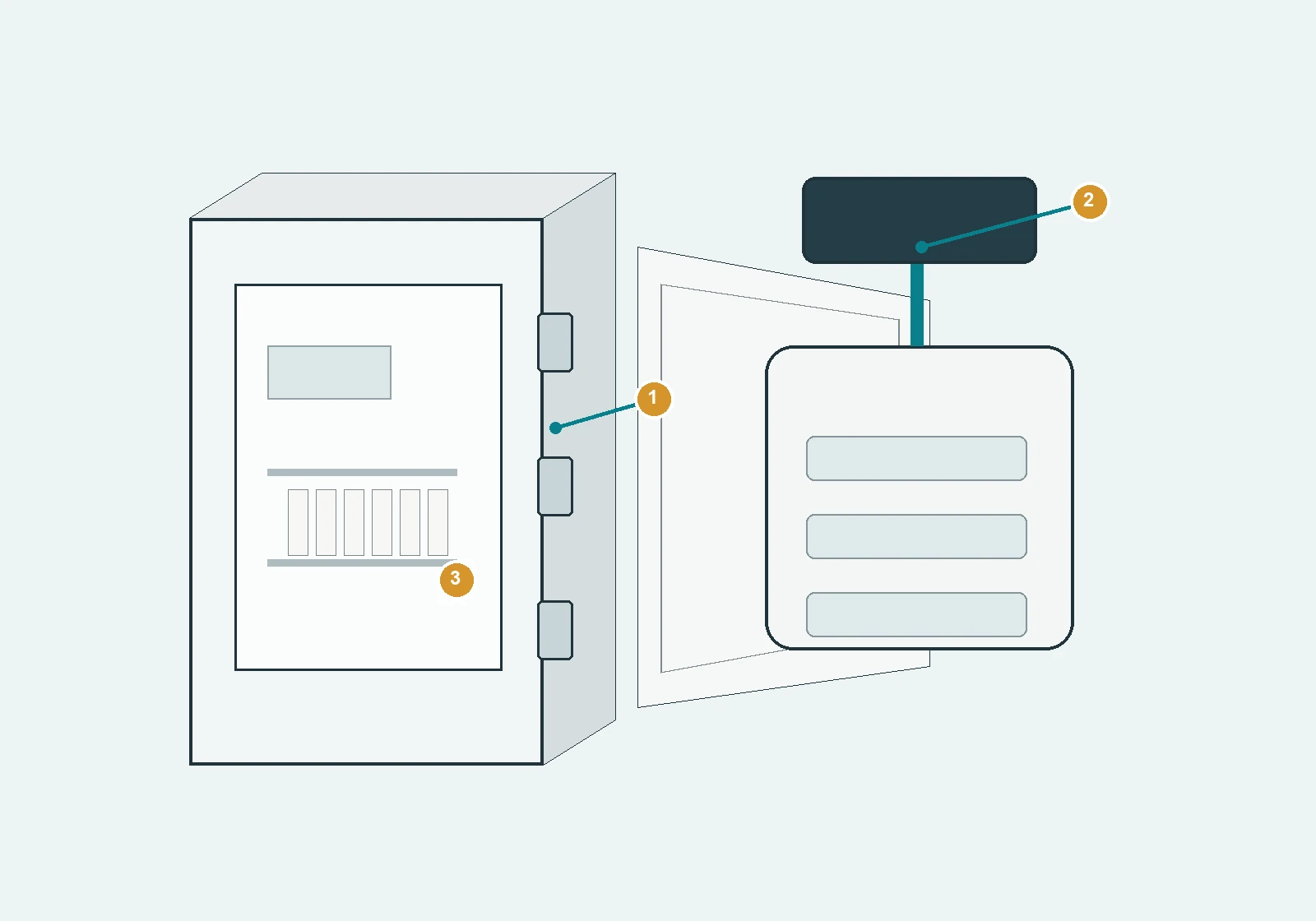
Equipment Application Map
Where Hinges Are Used on Medical and Laboratory Equipment
A single device can contain several moving assemblies. The hinge for a top cover does not carry the same risk as a rear service panel, cart drawer cover, or display support.
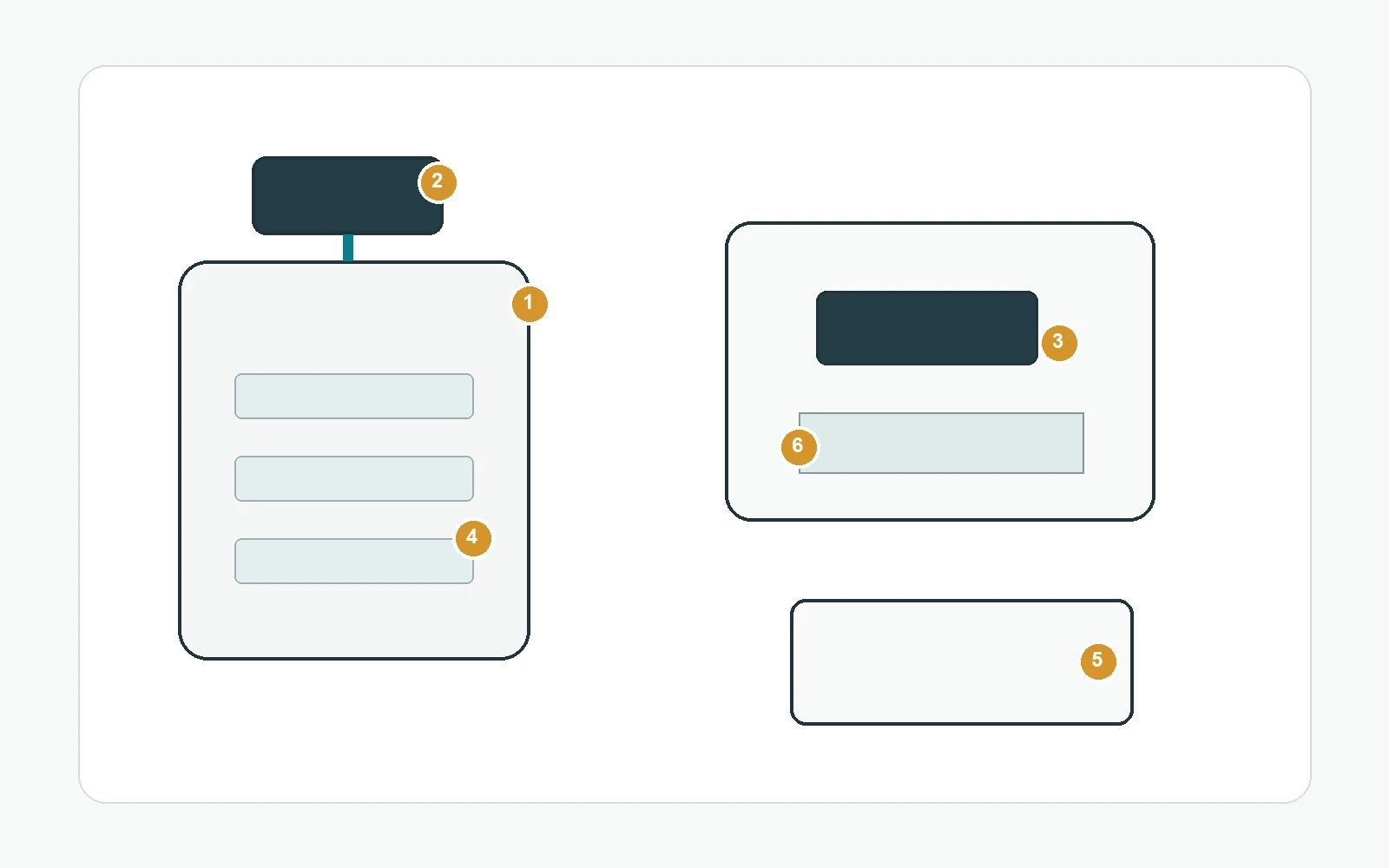
01
Medical cart top coverMain risk: repeated movement, vibration, and external protrusion.
02Instrument access doorMain risk: compact mounting space and panel alignment.
03Position-controlled displayMain risk: holding angle, touch force, and cable bend radius.
04Laboratory cabinet doorMain risk: gaps, fastener heads, and cleaning access.
05Removable rear panelMain risk: lift clearance, wiring, and reinstallation alignment.
06Internal service coverMain risk: cleaning exposure, humidity, and material selection.
Application Scope
This page focuses on hinge placement and movement across medical carts, diagnostic devices, laboratory instruments, covers, displays, cabinet doors, and service panels. Pharmaceutical GMP cabinets and cleanroom cabinet hardware require separate environment-specific review.
Choose a Hinge by Equipment Type
Start with how the device is opened, cleaned, adjusted, and serviced. The hinge family can then be narrowed by load, available mounting space, and user interaction.
Medical Carts and Mobile Workstations
Diagnostic Equipment
Laboratory Instruments
Laboratory Cabinets
Position-Controlled Covers
Abnehmbare Wartungsklappen
Frequent movement, cleaning, external protrusion, cable routing, and repeated service access.
Torque, concealed, compact heavy-duty, lift-off, and multi-axis positioning hinges.
Confirm hinge axis, panel weight, opening angle, and internal clearance before tooling or enclosure layout freezes.
Check existing hole patterns, sheet-metal stiffness, gasket path, and whether the panel can still be removed safely. For OEM projects, the same review should include assembly sequence, service technician access, and whether fasteners remain reachable after internal components are installed.
Medical Carts and Mobile Workstations
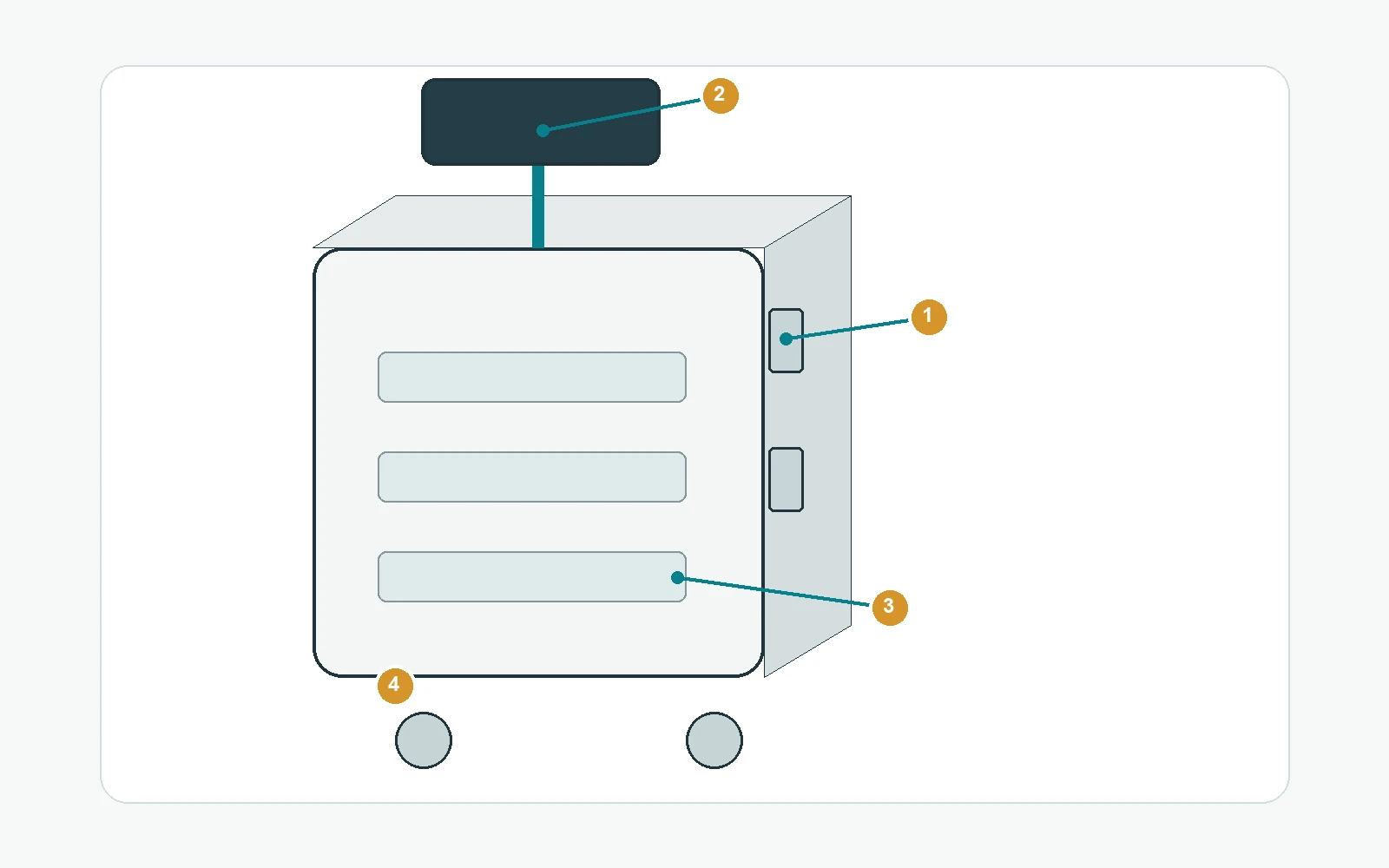
Carts and workstations combine frequent movement with one-hand access, cleaning routines, drawers, covers, displays, battery compartments, and service doors.
Mobile carts experience short-duration vibration and impact when crossing floor joints, thresholds, or uneven surfaces. Hinge selection should therefore consider retained closure, mounting-zone stiffness, and repeated dynamic movement rather than static door weight alone.
- Use concealed or low-profile hinges where external protrusion can interfere with movement or cleaning.
- Use compact heavy-duty hinges where repeated opening places concentrated load into thin sheet metal.
- Use torque or position-control hinges for screens, small covers, and adjustable operator interfaces.
- Use lift-off structures when a panel must be removed for battery or electronics service.
External projection
Exposed barrels, pin ends, and fastener heads should be reviewed for snagging around cables, cleaning cloths, clothing, and adjacent equipment.
Thin sheet-metal interface
Local deformation can occur before the hinge reaches rated load. Review backing plates, fastener spacing, and frame reinforcement together.
Retained access panels
Battery covers, storage doors, and service panels should remain controlled during cart movement and should not open unintentionally under vibration.
Product mapping
Typical structures include concealed hinges, compact heavy-duty hinges, torque hinges, and lift-off hinges.
Diagnostic and Laboratory Instruments
Instrument covers and access doors often work inside tight space, but diagnostic equipment and laboratory instruments do not fail in the same way. The review starts with the moving part and the user interaction around it.
Diagnostic Equipment
Diagnostic devices often combine displays, compact covers, internal wiring, and service access in a limited envelope. The hinge arrangement should be reviewed for touch stability, cable movement, opening clearance, and repeatable panel alignment.
Laboratory Instruments
Laboratory instruments often use lightweight covers, sample-chamber lids, and removable rear panels. The hinge must be matched to cover weight, center of gravity, access frequency, cleaning exposure, and internal component clearance.
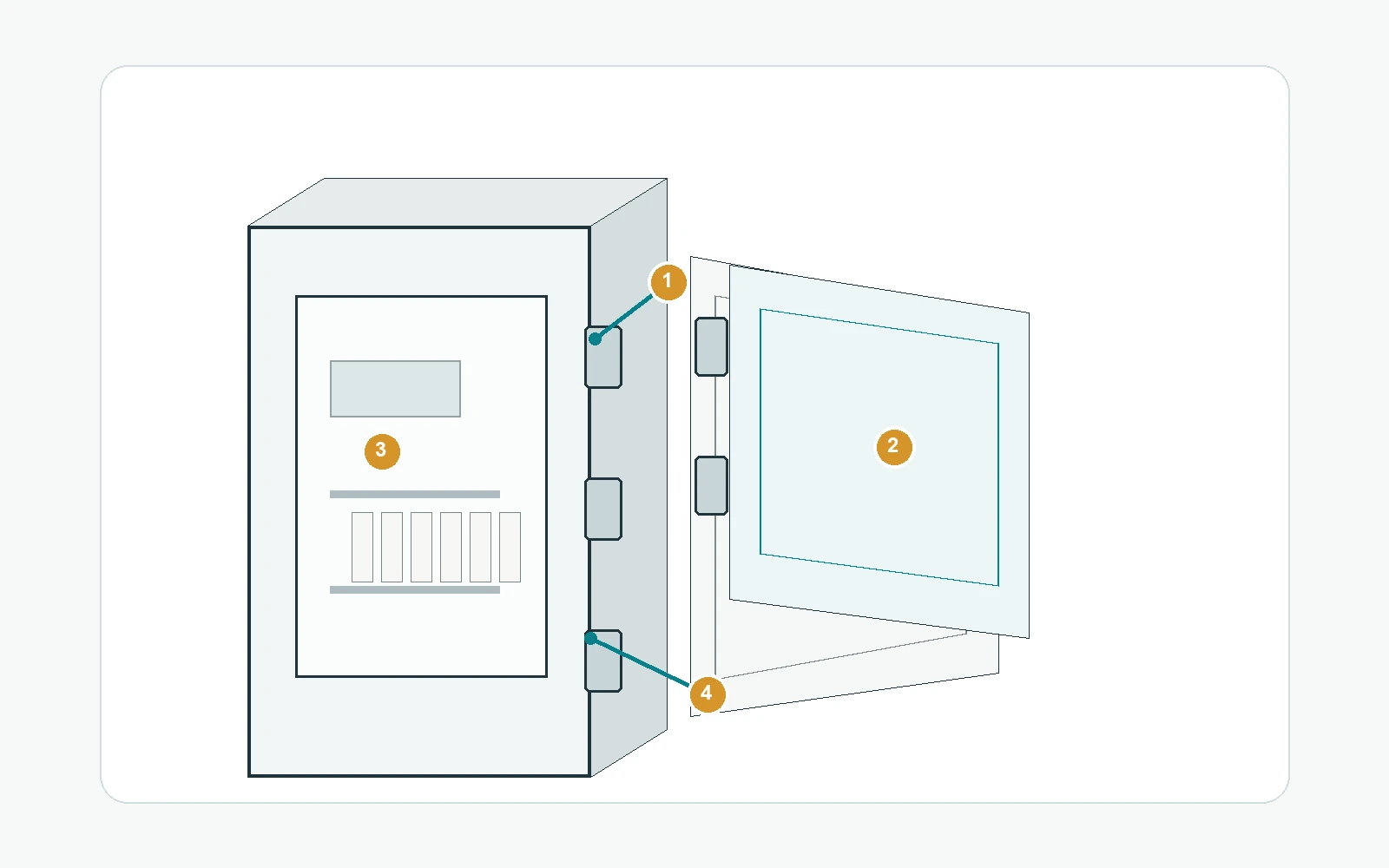
Laboratory Cabinets and Instrument Storage
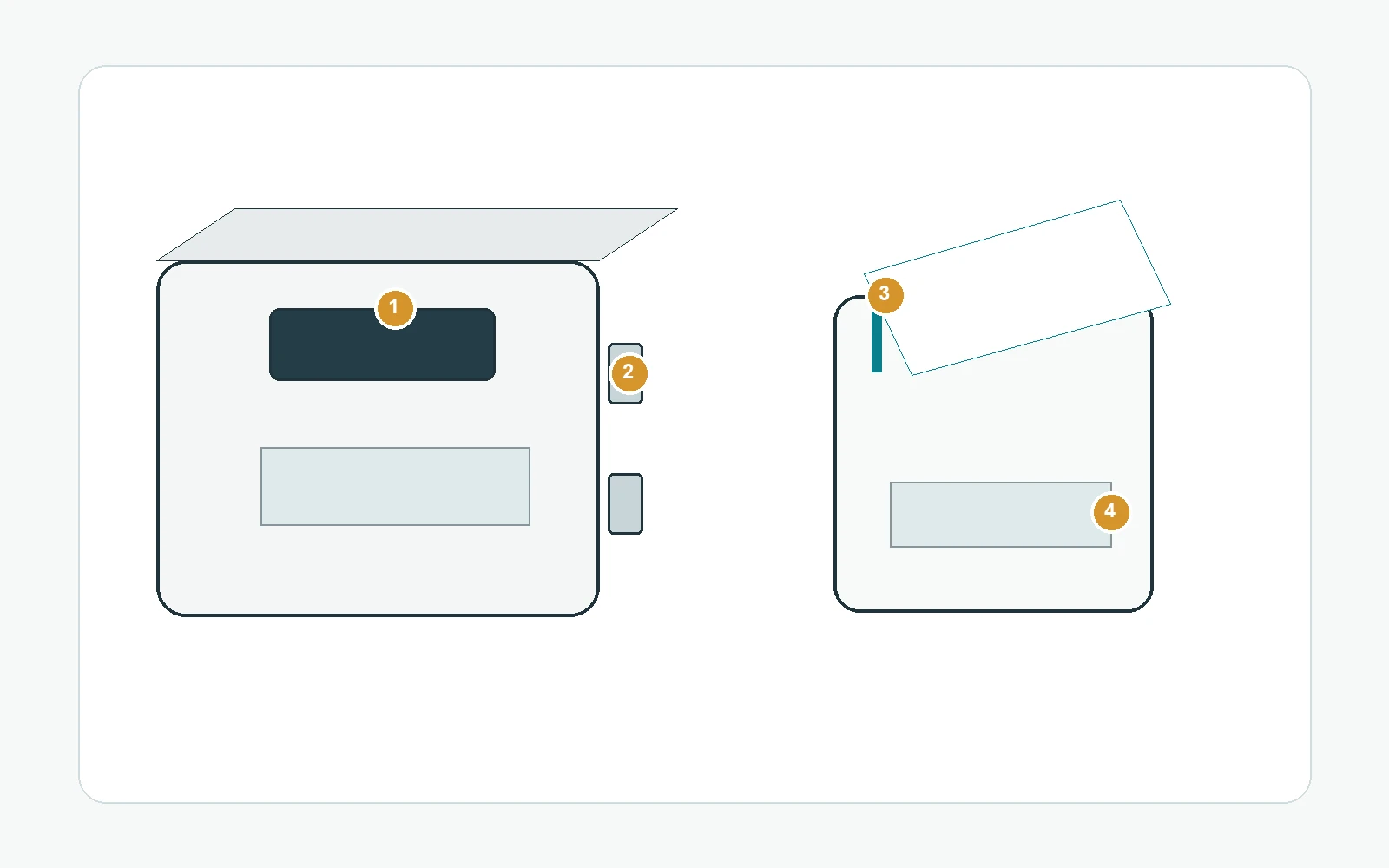
Laboratory cabinet hinges should be selected around door material, frame width, opening frequency, cleaning exposure, and whether the door must be removable. Glass or transparent panels may also require tighter control of mounting stress and alignment.
Door materialFrame widthGewicht der TürCleaning exposureErforderlicher ÖffnungswinkelRemovable or fixed layout
For GMP-controlled pharmaceutical cabinets or classified cleanroom cabinetry, use the dedicated environment-specific guides listed in the application scope above.
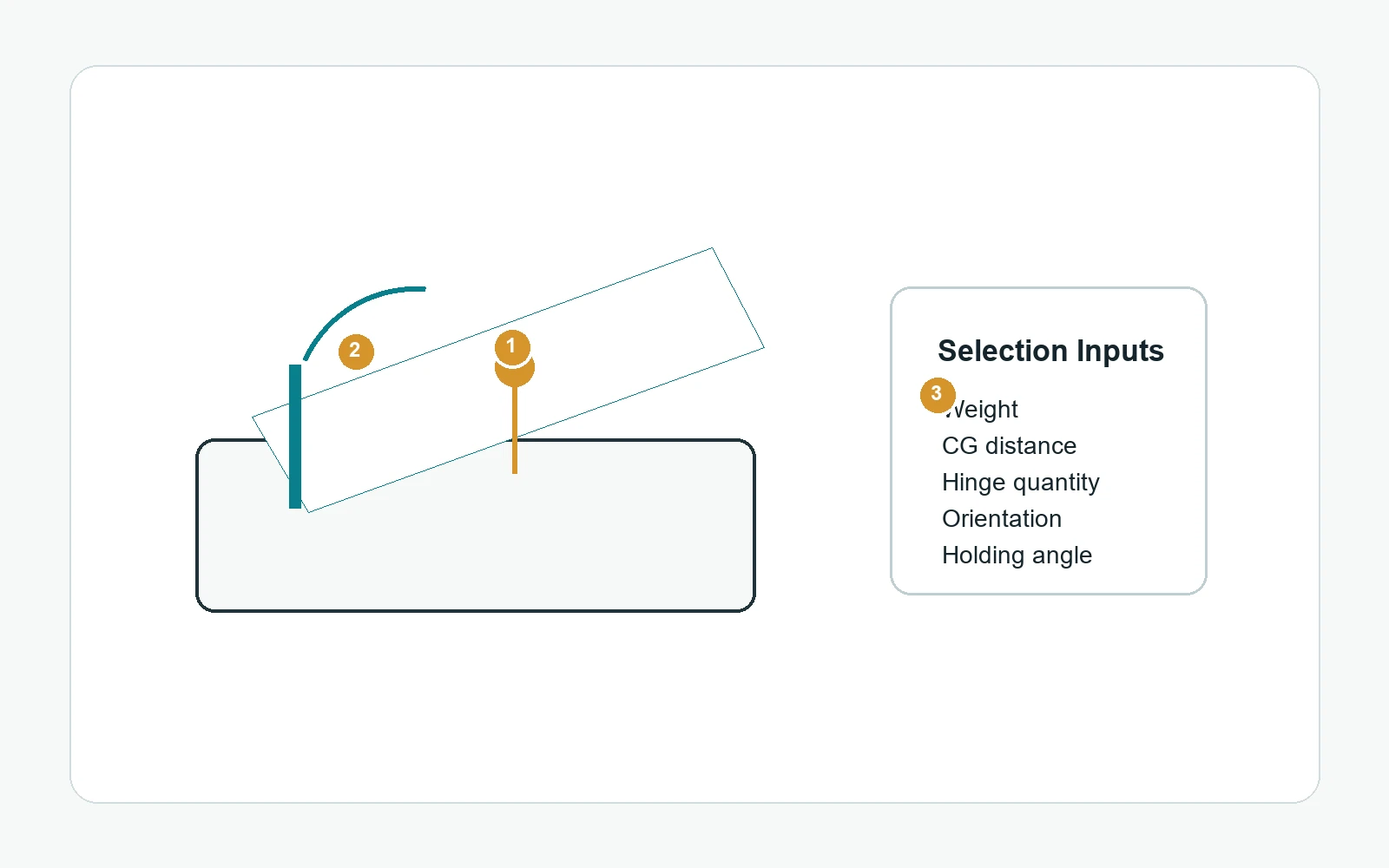
Position-Controlled Covers and Operator Displays
Covers and HMI displays may need to stay open at a controlled angle without dropping, drifting, or feeling unstable during touch input.
- Check panel weight, center-of-gravity distance, hinge quantity, installation orientation, and the angle range used during operation.
- Confirm whether wires pass through, around, or near the hinge axis.
- Review opening direction, required holding angle, touch force, and cable path before finalizing the hinge layout.
To estimate holding torque, provide panel weight, center-of-gravity distance, hinge quantity, orientation, and required holding angle.
Removable Service Panels and Maintenance Access
Rear covers and service panels must be removable without damaging wiring, connectors, dust lips, seals, or alignment features.
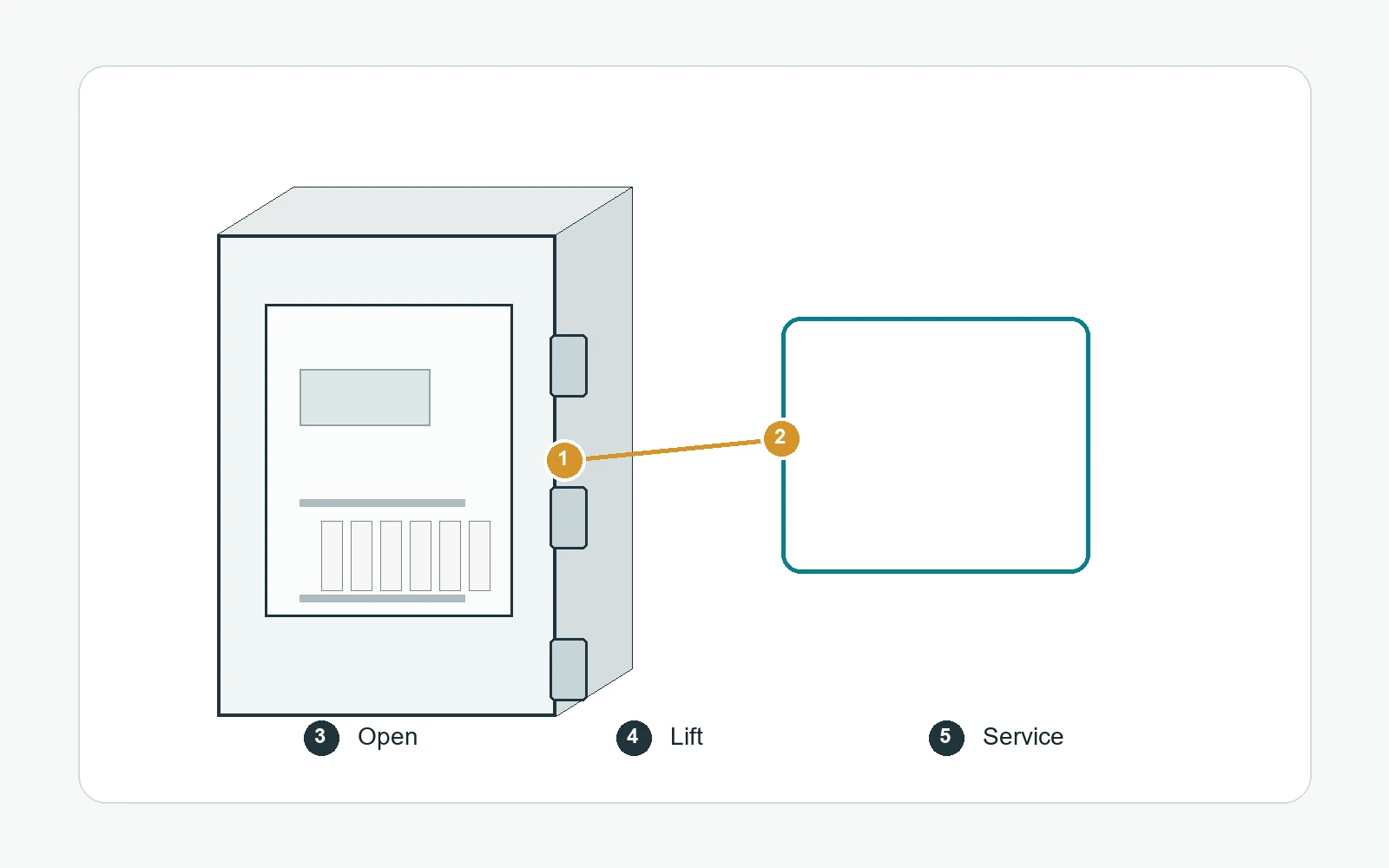
01Open
Confirm the panel reaches the service angle without contacting nearby equipment.
02Disconnect
Release wiring, straps, or connectors only when the design requires it.
03Lift
Check lift clearance, panel weight, and safe single-person handling.
04Service
Maintain access to batteries, electronics, filters, or internal fasteners.
Reinigbarkeit
Cleanability, Gaps, and External Protrusion
Hinge selection can reduce exposed protrusions or improve wiping access, but it does not certify hygiene performance by itself.
- External barrels, fastener heads, and sharp transitions should be checked against the cleaning routine.
- Concealed structures can reduce outside protrusion but may consume internal space.
- Rounded edges and smooth surfaces help wiping, but the completed device must still be validated.
Cleanability depends on the completed equipment geometry, surface condition, fasteners, interfaces, and validated cleaning procedure, not on the hinge type alone.
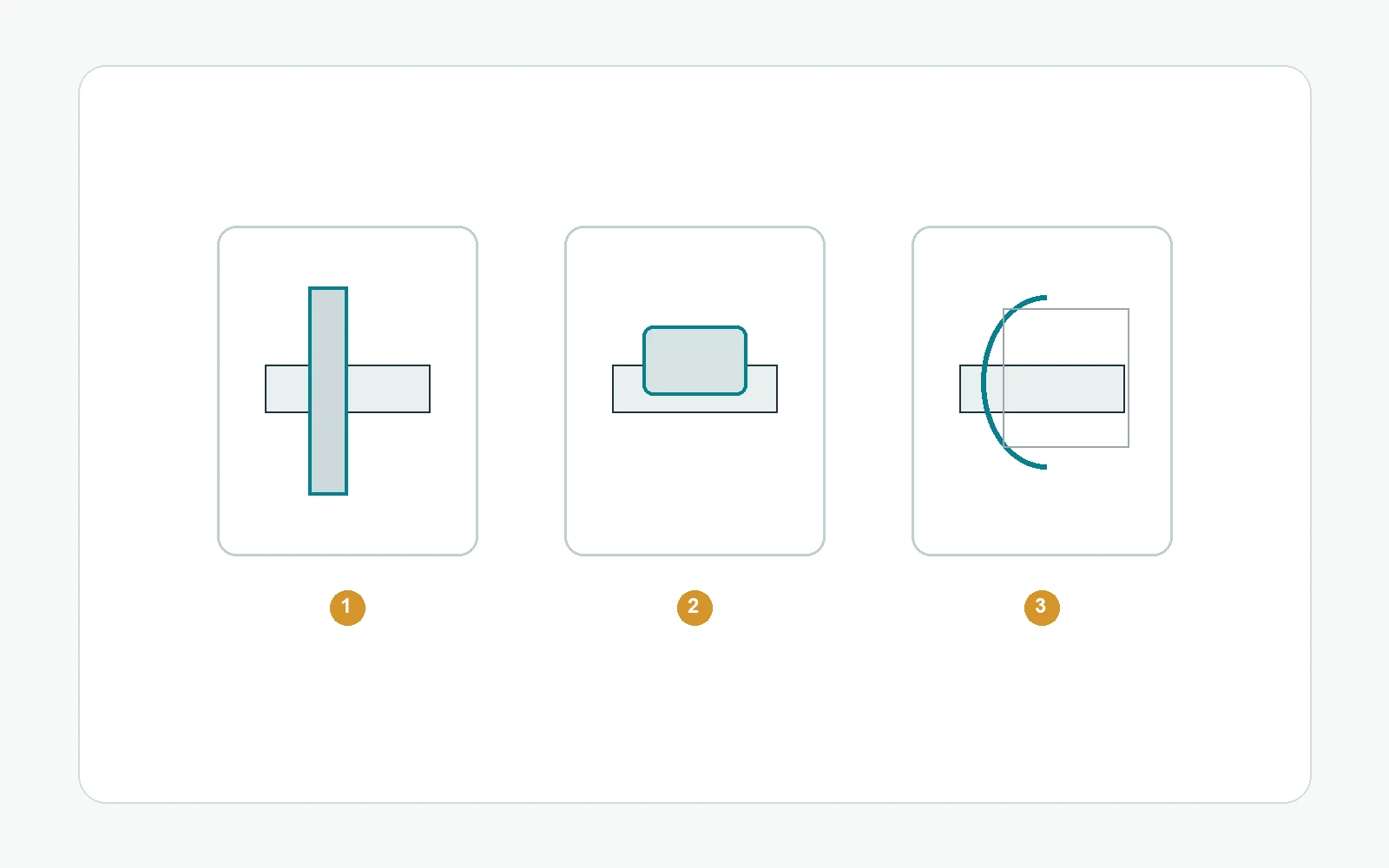
Materials and Cleaning-Chemical Exposure
Material selection should be tied to the actual cleaning process, not a generic assumption about stainless steel, zinc alloy, aluminum, or engineering plastics.
- Confirm cleaning-agent type, concentration, contact time, and wiping frequency.
- Check pin and fastener material, coating damage, galvanic contact, and surface roughness.
- Material compatibility should be confirmed against the actual equipment cleaning process.
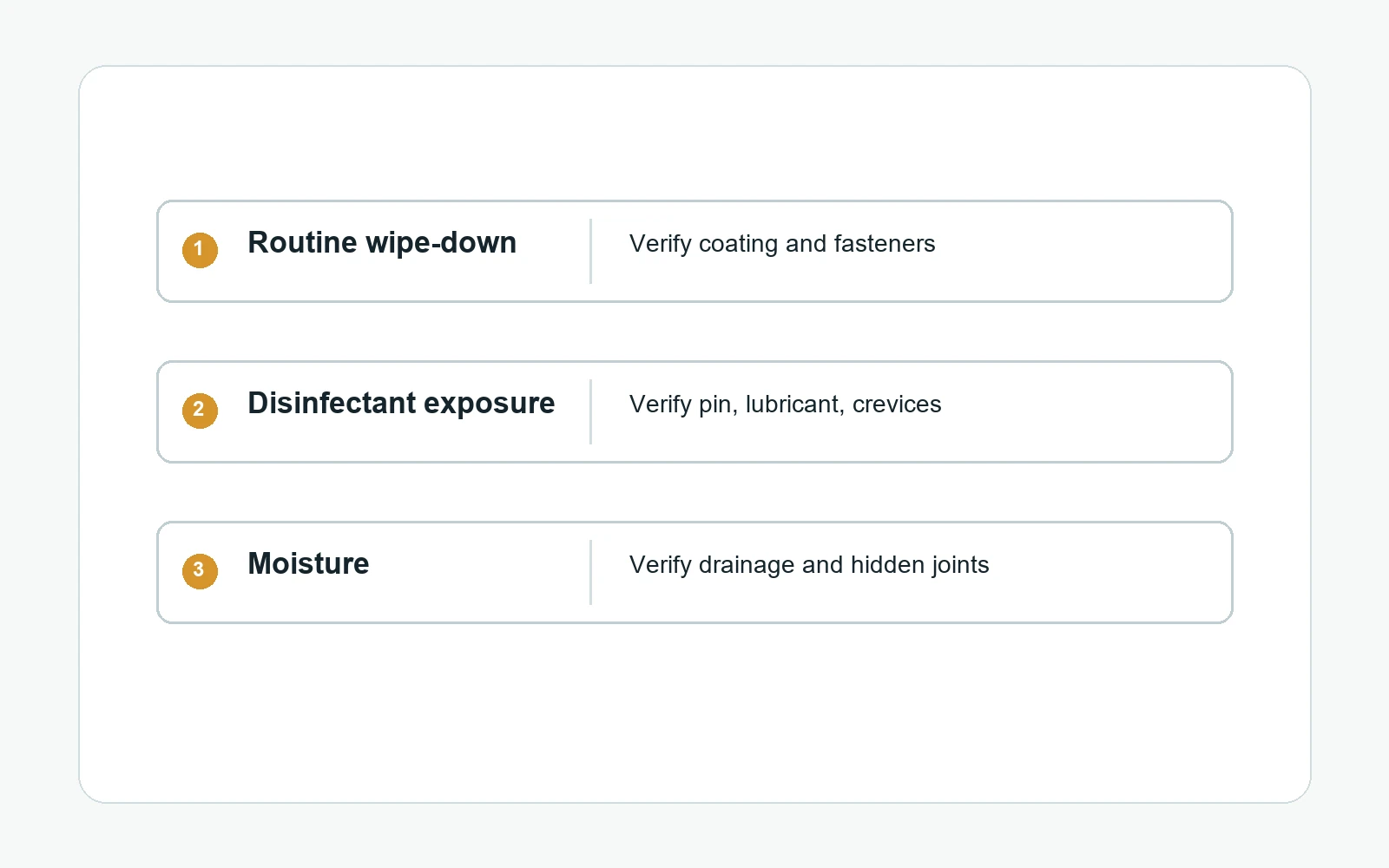
Exposure ConditionVerifyCommon Risk
Routine wipe-downCoating, fastener, pin, and cleaner compatibilityStaining, residue, or coating wear around fasteners and joints
Frequent disinfectant exposureLeaf material, pin, lubricant, crevices, concentration, contact time, and temperatureResidue buildup, lubricant removal, discoloration, or coating damage
Moisture or condensationDrainage path, galvanic contact, pin material, and hidden crevicesHidden corrosion around joints, fasteners, or enclosed hinge areas
Hinge Families for Medical and Laboratory Equipment
The hinge family should follow the moving assembly. Start with access, positioning, cleanability, load, and internal space before selecting a model.
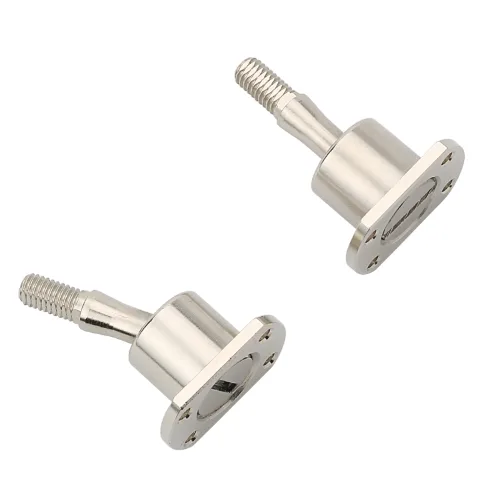
Ball-Joint or Multi-Axis Positioning Hinges
Best fit: Displays and controls requiring multi-directional adjustment.
Watch for: Touch stability, cable routing, adjustment range, and user-applied force.
Torque Scharniere
Best fit: Instrument covers, HMI displays, and panels that need controlled positioning.
Watch for: Panel weight, center-of-gravity distance, orientation, and torque decay.
Configure Position Control for a CoverVerdeckte Scharniere
Best fit: Equipment requiring reduced external protrusion and a clean exterior.
Watch for: Internal clearance, opening angle, cable routing, and fastener access.
Compare Concealed Equipment Hinge LayoutsAbnehmbare Scharniere
Best fit: Rear panels and service doors that need to be removed during maintenance.
Watch for: Lift clearance, door weight, wiring, connectors, and reinstallation alignment.
Plan a Removable Service PanelCompact Heavy-Duty Hinges
Best fit: Mobile carts and equipment doors with repeated movement and concentrated load.
Watch for: Thin sheet-metal mounting areas, vibration, frame stiffness, and fastener access.
Support a Mobile Equipment DoorOEM Review
How We Review and Validate the Equipment Assembly
Simplified diagrams explain the review method, while project recommendations are based on the submitted panel, frame, mounting, cleaning, and operating details.
Define the Moving Assembly
Panel size, weight, center of gravity, opening direction, and required angle.
Review the Equipment Interface
Mounting space, frame stiffness, internal equipment, cable path, and fastener access.
Match the Hinge Structure
Torque, concealed, lift-off, compact heavy-duty, or multi-axis positioning structure.
Validate the Actual Assembly
Fit, alignment, cleaning exposure, maintenance access, and expected cycle profile.
What HTAN Can Review
The review supports hinge selection and sample validation. It does not replace the medical-device manufacturer’s regulatory, hygiene, electrical-safety, or completed-equipment validation process.
Hinge axis and mounting geometryDoor, cover, or display loadTorque direction and holding behaviorOpening clearanceCable-routing interferenceFastener accessMaterial and finish directionSample fitMovement behaviorPanel alignment
Validation Boundary
Hinge selection can support cleanability, access, positioning, and enclosure design, but final hygiene, safety, regulatory, corrosion, lifecycle, and equipment-performance requirements must be validated on the completed device assembly.
Hinge selection can support cleanability, access, positioning, and enclosure design, but final hygiene, safety, regulatory, corrosion, lifecycle, and equipment-performance requirements must be validated on the completed device assembly.
Engineering Resources for Medical Equipment Hinge Design
Use these references when the moving panel needs controlled positioning, clean exterior geometry, removable service access, or corrosion review.
Industrial Monitor or HMI Positioning
Use when touch force, display angle, and cable movement affect hinge selection.
Configure an Adjustable Operator DisplayMaterial Selection and Exposure
Use when stainless steel, coating, and cleaning-agent exposure need a cost and risk comparison.
Compare Material Selection and TCORFQ Requirements
What to Send for a Medical or Laboratory Equipment Hinge Review
You do not need to know the hinge model before contacting us. Send the moving assembly context so the recommendation can start from the actual equipment layout.
Door, Cover, or Display
- Dimensions
- Gewicht
- Center-of-gravity distance
- Opening direction
- Required angle
Equipment Interface
- Mounting space
- Material und Dicke des Rahmens
- Internal clearance
- Kabelverlegung
- Fastener access
Cleaning and Environment
- Cleaning-agent type
- Cleaning frequency
- Moisture or condensation
- Temperature
- Korrosionsbelastung
Project Information
- Expected cycle life
- Annual quantity
- Existing hinge or new design
- Drawing
- Equipment photo
 Deutsch
  English
  한국어
한국어  Русский
  Español
  Italiano
  Français
  Português