

Industrial machinery solutions
Hinge Solutions for Industrial Machinery and Automation Equipment
Match hinge structures to machine guards, service doors, inspection covers, operator displays, and removable maintenance panels based on movement, load, access, and operating conditions.
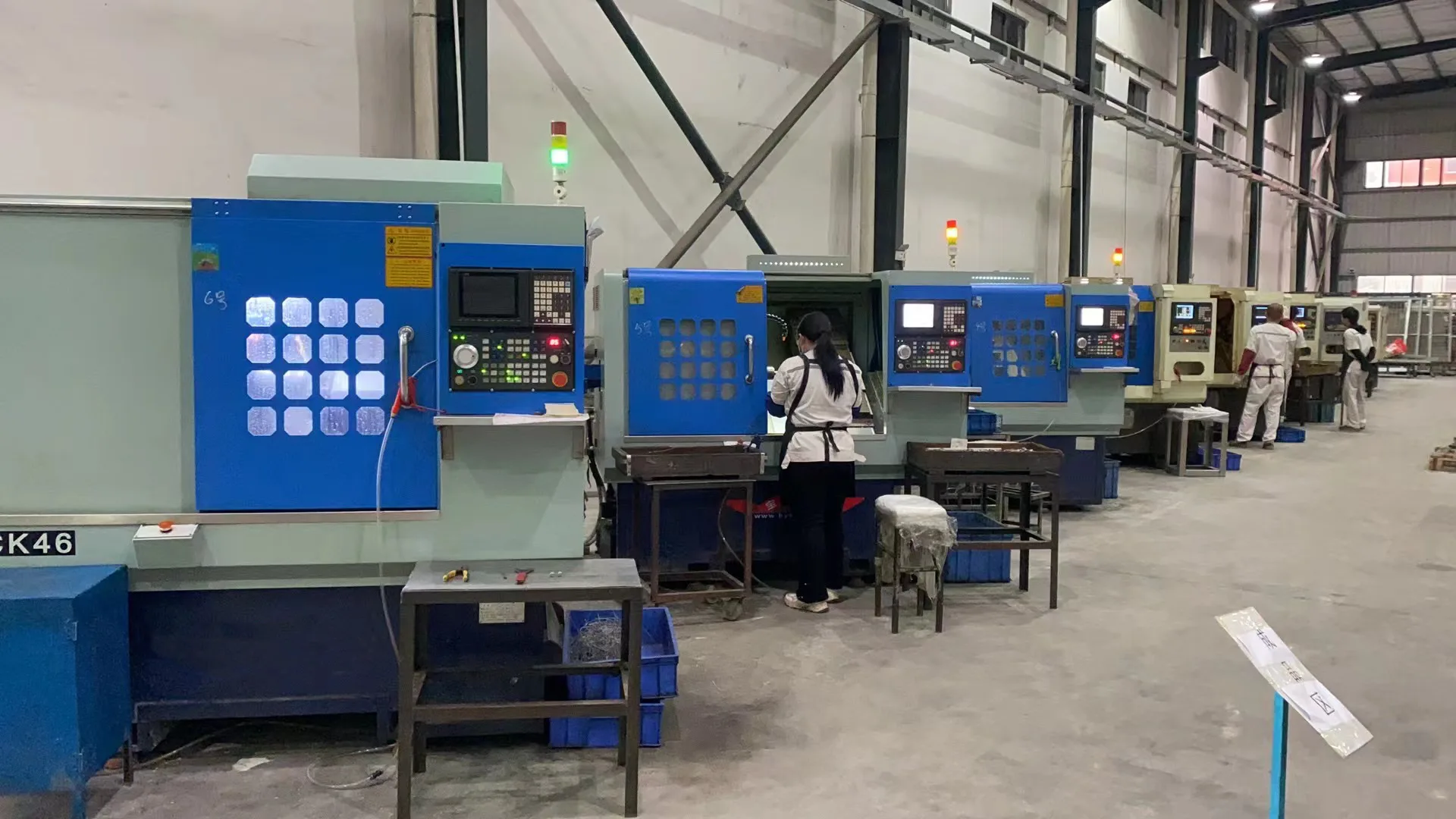 Hinge applications on machine guards, service doors, inspection covers, and operator panels
Start with the moving assembly.
Door weight, center of gravity, access frequency, vibration, and available mounting space shape the hinge recommendation.
Machine positions
Where Hinges Are Used on Industrial Machinery
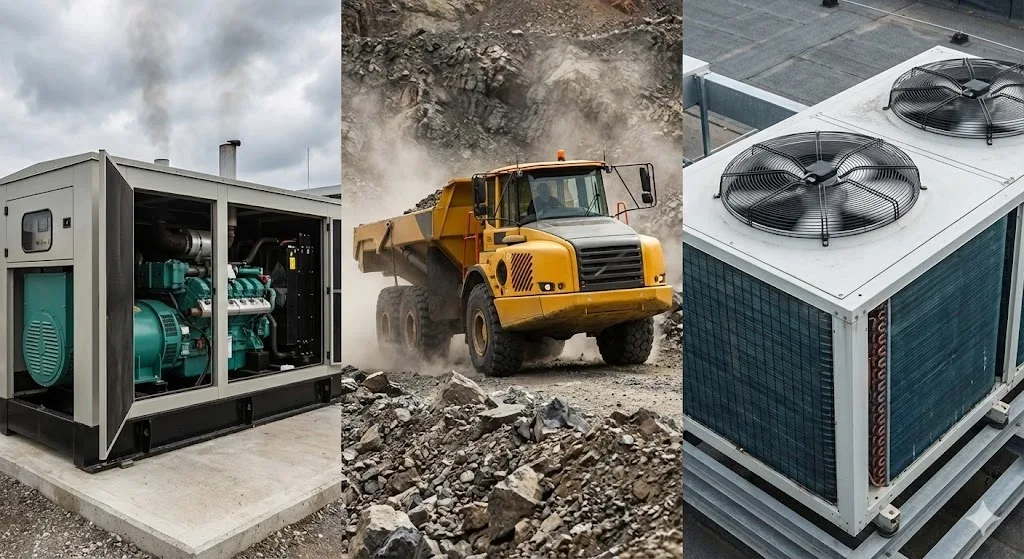
A machine may need several hinge structures on the same platform. Use the equipment position first, then refine the selection by load, motion control, service access, vibration, and environment.
01
Guard DoorHigh-frequency opening, vibration, interlock alignment, and large opening angles.
02Service DoorMaintenance clearance, removable panels, and faster access to internal parts.
03Inspection CoverPosition holding, one-hand operation, and controlled opening behavior.
04Operator DisplayAngle stability, cable routing, and repeated adjustment by operators.
05Welded Access DoorSteel frames, high load, impact, and direct welded load paths.
06Internal Control CabinetCompact clearance, concealed hardware, gasket location, and alignment.
Guard access
Machine Guard Door Hinge Requirements
Guard doors often combine repeated opening, vibration, door sag, interlock alignment, coolant, dust, chips, and wide access angles. The hinge structure should support the door without disturbing the safety interface or limiting operator access.
- High opening frequency
- Interlock position changes
- Door sag under vibration
- Coolant, dust, and chips
Typical structures: heavy-duty hinges, continuous hinge support, lift-off hinges, and stop hinges. For machine-type comparison, Match safety guard hinges by machine type.
Acceso para mantenimiento
Service Doors and Removable Maintenance Panels
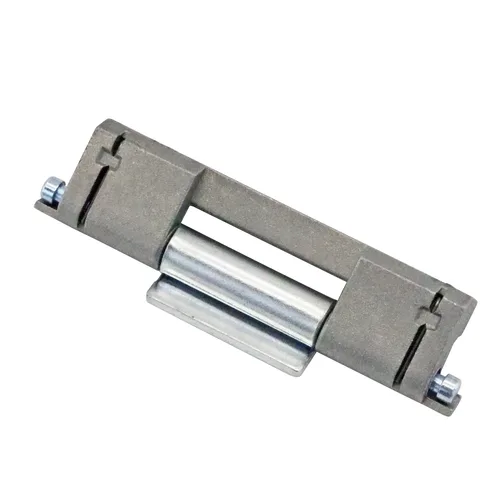
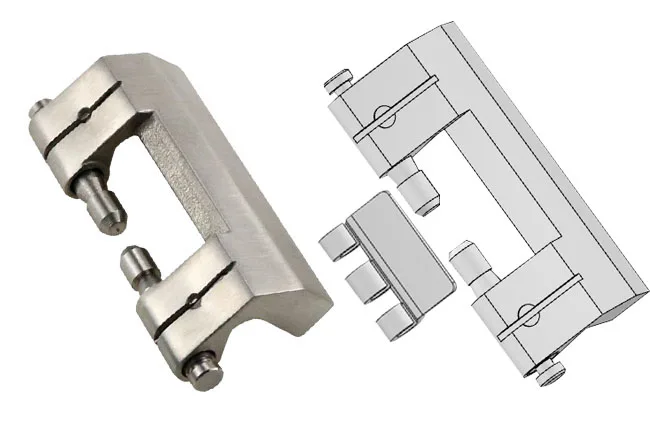
Service doors should not block the internal maintenance path. When fasteners take too long to remove, panels are too heavy, or tools and screws are easily lost, lift-off structures can simplify routine service.
- Door blocks the service area
- Fastener removal takes time
- Panel weight slows handling
- MTTR is extended
Typical structures: lift-off hinges, lift-off torque hinges, and removable access hinge structures. Select lift-off hinges for faster maintenance.
Controlled movement
Inspection Covers and Position-Controlled Lids
Top-opening covers and inspection lids may need to stop at a selected angle, avoid sudden drop, and remain easy to operate with one hand. A torque or stop hinge can remove the need for separate gas springs in some compact assemblies.
- Cover drops unexpectedly
- Limited opening space
- One-hand operation needed
- Holding force changes after use
Torque estimate input: provide panel weight, center-of-gravity distance, hinge quantity, and installation orientation. Estimate holding torque for the cover.
Operator interface
HMI Panels and Operator Display Positioning
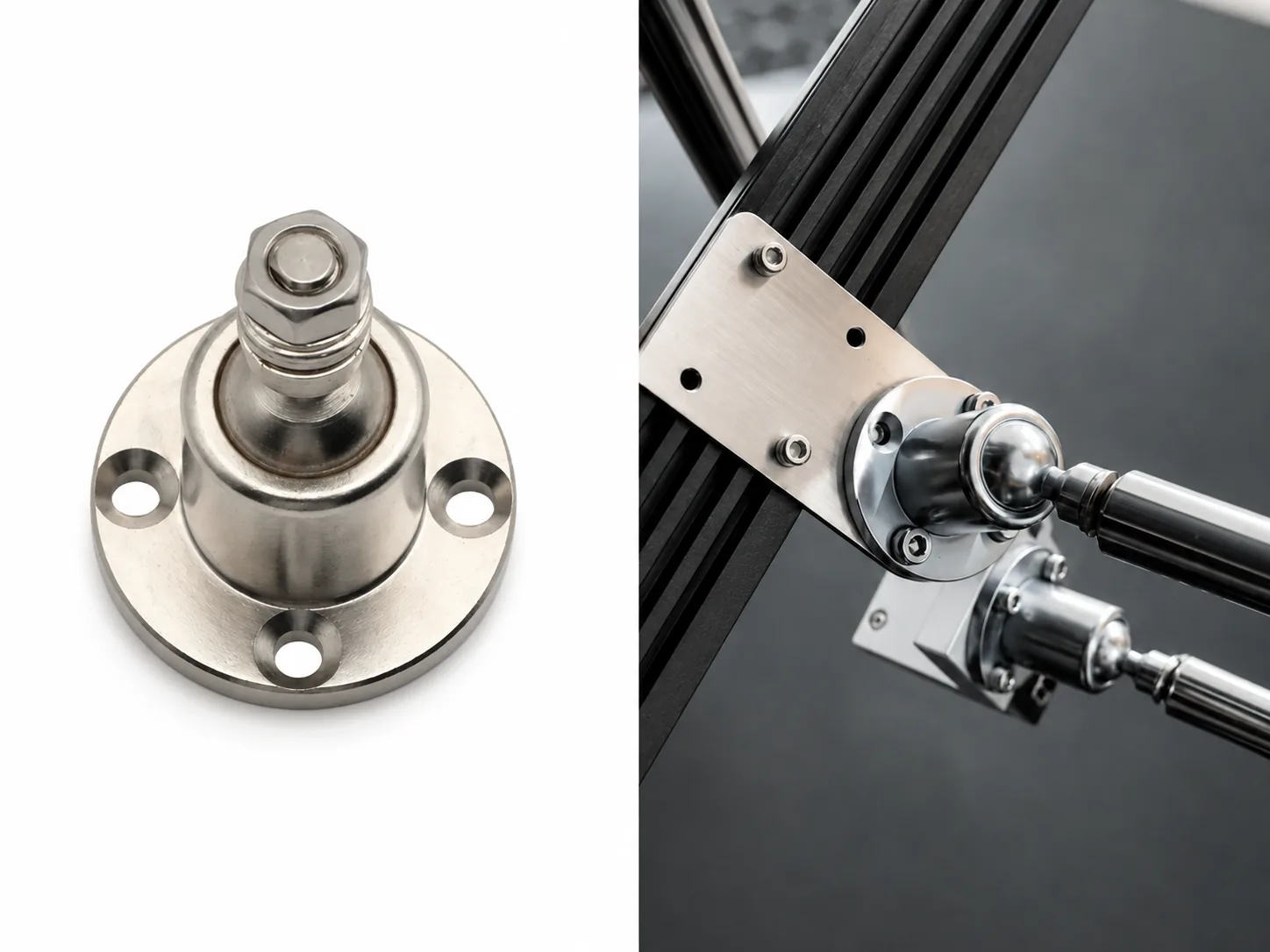
Operator displays need stable viewing angles while allowing frequent adjustment. The hinge must consider touch input force, cable routing, single-axis or multi-axis movement, and the available space around the operator station.
- Display angle drifts
- Touch input causes bounce
- Cable routing is constrained
- Operators need repeated adjustment
Typical structures: fixed torque, adjustable torque, cable-hole torque, and ball-joint torque hinges. Specify torque requirements for industrial displays.
Steel frames
Heavy Welded Doors and Steel Equipment Frames
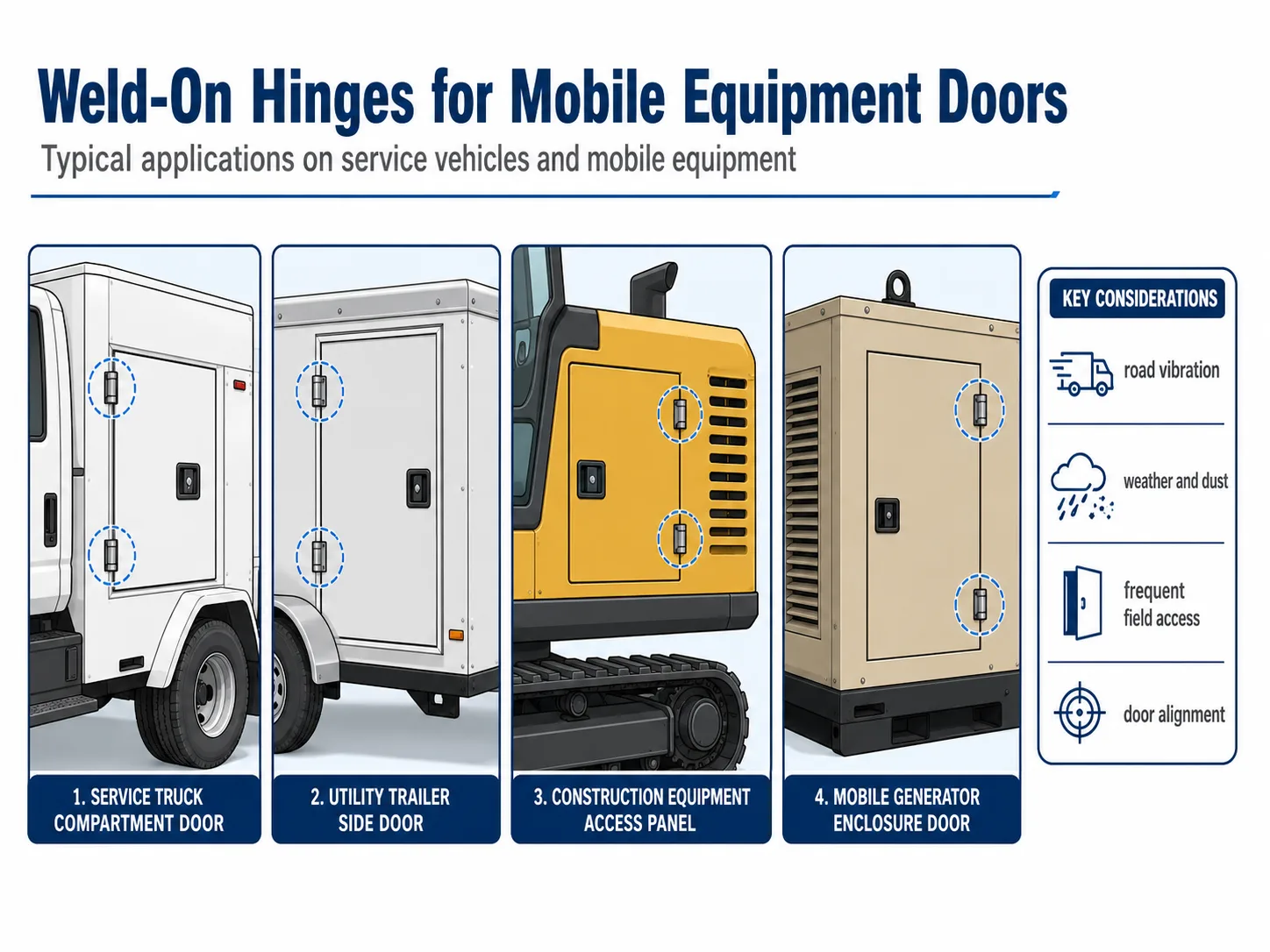
Heavy welded doors need a direct and stable load path into the frame. The design must account for vibration, impact, limited rear access for nuts, weld distortion, and hinge-axis alignment.
- Heavy steel doors
- Impact and vibration
- Limited bolt access
- Weld alignment concerns
Typical structures: weld-on hinges, bullet hinges, heavy-duty hinges, and reinforced mounting plates. Check weld-on hinge design limits.
Internal compartments
Internal Control Cabinets and Compact Electrical Compartments
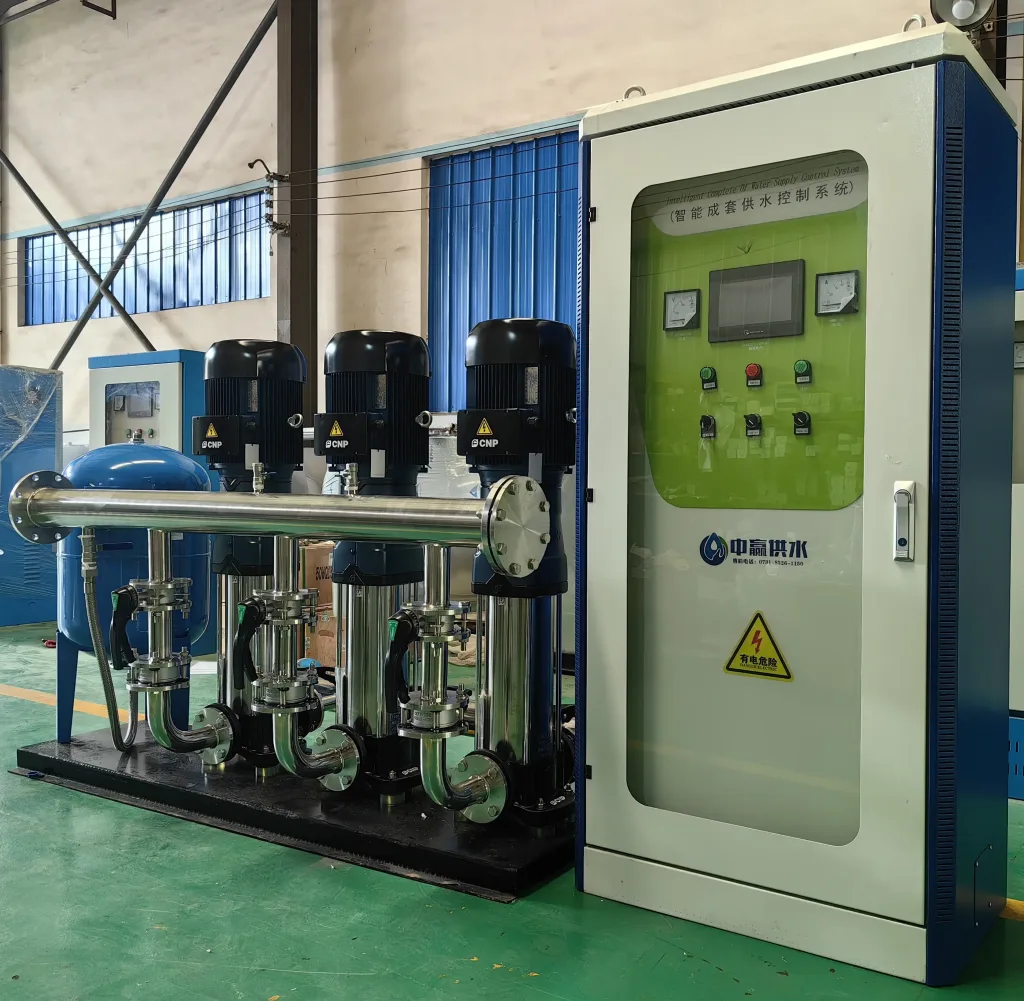
Internal control cabinets inside machinery often have tight clearance, wire bundles, grounding straps, gasket positions, and service paths. The hinge should support alignment without protruding into the work area.
- Limited internal space
- Hardware must be concealed
- Door alignment matters
- Wire and gasket clearance
Typical structures: concealed hinges, compact heavy-duty hinges, and lift-off hinges. Open electrical enclosure hinge requirements.
Engineering requirements
Choose a Hinge by Engineering Requirement
If the machine area is clear but the product family is not, start with the behavior the moving assembly must provide.
Hold a Cover at Any Angle
For lids, covers, or displays that drift or drop when released.
Structure: fixed or adjustable torque hingesSupport a Heavy Guard Door
For long or heavy panels where sag affects interlock and access.
Structure: heavy-duty or continuous supportRemove a Panel Without Tools
For maintenance panels that must clear the service path quickly.
Structure: lift-off hingesHide Hardware Inside the Machine
For compact equipment, clean exterior surfaces, or tamper reduction.
Structure: concealed hingesWeld Directly to a Steel Frame
For load paths that should be fixed to a fabricated steel structure.
Structure: weld-on or bullet hingesMaintain Alignment Under Vibration
For moving doors exposed to repeated motion, impact, or machine vibration.
Structure: heavy-duty hinges with reinforced mountingProduct families
Hinge Families for Machinery and Automation Equipment
These product families cover the most common machine positions. The final recommendation depends on the full assembly and should be checked on the actual equipment.
Bisagras de torsión
Hold covers, HMI panels, and inspection lids at selected angles.
Typical machine position: inspection covers and operator displays.
View torque hinge categoryBisagras de alta resistencia
Support machine guards, large access doors, and vibration-prone panels.
Typical machine position: guard doors and heavy service doors.
View heavy-duty hinge categoryBisagras «Lift-Off»
Remove maintenance panels or doors without disassembling fasteners.
Typical machine position: removable service panels.
View lift-off hinge categoryBisagras soldadas
Connect heavy steel doors directly to fabricated equipment frames.
Typical machine position: welded steel equipment doors.
View weld-on hinge categoryBisagras ocultas
Keep hardware inside compact cabinets or machine enclosures.
Typical machine position: internal control cabinets.
View concealed hinge categoryOEM review
How We Review and Validate a Machinery Hinge Application
The review starts from the moving assembly, not a catalog part number. The same process connects the drawing inputs, machine interface, hinge family, and final sample validation.
Definir el conjunto móvil
Confirm size, weight, center of gravity, opening direction, and required angle.
Review the Machine Interface
Check frame stiffness, mounting space, rotation clearance, interlock location, cable route, and gasket interference.
Adapta la estructura de la bisagra
Decide whether torque, heavy-duty, lift-off, concealed, or weld-on structure fits the application.
Validar el ensamblaje real
Review mounting fit, door alignment, opening behavior, position holding, and maintenance access.
Drawing Review
Door size, hole spacing, mounting face, and hinge-axis clearance are checked before sample selection.
Sample Fit Check
Sample review confirms installation direction, alignment, rotation, and service access on the assembly.
Machine Interface Review
Interlock, gasket, cable, frame stiffness, and vibration exposure are reviewed as system inputs.
Validation Boundary: Final hinge performance depends on the complete door, frame, fastener, interlock, gasket, and operating environment. The hinge recommendation should be validated on the actual machine assembly before production approval.
Related resources
Engineering Guides for Machinery Hinge Selection
Use these guides when the application requires deeper comparison. This page keeps the scope at the equipment-position level.
01
Door Sag and Frame Reinforcement
Use this reference when a long guard door, welded frame, or heavy access panel needs better load support.
Size mounting plates and frame reinforcement02
Lift-Off vs Fixed Hinges
Compare removable and fixed hinge layouts when maintenance access, alignment, and safety handling must be balanced.
Choose lift-off or fixed hinge layoutsCompact resource list
Confirm mounting hole patterns before ordering
Use this before locking a drawing or sample request.
Size continuous support for long doors
Useful for large access doors and long guard panels.
Select material and finish for the operating environment
Useful when coolant, moisture, dust, or chemicals are present.
RFQ requirements
What to Send for an Industrial Machinery Hinge Review
- Machine type
- Door, cover, or panel dimensions
- Peso
- Distancia al centro de gravedad
- Instrucciones de apertura
- Ángulo de apertura
- Número de bisagras
- Espacio de montaje
- Material y grosor del marco
- Vibration or impact exposure
- Coolant, dust, moisture, or chemical exposure
- Vida útil prevista
- Cantidad anual
- Drawing or equipment photo
Start with the moving assembly
Submit the details you already have.
You do not need to know the hinge model before contacting us. Send the machine type, moving-panel dimensions, weight, mounting space, operating conditions, and an available drawing or photo.
You can send drawings or application photos by email after submitting the form.
Envía el plano de tu equipo Español
  English
  한국어
한국어  Русский
  Italiano
  Deutsch
  Français
  Português