

Soluções para caixas elétricas
Soluções de dobradiças para caixas elétricas e armários de controlo
Adapte as estruturas das dobradiças à carga da porta, ao alinhamento das juntas, ao acesso para manutenção, ao espaço livre interno, à geometria de montagem e ao ambiente de funcionamento. Analise o conjunto completo da porta e da moldura antes de escolher uma dobradiça padrão ou personalizada.
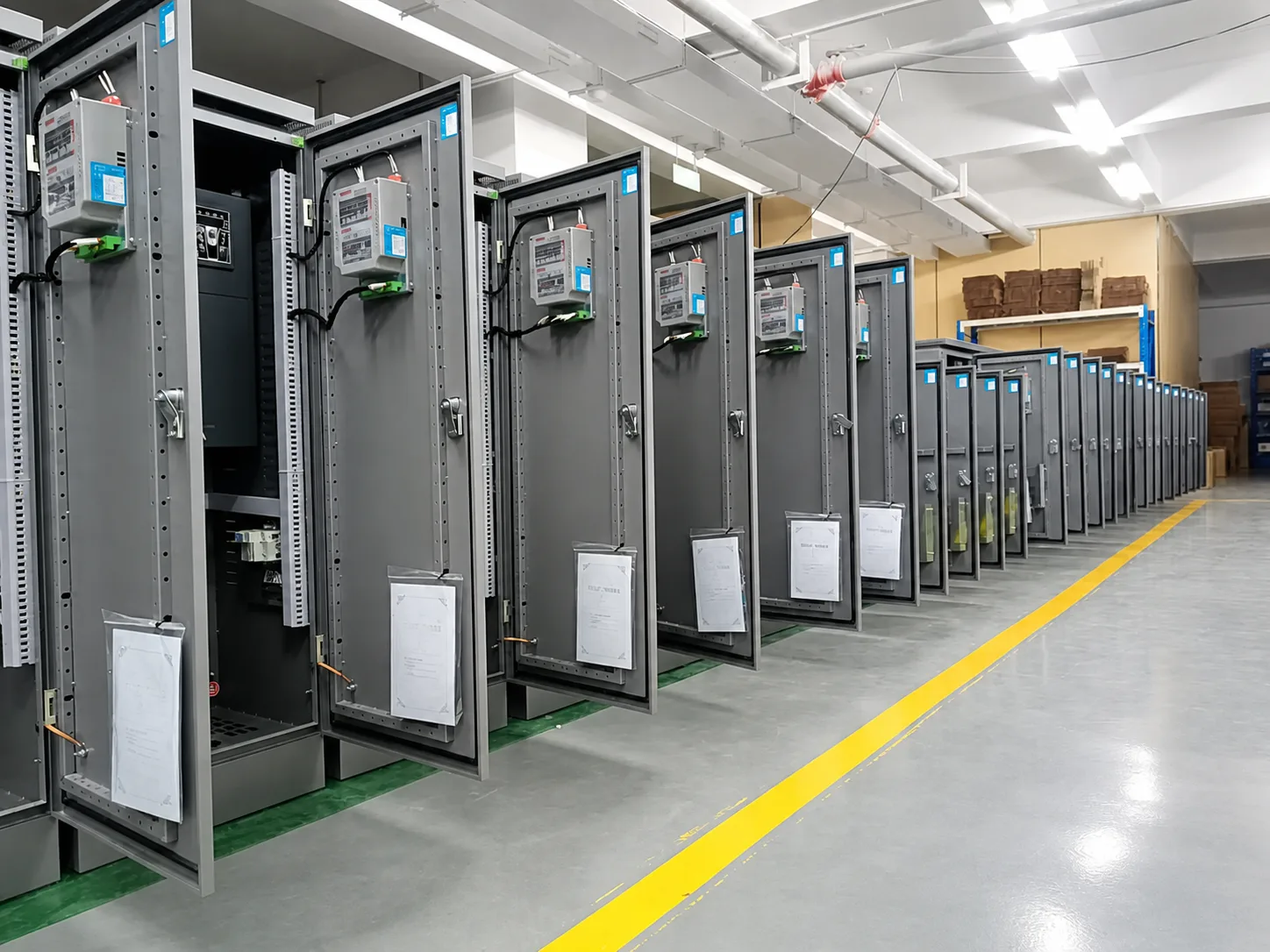
Inspecione a porta como um conjunto.
O peso da porta, a rigidez da moldura, a posição do trinco, a ligação à terra e a folga interna são fatores que influenciam a recomendação relativa às dobradiças.
Mapa do sistema
Como a dobradiça influencia o desempenho do invólucro
A dobradiça é apenas uma das componentes do sistema da porta do invólucro. O seu eixo, a superfície de montagem, a rigidez e a folga influenciam a estanqueidade, o acesso para manutenção, a ligação à terra e o encaixe do trinco.
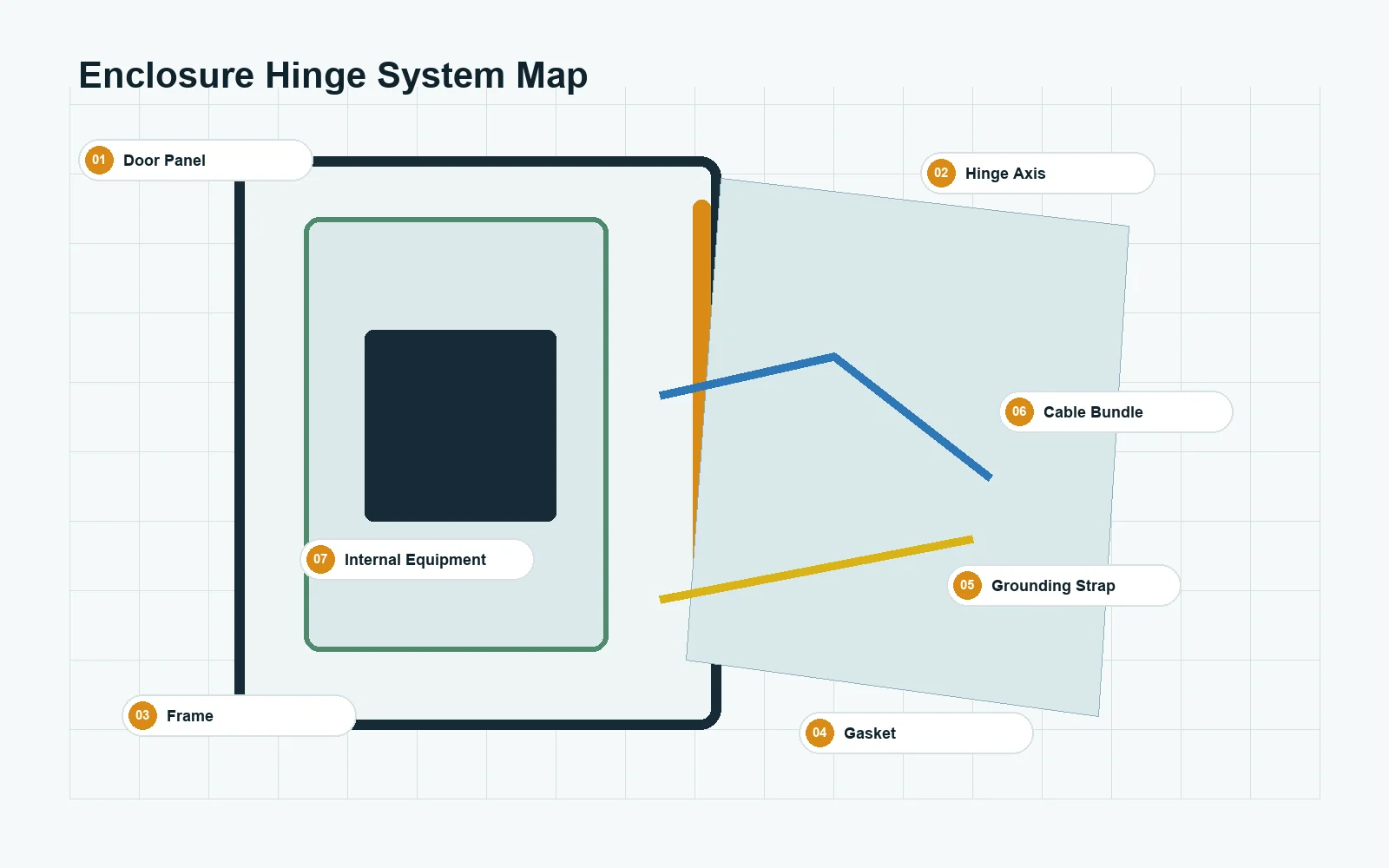
01
02
03
04
05
Alinhamento da porta
O espaçamento entre as dobradiças, a altura da porta e a rigidez do caixilho determinam se o lado do trinco permanece nivelado.
Compressão da junta
O eixo da dobradiça influencia a forma como a porta se aproxima da junta e o grau de uniformidade com que esta é comprimida.
Distância de segurança em relação ao solo
As fitas de ligação à terra e os feixes de cabos necessitam de um percurso de rotação que não provoque atrito nem comprima os cabos.
Acesso para manutenção
As estruturas amovíveis ou fixas devem ser adequadas à frequência de utilização, ao peso da porta e ao acesso ao local.
Método de montagem
As dobradiças ocultas, externas e soldadas têm características diferentes em termos de espaço, resistência e lógica de substituição.
Escolha uma dobradiça de acordo com o tipo de porta do compartimento
Comece por analisar a estrutura da porta antes de escolher uma gama de produtos. Uma porta pequena de um compartimento interior e uma porta alta de um armário exterior não apresentam os mesmos riscos em termos de alinhamento, vedação ou manutenção.
Porta simples padrão
Risco principal: Alinhamento do lado da trava e compressão irregular da junta.
Estruturas típicas: Dobradiça externa ou oculta.
Porta comprida ou alta
Risco principal: Afundamento da porta causado pela altura, pelo peso e pelo espaçamento entre as dobradiças.
Estruturas típicas: Suporte para cargas pesadas ou contínuo.
Porta para equipamento pesado
Risco principal: Deformação local em torno das placas de fixação e dos elementos de fixação.
Estruturas típicas: Dobradiça para uso intensivo ou para soldar.
Porta de serviço amovível
Risco principal: Percurso de remoção, fita de ligação à terra e alinhamento para a reinstalação.
Estruturas típicas: Estrutura de dobradiça de elevação.
Caixa com duas portas
Risco principal: Folhas ativas e inativas que se fecham em planos diferentes.
Estruturas típicas: Eixo da dobradiça alinhado em ambas as folhas.
Porta do compartimento interno
Risco principal: Interferência com o equipamento interno e o traçado dos cabos.
Estruturas típicas: Dobradiça oculta ou de torque.
Novo projeto ou remodelação?
Novo design da caixa
Comece por analisar as dimensões da porta, a rigidez da moldura, a posição da junta, o eixo da dobradiça, a geometria do trinco e a folga interna.
Modernização ou substituição
Alinhe os orifícios de montagem existentes, o recorte, o eixo da dobradiça, a folga da porta, a folga de abertura e o acabamento da superfície.
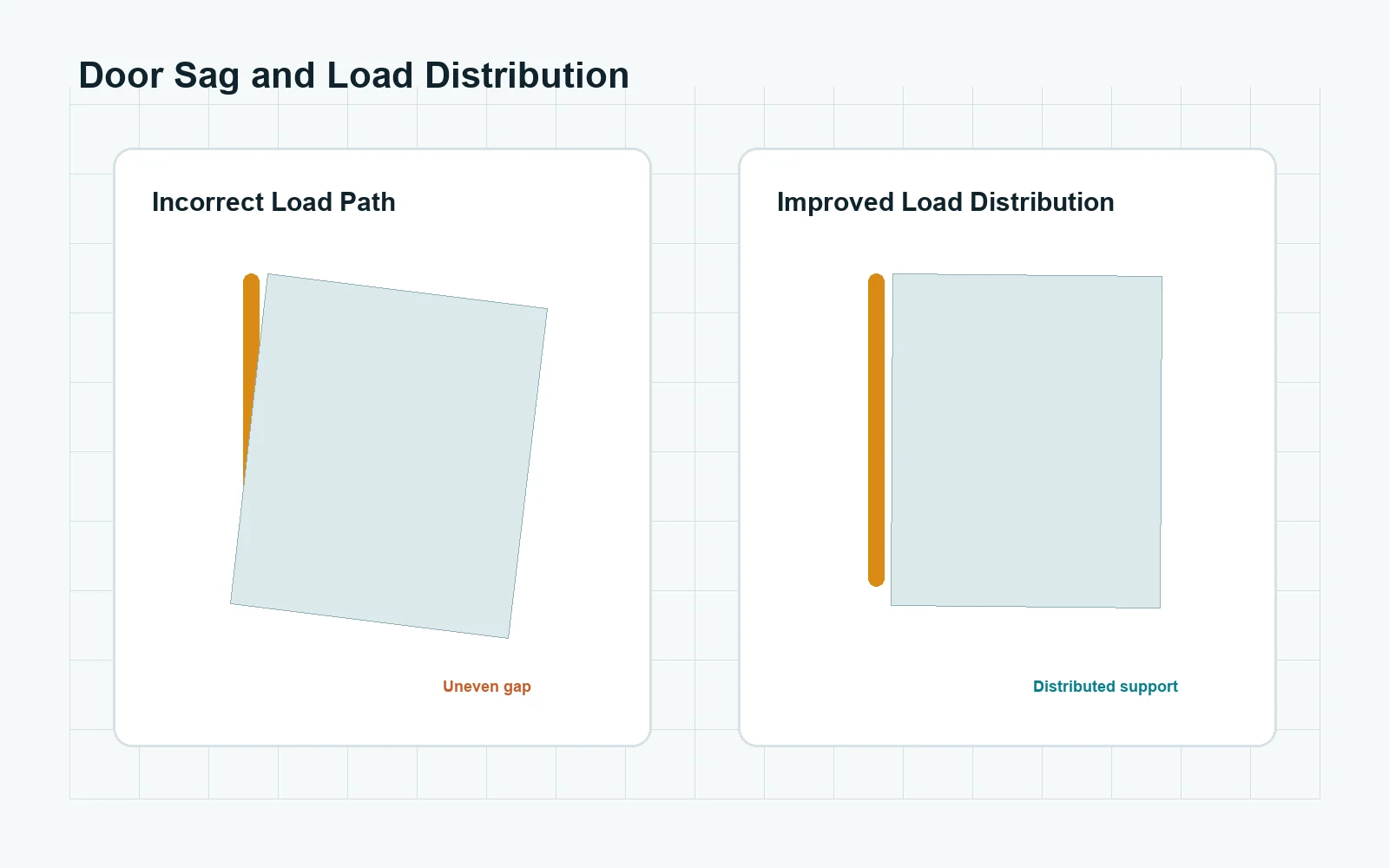
Planear os requisitos relativos às dobradiças de adaptaçãoDeformação da porta e distribuição da carga
O peso da porta não é o único parâmetro. A altura da porta, a distância até ao centro de gravidade, o espaçamento entre as dobradiças e a rigidez da placa de fixação aumentam o momento aplicado ao lado da dobradiça.
- Um espaçamento insuficiente entre as dobradiças pode acelerar a inclinação do lado do trinco.
- As zonas de fixação em chapa fina podem deformar-se localmente antes de a própria dobradiça falhar.
- A folga altera o contacto da junta e o encaixe do trinco nas portas altas dos armários.
Compressão da junta e alinhamento da porta
Uma dobradiça, por si só, não pode garantir o cumprimento das normas IP ou NEMA. É o conjunto completo do invólucro que determina o resultado final da vedação, incluindo o revestimento da porta, a flange da moldura, a junta, a força de fecho e o eixo da dobradiça.
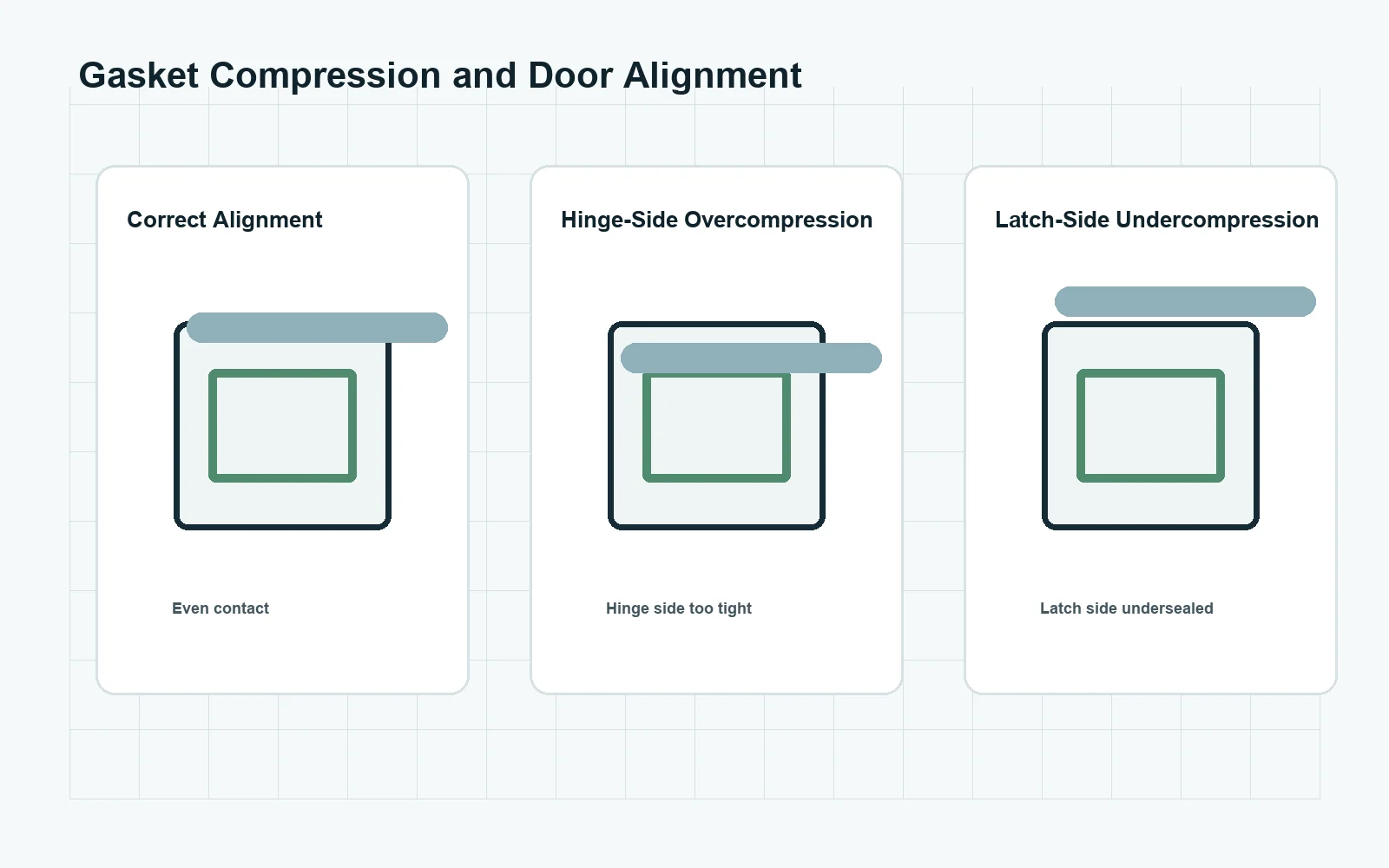
Alinhamento corretoA superfície da porta e a aba da moldura encontram-se com a junta no mesmo plano de referência.
Sobrecarga do lado da articulaçãoO eixo da dobradiça ou a face de montagem podem pressionar um dos lados com demasiada força contra a vedação.
Subcompressão do lado da travaA flacidez ou um mau alinhamento podem reduzir a pressão de contacto no lado de fecho.
No caso de armários com duas portas, analise em conjunto as folhas ativa e inativa. A consistência do eixo das dobradiças, a sobreposição central, o encaixe do trinco e a compressão da junta central podem influenciar o facto de ambas as portas fecharem no mesmo plano de referência.
Ligação à terra, cabos e espaço livre interno
As fitas de ligação à terra, os feixes de fios, os blocos de terminais, as placas de montagem e o equipamento interno devem permanecer fora da trajetória de movimento da porta e das folhas das dobradiças. A dobradiça não deve ser considerada como a única via de ligação de proteção, a menos que o conjunto completo do invólucro tenha sido especificamente concebido e validado para esse fim.
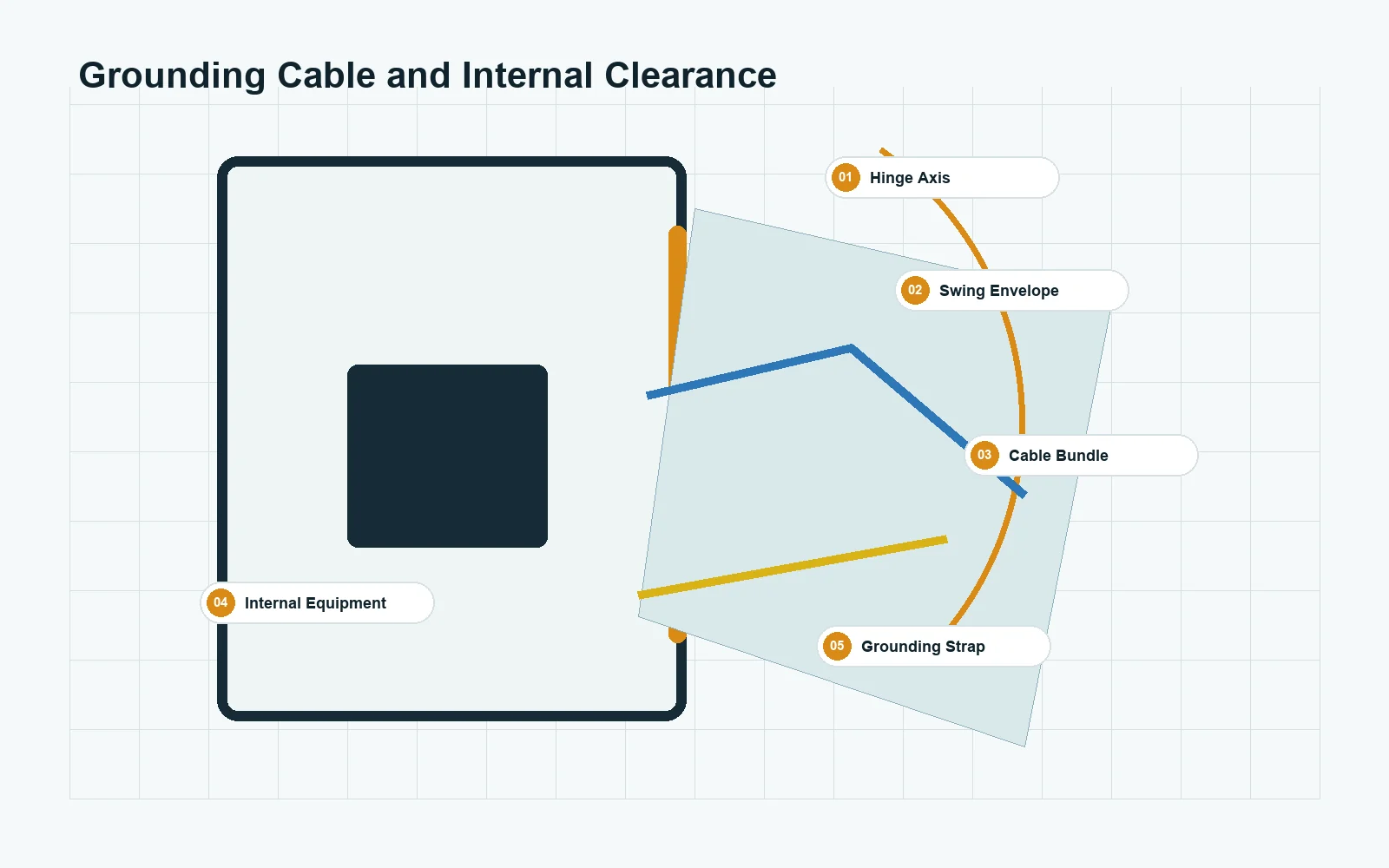
Fita de ligação à terraVerifique a folga e o alinhamento depois de a porta atingir o seu ângulo máximo de abertura.
Conjunto de cabosEvite o atrito na zona da dobradiça, especialmente em portas com ecrãs internos.
Equipamento internoVerifique os relés, os blocos de terminais, as placas de montagem e as tampas nas proximidades da trajetória de oscilação.
Portas amovíveis e acesso para manutenção
As dobradiças amovíveis podem facilitar o acesso para manutenção em locais estreitos, mas o processo completo de remoção deve incluir o peso da porta, o manuseamento da fita de ligação à terra, a cablagem e o alinhamento na reinstalação.
Porta Aberta
Verifique se a porta consegue atingir o ângulo de serviço necessário.
Correia de desconexão
Efetue a ligação à terra ou a ligação elétrica apenas quando o projeto assim o exigir.
Porta do elevador
Verifique se o manuseamento é seguro e se existe espaço livre acima dos pinos das dobradiças.
Equipamento de acesso
Mantenha o espaço de trabalho desimpedido, sem danificar a vedação.
Montagem oculta, externa e por soldadura
O método de montagem influencia a resistência, o acesso para substituição, a saliência externa, o espaço interno, a exposição à corrosão e a forma como a força é transmitida à moldura da porta.
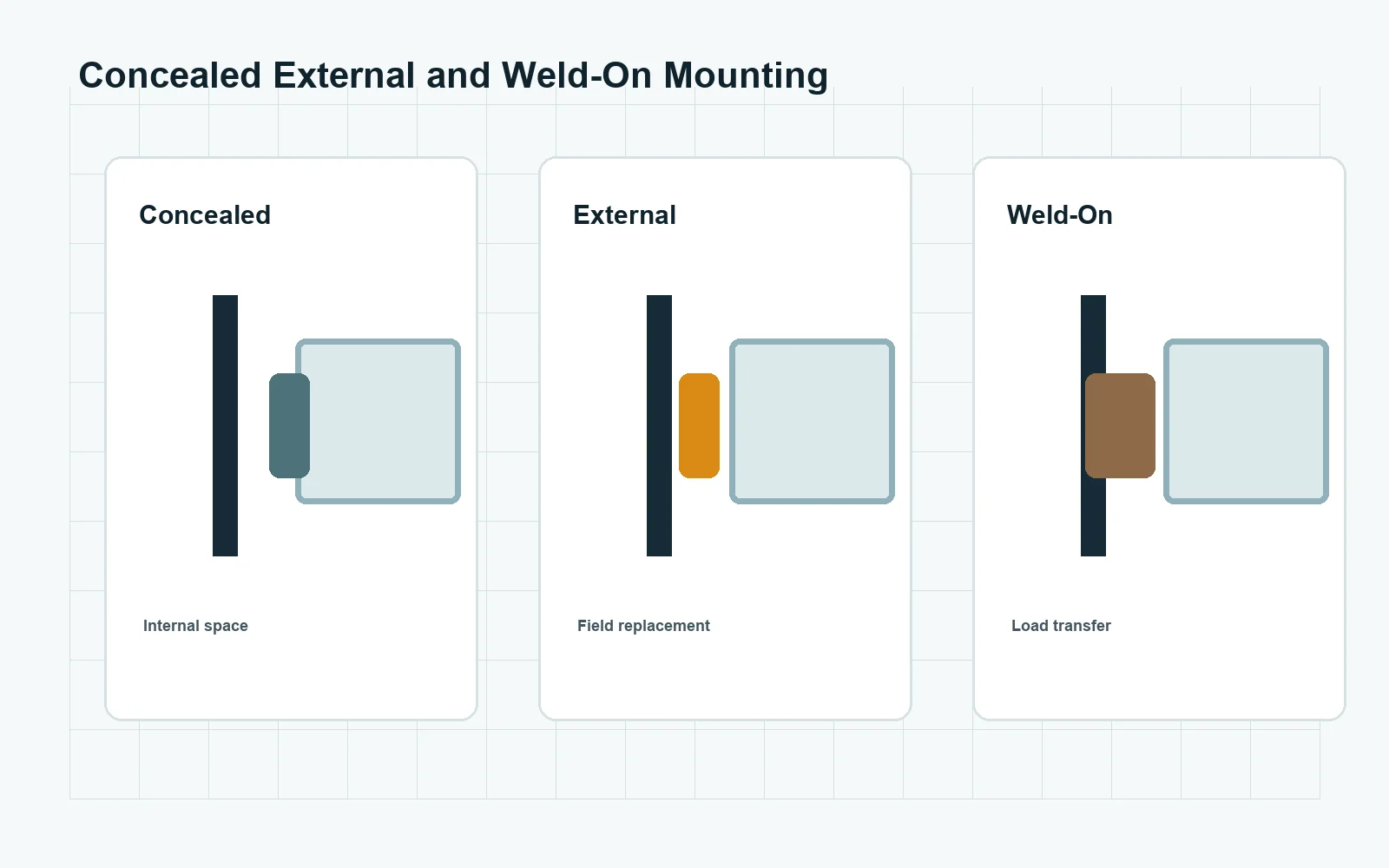
Oculto
Útil quando não é necessário que o cilindro fique visível no exterior. Verifique o espaço interno, o ângulo de abertura e o acesso para manutenção.
Externo
Eficaz para armários padrão e substituição no local. Verifique a saliência, a exposição à corrosão e o risco de vandalismo.
Soldadura
Adequado para portas pesadas de aço. Permite controlar a deformação causada pela soldadura, a coaxialidade das dobradiças e a recuperação do acabamento da superfície.
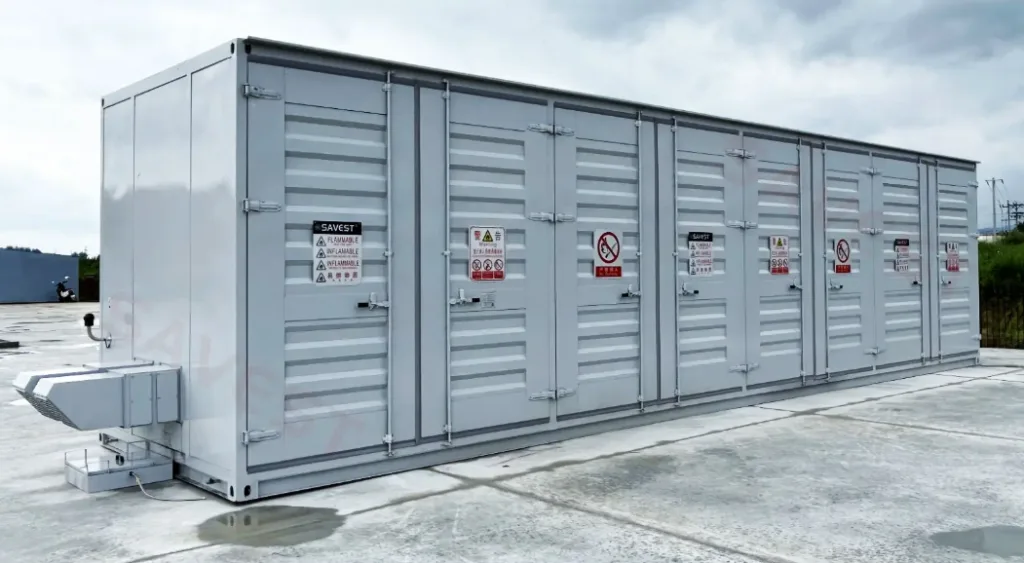
Ambiente operacional
Ambientes exteriores e corrosivos
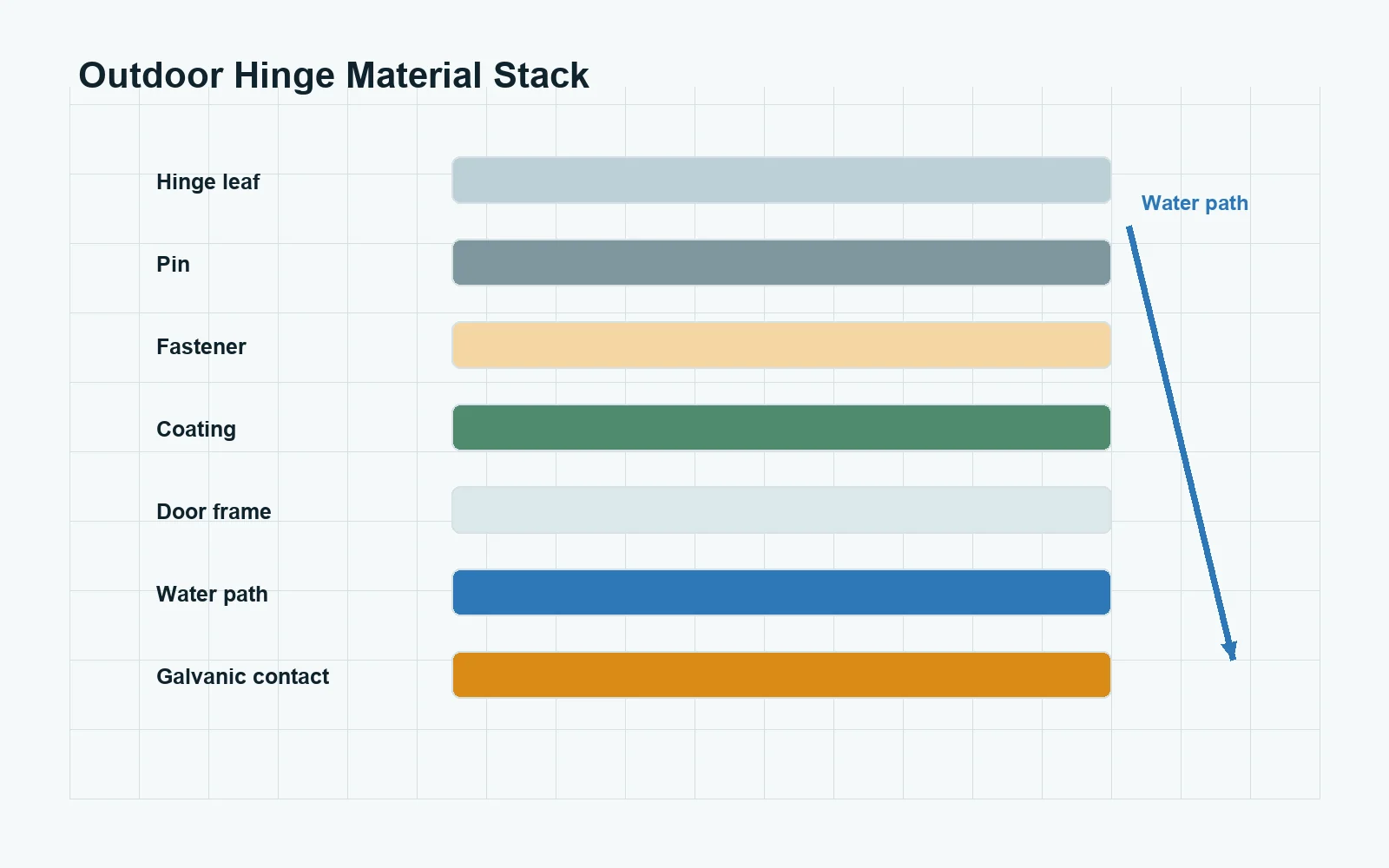
A escolha do material não pode basear-se apenas na folha da dobradiça. O material dos pinos, os elementos de fixação, os danos no revestimento, o contacto galvânico, a condensação, o percurso de drenagem e a exposição no local são fatores que afetam a durabilidade em condições reais de utilização.
Famílias de dobradiças para caixas elétricas
Comece por analisar a estrutura da porta e, em seguida, verifique as dimensões, o espaço de montagem, o acabamento e a quantidade necessária para o projeto antes de escolher um modelo de dobradiça.
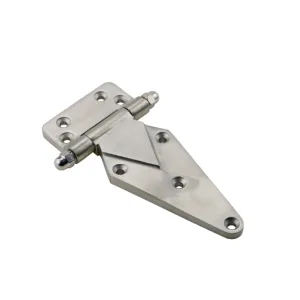
Dobradiças para uso intensivo
Melhor ajuste: Portas do compartimento principal altas ou pesadas.
A ter em atenção: Flange de montagem finas, reforço insuficiente e distância excessiva do centro de gravidade.
Explorar dobradiças para caixas de proteção de alta resistência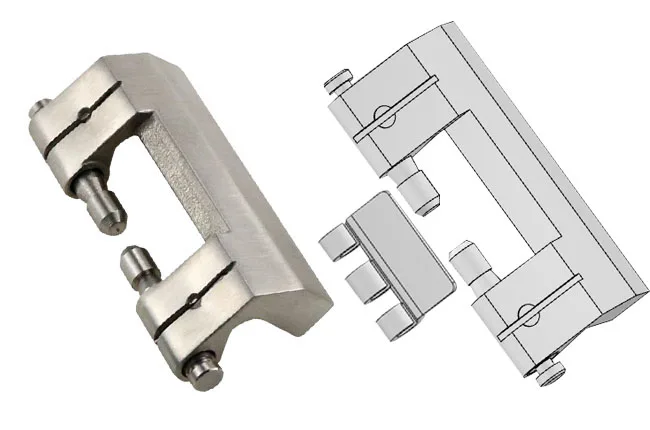
Dobradiças ocultas
Melhor ajuste: Superfícies exteriores limpas e saliências externas reduzidas.
A ter em atenção: Espaço livre interno, ângulo de abertura limitado e acesso aos elementos de fixação.
Descubra as dobradiças ocultas para armários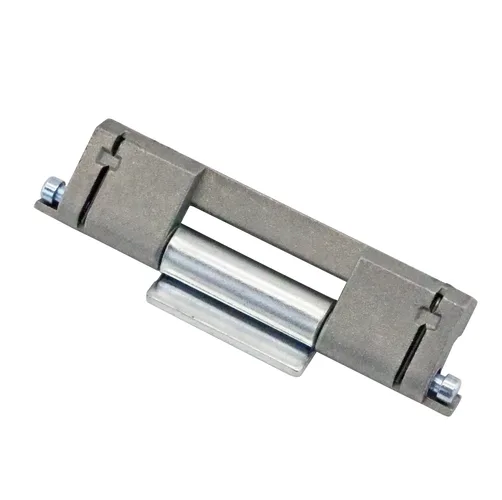
Dobradiças Lift-Off
Melhor ajuste: Portas de serviço que têm de ser removidas durante a manutenção.
A ter em atenção: Peso de manuseamento da porta, altura livre de elevação, cintas de ligação à terra e alinhamento na reinstalação.
Descubra as dobradiças removíveis para portas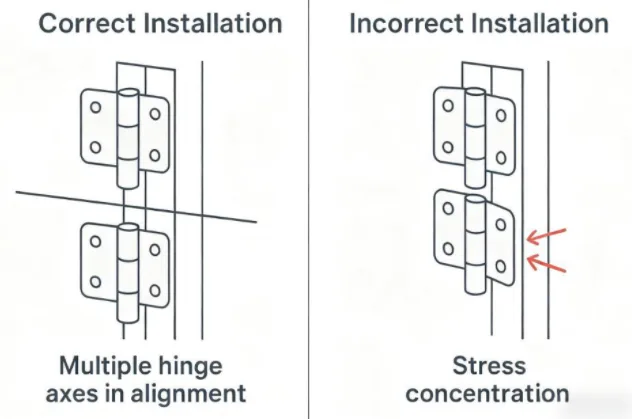
Estruturas com dobradiças contínuas
Melhor ajuste: Portas compridas que requerem um apoio distribuído ao longo do lado das dobradiças.
A ter em atenção: Retidão da estrutura, tolerância de instalação, exposição à corrosão e método de substituição.
Suporte contínuo para portas compridas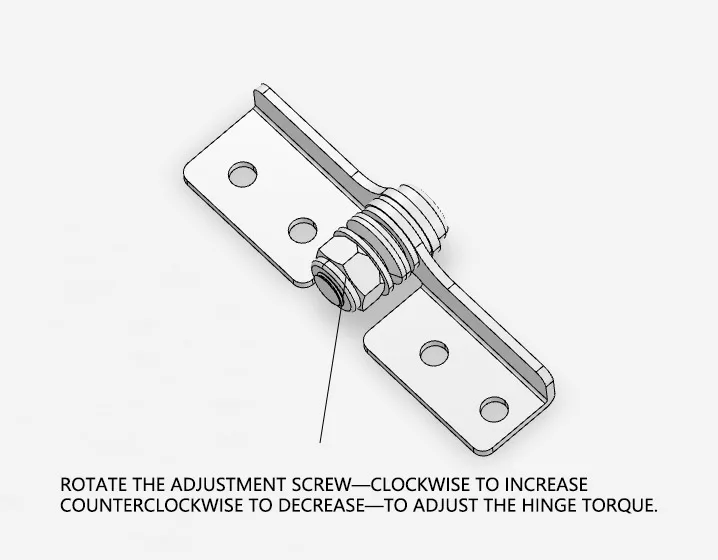
Dobradiças com controlo de binário ou de posição
Melhor ajuste: Painéis HMI, tampas leves e painéis de acesso internos ajustáveis.
A ter em atenção: Peso do painel, distância até ao centro de gravidade, orientação e ângulo de fixação necessário.
Descubra as dobradiças com controlo de posiçãoAnálise do OEM
Como avaliamos um conjunto de porta de invólucro
A recomendação parte do conjunto da porta, e não do número do modelo. A análise dos desenhos, as verificações de ajuste e a análise do alinhamento ajudam a reduzir erros de seleção que poderiam ser evitados.
Definir a porta
- Altura e largura
- Peso e centro de gravidade
- Espessura do material
- Ângulo de abertura
Verifique a moldura e a vedação
- Rigidez do quadro
- Flange de montagem
- Posição da junta
- Lado da trava
Verificar as interfaces internas
- Fita de ligação à terra
- Trajeto dos cabos
- Equipamento interno
- Folga de rotação
Validar a montagem
- Ajuste de montagem
- Alinhamento da porta
- Contacto da junta
- Comportamento de abertura
Limite de validação
O desempenho final da dobradiça depende da porta completa, da moldura, dos elementos de fixação, da junta, do trinco, do sistema de ligação à terra e do ambiente de funcionamento. O desempenho em termos de IP, NEMA, resistência à corrosão e ciclo de vida deve ser validado no conjunto completo do invólucro antes da aprovação para produção.
Recursos de engenharia para a conceção de portas de caixas de equipamento
Utilize estes guias de engenharia para verificar os detalhes relativos à montagem, vedação, adaptação, corrosão e aprovação de amostras antes de finalizar o projeto da porta do invólucro.
Guia sobre dobradiças para caixas industriais
Utilizar em estruturas de dobradiças mais amplas e em contextos de aplicação de caixas de proteção.
Abra a guia da dobradiça do invólucroAs melhores dobradiças para quadros elétricos
Utilizar para uma comparação específica das estruturas de dobradiças para aplicações em painéis.
Selecionar tipos de dobradiças para quadros elétricosReforma das dobradiças de um armário exterior
Utilizar quando for necessário substituir as dobradiças ou corrigir o alinhamento de uma porta de armário exterior já existente.
Planear uma remodelação de dobradiças para exteriorRequisitos do Pedido de Cotação
O que enviar para uma avaliação de dobradiças de caixas elétricas
Envie o conjunto completo da porta para que a dobradiça possa ser analisada em termos de carga, vedação, folga, instalação e ambiente de funcionamento.
Porta
- Altura e largura da porta
- Peso da porta
- Material e espessura
- Distância do centro de gravidade
- Sentido e ângulo de abertura
Estrutura e montagem
- Quantidade de dobradiças
- Espaço de montagem
- Estrutura em quadro ou com flange
- Tipo de fecho
- Detalhes do reforço
Vedação e interfaces internas
- Localização da junta
- Disposição da fita de ligação à terra
- Trajeto dos cabos
- Espaço livre para o equipamento no interior
Ambiente e Projeto
- Utilização em interiores ou no exterior
- Exposição à humidade, ao sal, a substâncias químicas ou à temperatura
- Vida útil prevista
- Quantidade anual
- Desenho ou fotografia do recinto
 Português
  English
  한국어
한국어  Русский
  Español
  Italiano
  Deutsch
  Français