

Solutions d'armoires électriques
Solutions de charnières pour armoires électriques et armoires de commande
Adaptez les structures de charnières à la charge de la porte, à l'alignement des joints, à l'accès pour l'entretien, au dégagement interne, à la géométrie de montage et à l'environnement d'utilisation. Examinez l'ensemble complet de la porte et du cadre avant de choisir une charnière standard ou sur mesure.
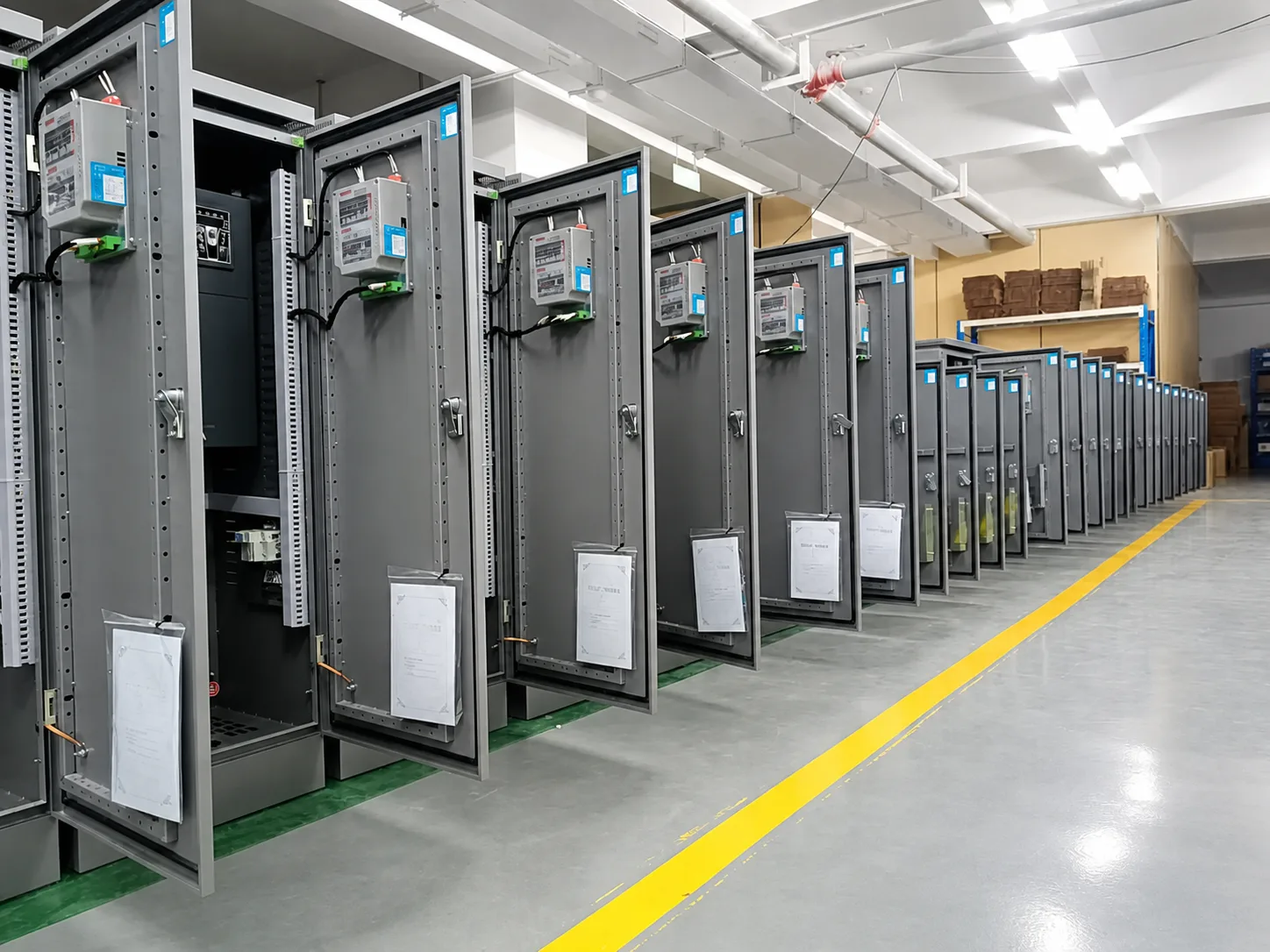
Vérifiez la porte dans son ensemble.
Le poids de la porte, la rigidité du cadre, la position du loquet, la mise à la terre et l'espace libre interne sont autant de facteurs qui influencent le choix de la charnière.
Plan du système
L'influence de la charnière sur les performances de l'enceinte
La charnière ne constitue qu'un élément parmi d'autres du système de porte de l'armoire. Son axe, sa face de fixation, sa rigidité et son jeu ont une incidence sur l'étanchéité, l'accès pour l'entretien, la mise à la terre et l'enclenchement du loquet.
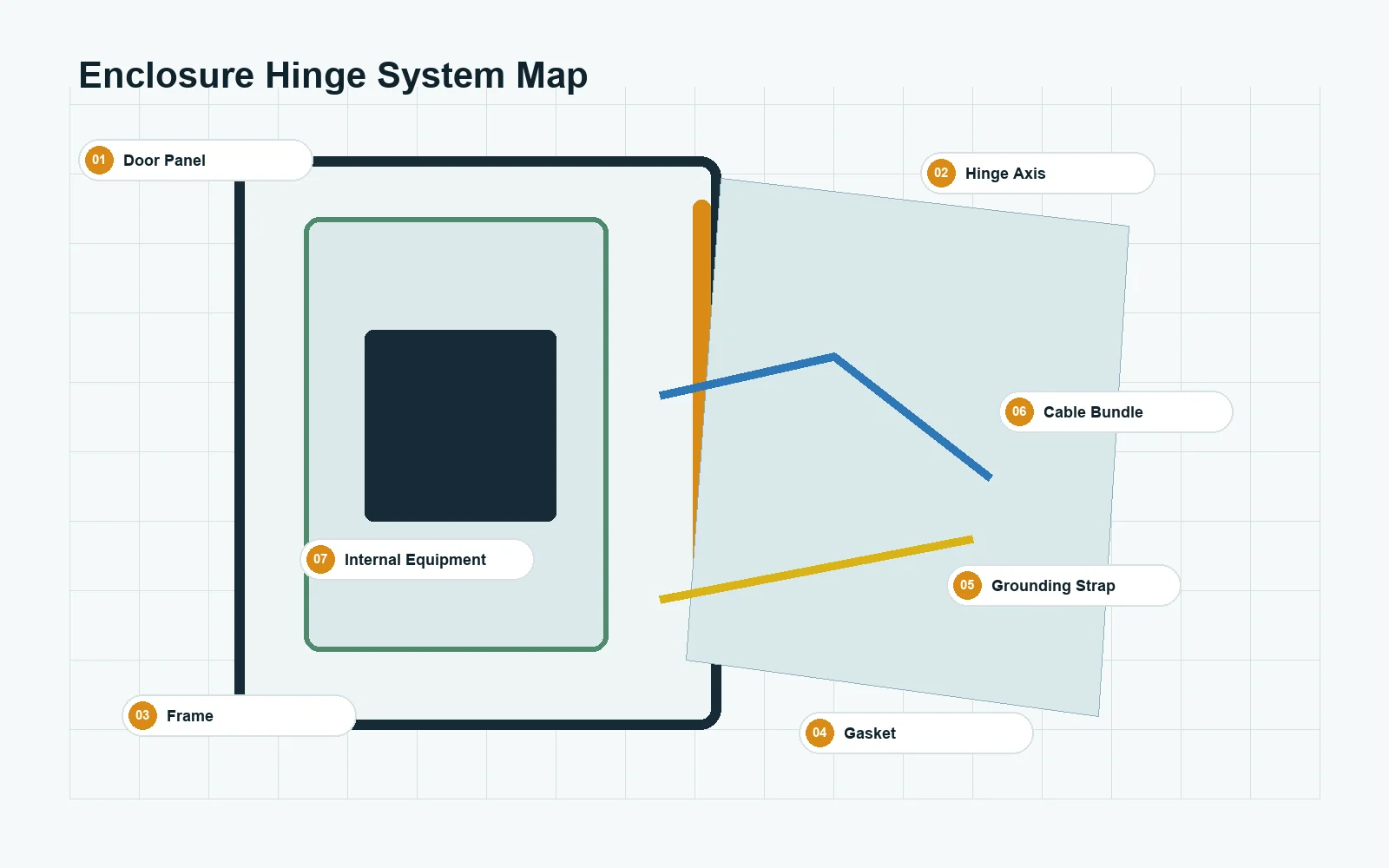
01
02
03
04
05
Alignement des portes
L'espacement des charnières, la hauteur de la porte et la rigidité du cadre déterminent si le côté du loquet reste à niveau.
Compression du joint
L'axe de la charnière influe sur la manière dont la porte vient s'appuyer contre le joint et sur l'uniformité avec laquelle celui-ci se comprime.
Distance par rapport au sol
Les sangles de mise à la terre et les faisceaux de câbles doivent pouvoir se déplacer sans frottement ni pincement.
Accès à la maintenance
Les structures amovibles ou fixes doivent être adaptées à la fréquence d'utilisation, au poids de la porte et aux conditions d'accès au site.
Méthode de montage
Les charnières encastrées, apparentes et à souder présentent des caractéristiques différentes en termes d'encombrement, de résistance et de modalités de remplacement.
Choisissez une charnière en fonction du type de porte du boîtier
Commencez par examiner la structure de la porte avant de choisir une gamme de produits. Une petite porte de placard intérieur et une grande porte d’armoire d’extérieur ne présentent pas les mêmes risques en matière d’alignement, d’étanchéité ou d’entretien.
Porte simple standard
Risque principal : Alignement du côté du loquet et compression inégale du joint.
Structures typiques : Charnière apparente ou encastrée.
Porte longue ou haute
Risque principal : Affaissement de la porte dû à la taille, au poids et à l'espacement des charnières.
Structures typiques : Support à usage intensif ou en continu.
Porte pour engins de chantier
Risque principal : Déformation locale au niveau des plaques de fixation et des éléments de fixation.
Structures typiques : Charnière à usage intensif ou à souder.
Porte de service amovible
Risque principal : Procédure de démontage, bride de mise à la terre et alignement lors de la réinstallation.
Structures typiques : Structure de charnière à levage.
Armoire à double porte
Risque principal : Feuilles actives et inactives se refermant sur des plans différents.
Structures typiques : Axe de charnière aligné sur les deux vantaux.
Porte de compartiment interne
Risque principal : Interférences avec les équipements internes et le cheminement des câbles.
Structures typiques : Charnière encastrée ou à couple.
Nouvelle conception ou modernisation ?
Nouvelle conception du boîtier
Commencez par examiner les dimensions de la porte, la rigidité du cadre, la position du joint, l'axe de la charnière, la géométrie du loquet et le jeu interne.
Modernisation ou remplacement
Respectez l'emplacement des trous de fixation existants, la découpe, l'axe de la charnière, le jeu de la porte, le dégagement d'ouverture et la finition de surface.
Planifier les exigences relatives aux charnières de rénovationAffaissement des portes et répartition de la charge
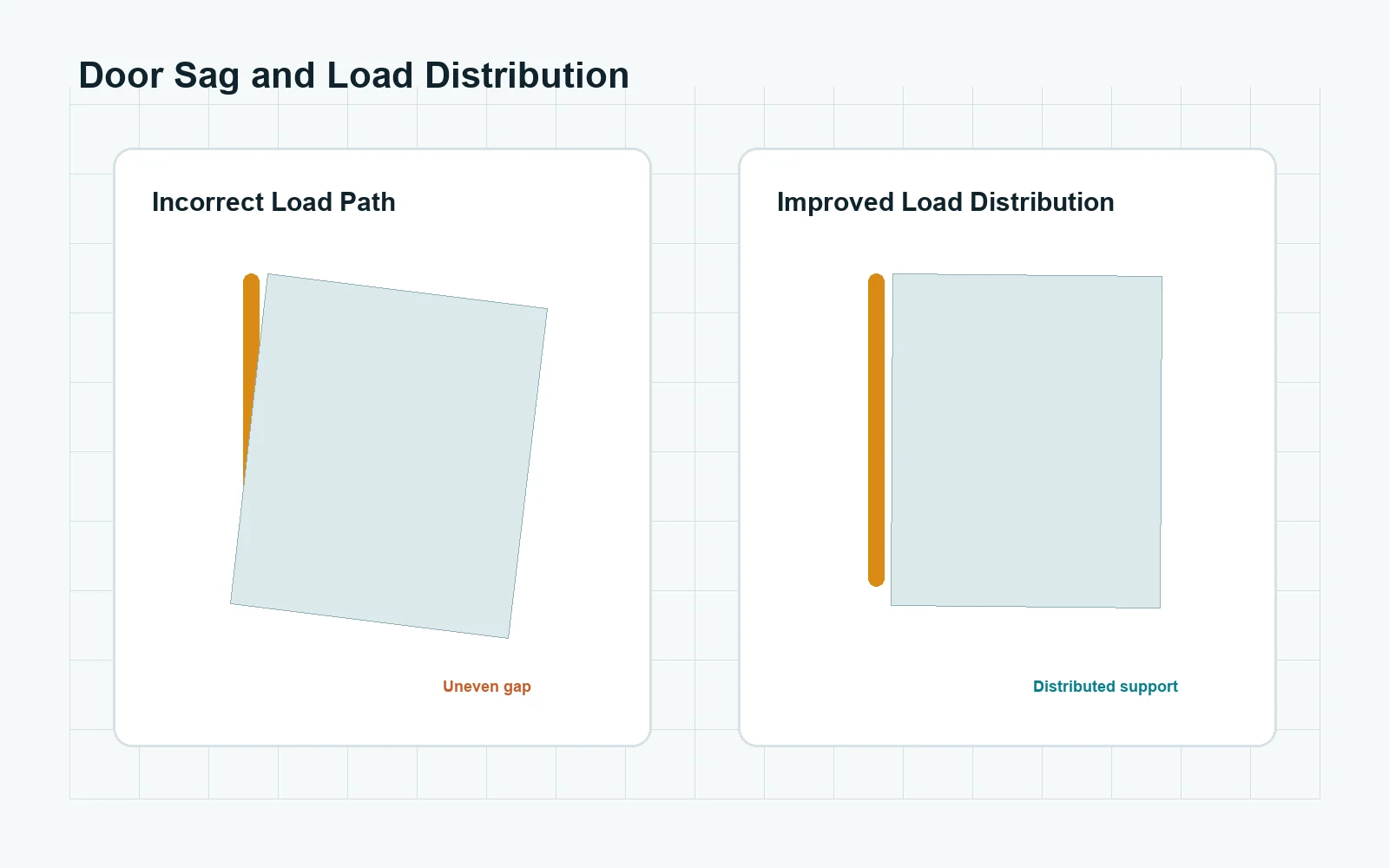
Le poids de la porte n'est pas le seul paramètre. La hauteur de la porte, la distance par rapport au centre de gravité, l'espacement des charnières et la rigidité de la plaque de fixation augmentent le moment exercé du côté des charnières.
- Un espacement insuffisant entre les charnières peut accélérer l'affaissement du côté du loquet.
- Les zones de fixation sur de la tôle fine peuvent se déformer localement avant que la charnière elle-même ne cède.
- L'affaissement modifie le contact du joint et l'enclenchement du loquet sur les portes de grandes armoires.
Dimensions de la structure de support pour une porte de caisson longue
Compression du joint et alignement de la porte
Une charnière ne peut à elle seule garantir la conformité aux normes IP ou NEMA. C'est l'ensemble complet du boîtier qui détermine le résultat final en matière d'étanchéité, notamment le revêtement de la porte, la bride du cadre, le joint d'étanchéité, la force de fermeture du loquet et l'axe de la charnière.
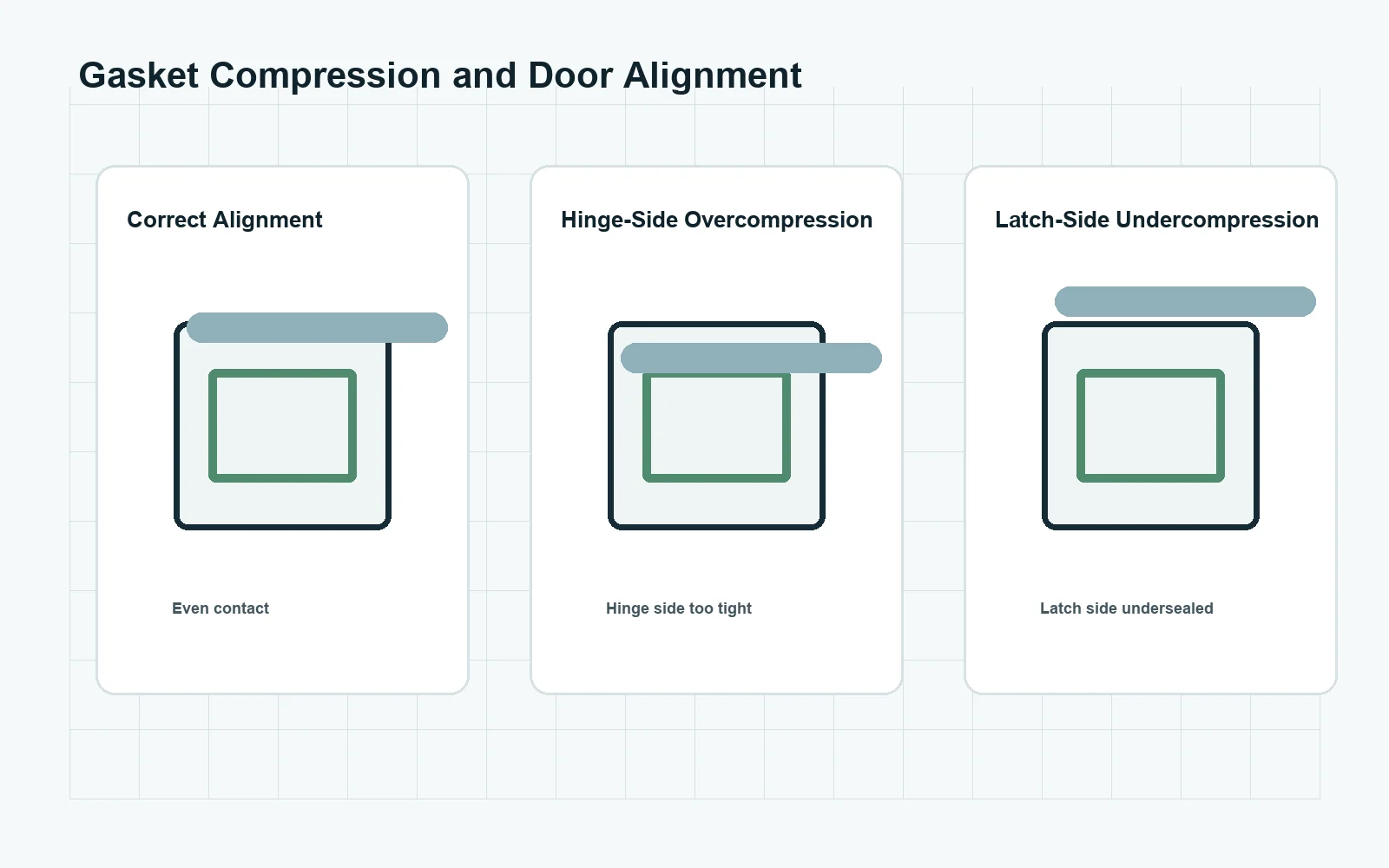
Alignement correctLe panneau de porte et la bride du cadre rejoignent le joint sur le même plan de référence.
Surcompression du côté de la charnièreL'axe de la charnière ou la face de fixation peut exercer une pression trop forte sur un côté du joint.
Sous-compression du côté du loquetUn affaissement ou un mauvais alignement peut réduire la pression de contact du côté de fermeture.
Pour les armoires à double porte, examinez simultanément les battants actifs et inactifs. L'alignement des axes de charnières, le chevauchement central, l'enclenchement du loquet et la compression du joint central peuvent influencer la fermeture des deux portes sur un même plan de référence.
Mise à la terre, câblage et espace libre interne
Les sangles de mise à la terre, les faisceaux de câbles, les borniers, les plaques de fixation et les équipements internes doivent rester en dehors de la trajectoire de déplacement de la porte et des vantaux de charnière. La charnière ne doit pas être considérée comme le seul chemin de liaison de protection, sauf si l'ensemble du boîtier, une fois assemblé, a été spécifiquement conçu et validé à cette fin.
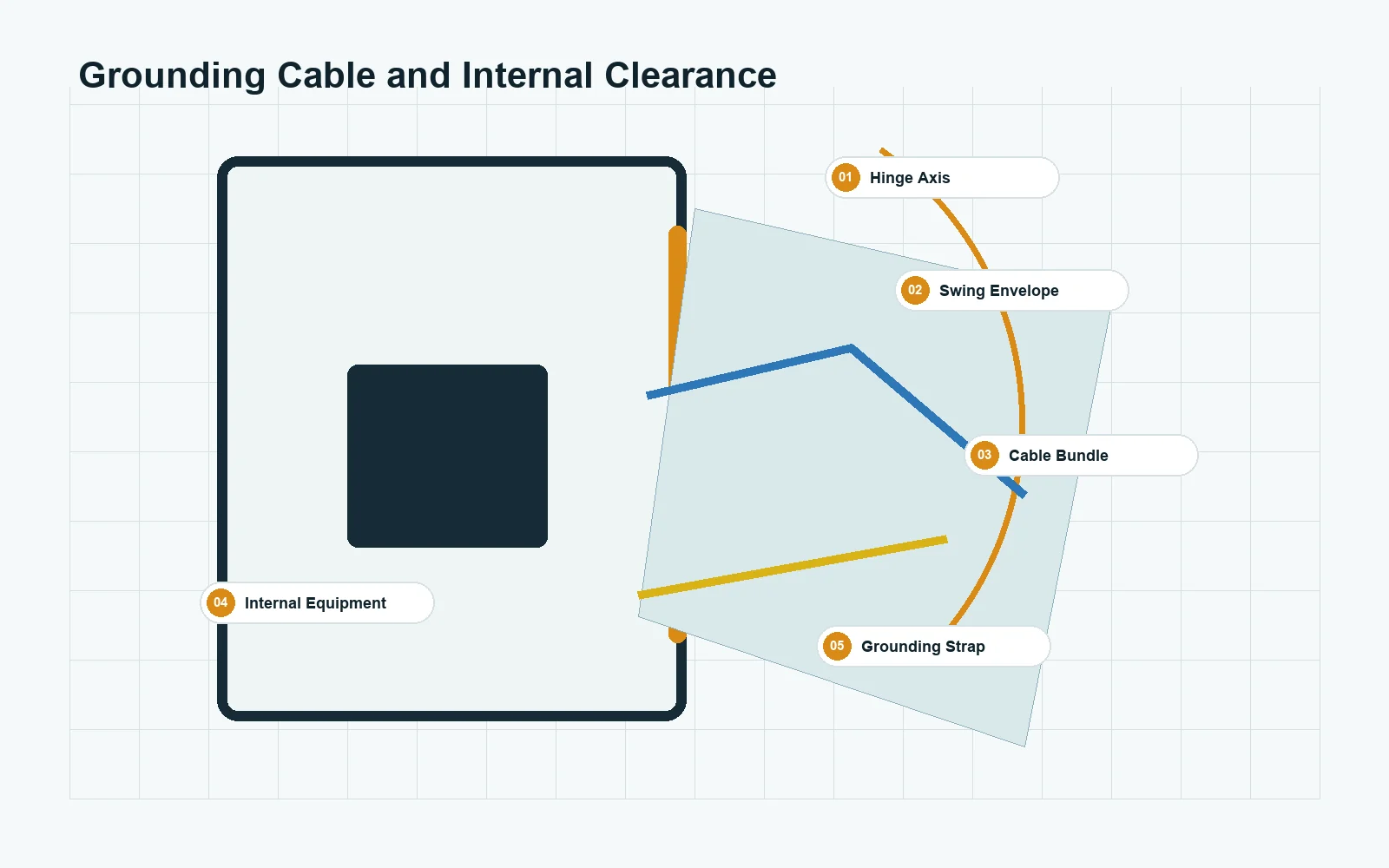
Bracelet de mise à la terreVérifiez le jeu et le guidage une fois que la porte a atteint son angle d'ouverture maximal.
Faisceau de câblesÉvitez tout frottement au niveau de la charnière, en particulier sur les portes équipées d'un écran intégré.
Équipement interneVérifiez les relais, les borniers, les plaques de fixation et les capots situés à proximité de la trajectoire d'oscillation.
Portes amovibles et accès pour l'entretien
Les charnières amovibles peuvent faciliter l'accès pour l'entretien dans les espaces restreints, mais la procédure complète de démontage doit tenir compte du poids de la porte, de la manipulation de la tresse de mise à la terre, du câblage et de l'alignement lors de la réinstallation.
Choisissez entre des configurations de portes amovibles ou fixes
Porte ouverte
Vérifiez que la porte peut atteindre l'angle de service requis.
Sangle de déconnexion
Ne procédez à la mise à la terre ou au câblage de décharge que lorsque la conception l'exige.
Porte d'ascenseur
Vérifiez que la manipulation s'effectue en toute sécurité et qu'il y a suffisamment d'espace libre au-dessus des axes de charnière.
Matériel d'accès
Veillez à ce que l'espace de travail reste dégagé sans endommager le joint.
Montage encastré, en saillie et par soudure
Le mode de fixation influe sur la résistance, l'accès pour le remplacement, le débordement extérieur, l'espace intérieur, l'exposition à la corrosion et la manière dont la force est transmise au cadre de porte.
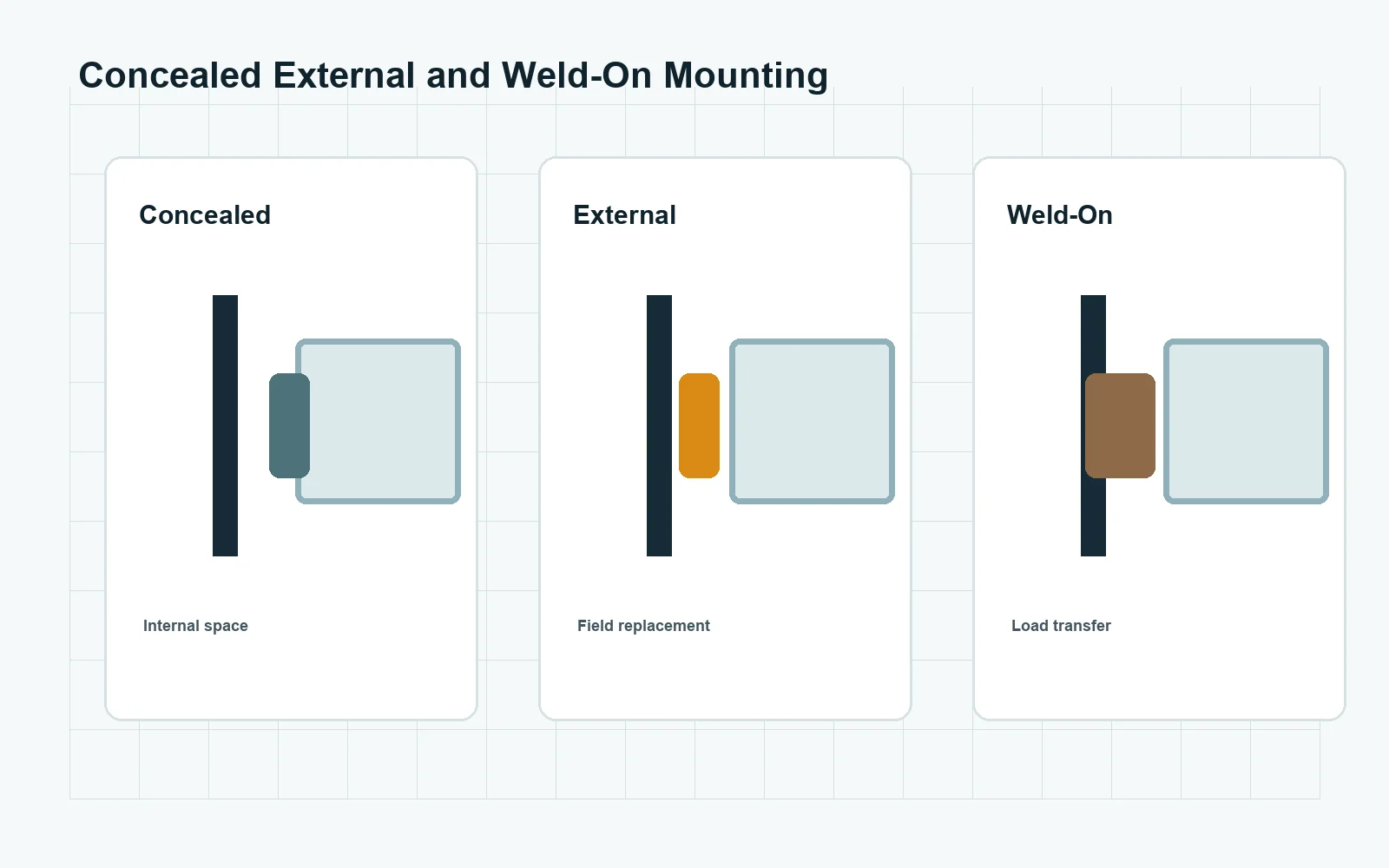
Caché
Utile lorsque l'extérieur ne nécessite pas de corps apparent. Vérifiez l'espace intérieur, l'angle d'ouverture et l'accès pour l'entretien.
Externe
Convient aux armoires standard et au remplacement sur site. Vérifiez le dépassement, l'exposition à la corrosion et le risque de vandalisme.
Weld-On
Convient aux portes lourdes en acier. Permet de limiter la déformation due à la soudure, d'assurer la coaxialité des charnières et de rétablir la finition de surface.
Environnement d'exploitation
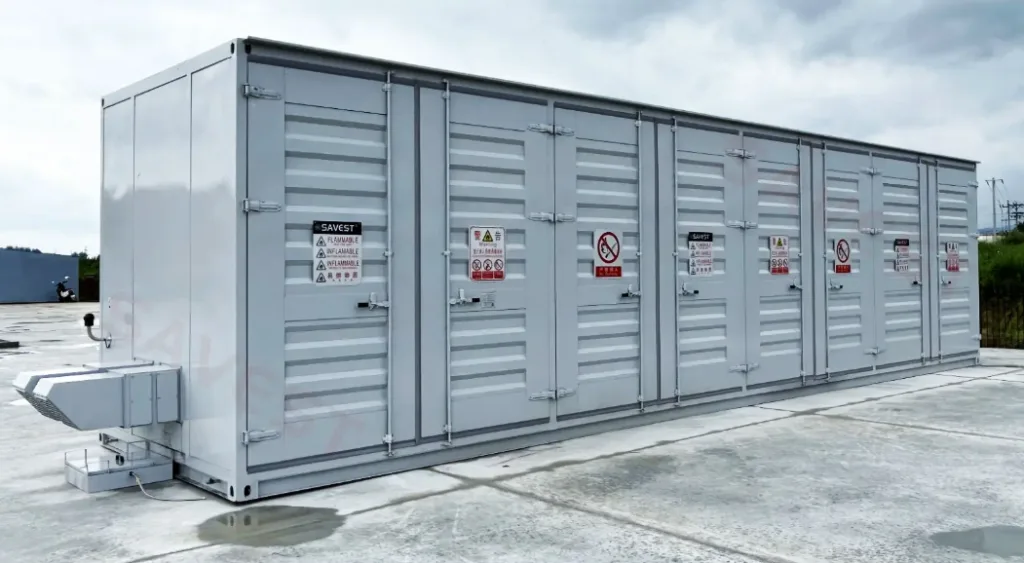
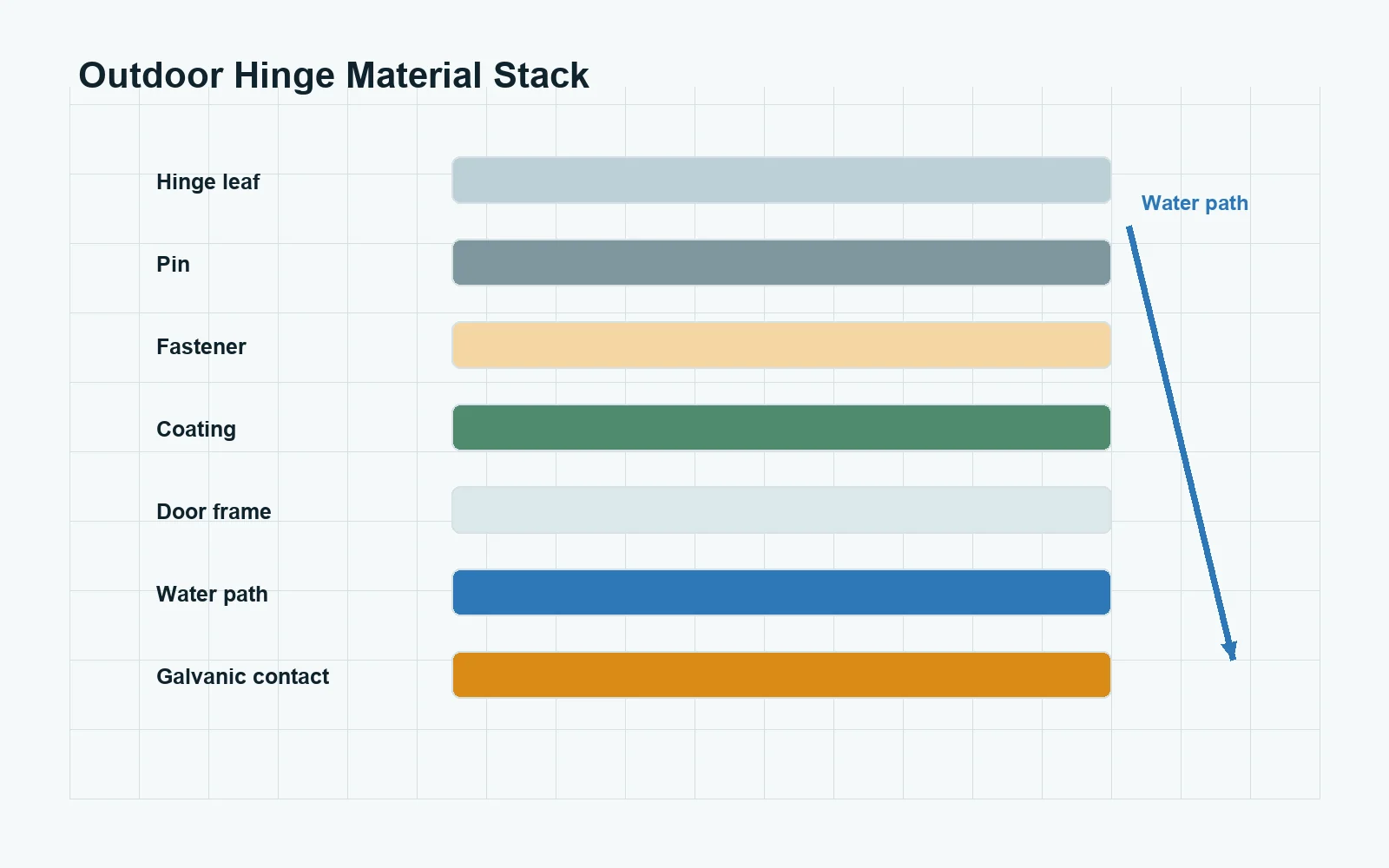
Environnements extérieurs et corrosifs
Le choix des matériaux ne peut pas se limiter au seul vantail de la charnière. Le matériau des axes, les éléments de fixation, les dommages causés au revêtement, les contacts galvaniques, la condensation, les voies d'évacuation et l'exposition sur site sont autant de facteurs qui influent sur la durabilité sur le terrain.
Gammes de charnières pour armoires électriques
Commencez par examiner la structure de la porte, puis vérifiez les dimensions, l'espace de montage, la finition et la quantité requise pour le projet avant de choisir un modèle de charnière.
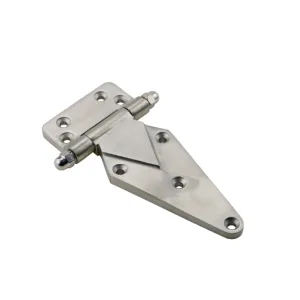
Charnières à usage intensif
La taille la plus adaptée : Portes de l'enceinte principale hautes ou lourdes.
À surveiller : Des brides de fixation trop fines, un renfort insuffisant et un centre de gravité trop éloigné.
Découvrir les charnières pour armoires industrielles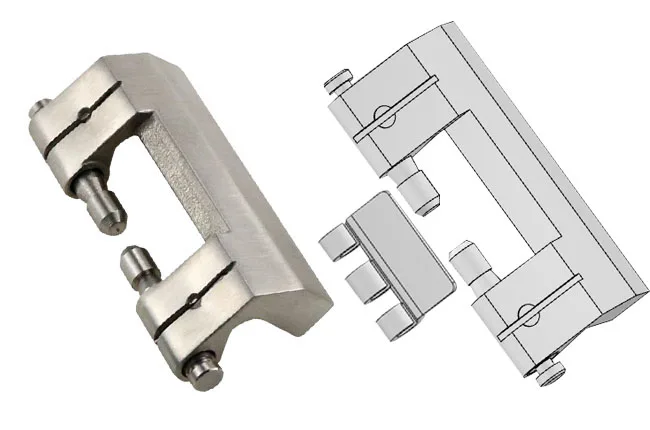
Charnières cachées
La taille la plus adaptée : Des surfaces extérieures épurées et des saillies extérieures réduites.
À surveiller : Dégagement intérieur, angle d'ouverture limité et accès aux fixations.
Découvrez les charnières invisibles pour meubles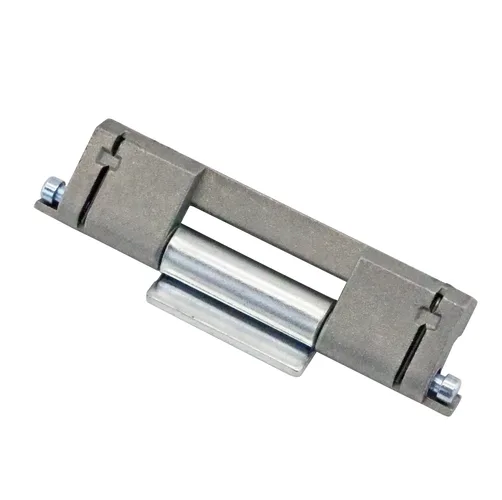
Charnières « Lift-Off »
La taille la plus adaptée : Portes de service devant être démontées lors des opérations de maintenance.
À surveiller : Poids de la porte, hauteur de levage, sangles de mise à la terre et alignement lors de la réinstallation.
Découvrez les charnières de porte amovibles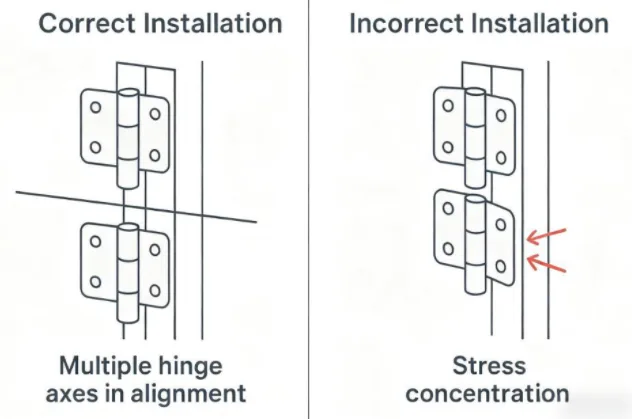
Structures à charnières continues
La taille la plus adaptée : Portes longues nécessitant un soutien réparti le long du côté des charnières.
À surveiller : Rectitude du châssis, tolérance de montage, exposition à la corrosion et méthode de remplacement.
Support continu pour portes longues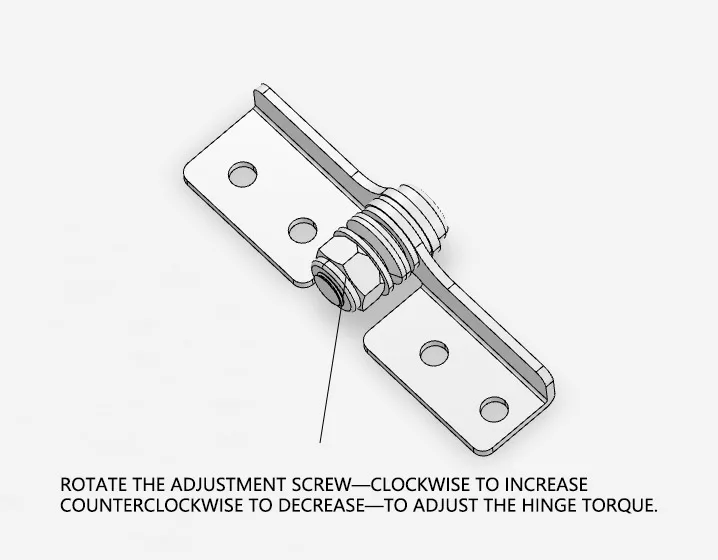
Charnières à contrôle de couple ou de position
La taille la plus adaptée : Panneaux IHM, capots légers et panneaux d'accès internes réglables.
À surveiller : Poids du panneau, distance par rapport au centre de gravité, orientation et angle de maintien requis.
Découvrez les charnières à réglage de positionAnalyse des équipementiers
Comment nous évaluons un ensemble « porte d'enceinte »
La recommandation part de l'ensemble de porte, et non d'une référence de modèle. L'examen des plans, les vérifications d'ajustement et le contrôle de l'alignement permettent de réduire les erreurs de sélection évitables.
Définir la porte
- Hauteur et largeur
- Poids et centre de gravité
- Épaisseur du matériau
- Angle d'ouverture
Vérifiez le cadre et le joint
- Rigidité du châssis
- Bride de fixation
- Position du joint
- Côté loquet
Vérifier les interfaces internes
- Bracelet de mise à la terre
- Acheminement des câbles
- Équipement interne
- Jeu de rotation
Valider l'assemblage
- Ajustement de montage
- Alignement des portes
- Contact du joint
- Comportement à l'ouverture
Limites de validation
Les performances finales des charnières dépendent de l'ensemble complet constitué de la porte, du cadre, des fixations, du joint d'étanchéité, du loquet, du dispositif de mise à la terre et de l'environnement d'utilisation. Les performances en matière d'indice de protection (IP), de conformité NEMA, de résistance à la corrosion et de durée de vie doivent être validées sur l'ensemble du boîtier fini avant l'homologation de la production.
Ressources techniques pour la conception de portes d'enceintes
Consultez ces guides techniques pour vérifier les détails relatifs au montage, à l'étanchéité, à la mise à niveau, à la corrosion et à l'homologation des échantillons avant de finaliser la conception de la porte du boîtier.
Guide sur les charnières pour armoires industrielles
À utiliser pour des structures de charnières plus larges et dans le cadre d'applications de boîtiers.
Ouvrez le guide de charnière du boîtierLes meilleures charnières pour les tableaux électriques
À utiliser pour une comparaison ciblée des structures de charnières destinées aux applications de panneaux.
Sélectionner les types de charnières pour tableaux électriquesRénovation des charnières d'une armoire d'extérieur
À utiliser lorsqu'il faut remplacer les charnières ou corriger l'alignement d'une porte d'armoire d'extérieur existante.
Planifier la modernisation d'une charnière extérieureExigences relatives à l'appel d'offres
Documents à fournir pour l'évaluation d'une charnière de coffret électrique
Veuillez fournir toutes les informations relatives à l'ensemble de la porte afin que la charnière puisse être évaluée en fonction de la charge, de l'étanchéité, du jeu, de l'installation et de l'environnement d'utilisation.
Porte
- Hauteur et largeur de la porte
- Poids de la porte
- Matériau et épaisseur
- Distance par rapport au centre de gravité
- Sens et angle d'ouverture
Cadre et fixation
- Nombre de charnières
- Espace de montage
- Structure à châssis ou à bride
- Type de loquet
- Détails de l'armature
Joints et interfaces internes
- Emplacement du joint
- Dispositif de mise à la terre
- Acheminement des câbles
- Dégagement interne de l'équipement
Environnement et projet
- Utilisation à l'intérieur ou à l'extérieur
- Exposition à l'humidité, au sel, aux produits chimiques ou aux variations de température
- Durée de vie prévue
- Quantité annuelle
- Dessin ou photo de l'enceinte
 Français
  English
  한국어
한국어  Русский
  Español
  Italiano
  Deutsch
  Português