

Durchhängen von Scharnieren an Industrietoren: Ursachen, Diagnose und Behebung
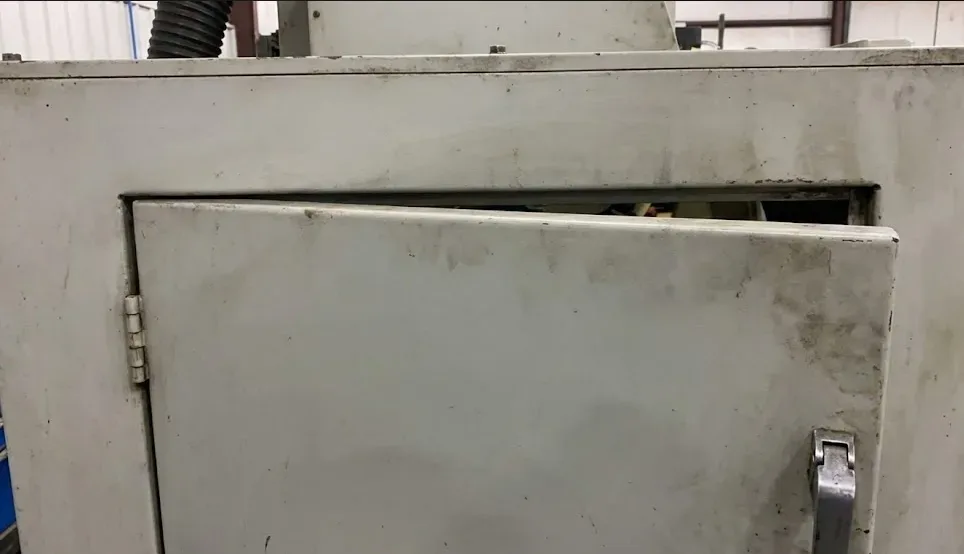
Ein Industrietor, das angehoben werden muss, bevor die Verriegelung einrastet, weist mehr als nur eine einfache Ausrichtungsstörung auf. Die Geometrie des Torsystems hat sich verändert. Mit Durchhang eines Industrietürscharniers, Die entscheidende Frage ist nicht einfach, ob das Scharnier „stark genug“ ist. Etwas im Lastpfad hat sich verschoben, ist abgenutzt, verbogen oder kann seine ursprüngliche Position nicht mehr halten.
Als sichtbares Symptom kann eine abgesackte Ecke auf der Schließseite, eine sich verjüngende Falz, ein Reiben am Rahmen oder ein Schließbolzen auftreten, der bei der Inbetriebnahme noch richtig ausgerichtet war, nun aber nicht mehr in die Schließplatte greift. Ein sofortiger Austausch des Scharniers kann die eigentliche Ursache verschleiern. Festgezogene Schrauben sind kein Beweis dafür, dass die Befestigungskonstruktion stabil ist, und ein scheinbar intaktes Scharnier ist kein Beweis dafür, dass sein Bolzen oder seine Buchse die Türposition noch kontrolliert.
Diagnosekriterien: Dieser Artikel befasst sich mit einer physischen Veränderung der Türposition oder der Scharniergeometrie. Wenn die Tür geometrisch ausgerichtet bleibt, sich ein Positionierungselement jedoch langsam dreht, nachdem der Antrieb es freigegeben hat, führen Sie eine Fehlerdiagnose durch. Positionsabweichung des Drehmomentscharniers stattdessen.
Beginnen Sie mit der Geometrie der Tür
Ein durchhängendes Industrietor macht sich in der Regel schon durch seine Formgebung bemerkbar, noch bevor das Scharnier selbst offensichtliche Schäden aufweist. Beginnen Sie mit festen Bezugspunkten am Rahmen. Beurteilen Sie den Zustand nicht allein danach, wie sich das Tor beim Schwingen anfühlt.
Schließen Sie die Tür, ohne den Riegel zu überlasten. Vergleichen Sie die oberen und unteren Abstände sowohl auf der Scharnierseite als auch auf der Riegelseite. Prüfen Sie die Position des Riegels im Verhältnis zum Riegelhalter und achten Sie darauf, ob die freie Ecke der Tür tiefer liegt als in ihrer ursprünglichen Position.
| Beobachtetes Symptom | Was dir als Erstes auffällt | Als Nächstes zu prüfende Beweismittel |
|---|---|---|
| Die Ecke auf der Verriegelungsseite ist heruntergefallen | Die Tür behält ihre ursprüngliche Stützgeometrie nicht mehr bei. | Scharnierbefestigungspunkte, Bolzenabstand, Rahmensteifigkeit und Verformung der Tür |
| Der obere und untere Rand sind nicht mehr parallel. | Die Tür, der Rahmen oder die Scharnierlinie haben sich relativ zur Öffnung verschoben. | Bezugsmaße in geschlossener Stellung und bei verschiedenen Öffnungswinkeln |
| Die Tür muss angehoben werden, bevor sie verriegelt werden kann. | Die Verriegelung gleicht einen konstruktionsbedingten Positionsfehler aus | Vertikale Bewegung an der freien Kante und Bewegung an einzelnen Scharniergelenken |
| Die Tür scheuert nur bei bestimmten Öffnungswinkeln | Ein reiner vertikaler Durchhang ist möglicherweise nicht das einzige Problem | Ausrichtung der Scharnierachse, Verwindung des Rahmens, Sitz der Flügel und lokale Beeinträchtigungen |
| Der Spalt verändert sich, wenn die freie Kante durch kontrollierte Abstützung leicht entlastet wird. | Irgendwo entlang des Stützwegs besteht Spiel oder eine strukturelle Flexibilität | Beobachten Sie jedes Scharnier, jede Befestigungsstelle, jede Halterung und jeden Rahmenabschnitt, wenn sich die aufgebrachte Last ändert |
Die aussagekräftigste Messgröße ist oft die Änderung auf der Grundlage einer bekannten Referenz und nicht anhand eines allgemein gültigen zulässigen Wertes. Für einen Schaltschrank, eine Maschinenschutzvorrichtung und eine Fahrzeugzugangstür können sehr unterschiedliche zulässige Spaltmaße gelten. Verwenden Sie die freigegebene Zeichnung, das genehmigte Muster oder die Projektabnahmebedingungen, sofern diese vorliegen.
Durchhang oder Drehmomentabweichung?
Der Begriff „Durchbiegung“ wird manchmal für zwei unterschiedliche Bewegungen verwendet. Diese erfordern unterschiedliche Prüfverfahren.
Eine sich strukturell durchhängende Tür verändert ihre Position relativ zum Rahmen. Die Abmessungen der Türlaibung ändern sich. Der Türriegel kann sich nach unten verschieben. Auch ein Scharnierblatt, eine Befestigungshalterung, die Mittellinie eines Scharnierstifts oder ein Rahmenabschnitt können sich verschieben. Das ist ein Problem der strukturellen Durchbiegung, kein Problem des Halte-Drehmoments.
Bei der Drehmomentabweichung verhält es sich anders. Ein Positionierungsscharnier kann eine Türplatte im Neuzustand in einem bestimmten Winkel halten, später jedoch nach dem Lösen eine Drehung der Türplatte zulassen. Bleibt die Geometrie des Drehpunkts stabil, sind die Ursachen in dem Halte-Drehmoment, dem aufgebrachten Drehmoment, dem Reibungsverhalten oder einer anderen Drehbelastung zu suchen – nicht in einer strukturellen Durchbiegung der Tür.
Einfacher Trennungstest: Wenn sich die Position des Riegels und die Geometrie zwischen Tür und Rahmen physisch verändert haben, bleiben Sie bei der Diagnose des strukturellen Durchhängens. Wenn die Geometrie stabil bleibt und sich die Tür nach dem Entriegeln lediglich um ihren vorgesehenen Drehpunkt dreht, fahren Sie mit der Diagnose der Drehmomentabweichung fort.
Der Lastpfad hinter dem Latch-Side-Drop
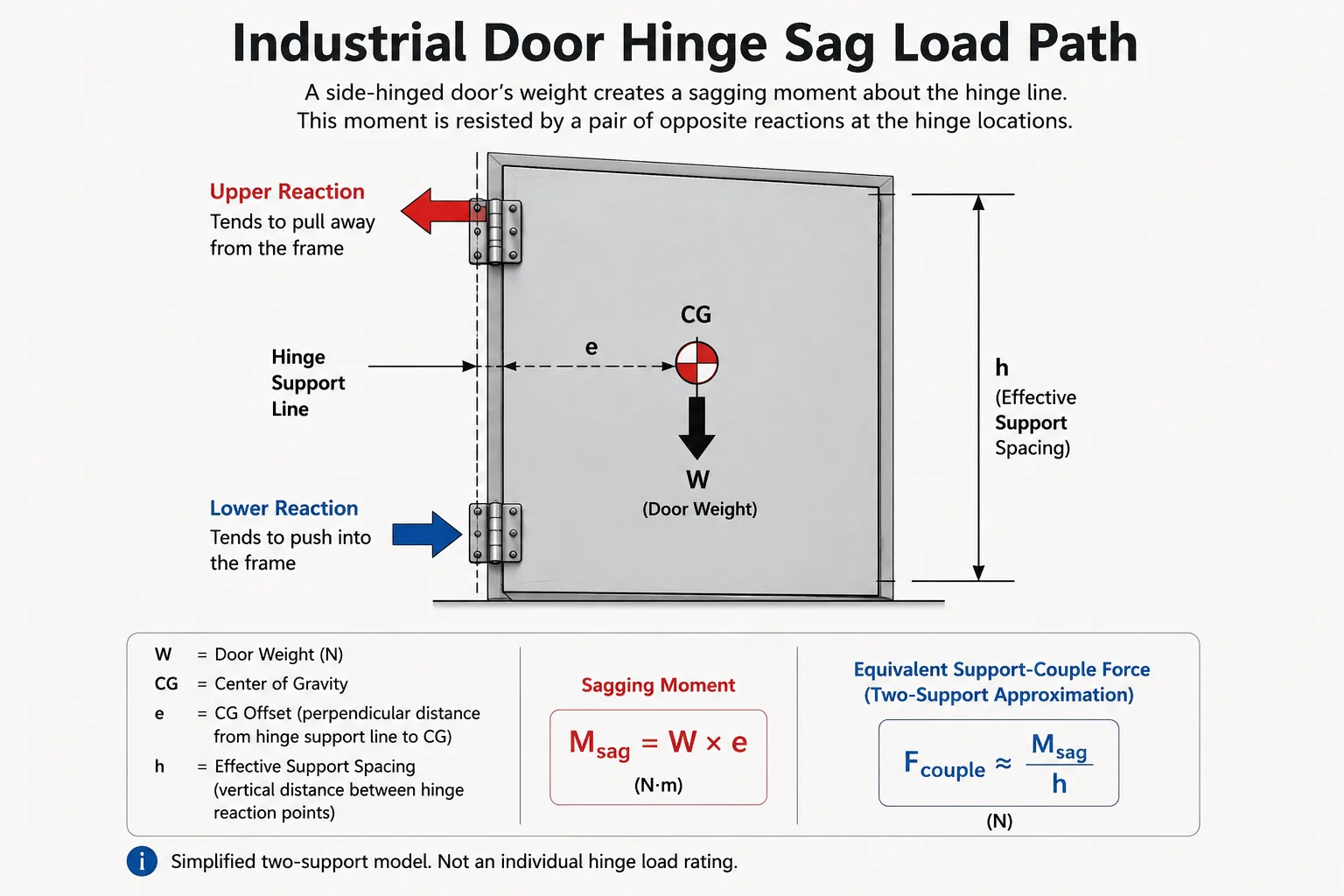
Ein seitlich angeschlagenes Industrietor verhält sich wie eine freitragende Konstruktion. Seine Masse wirkt auf einen Schwerpunkt, der sich in einem gewissen Abstand von der Aufhängungslinie der Scharniere befindet. Dieser Versatz erzeugt ein Biegemoment, das von den Scharnieren, Befestigungselementen, Halterungen und dem umgebenden Rahmen aufgenommen werden muss.
Türgewicht:
W = m × g
Vereinfachtes Durchbiegungsmoment:
Mdurchhängen = W × e
Äquivalente Stützpaar-Kraft – Zwei-Stützen-Näherung:
FPaar ≈ Mdurchhängen / h
Dabei ist W die Schwerkraft, m die Masse der Tür, g die Erdbeschleunigung, e der senkrechte Abstand von der Scharnierauflagelinie zum Schwerpunkt der Türbaugruppe, h der effektive vertikale Abstand zwischen den reaktiven Auflagern und FPaar ist die ungefähre Größe des entgegenwirkenden Kraftpaares, das erforderlich ist, um dem Durchbiegungsmoment entgegenzuwirken.
Diese Zusammenhänge stellen ein vereinfachtes statisches Modell dar und sind keine Belastungsangabe für die Scharniere. Die Scharniere nehmen zudem die vertikale Scherbeanspruchung der Tür auf. Der Drehmomentzusammenhang beschreibt lediglich die zusätzlichen Gegenkräfte, die erforderlich sind, um dem Durchbiegungsmoment entgegenzuwirken, und sollte nicht als Belastung eines einzelnen Scharniers interpretiert werden.
Die tatsächliche Lastverteilung hängt von der Scharniersteifigkeit, der Anzahl und Anordnung der Scharniere, der Nachgiebigkeit der Befestigung, der Türsteifigkeit, der Achsenausrichtung, dynamischen Stößen, Anschlägen, Dichtungen und anderen Einschränkungen ab. Die Näherung stößt insbesondere bei Baugruppen mit drei oder vier Scharnieren an ihre Grenzen, bei denen die Last selten gleichmäßig auf alle Scharniere verteilt wird.
Das Modell ist nach wie vor nützlich, da es zwei wichtige Zusammenhänge aufzeigt. Wird der Schwerpunkt weiter von der Scharnierlinie entfernt, erhöht sich das Durchbiegungsmoment, auch wenn sich die Masse der Tür nicht ändert. Wird der effektive vertikale Abstand zwischen den primären Reaktionsstützen verringert, erhöht sich das Kraftpaar, das erforderlich ist, um demselben Moment entgegenzuwirken.
Aus diesem Grund ist die Angabe „Die Tür wiegt nur ___ kg“ unvollständig. Die Breite der Tür, angebrachte Bauteile und der Abstand der Scharniere beeinflussen die statischen Anforderungen. Ein Griff, ein Display, eine Dämmplatte, eine Kabelbaugruppe oder andere Beschläge in der Nähe der freien Kante können den Schwerpunkt ebenfalls nach außen verlagern.
Dieser Durchbiegungsmoment darf nicht mit dem Drehmoment verwechselt werden, das dazu dient, einen horizontalen Deckel oder eine Positionierungsplatte in einem bestimmten Winkel zu halten. Es handelt sich um unterschiedliche Lastfälle.
Finde heraus, wohin sich die Geometrie verschoben hat
Sobald ein physisches Durchhängen festgestellt wurde, sollten Sie nicht sofort mit der Auswahl eines Ersatzscharniers beginnen. Suchen Sie zunächst die Stelle, an der eine relative Bewegung auftritt. Ein und dieselbe heruntergefallene Ecke kann auf ganz unterschiedliche Ursachen zurückzuführen sein.
| Mögliche Ursache | Typische Anhaltspunkte | Was unterscheidet ihn von den anderen Zweigen? |
|---|---|---|
| Zunehmende Migration | Spuren von Zeugen, verschobenes Blatt, lockeres Befestigungselement, längliches Loch, Verschiebung des Einsatzes, gerissene oder verschobene Schweißnaht | Zwischen dem Scharnierflügel bzw. der Halterung und der Befestigungskonstruktion ist eine relative Bewegung erkennbar. |
| Verschleiß an Bolzen, Gelenken oder Buchsen | Radiales oder vertikales Spiel am Scharniergelenk, während die Befestigungsflügel feststehen | Die Bewegung findet im Inneren des Scharniers statt und nicht an dessen Befestigungsstelle. |
| Scharnierachsenfehler | Klemmen, ungleichmäßige Drehung, ein Scharnier scheint stark belastet zu sein, wechselnder Widerstand über den gesamten Bewegungsbereich | Die einzelnen Scharnierachsen verhalten sich nicht wie eine gemeinsame Drehachse. |
| Verformung des Rahmens | Die Wandhalterung oder der Halter bewegt sich unter der auf die Tür einwirkenden Last | Das Scharnier kann fest an seiner Halterung sitzen bleiben, während sich die Tragkonstruktion verbiegt oder nachgibt. |
| Verformung der Türverkleidung | Die Tür ist verzogen oder nicht mehr eben, obwohl die Scharnierpunkte stabil sind | Das bewegliche Teil selbst hat seine Form verändert |
| Unterdimensioniertes System | Nach der Reparatur tritt erneut ein Durchbiegung auf, die lokale Belastung bleibt hoch oder die derzeitige Konstruktion weist nur eine geringe strukturelle Reserve auf | Es gibt kein einzelnes, isoliertes Element, das dieses wiederkehrende Verhalten erklärt |
Verschiebung der Befestigung vor dem Versagen des Scharniers
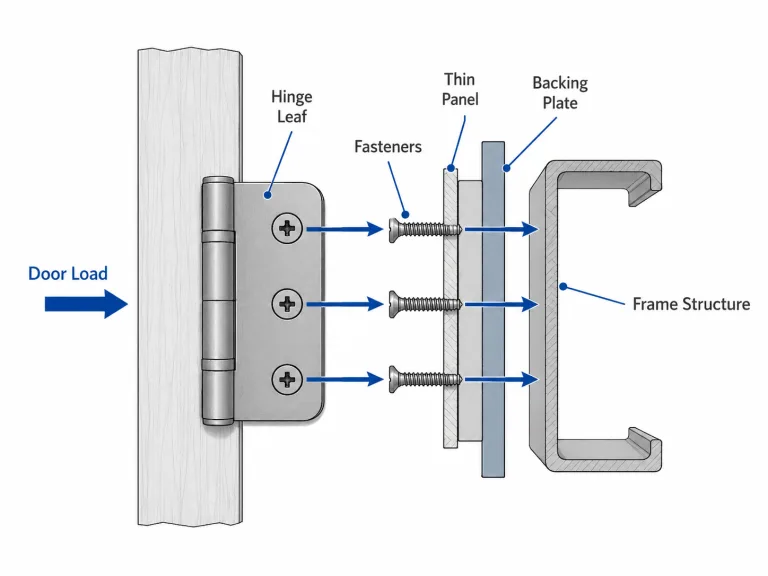
Ein Scharnier kann mechanisch einwandfrei funktionieren, auch wenn sich sein Befestigungspunkt verschiebt. Dies ist bei Blechgehäusen, gefertigten Halterungen und geschweißten Türen von Bedeutung, bei denen die lokale Steifigkeit der Bleche Teil des Scharniersystems ist.
Überprüfen Sie jeden Scharnierflügel gründlich, anstatt nur zu kontrollieren, ob sich ein Bolzen fest anfühlt. Achten Sie auf Abriebspuren, verschobene Lacklinien, Lochverformungen, herausgezogene Einsätze, lokale Vertiefungen, Risse in der Beschichtung im Bereich einer Schweißnaht oder einen sichtbaren Spalt zwischen dem Flügel und seiner Befestigungsfläche.
Ein festgezogener Befestigungselement kann eine bereits verformte Verbindung festklemmen. Dass die Schraube heute fest sitzt, beweist nicht, dass die Schnittstelle in ihrer ursprünglichen Position geblieben ist.
Verschleiß an Bolzen, Gelenken und Buchsen
Wenn beide Scharnierflügel fest an der Tür und am Rahmen sitzen, beobachten Sie das Scharniergelenk, während eine geringe, kontrollierte Belastungsänderung auf die abgestützte Tür ausgeübt wird. Eine Relativbewegung zwischen dem Bolzen und dem Gelenkkopf bzw. der Buchse deutet eher auf ein Spiel im Scharnier als auf eine Verschiebung der Befestigung hin.
Die entscheidende Frage ist nicht nur, ob überhaupt ein Spiel vorhanden ist. Es geht vielmehr darum, ob das derzeitige Spiel zu unzulässigen Bewegungen auf der Schließseite führt. Eine kleine Veränderung im Bereich des Scharniers kann an der freien Kante einer breiten Tür deutlich stärker ins Auge fallen.
Es gibt keinen einheitlichen Grenzwert für den Bolzenabstand, der für alle Industrietorbaugruppen gilt. Vergleichen Sie den gemessenen Abstand mit der Scharnierzeichnung, den Angaben des Lieferanten oder der projektspezifischen Funktionsgrenze.
Verformung von Rahmen und Türen
Man könnte das Scharnier dafür verantwortlich machen, da dort die Bewegung sichtbar ist. Manchmal ist jedoch die Gehäusewand, die Scharnierverstärkung, der Befestigungsflansch oder die Türverkleidung die eigentliche Feder.
Bringen Sie einen festen visuellen Bezugspunkt am Rahmen an und beobachten Sie den Bereich der Scharnierbefestigung, während sich die auf die Tür wirkende Last ändert. Wenn sich das gesamte Scharnier zusammen mit dem Rahmenabschnitt bewegt, lässt sich die strukturelle Nachgiebigkeit nicht allein durch den Austausch des Scharniers beseitigen.
Dauerhafte Verformung und elastische Verformung führen zu unterschiedlichen Maßnahmen. Ein dauerhaft verbogener Flansch erfordert eine Wiederherstellung der Geometrie oder eine strukturelle Reparatur. Eine Oberfläche, die unter normaler Belastung wiederholt verformt wird, erfordert möglicherweise eine Verstärkung oder eine angepasste Lastführung, selbst wenn sie nach Abstützung der Tür wieder in ihre ursprüngliche Position zurückkehrt.
Ein Achsenfehler kann wie ein Durchhang aussehen
Mehrere Scharniere an einer Tür sollen sich wie ein gemeinsames Drehgelenksystem verhalten. Wenn ihre Bolzenmittelachsen keine kompatible Achse bilden, kann die Tür klemmen, durchfedern, ungleichmäßig verschleißen oder Lasten auf den Rahmen übertragen, was einem einfachen Durchhangproblem ähnelt.
Dies führt zu einer wichtigen diagnostischen Falle. Das Hinzufügen eines weiteren Scharniers kann zwar die nominelle Tragfähigkeit erhöhen, verbessert die Baugruppe jedoch nicht automatisch, wenn der zusätzliche Drehpunkt auf eine andere Achse verlagert wird. Mehr Beschläge können eine weitere Einschränkung schaffen, anstatt das ursprüngliche Problem zu lösen.
Bei einer Tür, die sich beim Öffnen oder Schließen verklemmt oder Anzeichen dafür aufweist, dass mehrere Scharniere nicht auf einer gemeinsamen Drehachse liegen, sollten Sie von der Diagnose der Durchhängung zu einer gezielten Überprüfung der Ausrichtung der Scharnierachse. Für Einzelheiten zu Jigging, Koaxialität und Installationsgeometrie sollten Sie die entsprechende Ausrichtungsanleitung heranziehen, anstatt die Durchhangdiagnose auf ein zweites Installationsthema auszuweiten.
Technischer Konflikt: Eine Tür kann über fest sitzende Riegel, ein scheinbar ausreichend dimensioniertes Scharnier und keine gebrochenen Scharniergelenke verfügen und dennoch auf der Fallenseite durchhängen, weil sich der Rahmen um die Scharnierbefestigung herum verbiegt. Der Austausch des Scharniers gegen ein stabileres Modell lässt möglicherweise die gleiche instabile Unterkonstruktion darunter bestehen.
Wenn das Scharniersystem zu klein dimensioniert ist
Nachdem die Bewegung der Lagerung, der Spielraum des Gelenks, der Achsenfehler und die strukturelle Verformung bewertet wurden, sollten Sie die ursprüngliche Architektur des Gelenksystems untersuchen. Wiederkehrendes Durchhängen kann darauf hindeuten, dass die Baugruppe einer Belastung ausgesetzt ist, für die die Anordnung des Gelenks oder die umgebende Struktur nicht ausgelegt ist.
Betrachten Sie die Tür als Ganzes und nicht nur das blanke Blech oder das Scharniermodell für sich allein:
- Endgewicht der Tür einschließlich Griffen, Fenstern, Dämmung und eingebauter Ausrüstung;
- Abstand des Schwerpunkts von der Scharnier-Stützlinie;
- Türhöhe und effektiver Abstand zwischen den Scharnieren;
- Anzahl der Scharniere und tatsächliche Lastverteilung;
- Rahmen- und Türverstärkung an jedem Befestigungspunkt;
- Öffnungsanschläge und Belastungen, die auftreten, wenn die Tür diese erreicht;
- Vibrationen, Stöße oder Betriebsbedingungen, die von der ursprünglichen Auslegung abweichen;
- alle Komponenten, die nach der ursprünglichen Auswahl des Scharniers hinzugefügt wurden.
Verwenden Sie die Anzahl der Gelenke nicht als Ersatz für eine statische Berechnung. Ein drittes Gelenk kann zur Lastverteilung beitragen, sofern die Geometrie und die Tragkonstruktion dies zulassen. Es kann jedoch auch zu einem Festklemmen führen, wenn die Befestigungspunkte keine gemeinsame Achse bilden können.
Schätzen Sie die Belastung der einzelnen Scharniere nicht einfach durch Division des Türgewichts durch die Anzahl der Scharniere. Die Lastverteilung bei einer Tür mit mehreren Scharnieren hängt von der Steifigkeit, der Ausrichtung, dem Abstand und den Befestigungsbedingungen ab.
Sollte die Diagnose ergeben, dass die ursprüngliche Hardware oder die Montagearchitektur nicht über ausreichende Kapazitäten verfügt, prüfen Sie die verfügbaren Optionen für Hochleistungsscharniere erst wenn die tatsächliche Geometrie der Tür und die Einbaubedingungen bekannt sind. Das Ziel besteht nicht darin, das größte Scharnier auszuwählen, sondern einen Lastpfad zu schaffen, der in der fertigen Baugruppe stabil bleibt.
Diagnose des Durchhängens von Scharnieren an Industrietoren
Sicherheit geht vor: Stützen Sie eine schwere Tür ab, bevor Sie Scharniere, Halterungen oder Befestigungselemente an der Konstruktion lösen. Schalten Sie die Anlage gemäß den vor Ort geltenden Vorschriften ab. Verlassen Sie sich nicht darauf, dass das Scharnier oder der Riegel die Tür stützt, während deren tragende Verbindungen überprüft oder entfernt werden.
- Notieren Sie das Symptom vor der Anpassung. Fotografieren Sie die geschlossene Tür und die Scharnierseite. Halten Sie die Ausrichtung des Türriegels sowie repräsentative Maße der Türfuge fest. Wenn jemand die Beschläge vorab justiert, geht ein Teil der Beweise verloren.
- Legen Sie feste Rahmenreferenzen fest. Wählen Sie Bezugspunkte, die sich nicht auf dem beweglichen Türflügel befinden. Messen Sie die Tür im Verhältnis zum Türrahmen, anstatt sich nur auf eine Wasserwaage oder den visuellen Eindruck zu verlassen.
- Beobachten Sie die abgestützte Tür bei einer geringen, kontrollierten Laständerung. Beobachten Sie jedes Scharniergelenk, jeden Flügel, jede Halterung und jeden Rahmenabschnitt, während die freie Kante vorsichtig entlastet oder wieder belastet wird. Stellen Sie fest, wo die relative Bewegung einsetzt.
- Unterscheiden Sie zwischen dem Spiel im Scharnier und der Bewegung bei der Befestigung. Wenn die Flügel unbeweglich bleiben, sich aber der Bolzenbereich bewegt, überprüfen Sie den Verschleiß der Scharniere. Wenn sich das gesamte Scharnier relativ zum Rahmen oder zur Tür verschiebt, überprüfen Sie die Befestigungsstelle.
- Vergleichen Sie mehrere Türpositionen. Notieren Sie die geschlossene Position und die nützlichen Zwischenöffnungswinkel. Ein festes Spiel, eine sich schrittweise verändernde Bindung und ein flexibler Rahmen können unterschiedliche Muster erzeugen.
- Überprüfen Sie den gesamten Lastfall. Bestätigen Sie das endgültige Gewicht der Tür, den ungefähren Schwerpunkt, den Abstand zwischen den Scharnieren, die angebrachte Ausrüstung sowie etwaige Änderungen seit der Erstabnahme der Baugruppe.
- Entscheiden Sie sich erst dann für die Reparatur, wenn eine Abteilung entsprechende Belege vorlegen kann. Das Festziehen, der Austausch von Scharnieren, die Verstärkung des Rahmens und die Korrektur der Achse beheben verschiedene Fehler. Verwenden Sie keine dieser Maßnahmen als Allheilmittel für alle vier Probleme.
Ein aussagekräftiger Fehlerprotokollbericht erfordert keinen großen Papieraufwand. Ein paar Maße, klare Fotos und ein kurzes Video, das zeigt, wo die Bewegung auftritt, sind oft aussagekräftiger als eine Beschreibung wie „Scharnier locker“ oder „Tür hängt durch“.
Die Reparatur auf die Ursache abstimmen
Durch die Korrektur sollte die Bewegung beseitigt werden, die den Geometriefehler verursacht hat. Wird die Verriegelungsposition wiederhergestellt, ohne den Lastpfad zu korrigieren, kann dies dazu führen, dass die Tür zwar repariert aussieht, aber nach der Wartung wieder nach unten rutscht.
| Beweise | Korrekturrichtung | Gehen Sie nicht davon aus, dass |
|---|---|---|
| Befestigungselement oder Einsatz hat sich verschoben; Befestigungsloch ist beschädigt | Die genehmigte Verbindung wiederherstellen und prüfen, ob eine Verstärkung oder eine angepasste Befestigungsmethode erforderlich ist | Ein höheres Anzugsdrehmoment stellt das beschädigte Material wieder her |
| Ein geschweißtes Scharnier oder eine geschweißte Halterung hat sich verschoben, ist gerissen oder an einer Stelle verformt | Die Befestigungskonstruktion unter Anwendung des entsprechenden Fertigungsverfahrens reparieren und die Geometrie des Scharniers wiederherstellen | Ein neues Scharnier wird die verformte Grundkonstruktion korrigieren. |
| Der Stift, das Gelenk oder die austauschbare Buchse weist übermäßiges Funktionsspiel auf | Lassen Sie die vom Hersteller zugelassenen austauschbaren Komponenten warten oder tauschen Sie das Scharnier entsprechend seiner Bauart aus. | Durch die Neuausrichtung wird das interne mechanische Spiel beseitigt. |
| Mehrere Gelenkachsen sind nicht miteinander kompatibel | Die Montagegeometrie korrigieren und eine kompatible Drehachse wiederherstellen | Durch Hinzufügen eines weiteren Scharniers wird die Lastverteilung automatisch verbessert. |
| Der Rahmen oder die Türverkleidung verbiegt sich bei normaler Belastung übermäßig | Lokale Verstärkung, Querschnittssteifigkeit und Lastübertragung überprüfen | Ein stabileres Scharnier kann eine unzureichende Montagewand bereits für sich allein versteifen. |
| Das bestehende System bleibt auch nach der Wiederherstellung der Geometrie überlastet | Größe, Bauweise, Anzahl, Abstand und strukturelle Abstützung der Scharniere als ein System neu bewerten | Allein das Türgewicht bestimmt, welches Ersatzscharnier das richtige ist |
Unterlegscheiben oder Einstellvorrichtungen können nützlich sein, wenn sie Teil der vorgesehenen Montageweise sind und die Konstruktion selbst einwandfrei ist. Sie sollten nicht dazu verwendet werden, ein zunehmendes Spiel der Stifte, ausgedehnte Befestigungslöcher oder dauerhafte Verformungen des Rahmens zu kaschieren.
Das gleiche Prinzip gilt für den Austausch eines Scharniers. Passen Sie die Reparatur an die vorliegenden Anzeichen an. Wenn keine Anzeichen auf eine Beschädigung des Scharniers hindeuten, führt der Austausch des Scharniers möglicherweise lediglich zu einer vorübergehenden Behebung des Problems, während der ursprüngliche bauliche Mangel weiterhin besteht.
Überprüfen Sie die Reparatur unter realer Türbelastung
Eine Reparatur gilt als nicht erfolgreich, wenn sich das unbelastete Scharnier auf der Werkbank leichtgängig bewegen lässt. Bauen Sie die komplette Tür mit den Bauteilen wieder zusammen, die ihre Masse und Geometrie beeinflussen, und nehmen Sie anschließend die gleichen Referenzmaße wie vor der Reparatur wieder auf.
- Vergleichen Sie die Enthüllung hinter verschlossenen Türen mit der Projektreferenz.
- Überprüfen Sie, ob die Verriegelung einrastet, ohne die freie Kante anzuheben oder mit Gewalt zu betätigen.
- Bewegen Sie die Tür über den gesamten Hubweg und achten Sie dabei auf eventuelle Blockierungen oder Bewegungen des Rahmens.
- Überprüfen Sie die Befestigungspunkte nach mehreren kontrollierten Funktionszyklen erneut.
- Vergewissern Sie sich, dass alle Dichtungen, Kabel und Anschläge weiterhin wie vorgesehen funktionieren.
- Halten Sie den Zustand nach der Reparatur fest, damit bei späteren Inspektionen tatsächliche Veränderungen festgestellt werden können, anstatt sich auf das Gedächtnis zu verlassen.
Falls die langfristige Haltbarkeit nachgewiesen werden muss, sollten Sie diese Fehlerbehebungsmaßnahme nicht zu einem undefinierten Test verkommen lassen, bei dem das Produkt „mehrfach geöffnet und geschlossen“ wird. Belastung, Hubweg, Zyklusdefinition, Prüfpunkte und Ausfallkriterien gehören in einen kontrollierten Prüfprotokoll für die Zyklusprüfung von Industrie-Scharnieren.
Bei einer Durchhangreparatur ist die Frage nach der Abnahme enger gefasst: Hat die Durchhang eines Industrietürscharniers wurde beseitigt, da die eigentliche Ursache behoben wurde, und behält die Tür unter der tatsächlichen Betriebslast ihre vorgeschriebene Geometrie bei?
Fragen, die die Diagnose beeinflussen
Was führt dazu, dass sich ein Industrietor durchhängt?
Ein Durchhängen von Industrietoren kann durch Bewegungen an den Befestigungspunkten, Verschleiß der Scharnierstifte oder -buchsen, nicht kompatible Scharnierachsen, Verformungen des Rahmens oder des Tors oder ein Scharniersystem verursacht werden, das für die tatsächliche Torgeometrie und Belastung unterdimensioniert ist. An der sichtbar abgesenkten Ecke lässt sich nicht erkennen, welches Bauteil versagt hat; daher sollte die Ursache der Bewegung ermittelt werden, bevor Beschläge ausgetauscht werden.
Kann sich ein Industrietor auch dann durchhängen, wenn alle Scharnierschrauben fest angezogen sind?
Ja. Festgezogene Schrauben zeigen lediglich an, dass die Befestigungselemente die Verbindung derzeit festhalten. Die Befestigungslöcher oder Einsätze haben sich möglicherweise bereits verschoben, der Rahmen kann sich verziehen oder es hat sich im Scharnier Spiel gebildet. Beobachten Sie den gesamten Befestigungsbereich, während sich die auf die Tür wirkende Last ändert.
Wie kann ich Verschleiß an den Scharnieren von einer Verformung des Rahmens unterscheiden?
Beobachten Sie das Scharniergelenk und die umgebende Befestigungskonstruktion, während eine sicher abgestützte Tür leicht entlastet und wieder belastet wird. Eine Bewegung im Bereich des Bolzens, des Gelenks oder der Buchse deutet auf Spiel im Scharnier hin. Wenn sich das gesamte Scharnier zusammen mit seiner Befestigungsplatte oder Halterung bewegt, ist die tragende Konstruktion betroffen.
Verhindert das Anbringen weiterer Scharniere, dass eine schwere Tür durchhängt?
Nicht automatisch. Zusätzliche Scharniere können die Lastverteilung verbessern, wenn die Geometrie von Tür, Rahmen und Befestigung eine korrekte Lastverteilung ermöglicht. Sind die Scharnierachsen nicht kompatibel oder ist die Befestigungskonstruktion nachgiebig, kann ein weiteres Scharnier zwar zusätzliche Festigkeit bieten, ohne jedoch die eigentliche Ursache zu beheben.
Warum sinkt die Ecke auf der Verriegelungsseite eines Industrietors ab?
Die Masse der Tür wirkt auf einen Schwerpunkt, der von der Auflagelinie des Scharniers versetzt ist, wodurch ein Durchbiegungsmoment entsteht, das vom Scharnier und der Befestigungskonstruktion aufgefangen werden muss. Spiel, Bewegung oder unzureichende Steifigkeit in diesem Lastpfad können sich in Form einer deutlich größeren Auslenkung an der freien Ecke auf der Verriegelungsseite bemerkbar machen.
Fotos und Sag-Messwerte teilen
Sollte sich ein Industrieschrank, eine Maschinentür oder eine Zugangsklappe eines Geräts aus der Ausrichtung verschieben, senden Sie uns bitte die Abmessungen der Tür, das Gewicht der fertig montierten Baugruppe, die Anzahl und den Abstand der Scharniere, Fotos von jedem Befestigungspunkt, ein Foto des Spaltes bei geschlossener Tür sowie alle bekannten Änderungen der Verriegelungsposition.
Diese Informationen bieten eine klarere Grundlage für die Unterscheidung zwischen Scharnierverschleiß, Bewegung der Befestigung, Rahmenverformung und einem möglichen Problem mit der Belastbarkeit des Scharniersystems, bevor ein Ersatzmodell in Betracht gezogen wird.
Türdaten senden
 Deutsch
  English
  한국어
한국어  Русский
  Español
  Italiano
  Français
  Português