

Friction Hinge vs Torque Hinge: Which One Holds Position Better?

Laptop lid held at 45° by a precision torque hinge — no external support required
Friction Hinge vs. Torque Hinge: The Short Answer
If your panel needs to hold position at any angle — without drifting, without slamming, and without the user holding it — you need either a friction hinge or a torque hinge. Both achieve free-stop functionality, but they do it differently and suit different applications.
Friction hinges work through basic surface contact resistance. They are inexpensive and compact, but torque fades as surfaces wear — typically noticeable after a few thousand cycles. They are the right choice for low-cost, low-frequency applications: toolboxes, makeup mirrors, storage lids.
Torque hinges (also called precision or constant-torque hinges) use calibrated internal mechanisms — multi-disc friction assemblies, encapsulated spring systems, or polymer friction elements — to deliver consistent, rated torque across tens of thousands of cycles. They cost more upfront but deliver lower total cost of ownership in high-cycle or high-reliability applications.
Quick decision rule: If your product will be opened and closed more than 5,000 times in its lifetime, or if panel drift would be a safety or quality issue, choose a torque hinge. For anything lighter or less critical, a friction hinge is sufficient.
The rest of this article explains the mechanisms, trade-offs, and selection criteria in detail — with real application examples from laptop design, medical equipment, and industrial enclosures. For the full torque calculation method and safety factor guidance, see the Torque Hinge Selection Guide.
Where Do Torque Hinges Fit? The Hinge Family Overview
Before comparing friction and torque hinges directly, it helps to understand where they sit within the broader hinge family. Different hinge categories solve fundamentally different problems — self-closing, damping, positioning, or heavy-load support. Choosing the wrong category is a more costly mistake than choosing the wrong model within a category.
| Functional Category | Type | How It Works | Typical Applications |
|---|---|---|---|
| Self-Closing | Spring Hinge | Built-in spring returns door to closed position automatically | Cabinet doors, small access panels |
| Self-Closing Hinge | Cam or spring mechanism pulls door shut after release | Office furniture, wooden doors | |
| Soft-Close / Silent | Soft-Close (Damping) Hinge | Hydraulic or mechanical damper slows closing speed in final degrees | Premium kitchen cabinets, wardrobes |
| Positioning / Holding | Friction Hinge | Surface friction resists rotation — holds position but torque decays with wear | Toolboxes, mirrors, low-cost lids |
| Torque (Precision) Hinge | Calibrated friction mechanism delivers consistent, rated torque over full service life | Laptops, medical monitors, industrial panels | |
| Multi-Position Hinge | Detent mechanism locks at specific preset angles (e.g., 30°, 90°, 135°) | Display cases, flip covers | |
| Special Opening | Lift-Up / Drop-Down Hinge | Supports upward or downward opening with counterbalance | Overhead cabinets, showcases |
| Folding Hinge | Enables bi-fold or collapsible panel configurations | Folding furniture, partitions | |
| Heavy-Duty | Heavy-Duty Hinge | Reinforced construction for high static and dynamic loads | Metal gates, industrial enclosures, vault doors |
This article focuses on the Positioning / Holding category — specifically the difference between basic friction hinges and precision torque hinges. If your application requires self-closing or soft-close behavior rather than free-stop positioning, a different hinge category is the correct starting point.
What Is a Friction Hinge?
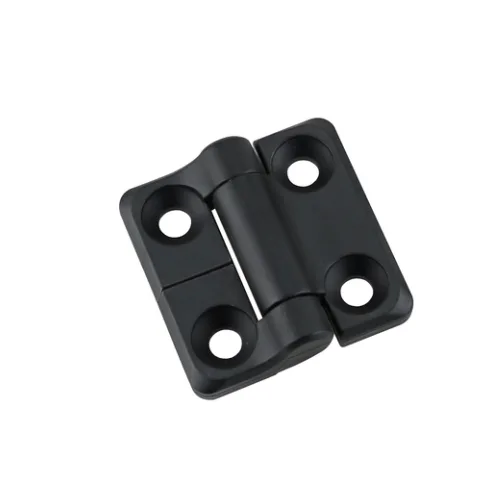
A friction hinge generates holding force through direct surface contact resistance between internal components — spring plates, friction washers, or a tight interference fit between shaft and sleeve. When the panel rotates, this resistance produces damping torque that counteracts the panel’s weight, allowing it to hold at any angle.
Types of Friction Hinges
- Leaf-type: A curved metal leaf clamps around the shaft to create friction. Simple, low-cost, widely used in consumer products.
- Washer-type: Friction is generated by compressing a stack of metal or polymer washers. Slightly more consistent than leaf-type.
- Sleeve-type: A sleeve tightly encircles the rotating shaft, producing controlled resistance. Common in compact electronics.
Why Basic Friction Hinges Fail
Friction hinges offer simplicity and low cost, but their core limitation is mechanical: the same surface contact that creates holding force also creates wear. Over time, this creates a cascade of performance issues that basic friction hinges cannot avoid:
- Torque decay: Friction surfaces wear progressively. In high-cycle applications, noticeable torque loss typically appears within 2,000–5,000 cycles — the panel begins to drift or droop.
- Worn hinge pins: Metal-on-metal contact at the pivot point creates incremental wear, introducing play and looseness that cannot be reversed without replacement.
- Loosened fasteners: Vibration from daily use progressively loosens mounting screws, creating gaps between the hinge and the mounting surface. This shifts load concentration to the remaining tight fasteners, accelerating their failure.
- Unit-to-unit variation: Manufacturing tolerances produce significant torque variation between individual units — problematic for products where consistent feel matters.
- Stick-slip effect: Some friction hinge designs exhibit high initial breakaway resistance followed by a sudden drop in running resistance, creating an uneven, jerky feel.
- Environmental sensitivity: Open friction surfaces are vulnerable to dust, moisture, and temperature changes — all of which alter the friction coefficient and therefore the torque output.
- No built-in braking: Standard friction hinges lack any mechanism to prevent a heavy panel from slamming shut under its own weight once the friction surface degrades — creating both a safety hazard and a damage risk to the product.
These failure modes compound over time. A friction hinge that performs acceptably in month one may produce a noticeably degraded user experience by month six in a daily-use product — and a potential safety issue by month twelve.
Cycle life and durability testing for hinges can be referenced against DIN EN 1935 (Building Hardware – Single-axis Hinges), which covers cyclic and corrosion testing protocols.
What Is a Torque Hinge?
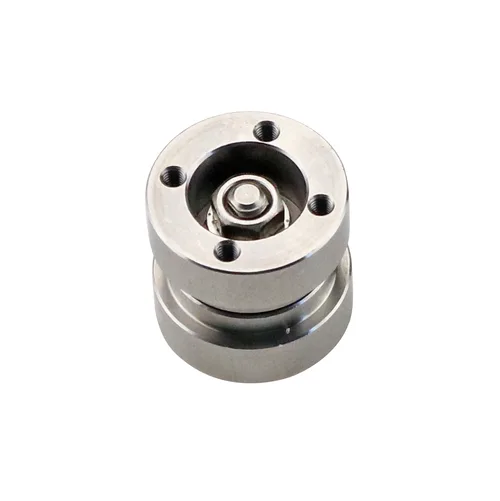
A torque hinge — also called a precision torque hinge or constant-torque hinge — is an engineered evolution of the friction hinge. Where a basic friction hinge relies on surface contact alone, a torque hinge uses a calibrated internal mechanism to deliver a specific, rated torque value that remains stable over the product’s service life.
It is worth clarifying a common source of confusion: most torque hinges also generate holding force through friction — but through precision-controlled friction elements rather than simple surface contact. The key differences are calibration, consistency, and longevity.
Core Technologies
- Multi-disc friction assemblies: Stacked precision discs — similar in concept to automotive clutch packs — distribute wear across multiple surfaces, dramatically extending service life.
- Encapsulated spring systems: Internal springs maintain consistent preload on friction elements throughout the rotation range, reducing torque variation with angle.
- Curled spring sheet mechanism: A curled spring sheet inside the hinge shaft provides controlled, predictable resistance — common in compact electronic device hinges where space is extremely limited.
- High-viscosity fluid damping: Some precision designs incorporate viscous fluids that reduce internal wear and produce exceptionally smooth motion feel — particularly valued in premium consumer electronics and medical equipment.
- Sealed construction: Factory-filled with specialized grease, sealed against dust and moisture ingress — maintaining consistent performance in harsh environments.
- Factory calibration: Each unit is torque-tested before shipment, ensuring batch-to-batch consistency within ±10–15% of the rated value.
Strengths and Limitations
- Durability: Rated for 10,000–50,000+ cycles with torque decay typically below 15% at end of rated life — validated per ASTM F1574.
- Consistency: Factory-calibrated torque eliminates the unit-to-unit variation that plagues basic friction hinges.
- Premium feel: Smooth, quiet, uniform motion with no stick-slip effect — a measurable contributor to perceived product quality in consumer electronics and medical equipment.
- Environmental resilience: Sealed construction maintains consistent torque output across a wide temperature range (-40°C to +85°C for most industrial grades).
- Limitations: Higher initial cost due to precision manufacturing; slightly larger form factor for equivalent torque output compared to basic friction hinges.
Adjustable vs. Constant Torque: Which Sub-Type Do You Need?
Within the torque hinge family, the most important sub-type decision is between adjustable and constant (fixed) torque designs. Both deliver the core benefit of position control, but they serve different engineering requirements.
| Feature | Adjustable Torque Hinge | Constant Torque Hinge |
|---|---|---|
| Torque setting | User-adjustable via screw (hex key or spanner) | Factory-set, fixed torque value |
| Torque range | Variable within rated range (e.g., 0–4.9 N·m) | Single rated value (e.g., 0.5–20 in-lb per model) |
| Best for | Products where panel weight may change, field-serviceable equipment, prototyping | Products with fixed panel weight, high-volume production, medical devices |
| Consistency | Depends on adjustment accuracy — user error possible | Highest consistency — no user adjustment variables |
| Typical applications | Industrial access panels, machinery covers, adjustable display mounts, equipment bonnets | Laptops, medical monitors, small LCDs, safety guards |
Adjustable torque hinges include a single adjustment screw — typically accessible with a hex key — that controls the preload on internal friction elements. This allows field adjustment to match the exact weight and balance of the panel. The trade-off is that incorrect adjustment (over-tightening or under-tightening) can degrade performance. For applications where the panel weight is known and fixed at the design stage, a constant torque hinge eliminates this variable entirely.
Constant torque hinges deliver the same rated torque throughout their service life with no adjustment required. Research on constant-torque flexure mechanisms has demonstrated that torque output can remain consistent with only approximately 5% deviation between theoretical and measured values — making them the preferred choice for applications where predictability and zero-maintenance operation are critical.
Selection shortcut: If you need field adjustability or are prototyping with uncertain panel weights, choose adjustable. If the panel weight is fixed and you want maximum consistency with zero maintenance, choose constant torque.
For a detailed breakdown of adjustable torque hinge mechanisms and specific torque ranges by model series, see our torque hinge product catalog.
Head-to-Head Comparison
The table below compares friction and torque hinges across the dimensions that matter most for engineering and procurement decisions.
| Dimension | Friction Hinge | Precision Torque Hinge |
|---|---|---|
| Torque accuracy | Low — wide tolerance range, varies by unit | High — factory-calibrated to rated value ±10–15% |
| Torque consistency over life | Poor — rapid, unpredictable decay | Excellent — <15% decay over rated cycle life |
| Rated cycle life | Hundreds to low thousands of cycles | 10,000–50,000+ cycles (application dependent) |
| Operating feel | May exhibit stick-slip, noise, or jerky motion | Smooth, uniform, quiet throughout rotation range |
| Environmental resistance | Poor — open to dust, moisture, temperature effects | Excellent — sealed construction, wide temp. range |
| Maintenance requirement | Periodic cleaning or adjustment needed | Maintenance-free (sealed units) |
| Initial unit cost | Low ($2–$15 typical) | Higher ($15–$80+ depending on torque and material) |
| Total cost of ownership | Higher — replacement and downtime costs accumulate | Lower — longer service life reduces lifecycle cost |
| Typical applications | Toolboxes, mirrors, storage lids, toy chests | Laptops, medical monitors, industrial enclosures, EV charging stations |
Environmental Durability: Why Torque Hinges Last Longer
The performance gap between friction hinges and torque hinges widens dramatically when environmental stress is factored in. In controlled laboratory conditions, a friction hinge may perform adequately for several thousand cycles. In real-world conditions — dust, humidity, temperature swings, vibration — degradation accelerates significantly.
How Environments Degrade Standard Friction Hinges
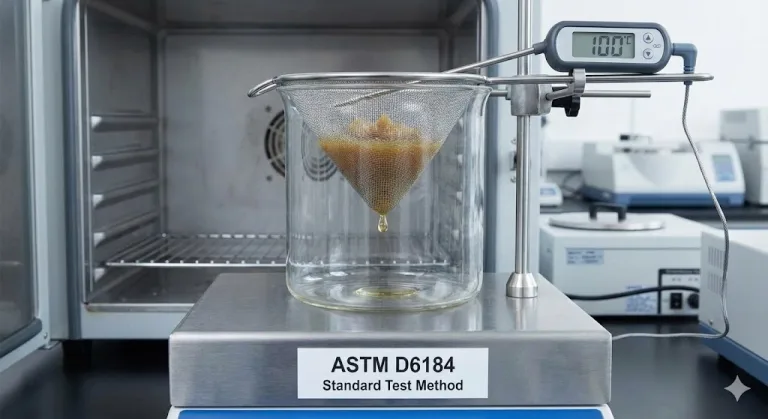
- Moisture and salt spray: Exposed metal friction surfaces corrode, altering friction coefficients unpredictably. Standard consumer hinges routinely fail corrosion testing under ASTM B117 salt spray protocols.
- Dust and particulate contamination: Abrasive particles embed in friction surfaces, accelerating wear rates by 3–5× compared to clean-room conditions.
- Temperature cycling: Thermal expansion and contraction changes clearances between friction surfaces. Lubricant viscosity shifts with temperature — thickening in cold conditions (increasing breakaway torque) and thinning in heat (reducing holding force). Standard lubricants in consumer hinges typically degrade outside the -10°C to +50°C range.
- Vibration: Continuous vibration from machinery, vehicles, or building HVAC systems progressively loosens fasteners and accelerates pin wear — the two most common mechanical failure modes in standard hinges.
How Torque Hinges Resist These Factors
Precision torque hinges are specifically engineered to maintain performance under environmental stress:
- Sealed enclosures (IP65–IP68): Prevent moisture, dust, and particulate ingress entirely. Internal friction elements never contact the external environment.
- Corrosion-resistant materials: 316L stainless steel, nitrided shafts, and passivated surfaces withstand salt spray exposure without degradation.
- Wide-temperature lubricants: Factory-filled with synthetic greases rated for -40°C to +85°C (industrial grades) or wider, maintaining consistent viscosity across the operating range.
- Vibration resistance: Multi-disc assemblies distribute load across multiple friction interfaces, eliminating the single-point-of-failure characteristic of pin-and-sleeve designs.
Durability Data Comparison
| Test / Metric | Standard Friction Hinge | Precision Torque Hinge |
|---|---|---|
| Rated cycle life | 1,000–5,000 cycles | 20,000–100,000+ cycles |
| Torque decay at end of life | 30–50%+ (unpredictable) | <15% (validated per ASTM F1574) |
| Salt spray resistance (ASTM B117) | 100% failure after 500 hours (uncoated steel) | 0% failure after 5,000 hours (316L SS / nitrided) |
| Vibration endurance (20G load) | ~50,000 cycles to fracture | 500,000+ cycles crack-free |
| Thermal expansion rate | >0.8% (sealing failure risk) | <0.1% (engineered clearances) |
| Extreme cold failure rate | 3.2 failures/year (brittle fracture risk) | 0 failures in 12-month field test |
| Maintenance cost vs. baseline | Baseline | 50% lower (longer replacement cycle) |
| Environmental protection rating | None (open construction) | IP65–IP68 (sealed) |
The data above demonstrates that in demanding environments — outdoor installations, industrial facilities, medical settings, vehicles — torque hinges do not merely outperform friction hinges but operate in a fundamentally different durability class. The sealed, calibrated construction eliminates the environmental vulnerability that is inherent to open friction surfaces.
Safety and Ergonomic Benefits
The engineering case for torque hinges extends beyond durability into two areas that directly affect end users: safety and physical comfort.
Safety
A hinge that loses holding force creates a hazard. Heavy panels that drift or slam shut can cause injury, damage sensitive components, or trigger regulatory non-compliance in medical, industrial, or automotive applications.
- Anti-slam protection: The consistent counter-torque of a precision hinge prevents panels from free-falling under gravity — eliminating the primary mechanism of hinge-related pinch and impact injuries.
- Predictable behavior: Because torque output remains within a narrow band throughout the product’s life, users can develop reliable expectations about how the panel will behave — a safety-critical factor in medical and industrial contexts where attention is focused on the task, not the equipment.
- Regulatory alignment: Applications subject to IEC 60601-1 (medical), ISO 14120 (machine guarding), or automotive interior safety standards often require documented evidence of consistent hinge performance over rated service life — a requirement that factory-calibrated torque hinges satisfy by design.
Ergonomics
Ergonomic research consistently shows that the force required to operate equipment directly affects user fatigue, comfort, and accessibility. Torque hinges contribute to ergonomic design in measurable ways:
- Reduced operating effort: A properly specified torque hinge makes a heavy panel feel dramatically lighter. For example, a 200 lb (90 kg) engine hood supported by counterbalanced torque hinges may require only 10 lb (4.5 kg) of opening effort —a 95% reduction in required force.
- One-hand operation: When the torque is correctly matched to the panel weight, users can open, position, and release the panel with a single hand — freeing the other hand for tools, instruments, or patient care.
- Accessibility compliance: Products designed for ADA (Americans with Disabilities Act) or EN 12182 (assistive products) compliance benefit from torque hinges that keep operating forces within accessible ranges — typically below 22 N (5 lbf) for one-hand operation.
- Repetitive strain reduction: In workstations where panels are opened and closed dozens of times per shift — diagnostic equipment, test benches, inspection stations — the smooth, consistent motion of a torque hinge reduces cumulative strain on wrists and shoulders compared to the jerky, variable resistance of worn friction hinges.
These safety and ergonomic advantages compound over the product’s lifetime. A friction hinge that feels acceptable on day one may become a safety concern or ergonomic liability within months as torque degrades — while a properly specified torque hinge maintains the same user experience from first cycle to last.
How to Calculate Required Torque
Selecting the right torque value is the most critical step in hinge specification. Too little torque and the panel drifts; too much and the user struggles to move it. The calculation is straightforward but must account for the panel’s weight, dimensions, and mounting geometry.
Basic Torque Formula
The minimum holding torque required at any angle is:
T = W × L × sin(θ)
- T = torque (N·m or in-lb)
- W = panel weight (N or lb)
- L = distance from hinge axis to center of gravity (m or in)
- θ = opening angle (from vertical)
Maximum torque demand occurs at θ = 90° (horizontal position), where sin(90°) = 1. This is the worst-case scenario and the angle you should design for.
Applying a Safety Factor
Always multiply the calculated torque by a safety factor to account for wear, temperature effects, and manufacturing tolerance:
T_design = T × Safety Factor
| Application Type | Recommended Safety Factor |
|---|---|
| Consumer electronics (indoor, light use) | 1.2× |
| Office / commercial equipment | 1.3–1.5× |
| Industrial / outdoor installations | 1.5–2.0× |
| Medical / safety-critical applications | 2.0×+ |
Worked Example
A medical monitor panel weighing 3 kg (29.4 N) is mounted on a hinge. The center of gravity is 150 mm (0.15 m) from the hinge axis.
- Maximum torque at 90°: T = 29.4 N × 0.15 m × sin(90°) = 4.41 N·m
- Apply medical safety factor (2.0×): T_design = 4.41 × 2.0 = 8.82 N·m
- Select a torque hinge rated at ≥ 8.82 N·m
For multi-hinge installations, divide the total required torque by the number of hinges. Two hinges supporting the same panel would each need ≥ 4.41 N·m in this example.
For a step-by-step walkthrough with additional examples covering asymmetric loads and multi-hinge configurations, see our Torque Hinge Selection Guide.
Decision Guide: Which One Do You Need?
Use this decision framework to match your application requirements to the correct hinge type. Start with the first question and follow the path.
Step 1: Does Position Holding Matter?
- No — the panel just needs to open and close → Use a standard butt hinge, piano hinge, or self-closing hinge. You do not need a friction or torque hinge.
- Yes — the panel must hold at any angle the user sets → Continue to Step 2.
Step 2: How Many Cycles Over Product Life?
- Under 5,000 cycles → A friction hinge is likely sufficient. Verify that torque decay is acceptable for your application.
- Over 5,000 cycles → A torque hinge is strongly recommended. Continue to Step 3.
Step 3: Is Torque Consistency Critical?
- No — some torque variation is acceptable (e.g., a storage cabinet) → A friction hinge may still work. Consider a torque hinge if budget allows for improved user experience.
- Yes — drift, sag, or slam would be a safety, quality, or user-experience problem → Use a torque hinge. Continue to Step 4.
Step 4: Fixed or Variable Panel Weight?
- Fixed (weight is known and constant, e.g., a laptop lid) → Choose a constant torque hinge.
- Variable (weight may change due to accessories, replaceable components, or field modifications) → Choose an adjustable torque hinge.
Step 5: Environmental Conditions?
- Indoor, climate-controlled → Standard torque hinge materials are sufficient.
- Outdoor, dusty, humid, or extreme temperature → Specify a sealed torque hinge (IP65+) with corrosion-resistant materials (316L SS or equivalent).
Step 6: Rotation Range?
- 0–180° → Standard torque hinge.
- Full 360° → Specialized 360° friction hinge required. See our 360-Degree Friction Hinge Engineering Guide for convertible devices, kiosk, and monitor applications.
Real Application Examples
The following examples show how the friction-vs-torque decision plays out in real products across different industries.
Consumer Electronics: Laptop Hinges
The problem: A laptop lid weighing 400–800 g must hold at any angle between 0° and 135° (or 360° for convertibles), with smooth one-finger operation, for 20,000+ open-close cycles over a typical 3–5 year product life.
Why friction hinges fail here: A basic friction hinge in a daily-use laptop will begin to show noticeable drift within 6–12 months. The lid starts to fall back under its own weight — one of the most common hardware complaints in budget laptops.
The torque hinge solution: Laptop manufacturers use compact constant-torque hinges — typically 4–8 mm shaft diameter — with curled spring sheet or multi-disc mechanisms rated for 20,000–30,000 cycles. The hinge is specified to hold the lid at any angle with one-finger opening force and zero drift.
For convertible (2-in-1) laptops requiring 360° rotation, the engineering challenge increases significantly. See our 360° Friction Hinge Engineering Guide for detailed specifications covering tent mode, tablet mode, and screen-bounce mitigation.
Medical Equipment: Monitor Arms and Panel Displays
The problem: A diagnostic monitor or surgical display weighing 2–8 kg must hold position precisely at any angle. Drift during a procedure is not merely inconvenient — it can obstruct the clinician’s view and compromise patient care.
Why friction hinges fail here: Medical equipment is subject to frequent adjustment (multiple repositioning events per shift), cleaning chemical exposure, and regulatory requirements for documented performance consistency. Basic friction hinges cannot meet these requirements.
The torque hinge solution: Medical-grade torque hinges are specified with 2.0× safety factors, sealed construction (IP65+), and chemical-resistant materials. Each hinge is factory-calibrated and typically supplied with a certificate of conformance documenting torque output — supporting IEC 60601-1 compliance documentation.
Industrial Enclosures and Access Panels
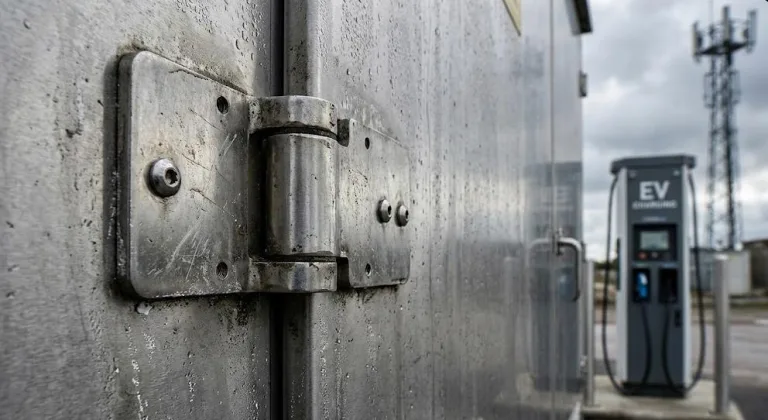
The problem: A steel access panel on a CNC machine, electrical enclosure, or EV charging station weighing 5–25 kg must open to a service position and hold there without external support — freeing both of the technician’s hands for maintenance work.
Why friction hinges fail here: Industrial environments combine heavy panel weights, high vibration, temperature extremes, and dust exposure — all of which accelerate friction hinge degradation. A failed hinge in this context is a direct safety hazard (falling panel) and a maintenance cost driver.
The torque hinge solution: Heavy-duty adjustable torque hinges rated for 50,000+ cycles in industrial conditions. Adjustable torque allows field technicians to compensate for any panel modifications (added insulation, cable routing, replacement components) without replacing the hinge. Stainless steel construction and sealed bearings handle the environmental exposure.
For specific torque hinge models suited to industrial applications, browse our industrial torque hinge catalog.
Installation and Maintenance
Installation Best Practices
- Mount the hinge with the panel in the closed position. This ensures correct alignment before load is applied.
- Use all mounting holes. Skipping fastener positions concentrates stress on the remaining holes, accelerating fatigue failure at the mount points.
- Apply thread-locking compound (e.g., Loctite 243 medium-strength) to all mounting fasteners. Vibration-induced fastener loosening is the number-one cause of hinge-related field failures — and it is entirely preventable.
- Verify torque after installation. For adjustable torque hinges, use a torque wrench or torque gauge to confirm the hinge output matches specification before the product ships or the enclosure is closed.
- Check alignment with the panel at 90°. At horizontal, any misalignment between the hinge axis and the panel’s pivot line will create uneven loading — accelerating wear on one side of the hinge.
Maintenance Guidelines
| Hinge Type | Maintenance Requirement | Recommended Interval |
|---|---|---|
| Basic friction hinge | Clean friction surfaces, check for wear, re-tighten fasteners, apply lubricant if needed | Every 1,000–2,000 cycles or 6 months |
| Constant torque hinge (sealed) | Visual inspection only — check mounting fasteners, inspect for external damage | Annually or per manufacturer recommendation |
| Adjustable torque hinge | Check and verify torque setting, inspect adjustment screw for damage | Every 5,000 cycles or 12 months |
Important: Never attempt to lubricate a sealed torque hinge externally. The factory-applied internal lubricant is specifically formulated for the friction elements inside the hinge. Adding external lubricant can migrate past seals and dilute or contaminate the internal grease — reducing torque output permanently.
Common Misconceptions
Several persistent myths prevent engineers and procurement teams from specifying the right hinge for their application. Here are the most common — and the reality behind each.
Misconception 1: “Torque hinges are too expensive”
Reality: Torque hinges have a higher unit cost than basic friction hinges — typically 3–5× more. But total cost of ownership tells a different story. A single torque hinge rated for 50,000 cycles can outlast 5–10 friction hinges in the same application. When you factor in the cost of replacement parts, labor for field service, product returns, warranty claims, and potential liability from hinge-related injuries, the torque hinge is frequently the lower-cost option over the product’s lifetime.
Misconception 2: “Torque hinges are only for high-end products”
Reality: Modern manufacturing has brought torque hinge costs down significantly. Compact torque hinges for consumer electronics applications (laptops, tablets, small displays) are now available at price points that make them viable for mid-range products — not just premium ones. The performance gap between a $3 friction hinge and a $12 torque hinge is vastly disproportionate to the cost difference.
Misconception 3: “Torque hinges require more maintenance”
Reality: The opposite is true. Sealed constant-torque hinges are maintenance-free for their entire rated service life. Basic friction hinges require periodic cleaning, lubrication, and fastener re-tightening — and even with maintenance, their torque output degrades irreversibly as friction surfaces wear.
Misconception 4: “Friction hinges and torque hinges are the same thing”
Reality: While torque hinges do use friction as their underlying physical mechanism, calling them “the same” is like calling a precision ball bearing and a plain bushing “the same” because both reduce rotational friction. The engineering, calibration, sealing, and performance characteristics are fundamentally different — and so are the results in your product.
Future Trends in Hinge Technology
Hinge technology is evolving rapidly, driven by trends in miniaturization, smart devices, and sustainability. These developments will shape how engineers specify positioning hinges over the next 5–10 years.
Smart Hinges with Embedded Sensors
The integration of angle sensors, strain gauges, and wireless transmitters directly into the hinge body is already in prototype stages at several major hinge manufacturers. Smart hinges will enable real-time monitoring of opening angle, cycle count, torque output, and remaining service life — feeding data into IoT platforms for predictive maintenance. This is particularly valuable in industrial and medical applications where unplanned hinge failure has significant consequences.
Advanced Materials
- Metal injection molding (MIM): MIM technology enables complex internal geometries that are impossible with traditional machining — allowing higher torque density in smaller packages. This is already being adopted for ultra-thin laptop hinges where every millimeter of thickness matters.
- Self-lubricating polymers: Advanced polymer friction elements that release micro-amounts of lubricant over their service life, further extending cycle life without external maintenance.
- Carbon-fiber composite hinges: For weight-sensitive applications (aerospace, portable medical devices), composite hinge bodies can reduce mass by 40–60% compared to stainless steel while maintaining equivalent torque output.
Sustainability and Circular Design
As manufacturers face increasing pressure to meet sustainability targets, hinge design is adapting in two key ways:
- Longer service life as a sustainability strategy: A torque hinge that lasts the entire product life eliminates mid-life hinge replacement — reducing material consumption, packaging waste, and service-trip carbon emissions.
- Recyclable and mono-material construction: New hinge designs are moving toward single-alloy construction (all-stainless or all-aluminum) that can be recycled without disassembly or material separation — supporting Design for Disassembly (DfD) principles.
FAQ
What is the difference between a friction hinge and a torque hinge?
Both hold panels at set angles, but they differ in mechanism and performance. A friction hinge uses basic surface contact to resist rotation — simple and cheap, but torque fades as surfaces wear. A torque hinge uses calibrated internal mechanisms (multi-disc assemblies, springs, or polymer elements) to deliver consistent, rated torque over tens of thousands of cycles. The practical difference is longevity: friction hinges degrade noticeably within a few thousand cycles, while torque hinges maintain performance throughout their rated service life.
Can I replace a friction hinge with a torque hinge in an existing product?
In most cases, yes. Torque hinges are available in form factors that match common friction hinge mounting patterns. The key steps are: (1) calculate the required holding torque using the formula in this guide, (2) select a torque hinge with matching mounting dimensions, and (3) verify that the hinge’s torque rating exceeds your calculated requirement including safety factor. For drop-in replacement options, see our torque hinge catalog or contact our engineering team for a fit check.
How long do torque hinges last?
Rated cycle life depends on the design and application. Consumer-grade torque hinges (laptops, small displays) are typically rated for 20,000–30,000 cycles. Industrial-grade torque hinges are rated for 50,000–100,000+ cycles. “Cycle life” means the hinge will maintain its rated torque output within specified tolerance (typically <15% decay) for that many full open-close cycles. Actual service life in years depends on usage frequency — a laptop opened 10 times per day reaches 20,000 cycles in about 5.5 years.
What torque value do I need?
Use the formula T = W × L × sin(θ), where W is panel weight, L is the distance from hinge axis to center of gravity, and θ is the maximum opening angle. Multiply the result by a safety factor (1.2× for consumer, up to 2.0× for medical/safety-critical). See the calculation section above for a worked example, or use our Torque Hinge Selection Guide for step-by-step assistance.
Are torque hinges adjustable?
Some are, some are not. Adjustable torque hinges include a screw mechanism that allows field adjustment of torque output within a rated range — useful when panel weight may vary. Constant torque hinges are factory-set to a fixed value and cannot be adjusted — ideal for applications with known, fixed panel weights. See the adjustable vs. constant torque section above for selection guidance.
Do torque hinges work in extreme temperatures?
Yes. Industrial-grade sealed torque hinges are typically rated for -40°C to +85°C continuous operation. Specialized high-temperature variants are available for applications up to +150°C. The sealed construction and wide-temperature lubricants maintain consistent torque output across this range — unlike basic friction hinges, where lubricant viscosity shifts significantly with temperature.
Can torque hinges be used on heavy panels?
Yes. Heavy-duty torque hinges are available with torque ratings up to 50+ N·m per hinge — sufficient for steel access panels weighing 25 kg or more. For very heavy panels, multiple torque hinges are used in parallel, with the total required torque divided equally among them. Industrial applications such as CNC machine enclosures, EV charging station doors, and generator access panels routinely use torque hinges for panels in the 10–30 kg range.
What is the difference between torque and damping in a hinge?
Torque (in the context of positioning hinges) refers to the rotational resistance that holds a panel at a set angle — it opposes gravity to prevent drift. Damping refers to speed-dependent resistance — it slows the closing velocity to prevent slamming but does not hold position. A soft-close kitchen cabinet hinge uses damping. A laptop screen hinge uses torque. Some premium hinges combine both functions — holding position at any angle while also controlling closing speed in the final degrees of rotation.

 English
  한국어
한국어  Русский
  Español
  Italiano
  Deutsch
  Français
  Português