

Torque Hinges in Industrial Monitor Arms
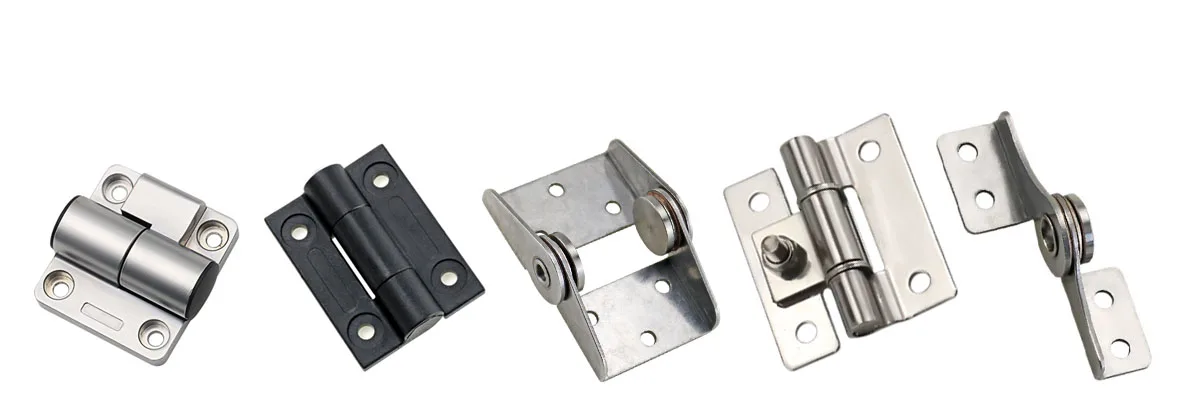
Why Torque Hinges Are Critical in Industrial Monitor Arms
Industrial monitor arms are not simple consumer display accessories. They support operator-facing HMIs, machine-control screens, warehouse terminals, inspection displays, and monitoring interfaces that must hold position reliably in real working environments. In these applications, the screen must move smoothly, stop where the user leaves it, and remain stable under repeated adjustment, vibration, and daily production use.
Torque hinges solve this problem by generating controlled rotational resistance through internal friction. Unlike free-swing pivots, mechanical locks, or bulky support hardware, they allow a monitor or HMI to hold at a chosen angle without external props, reducing clutter and improving usability.
This page focuses specifically on industrial monitor arms, HMIs, and operator display systems. It is not a general torque hinge definition page, and it is not a medical-only selection page. The purpose here is to explain why torque hinges work well in industrial monitor arms, what engineering variables matter most, and how to avoid under-specifying hinges for displays that must stay stable in real industrial use.
What Monitor Arm Designers Actually Need From a Torque Hinge
In a monitor arm application, a torque hinge is not only expected to hold a screen. It usually has to satisfy several requirements at the same time:
- Repeatable angle holding: the display should stay where the operator positions it, without gradual drift.
- One-hand repositioning: the monitor must move without excessive force, especially in fast HMI workflows.
- Stable touch interaction: the screen should not shake or sag when the user presses on it.
- Long-term consistency: movement feel and holding torque should remain usable after many cycles.
- Compact packaging: the motion-control solution should fit inside clean, space-limited industrial designs.
These requirements are why torque hinges are often preferred over free pivots, external locks, or bulkier support mechanisms in industrial displays.
How Torque Hinges Work in Monitor Arm Applications
A torque hinge provides rotational resistance through friction interfaces such as discs, spring-preloaded washers, or compressed internal contact surfaces. As the monitor rotates, the hinge generates a resisting moment that counters gravitational torque and stabilizes the selected angle.
In practical monitor arm use, this means:
- the screen can be positioned without a latch, knob, or separate stay
- the user can stop movement at intermediate angles
- the hinge resists drift caused by weight, vibration, or repeated repositioning
For broader engineering logic on sizing, safety factor, and torque calculations, continue with the torque hinge selection guide.
Industrial HMI Scenarios Where Torque Hinges Add Real Value
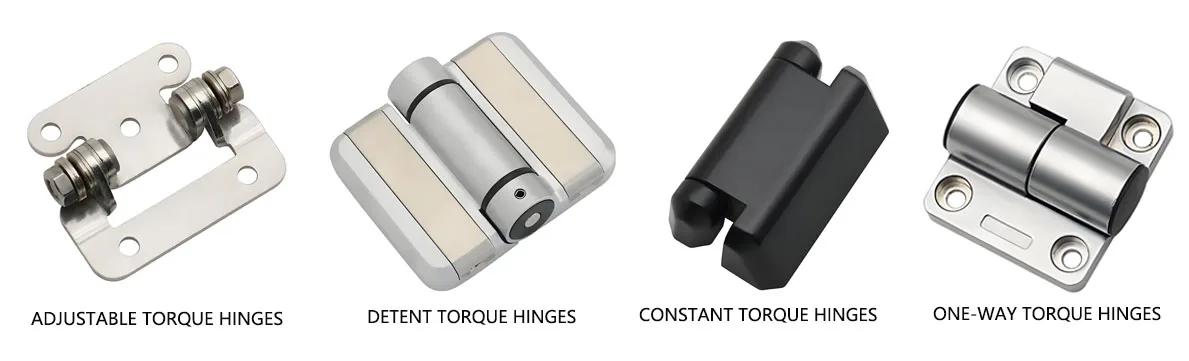
Not all industrial displays behave the same way. The monitor-arm requirement changes depending on operator workflow, vibration exposure, cleaning demands, and screen size.
Operator Station HMIs
At standing machine stations, operators often reposition screens to reduce glare, improve reach, or align the display with different working heights. In this case, the hinge must balance two things: low enough operating effort for one-hand adjustment, and high enough holding torque to prevent drift after the display is released.
Multi-Screen Control Rooms
In control rooms, space efficiency matters. External support arms or bulky counterbalance systems can interfere with neighboring screens. Torque hinges are valuable here because they deliver compact free-stop control without adding large visible support components.
Mobile or Vibration-Prone Display Systems
Forklift terminals, mobile inspection panels, vehicle-mounted industrial displays, and vibration-prone machine HMIs place much higher demand on holding stability. In these applications, the hinge must resist gradual angle loss under repetitive vibration and operator touch input.
Why Vibration Resistance Matters More Than Many Designers Expect
Monitor arm performance is not only about static holding. In real factories, screens are affected by machine vibration, intermittent shock, repeated touchscreen input, and operator adjustment. A display that slowly drifts or shakes during use can reduce readability, make touch interaction less accurate, and create frustration in production environments.
- Continuous vibration can gradually overcome weak holding torque.
- Intermittent shock can amplify movement if the hinge pair is not balanced correctly.
- Touchscreen use adds repeated forward force that exposes under-specified hinges quickly.
This is why vibration resistance should not be treated as a marketing phrase. It is a real design requirement in industrial displays. The hinge must not only support the static mass of the monitor, but also preserve angle stability under dynamic use.
Ergonomic Parameters Engineers Should Review
In industrial monitor arms, ergonomics is a mechanical issue as much as a human-factor issue. Poor hinge selection affects usability directly.
| Parameter | Why It Matters |
|---|---|
| Monitor weight and center of gravity | Determines the actual torque requirement, not just nominal screen size |
| Adjustment force | Must be low enough for practical one-hand repositioning |
| Holding stability after release | Prevents drift after the display is set |
| Viewing angle range | Defines the working motion range the hinge must control |
| Touch interaction stability | Prevents shake, bounce, or movement during input |
| Standing vs seated use | Affects angle targets, reposition frequency, and operator reach |
A good monitor arm hinge does not feel as strong as possible. It feels balanced. The user should be able to reposition the screen without strain, but the screen should still stay put during work.
Matched Pairs: Why Dual-Hinge Balance Matters
Many industrial monitor arms use two hinges in parallel. In theory, this spreads the load. In practice, left-right inconsistency can create twist, uneven movement feel, noise, and long-term single-side wear. That is why matched hinge pairs matter more in monitor arms than many buyers expect.
If your display arm uses two hinges to share load and movement, review why torque hinges require matched pairs before final specification. This is especially important in displays that must maintain smooth synchronized motion across the full adjustment range.
Material Selection for Industrial Monitor Arm Hinges
Material choice affects more than corrosion resistance. In industrial monitor arms, it also affects wear stability, temperature behavior, cleanability, and long-term torque consistency.
- 304 / 316 stainless steel: preferred where corrosion resistance and cleanability matter
- Hardened steel: useful where high strength and wear resistance are priorities
- Engineered polymers or inserts: may help with friction control and reduced noise in some assemblies
Where corrosion, washdown, cleanability, or temperature stability are part of the application, compare the design against the torque hinge material guide before freezing the final hinge specification.
Medical Displays Are a Related but Separate Scenario
Industrial monitor arms and medical displays share some requirements, such as one-hand positioning, stable angle holding, and compact packaging. But medical systems add extra constraints, including hygiene, cleanability, smoother human interaction, and more sensitive equipment-use conditions.
For hospital, imaging, and device-specific selection logic, use our torque hinge selection for medical devices page instead of relying on this industrial-use article alone.
Practical Selection Rules for Industrial Monitor Arms
When selecting torque hinges for industrial monitor arms, check these points in order:
- Measure the real monitor weight and center of gravity.
- Define the required adjustment range and working angles.
- Estimate how often the operator will reposition the screen.
- Check whether the screen will be touched regularly during use.
- Review vibration, shock, and environmental exposure.
- Decide whether one hinge or matched dual hinges are needed.
- Verify material suitability for corrosion, temperature, and cleaning conditions.
Do not choose a monitor arm hinge only by screen size. A compact but front-heavy screen may need more torque than a larger but better-balanced display. Likewise, a rarely adjusted monitor and a frequently repositioned HMI should not automatically use the same hinge specification.
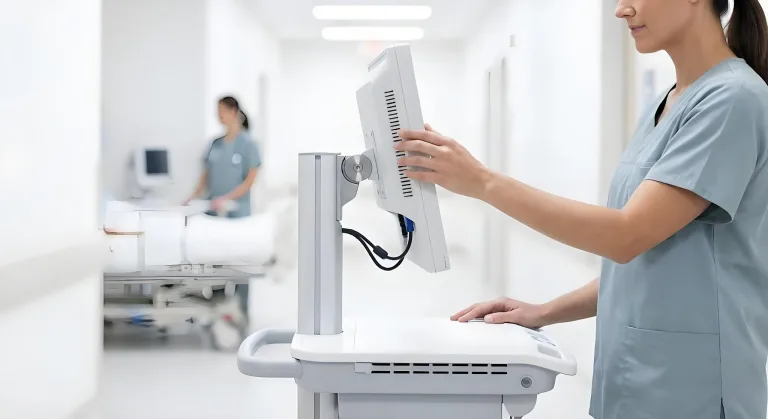
Torque Hinges in Action
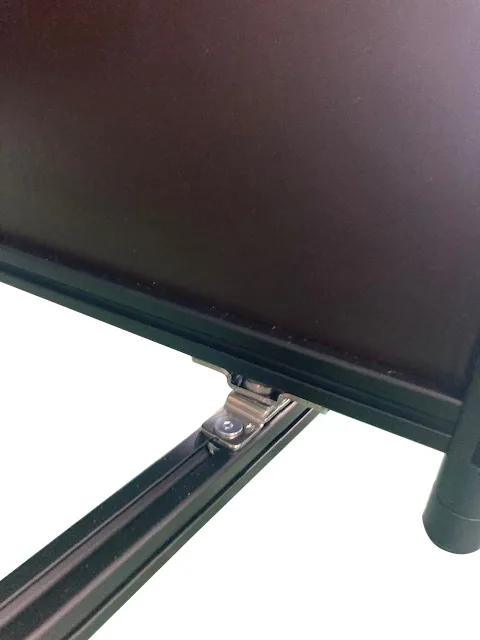
Example application of torque hinges in industrial displays and monitor arm systems.
- Automotive manufacturing: monitor drift can reduce operator efficiency and screen readability on busy production lines.
- Factory HMIs: free-stop control improves viewing angle flexibility without adding external locks.
- Warehouse control stations: compact monitor-arm layouts benefit from low-profile hinge integration.
Installation and Maintenance Best Practices
- Keep hinge axes aligned during installation.
- Use the recommended fasteners and mounting substrate.
- Check torque symmetry in dual-hinge systems.
- Inspect mounting looseness in high-vibration environments.
- Remove dust, oils, or contaminants using appropriate cleaning methods.
Many hinge failures in monitor arms are actually installation or matching failures. A correctly sized hinge can still perform poorly if the arm geometry is biased, the fasteners loosen, or the left and right hinges are not balanced.
FAQ
Q1: Why are torque hinges better than free pivots in industrial monitor arms?
A1: Because they provide controlled resistance and free-stop positioning, allowing the display to stay at the required angle without external locks or support hardware.
Q2: Why do industrial HMIs need stronger holding stability than office monitor arms?
A2: Because they often face vibration, repeated touch input, harsher environments, and more demanding operator workflows.
Q3: Should I use one hinge or two in a monitor arm?
A3: That depends on load, width, geometry, and motion feel targets. Dual-hinge systems often perform better in wider or heavier displays, but matched-pair consistency becomes more important.
Q4: Can a torque hinge monitor arm replace a gas spring arm?
A4: In many compact industrial display systems, yes. But if the display is much heavier and user lift effort must be reduced significantly, a different support strategy may be needed.
Q5: Which material is better for industrial monitor arm torque hinges?
A5: That depends on corrosion risk, temperature, cleaning requirement, and wear target. Stainless steels are often preferred where hygiene or corrosion resistance matters, while harder steels may be better where wear resistance dominates.
Conclusion
Torque hinges are well suited to industrial monitor arms because they combine free-stop positioning, compact packaging, and stable motion control in a single mechanical solution. But the real engineering challenge is not simply picking a torque hinge. It is selecting a hinge system that matches the display weight, center of gravity, operator workflow, vibration environment, and expected service life.
For industrial displays and HMIs, the best results come from treating the hinge as part of a full stability strategy: correct torque sizing, correct hinge pairing, correct material choice, and correct installation.


 English
  한국어
한국어  Русский
  Español
  Italiano
  Deutsch
  Français
  Português