

Torque Hinge Materials: SS304 vs SS316 vs Hardened Steel
How to Choose Torque Hinge Materials
Torque hinge failure is often blamed on poor structural design, but many field failures begin much earlier at the material level. A hinge may look mechanically correct on paper, yet still lose torque, develop rust, gall, or wear out quickly if the base material does not match the real environment and duty cycle.
For torque hinges, material choice affects four things at the same time: corrosion resistance, wear life, torque stability, and long-term maintenance risk. That is why engineers should not treat SS304, SS316, and hardened steel as interchangeable metals. Each one solves a different engineering problem.
This guide compares the three core material families used in industrial torque hinges: SS304 stainless steel, SS316 stainless steel, and hardened steel. The goal is not to declare one universal winner, but to help you choose the right material for the right application.
Why Material Mismatch Causes Torque Hinge Failure
A torque hinge is expected to hold position through repeated friction, environmental exposure, and mechanical loading. If the material is too soft, friction surfaces wear and torque decays. If corrosion resistance is too low, the hinge may stain, seize, or lose appearance quality. If the wrong stainless grade is chosen, chloride pitting can destroy surface integrity even when the hinge is technically stainless.
- A well-designed outdoor hinge can fail early if SS304 is used in a chloride-rich marine environment where SS316 is required.
- A high-cycle positioning hinge can lose stable holding force if the friction core uses soft, unhardened material.
- An all-stainless friction pair can suffer galling and stuttering even when corrosion resistance is adequate.
Material selection is therefore not only a corrosion question. It is also a torque-retention and wear-life question.
SS304 Stainless Steel: The General-Purpose Workhorse
SS304 is the most common industrial stainless grade used in torque hinge housings and external components. In controlled indoor and general outdoor environments, it offers a good balance of corrosion resistance, availability, and cost.
What SS304 Does Well
- Good corrosion resistance in ordinary indoor and non-marine outdoor conditions
- Solid general mechanical strength for common industrial hinge structures
- Better cost control than SS316 in volume production
- Good appearance quality for visible industrial hardware
Where SS304 Reaches Its Limit
SS304 is not the right answer for every corrosion environment. In salt spray, coastal installations, aggressive washdown zones, or long-term chloride exposure, its resistance can fall short. This is where many engineers overestimate “stainless steel” as a generic category and under-specify the hinge.
If your main concern is not material comparison but actual corrosion failure mechanisms, continue with why stainless steel hinges corrode.
SS316 Stainless Steel: The Better Choice for Chloride Exposure
SS316 is the preferred upgrade when the hinge must survive chloride-rich or highly corrosive environments. Its advantage comes mainly from molybdenum, which improves resistance to pitting corrosion.
Why SS316 Performs Better
- Higher resistance to chloride-induced pitting
- Better long-term surface stability in marine or chemical atmospheres
- More suitable for hygiene-sensitive and washdown environments
- Lower appearance risk in visible outdoor products where staining damages brand perception
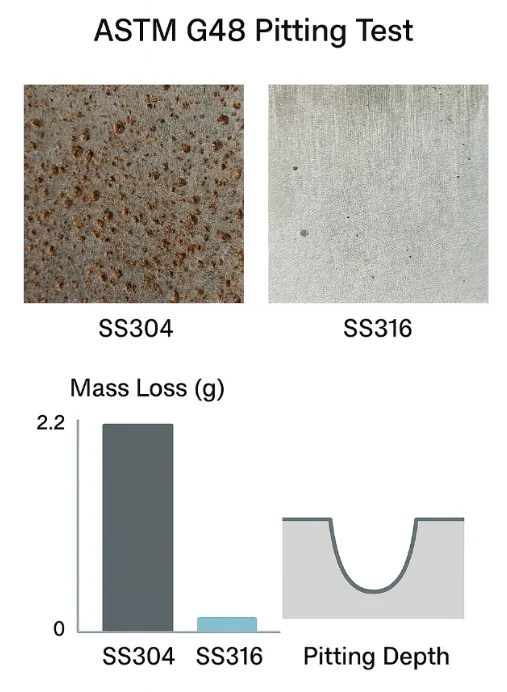
Figure: ASTM G48 pitting corrosion comparison showing why SS316 is preferred over SS304 in chloride-rich service.
For example, coastal charging stations, marine-adjacent enclosures, and chemical plant interfaces often justify SS316 because the replacement cost and corrosion risk quickly outweigh the initial material premium.
Where the application also combines corrosion, moisture, and low-temperature condensation, the material decision should be checked against your cold storage hinge environment logic, because those installations often accelerate both staining and surface degradation.
Hardened Steel: The Wear and Torque Stability Specialist
Hardened steel plays a different role. It is not primarily chosen for corrosion resistance. It is chosen because friction-based torque hinges need wear-resistant internal components that can keep their geometry and holding force over long cycle counts.
Why Hardened Steel Matters Inside Torque Hinges
- Higher surface hardness supports better wear resistance
- More stable friction geometry reduces torque decay over time
- Better suited for high-cycle positioning applications
- Essential where the hinge core must resist repeated sliding or compressive contact
The main weakness of hardened steel is obvious: corrosion resistance is poor if it is left exposed. That is why it is often best used internally rather than as the visible outer housing.
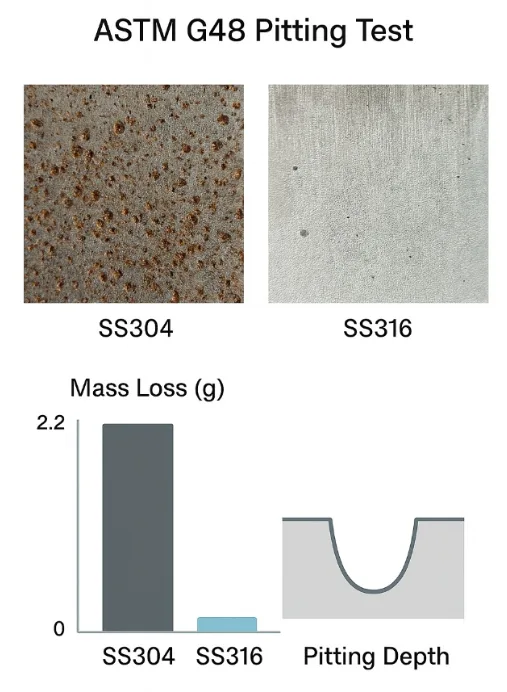
Figure: Hardened steel provides better long-term torque retention in high-cycle hinge applications because higher hardness reduces wear on friction interfaces.
Why Hybrid Material Designs Often Work Best
In many high-performance torque hinges, the best answer is not one material alone. It is a hybrid structure.
- Outer housing: SS304 or SS316 for corrosion resistance and external durability
- Internal core or friction shaft: hardened steel for wear resistance and torque stability
This combination helps solve the main weakness of each material:
- stainless steel protects the outside from rust and staining
- hardened steel protects the inside from early wear and torque decay
This is often the most realistic engineering answer for high-cycle industrial or equipment-grade torque hinges.
Material–Environment Selection Matrix
| Environment | SS304 | SS316 | Hardened Steel | Best Choice |
|---|---|---|---|---|
| Controlled indoor industrial | Good | Good but often over-specified | Suitable internally only | SS304 or hybrid |
| Coastal / salt spray | Risk of staining and pitting | Preferred | Not suitable exposed | SS316 or SS316 + hardened core |
| Washdown / chemical cleaning | Limited depending on chemistry | Preferred | Internal only with protection | SS316 |
| High-cycle dry internal mechanism | Moderate wear life | Moderate wear life | Excellent wear life | Hardened steel core |
| Medical / hygiene-sensitive | Often acceptable | Often preferred in harsher cleaning regimes | Use cautiously and usually internal only | SS304 or SS316 depending on cleaning exposure |
If your project is for healthcare devices or clinical equipment, do not rely on this material page alone. Check the full application logic in torque hinge selection for medical devices.
Cost vs Corrosion vs Wear Trade-Off
| Material | Corrosion Resistance | Wear Resistance | Relative Cost | Typical Use |
|---|---|---|---|---|
| SS304 | Good | Moderate | Medium | Indoor industrial, general outdoor, visible hardware |
| SS316 | Excellent | Moderate | Higher | Marine, chloride, washdown, high-corrosion settings |
| Hardened Steel | Poor if exposed | Excellent | Medium to high depending on treatment | Internal friction shafts, high-cycle cores, torque-critical wear surfaces |

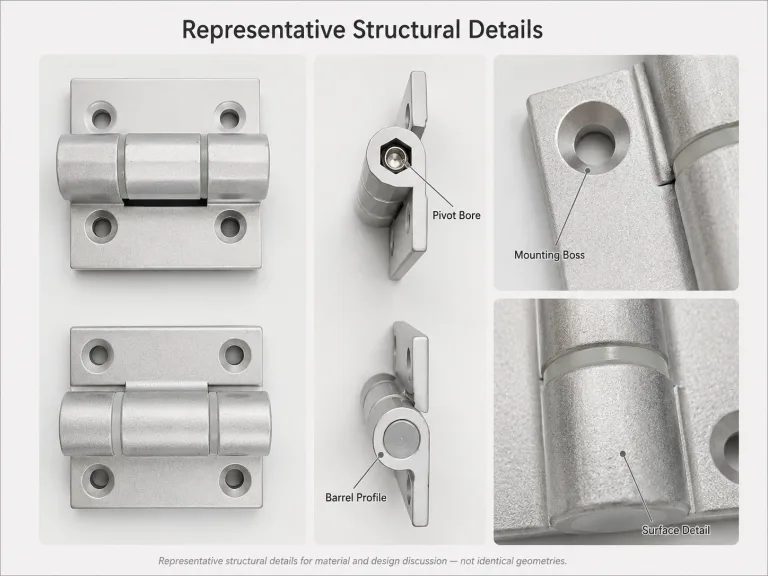
Figure: Overall material comparison showing how SS304, SS316, and hardened steel trade off corrosion resistance, wear life, and application fit.
This is the key trade-off: SS316 usually wins on corrosion resistance, SS304 usually wins on general value, and hardened steel usually wins on wear resistance and torque retention. The correct choice depends on which failure mode matters more in your design. When the decision comes down to upfront cost versus corrosion life, our guide on comparing carbon steel and stainless steel hinges breaks down where each one pays off.
The Hidden Risk of All-Stainless Friction Pairs: Galling
Engineers sometimes assume that using stainless steel everywhere creates the best hinge. In friction-based torque hinges, that can create a different problem: galling.
When stainless steel slides against stainless steel under pressure, the contact surfaces can adhere microscopically and begin a form of cold welding. The result is rough motion, stuttering, unstable feel, and in severe cases partial seizure.
- 304 against 304 is especially prone to adhesion under poor lubrication
- all-stainless friction structures increase motion-quality risk
- surface treatment, coating, nitriding, or hybrid pairing may be required
This is one reason why all-stainless is not automatically the most advanced torque hinge design.
Selection Decision Framework
Use the following logic to choose the right torque hinge material:
Scenario 1: Coastal, Salt Spray, or Chemical Exposure
- Typical applications: marine-adjacent enclosures, coastal charging stations, outdoor chemical equipment
- Recommendation: choose SS316
- Reason: chloride resistance and pitting resistance outweigh the extra material cost
Scenario 2: Controlled Indoor Industrial Environment
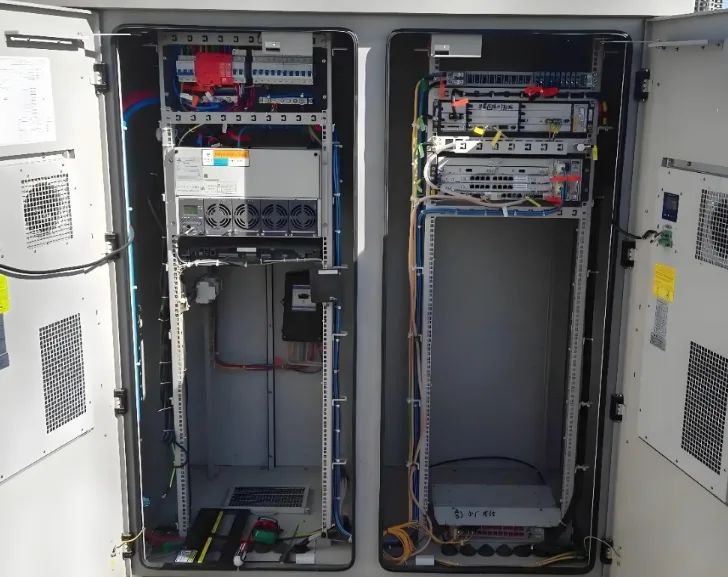
- Typical applications: server racks, operator panels, machine covers, industrial furniture
- Recommendation: SS304 is often the first choice
- Reason: corrosion demand is moderate and cost-efficiency matters more
Scenario 3: High Cycle and High Torque Stability
- Typical applications: frequently adjusted lids, equipment covers, device brackets, repeated-use access panels
- Recommendation: hardened steel core with stainless housing
- Reason: wear life and torque consistency are more important than exposed all-metal corrosion resistance alone
FAQ
Q1: Can SS304 torque hinges really be used outdoors?
A1: Yes, in many general outdoor environments they can. But in coastal, chloride-rich, or severe washdown environments, SS316 is usually the safer choice.
Q2: Why not use hardened steel for the entire hinge?
A2: Because exposed hardened steel has poor corrosion resistance. It is usually better used as an internal wear-resistant core rather than as the outer visible housing.
Q3: Is SS316 always better than SS304?
A3: Not always. SS316 is better for corrosive environments, but SS304 is often more cost-effective for indoor industrial use where chloride exposure is low.
Q4: Why do some stainless torque hinges still lose performance?
A4: Because corrosion is only one failure mode. Wear, galling, soft internal materials, and poor friction-pair design can also reduce torque stability.
Q5: What is the safest all-around strategy for many industrial torque hinges?
A5: A hybrid design with stainless external protection and hardened internal wear components is often the best long-term balance.
Conclusion
There is no universal best torque hinge material. SS304 is the practical workhorse for many indoor and moderate outdoor applications. SS316 is the better answer when chloride exposure or aggressive corrosion risk becomes the main threat. Hardened steel is the wear and torque-retention specialist that becomes critical in high-cycle internal friction structures.
The right engineering choice comes from matching the material to the real failure mode: corrosion, wear, galling, torque decay, or cost pressure. Once that failure mode is identified clearly, the correct material strategy is usually much easier to define.


 English
  한국어
한국어  Русский
  Español
  Italiano
  Deutsch
  Français
  Português