
Electrical Enclosure Door Hinges: Load, Sealing & Grounding

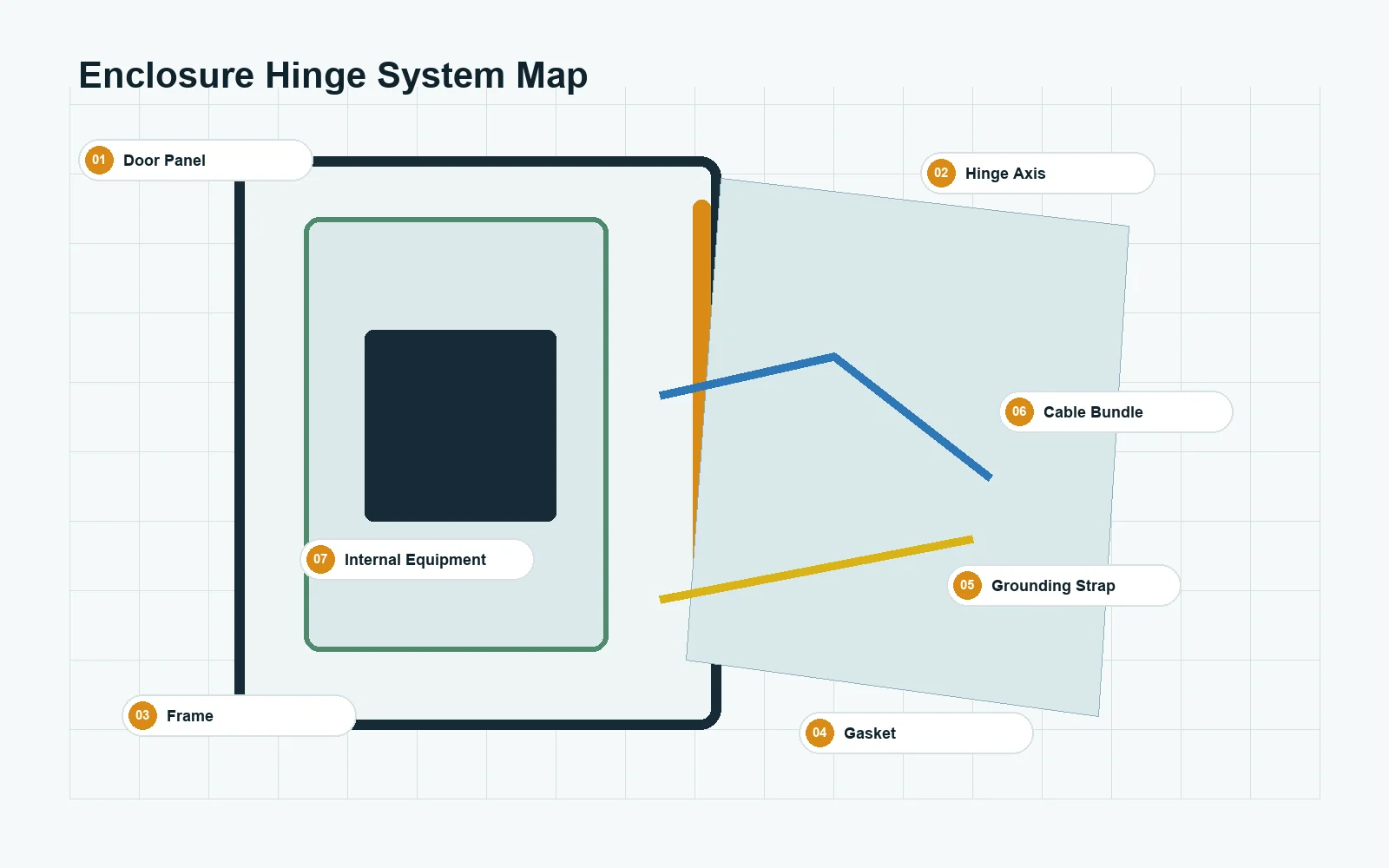
Electrical enclosure door hinges are more than simple mechanical hardware. In industrial control cabinets, power distribution enclosures, automation panels, outdoor electrical boxes, and machine control systems, the hinge affects how the door carries load, compresses the gasket, maintains alignment, supports grounding continuity, and allows safe maintenance access.
A poorly selected hinge can cause door sag, uneven gasket compression, water or dust ingress, latch misalignment, loose fasteners, or unreliable door-to-frame bonding. For electrical enclosures, these issues are not only mechanical problems. They can affect enclosure protection, maintenance safety, and long-term system reliability.
This guide explains how to evaluate electrical enclosure door hinges based on four engineering requirements: load capacity, sealing performance, grounding and bonding, and maintenance access.
This guide focuses on the door hinge itself. For projects where the hinge must be evaluated together with locks, seals, handles, cabinet structure, and enclosure protection, the broader enclosure hardware decision should be reviewed as one system.
Why Electrical Enclosure Door Hinges Need a Different Design Approach
Electrical enclosure doors often carry more than their own panel weight. They may include locks, handles, viewing windows, warning labels, grounding straps, gasket systems, control components, cable pockets, vents, filters, or insulation layers. These added components change the door’s center of gravity and increase stress on the hinge line.
Unlike a general cabinet door, an electrical enclosure door must also preserve the enclosure’s protection function. The hinge must keep the door aligned so the gasket compresses correctly, the latch engages properly, and the door can be opened for inspection without damaging wiring, bonding straps, or sealing surfaces.
This is why hinge selection should not be treated as a separate hardware decision. It should be reviewed together with the enclosure frame, door weight, gasket design, grounding method, access frequency, and installation environment.
Door Load and Alignment in Electrical Enclosures
Door Weight, Width, and Mounted Components

The first load factor is the total door weight. This includes the metal panel, handles, locks, seals, viewing windows, accessories, labels, vents, and any components mounted on the door. In electrical enclosures, even small added parts can shift the center of gravity and increase stress on the hinge side.
Door width is just as important as door weight. A wide door creates more leverage on the hinge line, especially when the door is opened repeatedly during maintenance. If the hinge is underspecified, the door may slowly drop, causing gasket compression loss, latch misalignment, and uneven contact between the door and frame.
For heavy or wide enclosure doors, evaluate at least these factors before choosing a hinge:
- Total door weight: include all mounted hardware and accessories.
- Door width and height: wider doors increase bending moment at the hinge line.
- Center of gravity: check whether accessories shift the load away from the hinge side.
- Opening frequency: frequently serviced panels need stronger wear resistance.
- Frame rigidity: thin sheet metal may require reinforcement around the hinge area.
- Gasket compression: hinge alignment must support consistent sealing pressure.
How Door Sag Affects Latching and Gasket Compression
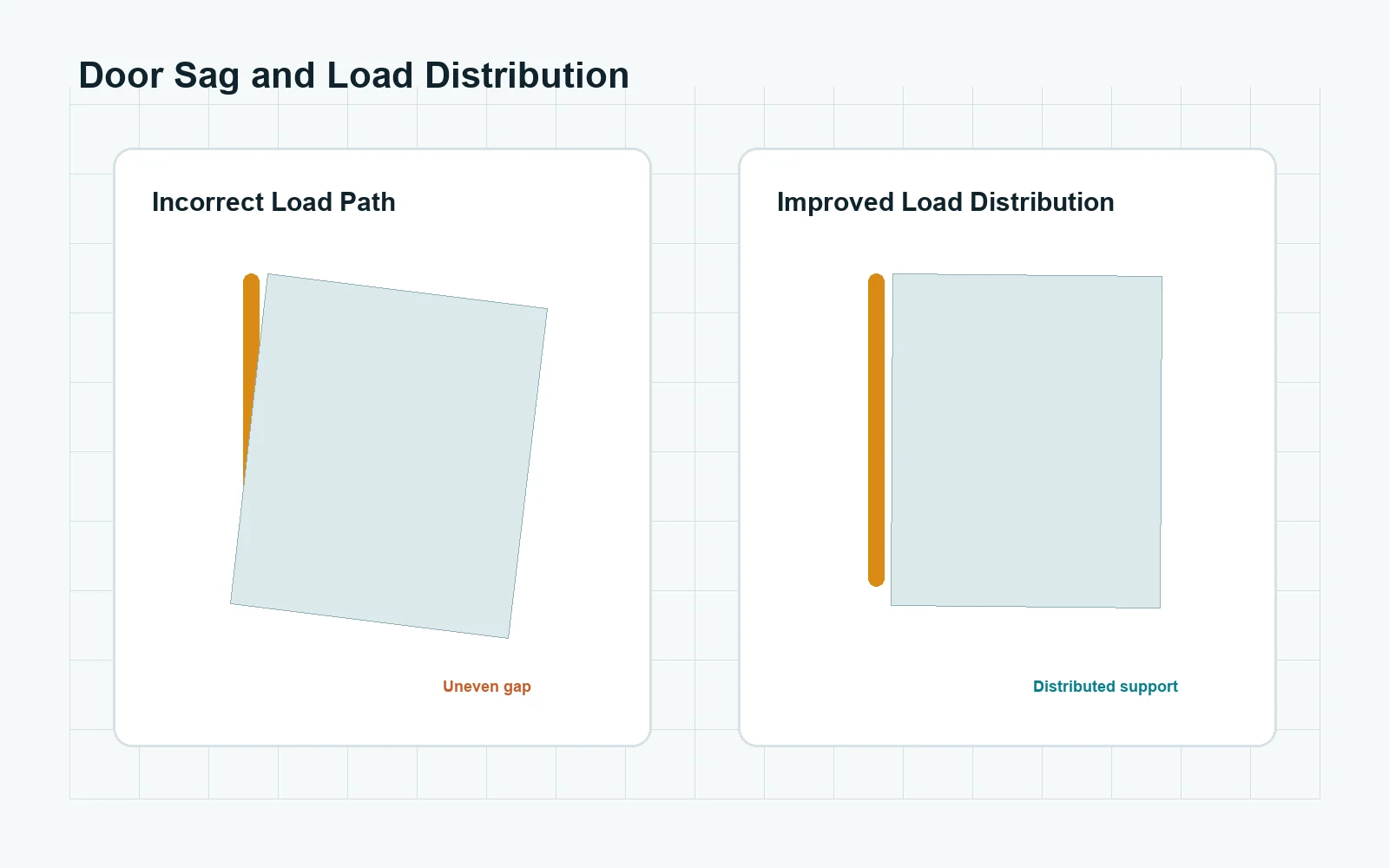
Door sag is especially problematic in electrical enclosures because it can affect more than the door’s appearance. When the door drops at the free edge, the latch may no longer align correctly, the gasket may compress unevenly, and the hinge-side sealing line may lose contact pressure.
This can reduce the enclosure’s ability to resist water, dust, or contaminants. In some designs, sagging can also place additional stress on grounding straps or internal wiring near the door. If the door requires extra force to close, the root cause may be hinge misalignment, weak mounting points, or insufficient hinge load capacity.
If the free edge of the door starts to drop, it should be corrected early. In electrical enclosures, door sag can also reduce sealing performance instead of remaining only a visual alignment issue.
When Heavy-Duty Hinges or Reinforced Mounting Are Needed
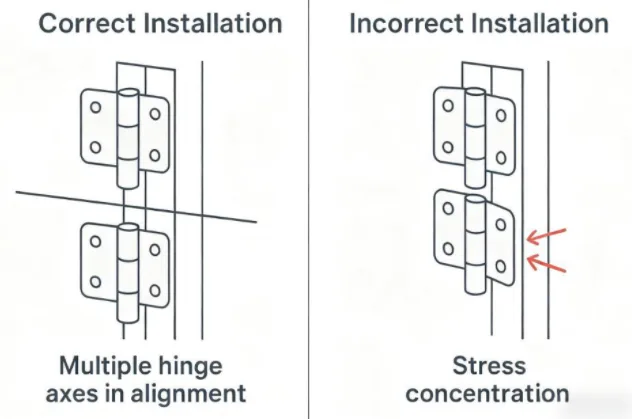
Heavy doors, tall panels, outdoor cabinets, and enclosures with mounted equipment may require heavy-duty hinges or reinforced mounting zones. A strong hinge alone is not enough if the enclosure wall, screw thread, weld area, or mounting plate cannot carry the load.
Reinforced hinge mounting is especially important when the door is opened frequently, exposed to vibration, or installed in an outdoor environment. Thin sheet metal can deform over time, which changes the hinge line and reduces the consistency of gasket compression.
If the enclosure uses a large steel door or high-load access panel, hinge layout should be checked against door weight, width, frame reinforcement, and expected service cycles. In these cases, a heavy-duty hinge may be needed instead of a standard cabinet hinge.
Sealing Performance: How Hinges Affect Gasket Compression
Hinge-Side Compression and Door Alignment
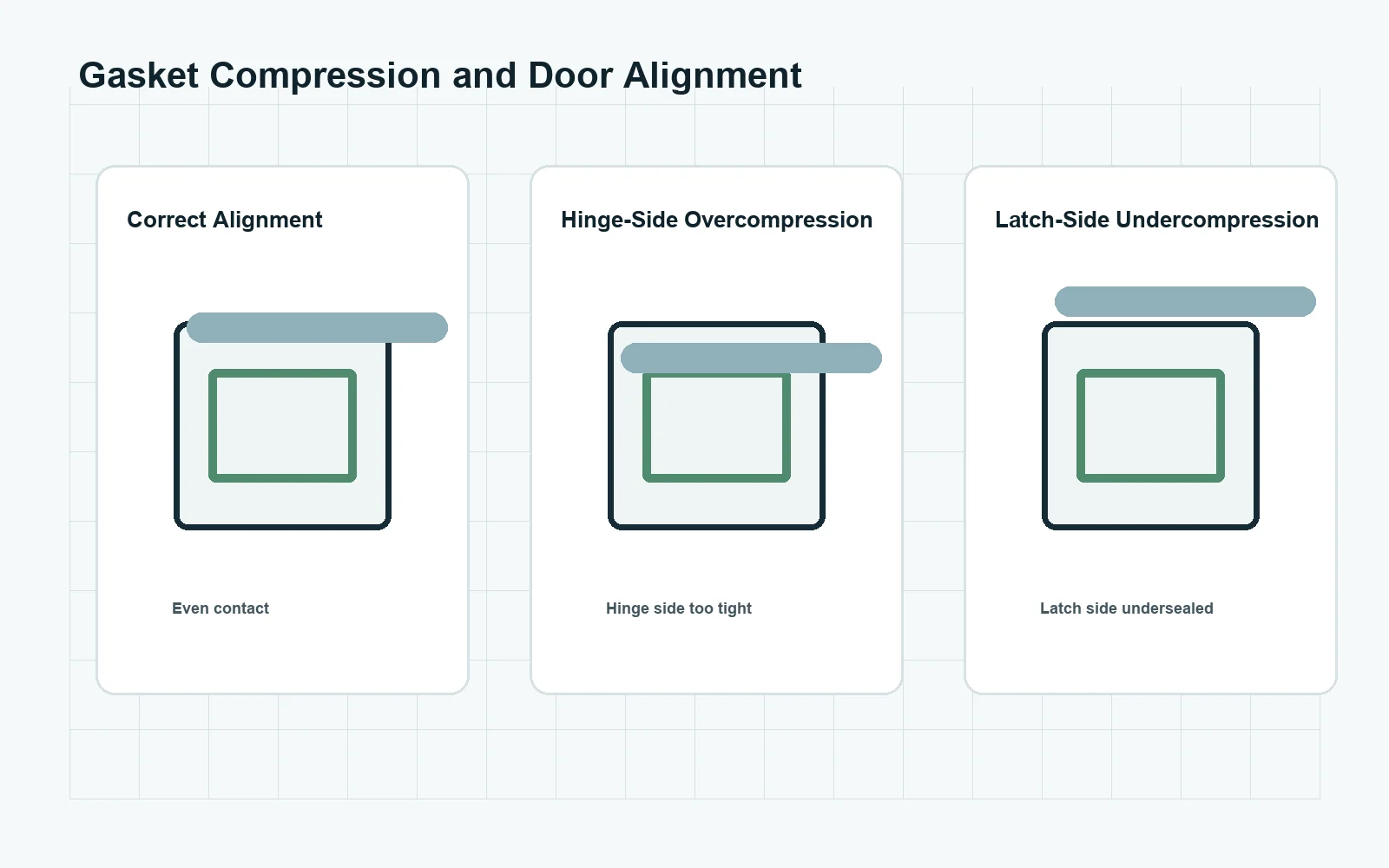
Electrical enclosure sealing depends on even gasket compression around the door perimeter. The hinge side is often the most difficult area to control because the hinge must allow rotation while still keeping the door aligned with the frame.
If the hinge creates uneven spacing between the door and the enclosure body, the gasket may be over-compressed in one area and under-compressed in another. Over-compression can shorten gasket life, while under-compression can create leakage points for dust, moisture, or sprayed water.
Good hinge selection should therefore consider not only load capacity but also how the hinge position, leaf thickness, knuckle clearance, opening angle, and mounting tolerance affect the sealing line.
Continuous, Butt, Concealed, and Lift-Off Hinge Effects on Sealing
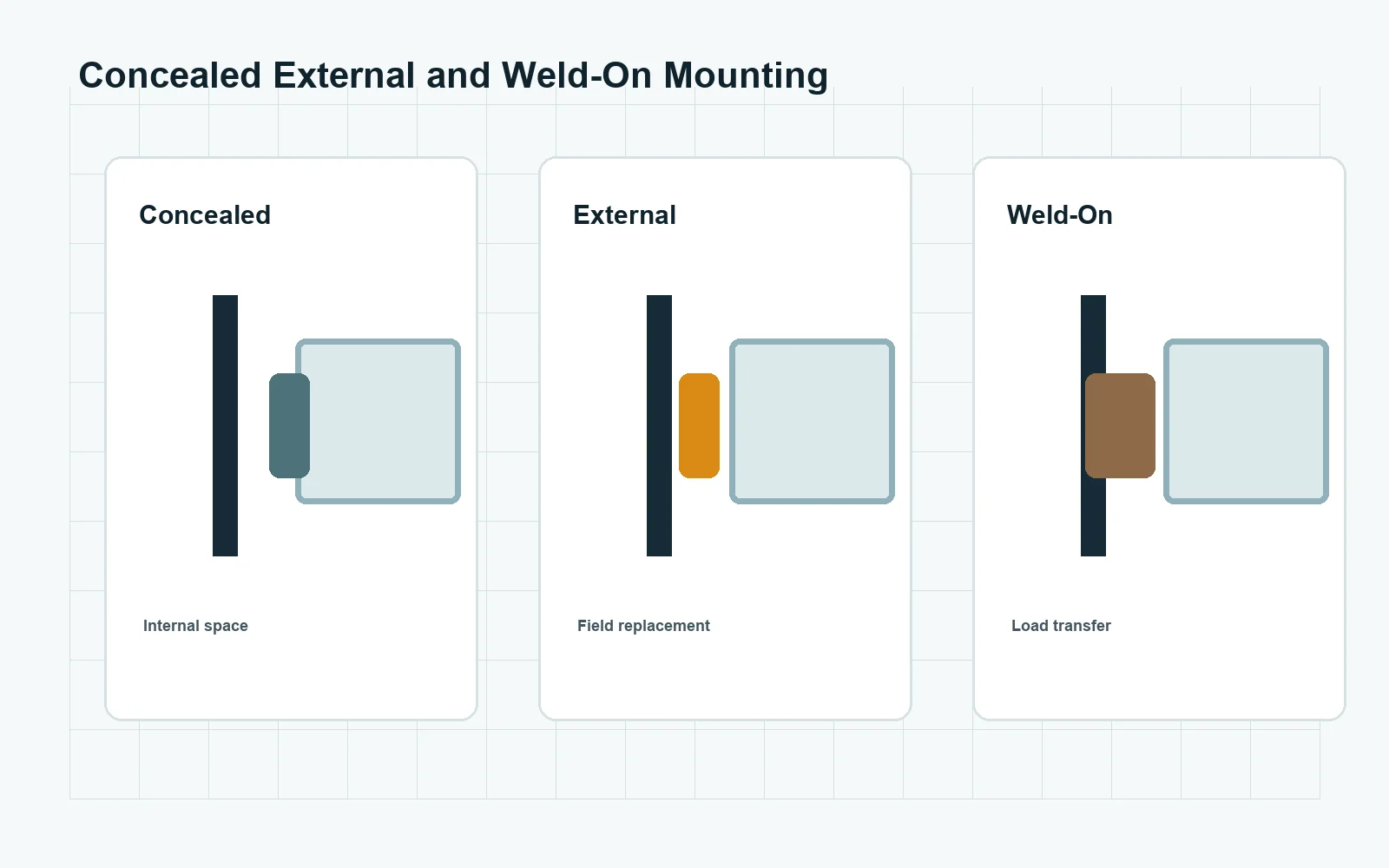
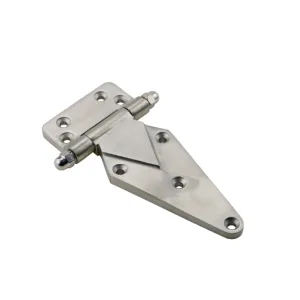
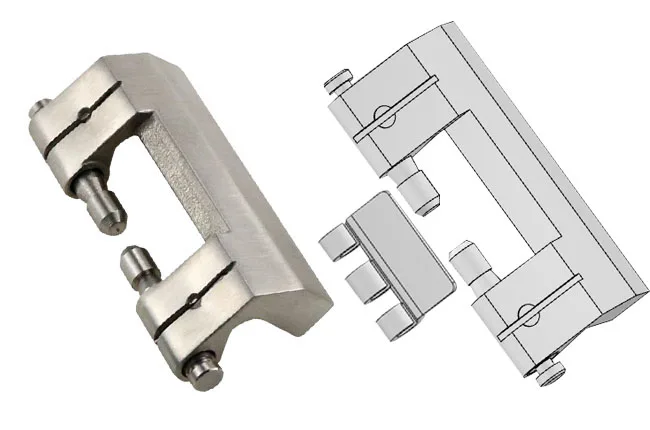
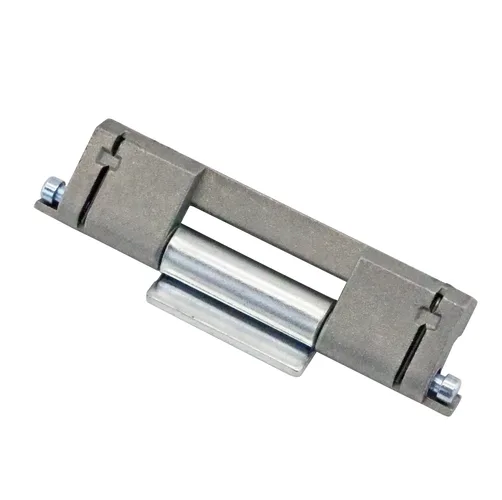
Different hinge types affect sealing in different ways. A continuous hinge can distribute load along the door edge and may help maintain a more consistent hinge-side gap. Butt hinges are simpler and easier to install, but they concentrate load at several points. Concealed hinges can protect the exterior appearance and reduce exposed hardware, but they require careful geometry to maintain gasket compression. Lift-off hinges improve access, but the removable structure must not reduce alignment stability after repeated door removal.
The best hinge type depends on the enclosure’s sealing requirement, door size, access frequency, and installation environment. For example, an outdoor electrical enclosure with a high protection requirement may prioritize alignment and corrosion resistance, while an indoor service panel may prioritize simple access and easy replacement.
Outdoor cabinets exposed to coastal humidity or salt spray need a stricter material and sealing review. In those applications, NEMA 4X hinge selection should consider the hinge body, fasteners, gasket stability, and long-term corrosion resistance together.
Common Sealing Mistakes at the Hinge Side
Many enclosure sealing failures are caused by small hinge-side design mistakes. These include placing the hinge too close to the gasket path, using hinges that pull the door out of plane, failing to reinforce the hinge mounting area, or ignoring how the door shifts after repeated opening cycles.
During prototype testing, check whether the door closes evenly without extra force, whether the latch engages smoothly, and whether the gasket shows consistent compression marks. If the hinge side is visibly loose or overly compressed, the problem should be corrected before production.
Grounding and Bonding: The Key Difference in Electrical Enclosure Hinges
Why Hinges Alone Should Not Be Treated as a Reliable Ground Path

Grounding and bonding are where electrical enclosure door hinges differ most from ordinary cabinet hinges. A hinge may connect the door mechanically, but that does not mean it provides a reliable low-resistance electrical path between the door and enclosure body.
Paint, powder coating, oxidation, grease, corrosion, vibration, and hinge wear can all increase contact resistance. Even if a hinge appears to be metal-to-metal, the electrical path may be inconsistent over time. This is why many electrical enclosure designs use a dedicated bonding jumper, copper braid, or grounding strap between the door and the enclosure body.
The hinge should be treated as part of the mechanical support system. The grounding or bonding path should be designed, installed, and verified separately when electrical safety depends on door-to-frame continuity.
Paint, Corrosion, and Contact Resistance Problems
Painted and powder-coated enclosure doors often create a hidden bonding problem. The coating improves corrosion protection, but it can also prevent direct metal contact at the hinge mounting area. Over time, corrosion around screws, hinge pins, or mounting holes can further increase resistance.
For this reason, relying on hinge pin contact alone is risky. If the enclosure door requires grounding continuity, the design should include a clear bonding path that remains effective even after repeated door movement, coating wear, cleaning, and environmental exposure.
Grounding Straps, Braids, and Bonding Jumpers
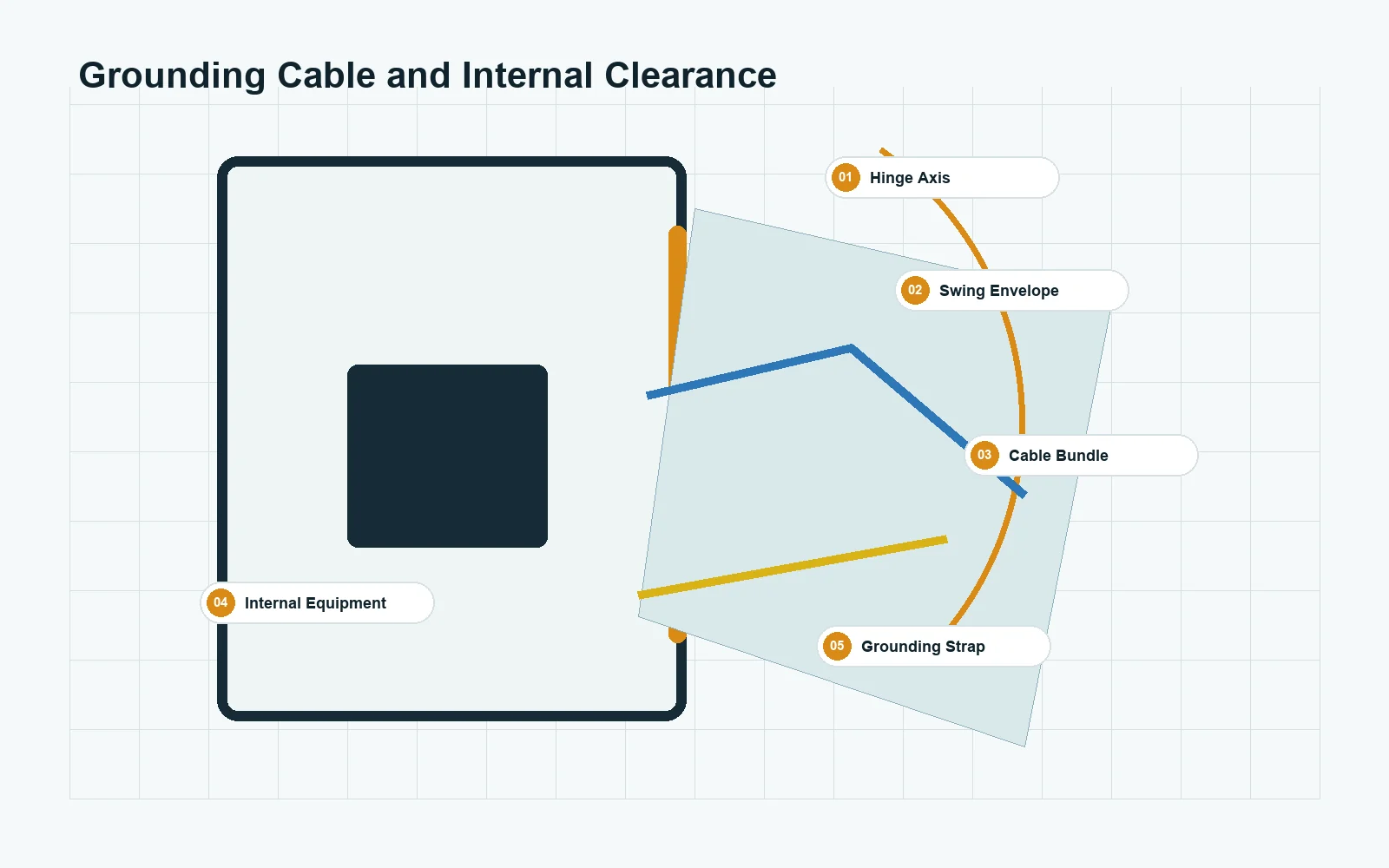
A flexible grounding strap or braided bonding jumper is commonly used to connect the enclosure door to the main body. The strap should be routed so it does not interfere with the hinge movement, pinch against the gasket, rub against sharp edges, or become overstretched at the maximum opening angle.
When a lift-off or removable door is used, the bonding strategy becomes even more important. The design should define whether the bonding strap stays attached, can be disconnected safely, or must be reinstalled after door removal. Maintenance teams should be able to inspect the bonding connection without disturbing the hinge alignment.
How to Verify Door-to-Frame Continuity
Door-to-frame continuity should be verified during prototype testing, assembly inspection, and maintenance checks. The inspection should confirm that the bonding strap is present, fastened securely, routed correctly, and protected from abrasion or corrosion.
If continuity testing is required, use appropriate test methods defined by the project, customer, or applicable electrical safety requirements. The key principle is simple: do not assume that a hinge provides grounding continuity unless the design has been tested and verified under real installation conditions.
Maintenance Access Without Losing Safety or Sealing
When a Fixed Hinge Is Safer
A fixed hinge is often safer when the enclosure door must remain permanently attached, the cabinet is installed outdoors, the door must maintain stable gasket compression, or the design must reduce the risk of accidental door removal. Fixed hinges can also simplify bonding strap routing because the door movement is predictable.
For high-use industrial electrical cabinets, fixed hinges may provide better long-term alignment than removable designs if the door does not need to be taken off during maintenance. The trade-off is that service access may be limited in narrow aisles, machine rooms, or wall-mounted installations.
When a Lift-Off Hinge Makes Maintenance Easier
Lift-off hinges can be useful when technicians need to remove the enclosure door for wiring access, component replacement, cleaning, or work in a restricted space. Removing the door can improve visibility and reduce interference during maintenance.
However, lift-off hinges should not be selected only for convenience. The designer must check whether repeated door removal affects alignment, gasket compression, hinge pin wear, corrosion protection, security, and grounding continuity.
If the door must be removed during service, compare that benefit with the need for retained alignment, sealing stability, and bonding continuity. This is where the choice between lift-off and fixed enclosure hinges becomes important.
How Removable Doors Should Handle Bonding and Reassembly
If an electrical enclosure uses a removable door, the bonding method should be part of the service procedure. The technician should know whether the bonding strap must be disconnected before door removal, how it should be reconnected, and how to verify that the door remains properly bonded after reassembly.
The hinge itself should also return the door to the same position after removal. If the door shifts after being reinstalled, the gasket may not compress evenly and the latch may not align correctly. For this reason, lift-off hinge designs used on electrical enclosures should be evaluated for both mechanical repeatability and electrical bonding reliability.
Electrical Enclosure Door Hinge Selection Table
| Electrical Enclosure Requirement | Recommended Hinge Direction | Why It Fits | Key Risk to Check |
|---|---|---|---|
| Heavy or wide enclosure door | Heavy-duty hinge or reinforced hinge mounting | Supports door weight and reduces sag risk | Frame deformation, screw loosening, and hinge-line misalignment |
| High gasket sealing requirement | Continuous, concealed, or carefully aligned fixed hinge design | Helps maintain consistent door position and gasket compression | Uneven hinge-side gap and over-compressed gasket areas |
| Door requires grounding continuity | Any suitable hinge plus a dedicated bonding jumper or grounding braid | Provides a designed electrical path independent of hinge contact | Paint, corrosion, loose fasteners, and untested hinge resistance |
| Frequent electrical maintenance | Fixed wide-opening hinge or lift-off hinge with bonding strategy | Improves access while keeping service procedure controlled | Reassembly alignment and bonding strap reconnection |
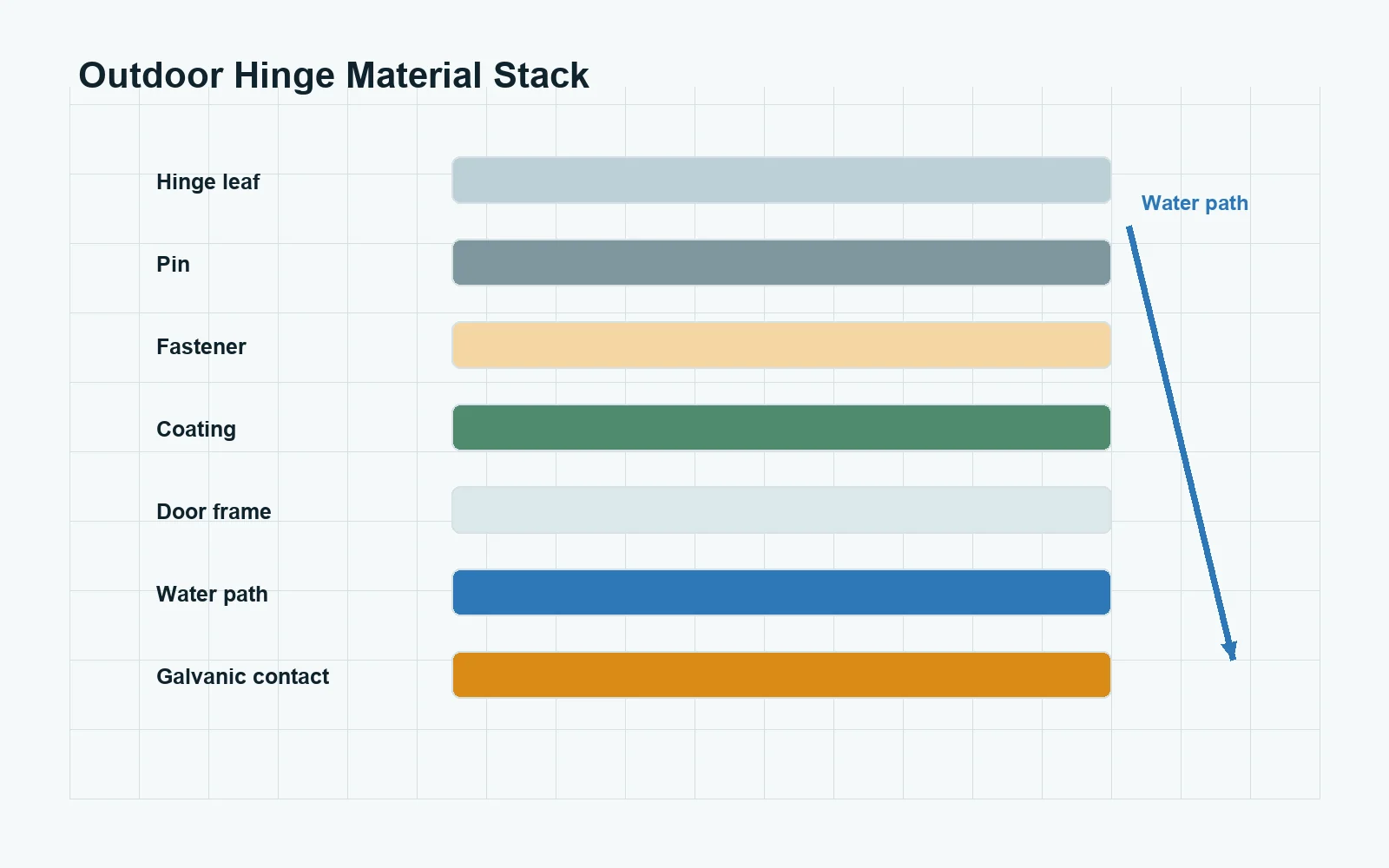
| Outdoor or corrosive installation | Stainless steel hinge with compatible fasteners | Improves resistance to moisture, condensation, and corrosion | Galvanic corrosion and fastener material mismatch |
| Removable door requirement | Lift-off hinge with verified alignment and grounding method | Allows door removal for service in limited spaces | Loss of sealing pressure, hinge wear, and bonding interruption |
Common Design Mistakes in Electrical Enclosure Door Hinges
Assuming the Hinge Can Carry Current Safely
A common mistake is assuming that a metal hinge automatically provides a reliable grounding path. In reality, hinge contact can be affected by paint, rust, grease, vibration, and wear. If the enclosure door must be bonded, use a dedicated grounding strap or bonding jumper and verify continuity.
Ignoring Gasket Compression at the Hinge Side
Another mistake is checking the latch side only and ignoring the hinge side. A door can appear closed while the hinge-side gasket is under-compressed or over-compressed. This can reduce sealing performance and shorten gasket life.
Choosing Lift-Off Hinges Without a Bonding Plan
Lift-off hinges improve access, but removable doors need a clear bonding strategy. If the bonding strap is disconnected during service and not reinstalled correctly, the door may no longer have the required continuity after maintenance.
Using Corrosion-Resistant Hinges With Incompatible Fasteners
Specifying a stainless steel hinge does not solve corrosion risk if the screws, washers, inserts, or frame materials are incompatible. In outdoor electrical enclosures, corrosion often starts around the fasteners before the hinge body itself fails.
In some projects, coated steel may still be acceptable, while stainless steel is safer in humid or corrosive environments. The final material choice should consider corrosion exposure, load requirement, fastener compatibility, and budget.
Underestimating Door-Mounted Components
Door-mounted accessories can change the real load condition. Handles, locks, panels, labels, vents, windows, and cable supports can shift the center of gravity. If these parts are added after hinge selection, the final enclosure door may behave differently than expected.
Inspection and Maintenance Recommendations
Electrical enclosure door hinges should be included in the enclosure maintenance plan. Inspection should focus not only on smooth opening, but also on sealing, bonding, corrosion, fastener condition, and door alignment.
- Check whether the door opens and closes without binding.
- Inspect hinge pins, knuckles, screws, and mounting plates for wear or corrosion.
- Confirm that the latch engages without excessive force.
- Check whether the gasket compresses evenly around the door perimeter.
- Inspect grounding straps or bonding jumpers for looseness, corrosion, or abrasion.
- Verify that removable doors are reinstalled in the correct position after service.
- Look for early signs of door sag, frame distortion, or hinge misalignment.
For outdoor, humid, corrosive, high-vibration, or frequently serviced enclosures, hinge and bonding inspections should be performed more frequently. Small hinge alignment problems can develop into sealing issues, grounding risks, or maintenance delays if they are ignored.
Conclusion
Electrical enclosure door hinges should be selected as part of the complete enclosure design. The hinge must support the door, maintain alignment, protect gasket compression, allow safe access, and avoid becoming a weak point in the grounding or bonding strategy.
The best hinge choice depends on four questions:
- How heavy and wide is the enclosure door?
- How important is gasket sealing and enclosure protection?
- Does the door require a dedicated bonding or grounding path?
- Does the door need to stay fixed, open wide, or be removed for maintenance?
If these questions are answered together, the hinge system will be more reliable than one selected by size or price alone. A well-designed enclosure hinge supports mechanical strength, sealing performance, electrical safety, and service efficiency throughout the equipment’s life.
FAQ
The hinge may be part of the mechanical connection, but it should not automatically be treated as the grounding path. If the door requires grounding continuity, use a dedicated bonding jumper or grounding strap and verify the connection during inspection.
It is risky to rely on the hinge alone because paint, powder coating, grease, corrosion, and wear can increase contact resistance. A dedicated grounding strap or bonding braid is usually a safer and more verifiable solution.
There is no single best hinge for every sealed enclosure. Continuous hinges, concealed hinges, and well-aligned fixed hinges can all work depending on door weight, gasket layout, enclosure rating, and access needs. The key is maintaining consistent gasket compression around the door.
Lift-off hinges can be suitable when the door must be removed for maintenance or access in limited spaces. However, the design must also address gasket alignment, security, corrosion, and bonding continuity after the door is removed and reinstalled.
Door sag can reduce gasket compression, misalign the latch, and place extra stress on grounding straps or internal wiring. In electrical enclosures, sag should be treated as a sealing and safety concern, not only a mechanical appearance issue.