

Lift-Off Hinges Complete Guide: Functionality, Installation Methods, and Applications
Lift-off hinges, also known as detachable hinges or flag hinges, are designed to allow a door, cover, or panel to be removed quickly by vertical lifting rather than by unscrewing hardware or extracting a loose pin. In industrial enclosures, electrical cabinets, machine access doors, medical equipment, cleanroom panels, and transport service compartments, this simple mechanical feature can reduce service time, simplify cleaning, and improve maintenance efficiency.
Compared with traditional fixed hinges, lift-off hinges offer a clear operational benefit: the door can be removed completely for inspection, cleaning, replacement, wiring changes, or repair. That convenience, however, must be evaluated against real engineering constraints such as security, vibration, installation accuracy, lift clearance, and load condition. This guide explains how lift-off hinges work, where they perform best, when they should be avoided, how to install them correctly, and how to select the right type for industrial and commercial projects.
If your application also requires controlled positioning in addition to removable access, you may also want to review our guide to lift-off torque hinges, which combine detachable functionality with free-stop holding torque.
What Is a Lift-Off Hinge?
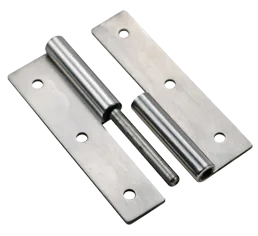
A lift-off hinge is a two-part hinge system in which one leaf carries a fixed pin and the mating leaf contains an open barrel or sleeve. During normal operation, the door opens and closes like a standard hinged panel. When removal is needed, the door is opened to the required angle and lifted vertically so the sleeve disengages from the pin. This allows fast door removal without removing screws or handling a separate hinge pin.
In practical terms, lift-off hinges are used when engineers or maintenance teams need faster access to internal components, easier cleaning, simplified servicing, or more efficient assembly of removable panels.
How Lift-Off Hinges Work
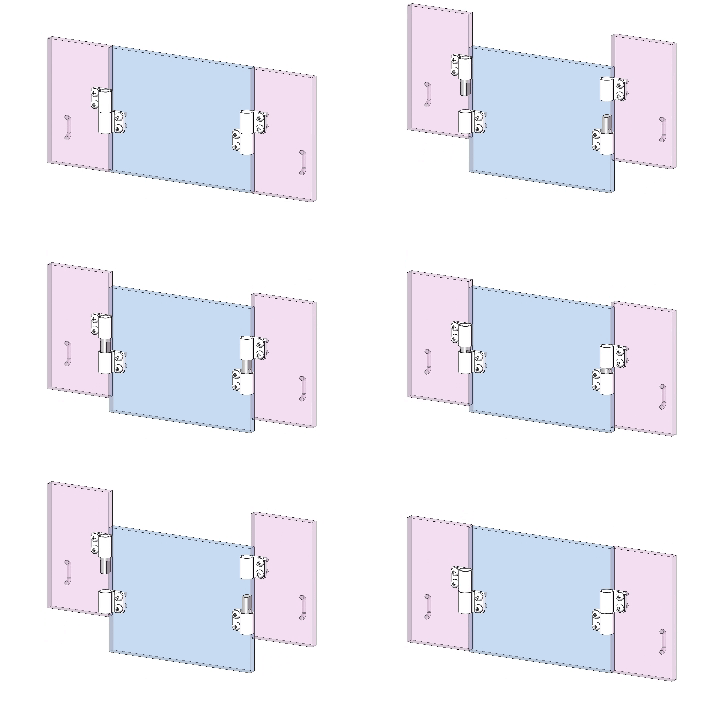
Vertical lift-off motion showing door removal without tools.
The working principle is straightforward. One hinge leaf is mounted to the frame, and the mating leaf is mounted to the door. The frame-side pin supports the mating leaf during normal use. When the door is opened and lifted upward, the mating leaf slides off the pin and the panel can be removed completely.
This is different from a removable-pin hinge. A removable-pin hinge still requires the pin to be extracted, often with tools or at least with separate handling. A lift-off hinge is designed for fast, repeatable, tool-free panel removal.
Key Advantages of Lift-Off Hinges
- Fast door removal: Panels can often be removed in seconds, reducing service time and simplifying inspection or replacement.
- Improved maintenance access: Full door removal provides unobstructed access to internal components in cabinets, machinery housings, and service enclosures.
- Better hygiene and cleaning: In medical, food-processing, pharmaceutical, and cleanroom environments, removable doors make deep cleaning and sanitation easier.
- Simplified assembly: The frame and door can be installed in separate steps, which can be helpful for large or awkward panels.
- Material flexibility: Lift-off hinges are available in stainless steel, plated steel, aluminum, and engineered polymers for different environments and load levels.
For projects where easy disassembly is a primary requirement, lift-off hinges often outperform permanent hinge systems in maintenance convenience and access efficiency. However, these benefits depend on correct handing, proper alignment, appropriate retention design, and a material grade suited to the environment.
Lift-Off Hinges vs. Traditional Hinges
The main difference is not only structural, but also operational. Traditional hinges prioritize permanent attachment. Lift-off hinges prioritize controlled removability.
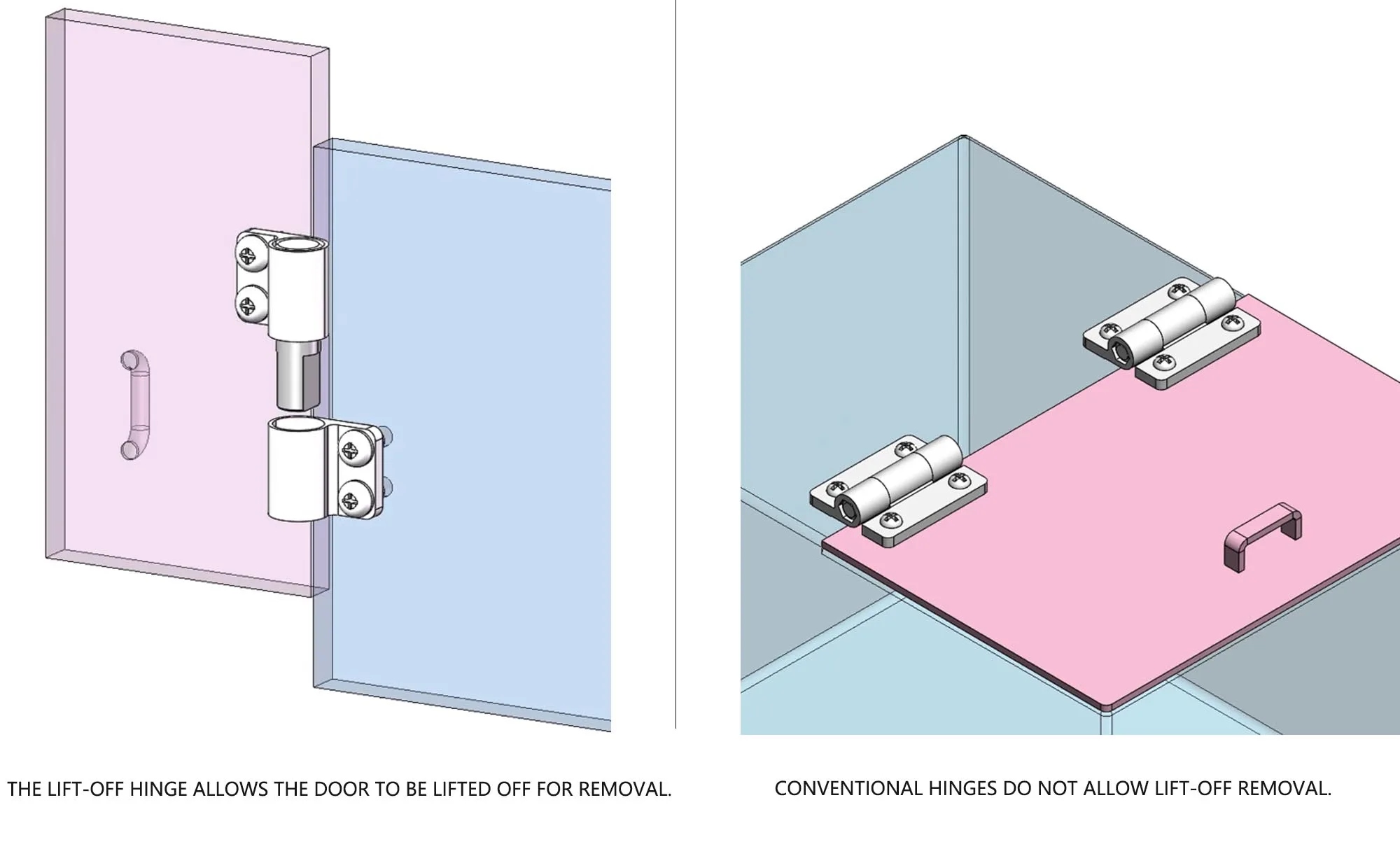
Structural and functional comparison between lift-off and traditional hinges.
| Feature | Lift-Off Hinge | Traditional Fixed Hinge |
|---|---|---|
| Door Removal | Vertical lift-off, no tools required | Usually requires unscrewing or pin removal |
| Maintenance Access | Excellent | Moderate to poor |
| Installation Flexibility | High | Lower once fully installed |
| Security | Lower unless paired with locks or latches | Generally higher |
| Typical Use Case | Frequent access, cleaning, modular equipment | Permanent or security-sensitive installations |
If you are comparing removable and permanent enclosure strategies, see our detailed comparison of lift-off vs. fixed industrial enclosure hinges.
Types of Lift-Off Hinges
Left-Hand vs. Right-Hand Lift-Off Hinges
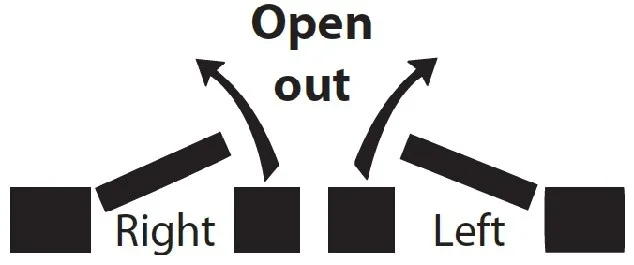
Left-hand vs. right-hand lift-off hinge orientation.
Handing is one of the most important selection factors. Lift-off hinges are not universally reversible. The correct left-hand or right-hand configuration must match the door swing direction and the installation side. Ordering the wrong handing can delay assembly, create procurement errors, and increase rework costs.
As a practical rule, always determine the door opening direction from the operator side and confirm whether the hinge pin is positioned on the left or right. This should be verified before ordering, not after installation begins.
For a step-by-step explanation with installation logic, see our guide on lift-off hinge installation.
By Material
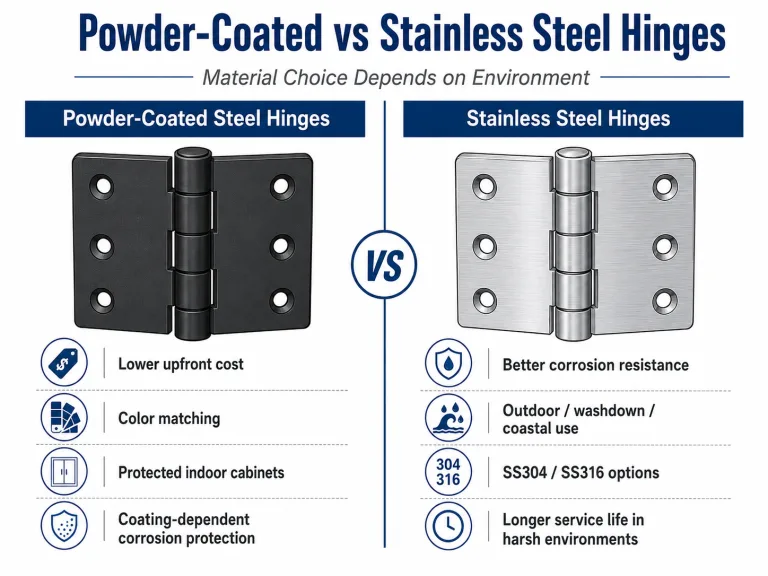
- 304 stainless steel: Suitable for general corrosion resistance, washdown zones, and many indoor hygienic applications.
- 316 stainless steel: Recommended for chloride-rich, coastal, marine-adjacent, or aggressive cleaning environments.
- Carbon steel or zinc-plated steel: Suitable for dry industrial interiors and many general equipment applications.
- Aluminum: Useful where reduced weight and corrosion resistance are both required.
- Plastic or nylon: Appropriate for light-duty, insulated, or non-metallic applications.
By Application
- Electrical cabinets and control enclosures
- Industrial machinery access doors
- Medical and laboratory equipment
- Cleanroom and hygienic processing equipment
- Transportation interiors and service compartments
- Modular cabinet doors and removable equipment panels
Best Applications for Lift-Off Hinges
A lift-off hinge is not simply a removable hinge. It is most effective where the value of fast access outweighs the need for permanent hinge retention.
Electrical Enclosures and Control Cabinets
Lift-off hinges are widely used on electrical enclosures because they allow fast removal of cabinet doors during wiring, inspection, retrofit work, and maintenance. In these projects, easy access to internal components can significantly reduce downtime. They are especially useful on service doors that may need to be removed temporarily during installation or field maintenance.
Machinery Access Panels
On industrial equipment and machine guards, lift-off hinges can simplify maintenance by allowing access covers to be removed entirely rather than held open in a restricted position. This can improve technician access in crowded machine layouts. The main design concern in these applications is alignment accuracy and, in some cases, vibration control.
Medical and Laboratory Equipment
In medical carts, cabinets, sterile workstations, and laboratory equipment, removable doors can improve cleaning access and support routine sanitation procedures. Stainless steel lift-off hinges are often preferred where corrosion resistance and hygiene are both important.
Cleanroom and Hygienic Equipment
In cleanroom and washdown environments, lift-off hinges are valuable because they make deep cleaning easier. If the door or panel must be removed regularly for sanitization, a detachable design can be far more practical than a permanent hinge. Material compatibility and surface cleanability are especially important here.
Transportation Service Compartments
Lift-off hinges can also be useful in transport interiors, service panels, and access compartments where quick door removal improves maintenance access. However, in mobile environments, designers must carefully evaluate vibration and retention requirements to reduce the risk of unintended upward movement during service.
Modular Removable Cabinet Doors
For modular equipment, knock-down assemblies, and removable side panels, lift-off hinges support easier assembly and replacement. They can simplify packaging, servicing, and part replacement, especially when doors are installed after the main frame is positioned.
When Lift-Off Hinges Are the Right Choice
Lift-off hinges are best suited to projects where maintenance access, cleaning efficiency, or repeated removability matters more than maximum anti-removal security. They are particularly effective in maintenance-heavy equipment, sanitary environments, modular systems, and service panels that must be removed repeatedly over the product life cycle.
Common high-fit applications include industrial automation enclosures, CNC machine guards, server rack side panels, pharmaceutical cabinets, stainless steel food equipment, ambulance interior access panels, and removable cleanroom partitions.
When to Avoid Lift-Off Hinges
Lift-off hinges are not the best solution for every project. Their greatest strength, easy removability, can also become their main limitation in the wrong application.
1. Security-Sensitive Doors
If unauthorized removal is a serious concern, lift-off hinges should not be the default choice. Exterior access doors, theft-sensitive compartments, security cabinets, and similar applications are usually better served by fixed hinges or security hinges combined with robust locking systems.
2. High-Vibration Equipment
In vibrating machinery, service vehicles, engine-adjacent compartments, or harsh mobile environments, repeated vibration may create a risk of upward door movement on the pin if the design is not properly restrained. In these situations, lift-off hinges should only be used when appropriate latching force or retention design is present.
3. Very Heavy or Highly Dynamic Doors
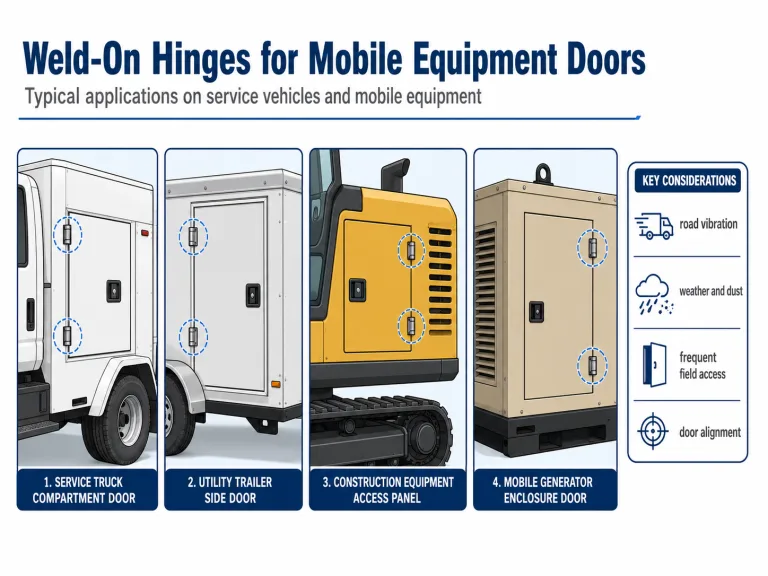
Lift-off hinges are available in heavy-duty versions, but for very heavy doors or doors exposed to strong repetitive dynamic loads, they should be compared carefully against continuous hinges, weld-on hinges, or reinforced fixed hinge systems.
4. Low-Precision Assembly Conditions
Lift-off hinges depend heavily on accurate alignment. If the hinge leaves are not mounted on a true vertical axis, the door may bind, scrape, sag, or become difficult to remove and reinstall. In low-precision assembly environments, more tolerant hinge designs may be more practical.
Quick Summary: When Lift-Off Hinges May Not Be Ideal
| Condition | Why Lift-Off Hinges May Not Be Ideal | Better Alternative |
|---|---|---|
| Security-sensitive doors | Easy removability may create unauthorized access risk | Fixed hinge or security hinge |
| Severe vibration environments | Door may walk upward without adequate retention | Fixed hinge with latch retention |
| Extremely heavy dynamic doors | Higher stress and alignment demands | Heavy-duty fixed hinge or continuous hinge |
| Low-precision assembly | Misalignment can affect removal and operation | More tolerant fixed hinge design |
How to Choose a Lift-Off Hinge for Industrial Doors and Enclosures
Choosing the right lift-off hinge requires more than matching hinge size to door size. Engineers and buyers should evaluate the full operating condition of the panel, including load, removal frequency, environmental exposure, security requirement, and installation control.
1. Define Door Weight, Width, and Center of Gravity
Do not select a hinge by door weight alone. Door width affects moment load, and center-of-gravity offset changes the stress acting on the hinge. A wide removable panel can place more demand on the hinge system than a narrower panel of similar mass.
2. Confirm Removal Frequency
If the panel is only removed occasionally, a removable-pin hinge may be acceptable. If the panel is removed routinely for service, cleaning, or inspection, a true lift-off hinge is usually the more efficient choice.
3. Check Security Requirements
If the door must not be easily removed, lift-off hinges may need additional latching, locking, or retention features. In some applications, a different hinge architecture will be more appropriate.
4. Match Material to the Environment
Select the hinge material according to actual operating conditions, not only appearance.
- Use 316 stainless steel for chloride-rich, marine-adjacent, or aggressive cleaning environments.
- Use 304 stainless steel for general hygienic or corrosion-sensitive indoor conditions.
- Use plated or coated steel for dry industrial applications where corrosion risk is moderate.
- Use polymer designs for light-duty insulated or electrically non-conductive requirements.
Once you have narrowed down the grade, you can review the available options in our range of detachable hinge solutions to match a specific model to your load, environment, and handing requirements.
5. Confirm Left-Hand or Right-Hand Orientation
Handing errors are one of the most common procurement problems with lift-off hinges. Confirm the operator view, swing direction, and hinge side before ordering.
6. Verify Installation Clearance and Alignment
A lift-off hinge requires enough vertical clearance for removal. Before final selection, confirm that the door can be lifted high enough to disengage from the pin without interference from the frame, top cover, adjacent equipment, or mounting structure.
Common Mistakes When Choosing Lift-Off Hinges
- Selecting by door weight only: Width and center of gravity also matter.
- Ignoring removal clearance: A lift-off hinge is not useful if the panel cannot be lifted enough to disengage.
- Ordering the wrong handing: Left-hand and right-hand configurations are not interchangeable.
- Underestimating vibration risk: Mobile or vibrating equipment may need additional retention.
- Choosing the wrong material grade: A hinge that is acceptable indoors may corrode quickly in outdoor or washdown service.
- Assuming all detachable hinges are the same: Lift-off hinges and removable-pin hinges serve different maintenance patterns.
- Ignoring installation precision: Poor alignment can cancel out the operational advantage of the hinge.
Installation Steps for Lift-Off Hinges
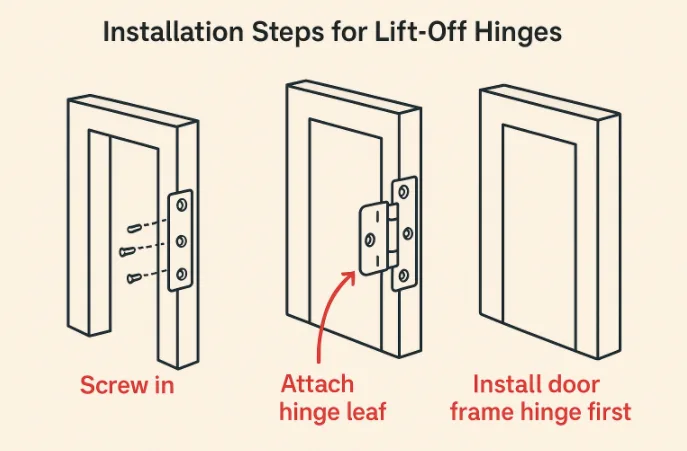
Correct installation is essential for smooth lift-off operation and long service life. Poor alignment is one of the most common causes of functional problems.
Before Installation Checklist
- Correct left-hand or right-hand orientation
- Intended lift-off direction
- Adequate vertical lift clearance
- Correct hinge spacing
- Frame flatness and door straightness
- Suitable fasteners or mounting method
- Safe support for the panel during installation
Basic Installation Steps
- Step 1: Confirm left-hand or right-hand hinge orientation before drilling.
- Step 2: Mark hinge positions accurately on the frame and door.
- Step 3: Install the frame-side hinge leaf first, ensuring the pin orientation matches the intended lift-off direction.
- Step 4: Install the mating leaf on the door panel, keeping all leaves aligned on the same vertical axis.
- Step 5: Lower the door onto the pins and test opening, closing, removal, and reinstallation.
- Step 6: Recheck all fasteners and confirm even gaps and smooth movement.
For the full method, tool checklist, and common installation mistakes, read our detailed guide to how to install lift-off hinges.
Maintenance and Common Problems
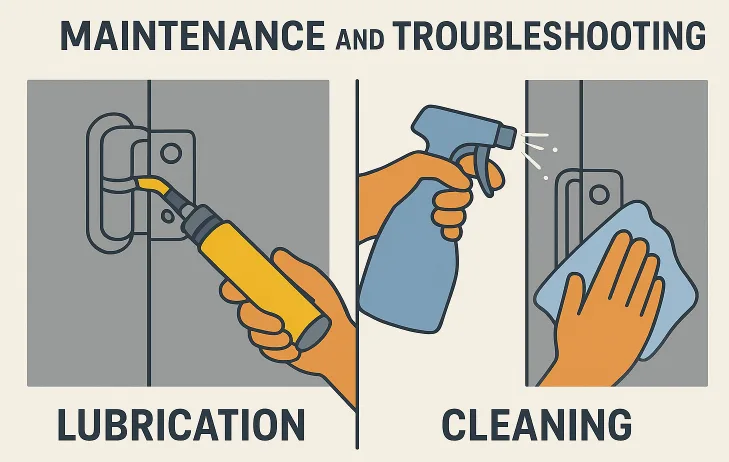
Lift-off hinges usually require limited maintenance, but periodic inspection is still important. Maintenance should focus on cleanliness, corrosion monitoring, lubrication where appropriate, fastener retention, and abnormal wear.
Door Sagging
Likely causes: Misalignment, loose fasteners, insufficient hinge rating, or excessive moment load.
Recommended action: Verify alignment, retighten fasteners, and confirm that the hinge rating matches the actual panel load and width.
Binding During Removal
Likely causes: Hinge-axis misalignment, poor installation, or frame distortion.
Recommended action: Inspect vertical alignment and verify that the door can be lifted without side loading or interference.
Noise or Rough Movement
Likely causes: Debris, corrosion, wear, or lack of lubrication where lubrication is appropriate.
Recommended action: Clean the hinge area, inspect for corrosion, and apply maintenance steps consistent with the hinge material and manufacturer guidance.
Rust in Harsh Environments
Likely causes: Incorrect material grade, damaged coating, or exposure conditions beyond the design assumption.
Recommended action: Review the actual environment and upgrade to a better material grade, such as stainless steel, when required.
For full diagnosis and corrective actions, visit our dedicated page on lift-off hinge troubleshooting.
Lift-Off Hinge vs. Removable Pin Hinge
These two products are often confused, but they are not the same. A removable-pin hinge still requires a pin to be manually extracted, often with tools or at least with separate handling. A lift-off hinge is designed for direct vertical removal without separate pin extraction.
| Feature | Removable Pin Hinge | Lift-Off Hinge |
|---|---|---|
| Disassembly Method | Pin removal required | Direct lift-off |
| Tool Requirement | Usually yes | No |
| Loose Parts | Pin may be misplaced | No separate pin handling |
| Best Use Case | Occasional removal | Frequent removal |
Lift-Off Hinge vs. Concealed Hinge
These hinge types serve different priorities. A lift-off hinge is chosen when fast removal and service access matter. A concealed hinge is chosen when appearance, hidden mounting, or tamper resistance is more important.
| Feature | Lift-Off Hinge | Concealed Hinge |
|---|---|---|
| Visibility | Usually visible | Hidden when closed |
| Door Removal | Fast and tool-free | Usually not intended for frequent removal |
| Maintenance Access | Excellent | More limited |
| Appearance | Functional, exposed hardware | Clean external appearance |
| Typical Use Case | Service doors, removable panels, maintenance-heavy equipment | Design-focused enclosures, cabinets, security-sensitive equipment |
FAQ
What is the main advantage of a lift-off hinge?
The main advantage is fast, tool-free door removal. This reduces downtime and makes maintenance, cleaning, and internal access much easier.
Are lift-off hinges secure?
Not by themselves. They are designed for convenience, not anti-removal security. In security-sensitive applications, they should be paired with appropriate latches or replaced with fixed hinge solutions.
Can lift-off hinges be used outdoors?
Yes, provided the material matches the environment. For outdoor, marine-adjacent, or chemically aggressive environments, 316 stainless steel is usually the preferred option.
Are lift-off hinges suitable for heavy doors?
They can be, but hinge rating, door width, dynamic load, and service condition must all be evaluated. Very heavy or highly dynamic doors may require alternative hinge systems.
What causes lift-off hinges to bind?
The most common cause is poor alignment during installation. If the hinge leaves are not mounted on the same vertical axis, removal and reinstallation can become difficult.
Is a flag hinge the same as a lift-off hinge?
In many markets, yes. “Flag hinge,” “detachable hinge,” and “lift-off hinge” are often used interchangeably, although naming conventions vary by supplier and region.
How do I know whether I need a left-hand or right-hand lift-off hinge?
Determine the door swing direction from the operator side and confirm which side the hinge pin must be on for correct lift-off operation. This should be checked before ordering.
Do lift-off hinges require top clearance for removal?
Yes. The panel must be able to move upward enough to disengage from the hinge pin. If surrounding structures block vertical movement, a lift-off hinge may not be the best choice.
Are lift-off hinges suitable for vibrating equipment?
They can be used in some vibrating environments, but only when retention and latching are properly considered. In severe vibration conditions, a fixed hinge system is often safer.
What material is best for outdoor lift-off hinges?
For most outdoor, marine-adjacent, or chemical-cleaning environments, 316 stainless steel is usually the most reliable choice. In milder conditions, other corrosion-resistant materials may also be suitable.
Conclusion
Lift-off hinges are one of the most practical hinge solutions for equipment and enclosure designs that require frequent access, hygienic cleaning, modular assembly, or fast service removal. Their value lies in operational efficiency, especially where removable doors improve maintenance access and reduce downtime.
That value, however, must always be balanced against real design constraints such as security, vibration, load condition, installation precision, and removal clearance. In the right application, a lift-off hinge can be an excellent choice. In the wrong application, a permanent hinge system may perform better over the product life cycle.
Need help matching the right lift-off hinge to your enclosure, cabinet, or equipment project? Contact HTAN for application-specific hinge selection support.


 English
  한국어
한국어  Русский
  Español
  Italiano
  Deutsch
  Français
  Português