

Cold Storage Hinges for Beverage Warehouses | Condensation & Seal Pressure
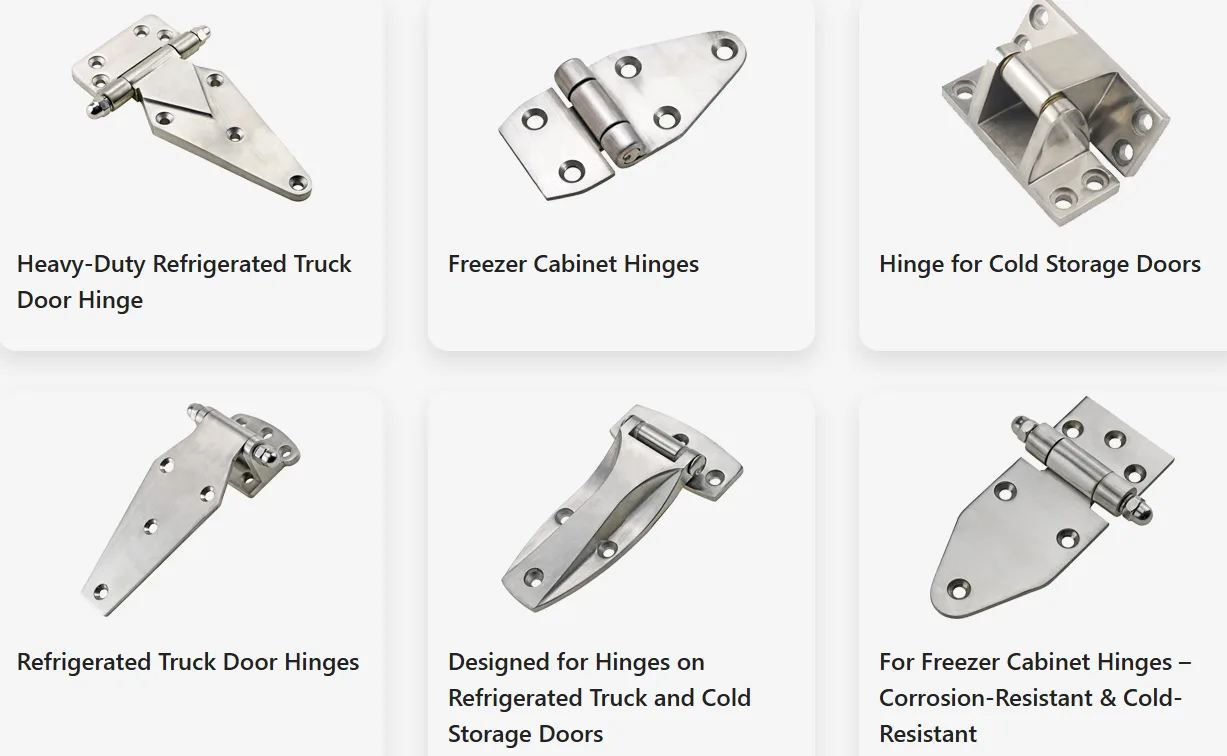
Cold storage hinge solutions for beverage warehouse and cold-room door systems
Beverage warehouses create a very specific hinge problem. Doors are large and insulated, traffic is frequent, forklifts and staff move constantly, warm humid air enters during every opening cycle, and washdown cleaning is often part of normal hygiene management. In this environment, the hinge is not just a support point. It directly affects door alignment, gasket compression, corrosion resistance, closing consistency, and long-term refrigeration efficiency.
This page focuses specifically on beverage cold rooms rather than cold storage in general. For the broader product and application overview, start with our cold storage hinges guide.
The main engineering question is simple: which hinge design can survive heavy insulated doors, repeated opening cycles, condensation, washdown cleaning, and sustained seal pressure without allowing the door to sag or the gasket line to fail? The answer usually depends on four factors working together: low-temperature material behavior, corrosion resistance, load-bearing stability, and the ability to maintain door-seal compression over time.
Why Beverage Warehouse Cold Rooms Are Harder on Hinges
Compared with many standard refrigerated rooms, beverage cold rooms combine several stresses at once:
- High cycle frequency: doors may be opened dozens or even hundreds of times per day during loading, picking, and replenishment.
- Moisture shock: every opening introduces warmer, wetter air that condenses on colder door hardware.
- Heavy insulated door leaves: thick doors create sustained load on hinge points and accelerate alignment drift if the hinge structure is not rigid enough.
- Washdown and sticky residue: beverage facilities often expose hardware to cleaning agents, splashing, and sugar-containing residue.
That combination is why beverage warehouse hinge selection should not be treated as a generic cold-room hardware decision.
The Four Real Performance Demands
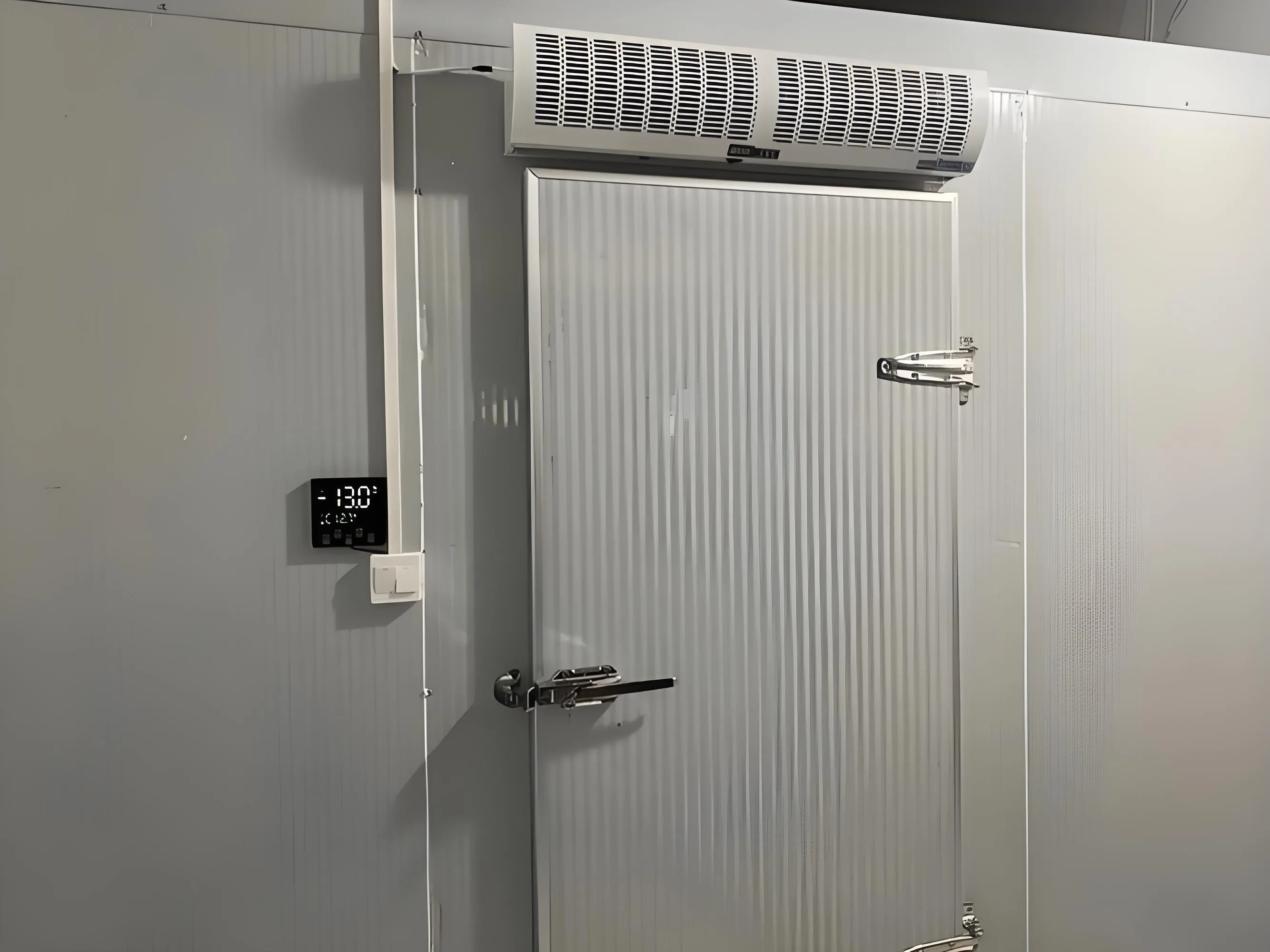
Cold-room hinge applications where durability, sealing, and hygiene matter together
1. Condensation and Icing Around the Hinge Area
Every time a refrigerated door opens, humid ambient air meets cold metal. Water condenses around hinge barrels, pins, mounting plates, and the surrounding frame area. If that moisture remains trapped, corrosion accelerates. In deeper cold conditions, it can freeze and raise opening resistance or disturb closing movement.
This is why beverage cold rooms should not rely on generic hardware-grade materials. If your project needs a deeper view of metal behavior and low-temperature reliability, compare it with our low-temperature hinge performance guide.
2. Frequent Opening Cycles and Fatigue Load
Door cycle count matters as much as static weight. Beverage warehouses often experience repeated short-cycle access by operators and forklifts. Over time, that repeated motion creates wear at pins, bearing surfaces, and mounting points. A hinge that seems acceptable in a low-traffic cold room may lose alignment much sooner in a fast-moving beverage facility.
3. Heavy Insulated Doors and Gasket Compression
Cold-room hinges do not only carry the door. They also help keep the door in the right position against the gasket line. If the hinge loses stiffness, the door starts to sag. Once sagging begins, door-seal pressure becomes uneven. That leads to air leakage, frost formation, temperature instability, and higher refrigeration energy demand.
For larger insulated doors or more aggressive load conditions, review the load-bearing logic in our heavy-duty hinges guide.
4. Washdown Cleaning and Hygienic Surface Exposure
Beverage storage areas may involve sticky residue, frequent rinsing, chemical cleaners, and sanitation checks. Hinges should therefore be easy to clean, less likely to trap residue, and able to tolerate repeated chemical exposure. Rough finishes, exposed crevices, and weak surface protection all increase long-term maintenance burden.
How Hinge Alignment Affects Door Seal Pressure
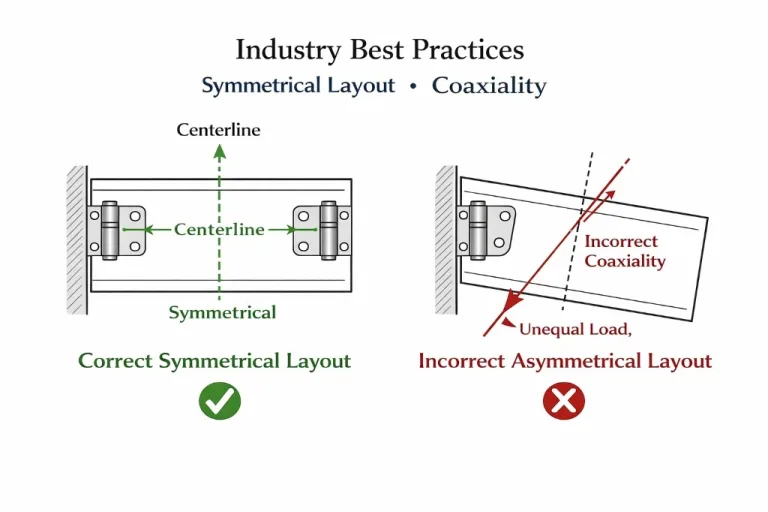
One of the most overlooked issues in beverage cold storage is door-seal pressure. Engineers often focus on hinge strength and forget that the real goal is stable closure against the gasket. A hinge that deforms, loosens, or shifts the door position will reduce compression at some points around the seal.
- Too little compression allows cold air leakage.
- Uneven compression increases frost risk and shortens gasket life.
- Poor alignment raises closing effort and accelerates door wear.
This is why adjustable, lift-up, or cam-assisted hinge structures can be valuable in beverage cold rooms. They help maintain the closing geometry needed for reliable sealing over the long term.
Material Choice for Wet, Cold, and Cleaned Environments
| Material | Main Strength | Main Limitation | Typical Fit |
|---|---|---|---|
| 304 stainless steel | Good low-temperature toughness and general corrosion resistance | Less resistant than 316 in harsher wet and chemical conditions | General refrigerated warehouse doors |
| 316 stainless steel | Better corrosion resistance in washdown and higher-condensation environments | Higher cost | More demanding beverage cold rooms and wet service zones |
| Protected zinc alloy | Cost-effective in milder indoor conditions | Less suitable for aggressive moisture and repeated cleaning | Lower-risk refrigerated areas |
| Low-friction inserts or engineered bushings | Can improve wear and smoothness | Usually supplementary rather than stand-alone structural material | Bearing interfaces and specific motion components |
Where corrosion resistance is part of the specification, especially in wet or aggressively cleaned environments, it is also useful to benchmark against NEMA 4X hinge requirements for corrosion-resistant enclosure hardware.
If your team is deciding between stainless and lower-cost alternatives, insert your material comparison target here rather than leaving the discussion generic.
Design Features That Work Better in Beverage Cold Rooms
- Adjustable hinges: useful where door alignment and gasket compression must be restored after settlement or wear.
- Lift-up or cam-lift hinges: useful where the door should compress the seal firmly during closing but relieve pressure slightly during opening.
- Self-closing hinges: useful in high-traffic environments where doors may otherwise be left ajar.
- Low-temperature compatible bearing interfaces: useful where smooth operation must continue under cold, wet conditions.
Maintenance Checklist for Beverage Warehouse Hinges
- Inspect hinge fasteners for loosening under repeated cycling.
- Check for rust staining, pitting, or residue around hinge joints.
- Verify that the door still closes evenly against the gasket.
- Look for sagging, uneven gaps, or rising closing force.
- Confirm that cleaning procedures are not leaving corrosive chemical residue on hardware.
- Use only lubricants and maintenance products suitable for low-temperature service where lubrication is required.
Conclusion
In beverage warehouses, cold-room hinges are part of the sealing system, part of the durability system, and part of the hygiene system at the same time. The right hinge is the one that keeps the insulated door aligned, preserves gasket compression, resists condensation and washdown exposure, and survives frequent daily cycling without drifting out of position.
FAQs
Q1: Why is door sealing so important in beverage warehouse hinges?
A1: Because hinge alignment directly affects gasket compression. If the door cannot stay correctly aligned against the frame, cold air leakage and frosting increase.
Q2: Is 304 stainless steel enough for beverage cold rooms?
A2: Often yes for general conditions, but where condensation, washdown, or harsher cleaning chemistry is significant, 316 may be the safer long-term choice.
Q3: Why do beverage warehouse doors need stronger hinges than expected?
A3: Because the real challenge is not only static weight. It is the combination of insulated door mass, high cycle counts, wet service conditions, and the need to maintain seal pressure.
Q4: Do beverage cold-room hinges need maintenance?
A4: Yes. Frequent door movement, moisture, residue, and cleaning exposure make regular inspection important for alignment and corrosion control.
Q5: Can hinge design affect refrigeration efficiency?
A5: Yes. A hinge that maintains door position and stable gasket compression supports better sealing and lowers cold-air loss.



 English
  한국어
한국어  Русский
  Español
  Italiano
  Deutsch
  Français
  Português