

Constant Torque Hinges for Lab Lid Safety and Controlled Covers
In laboratories, medical instruments, and precision analysis equipment, an uncontrolled lid is not a minor inconvenience. It is a direct safety and reliability problem. When an oven cover, analyzer lid, microscope chamber door, or instrument access panel suddenly drops under gravity, the result can be finger pinch injuries, operator impact, equipment shock, and premature hinge failure.
A torque hinge solves this problem by adding controlled rotational resistance to the opening and closing motion. Among these products, the constant torque hinge is especially valuable in laboratory and instrument-cover applications because it provides near-uniform resistance across the working range, helping a lid or cover remain stable at intermediate angles without separate stays or bulky gas struts.
This guide explains what a constant torque hinge is, why standard and spring-loaded hinges often fail in laboratory safety scenarios, where constant torque hinges are most useful, and how engineers should evaluate load, risk, inspection, and long-term performance when selecting them.
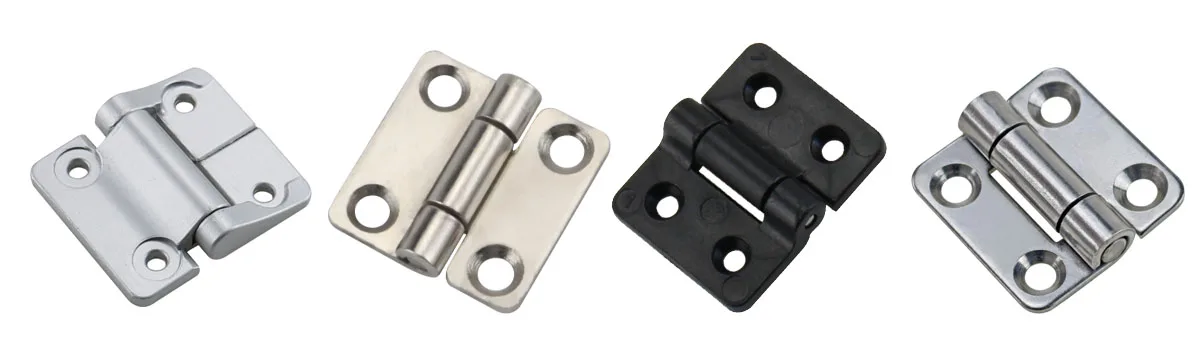
What Is a Constant Torque Hinge?
A constant torque hinge is a hinge engineered to deliver near-constant rotational resistance through its normal working range. In practical terms, it helps a cover, lid, or door stay where the user places it, while also slowing movement enough to reduce slam risk during closing.
The phrase “constant torque” does not mean the output is perfectly identical at every angle under every condition. In real engineering use, torque still depends on hinge design, production tolerance, temperature, cycle life, and friction-material behavior. However, compared with ordinary hinges or crude friction mechanisms, a constant torque hinge provides much more stable and predictable resistance across the motion range.
This makes it especially suitable for laboratory lids, instrument covers, optical-equipment doors, and service flaps where free-stop positioning, controlled closing, and repeatable user feel are more important than simple open-or-shut motion.
For broader sizing logic and calculation methods, see our torque hinge selection guide.
Why Lab Lids and Instrument Covers Become Safety Hazards
Laboratory and precision-instrument lids often seem harmless until motion becomes uncontrolled. In practice, even a medium-weight cover can create serious hazards if it cannot hold at intermediate angles or closes too quickly.
| Risk | Typical Cause | Result |
|---|---|---|
| Finger pinch injury | Sudden lid drop under gravity | Operator injury during opening or closing |
| Body or head impact | Uncontrolled cover motion | Direct user safety risk in tight workspaces |
| Instrument shock | Hard slam at end of travel | Internal component loosening, vibration, recalibration risk |
| Rebound after closure | Spring force spike or poor damping | Repeated instability and secondary impact |
| Premature hinge failure | Repeated slamming and overload | Shortened service life and higher maintenance cost |
These risks are especially important in labs because covers are frequently opened during delicate tasks such as sampling, calibration, cleaning, chamber access, or maintenance. A hinge that cannot control motion turns a basic access function into a recurring hazard.
Why Standard, Spring, and Basic Friction Hinges Fall Short
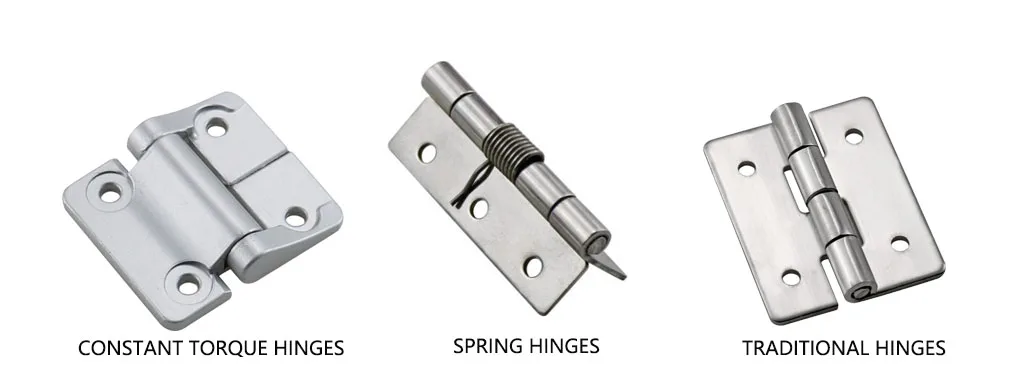
Constant torque hinges are often selected only after more basic solutions have already failed. The table below explains why.
| Hinge Type | Can Hold at Any Angle | Closing Control | Lab Safety Suitability |
|---|---|---|---|
| Standard butt hinge | No | No control | Low |
| Spring hinge | No | Force spike near closure | Low |
| Basic friction hinge | Limited | Often inconsistent | Medium |
| Constant torque hinge | Yes | Smooth, controlled resistance | High |
Standard butt hinges provide almost no help. They simply allow rotation and rely on gravity to determine motion. If the center of gravity shifts or the cover is bumped, the lid can drop suddenly.
Spring hinges are not a true free-stop solution. They are designed to return the door or cover toward a default position, which often creates unpredictable closing force and impact near the end of travel.
Basic friction hinges can improve hold-open behavior, but their output is often too crude for safety-critical covers. If friction is too low, the lid slips. If friction is too high, the user struggles to move it. More importantly, the motion feel may vary too much through the closing path.
How Constant Torque Hinges Improve Safety and Free-Stop Control
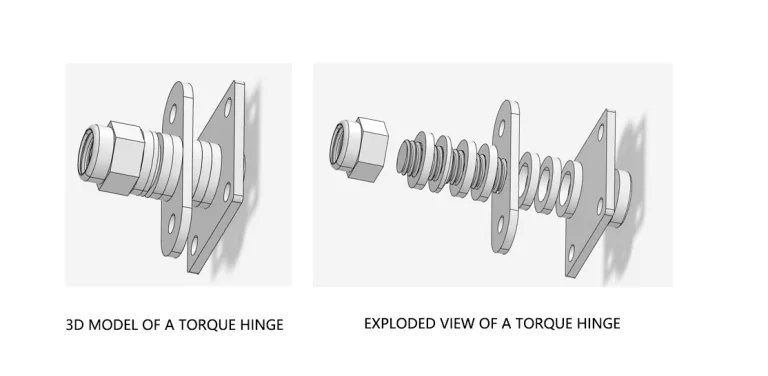
A constant torque hinge typically combines a precision shaft, friction interface materials, and a preload mechanism to generate stable rotational resistance. Instead of letting the cover accelerate freely under gravity, the hinge resists motion throughout the operating range.
- Positional stability: the lid can remain at intermediate angles during use or maintenance.
- Controlled closing: the cover closes with resistance rather than impact.
- Lower rebound risk: smoother energy dissipation reduces bounce-back at the end of travel.
- Better user feel: motion is more predictable and less stressful for the operator.
In practical terms, this means a researcher can raise a cover, release it at the needed working position, and continue the task without using one hand to support the panel. This is one of the biggest reasons constant torque hinges are valuable in laboratory environments.
Typical Load and Application Range for Constant Torque Hinges
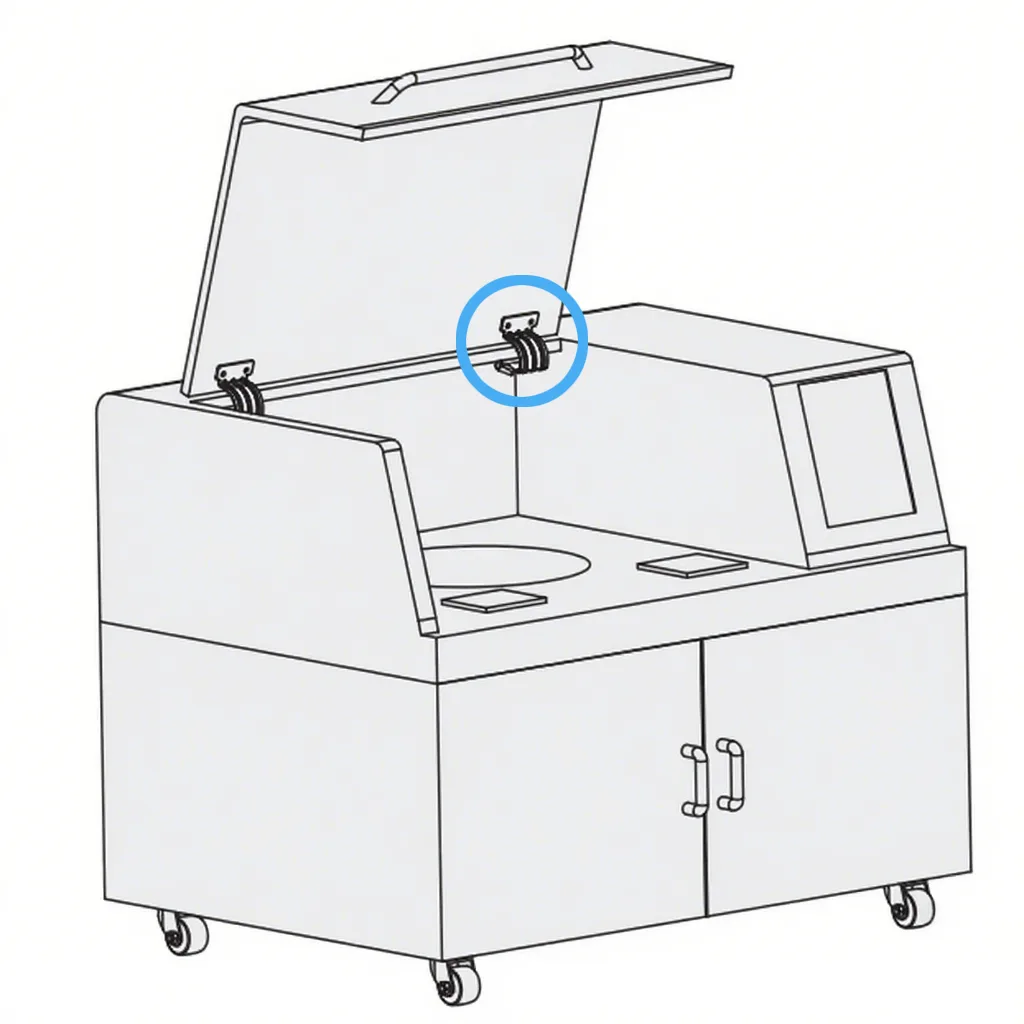
The exact torque requirement depends on lid weight, center of gravity, opening angle, and hinge quantity. Still, the application ranges below are useful for early engineering review.
| Application | Typical Lid / Cover Load | Why Constant Torque Helps |
|---|---|---|
| Analyzer service cover | Light to medium | Stable free-stop access during calibration or maintenance |
| Centrifuge lid | Medium | Controlled lift and safer anti-slam closure |
| Lab oven or incubator cover | Medium | Improves open-position stability and reduces sudden drop risk |
| Optical instrument cover | Light to medium | Protects precision components from shock during closure |
| Biosafety cabinet or service access door | Medium | Secure hold-open during cleaning and service procedures |
Where field tuning is necessary because the cover weight may vary, or because fine adjustment after assembly is important, adjustable torque hinges may be the better direction. Where consistent factory-set motion is the goal, constant torque hinges are often preferred.
Constant Torque Hinges vs Adjustable Torque Hinges
These two product families are related, but they are not identical.
| Type | Main Characteristic | Best Fit |
|---|---|---|
| Constant torque hinge | Factory-designed near-uniform resistance through motion range | Stable free-stop covers and instrument lids with well-defined load |
| Adjustable torque hinge | Torque can be tuned during setup or service | Applications needing field adjustment or variable panel conditions |
If your design team already knows the lid load and wants repeatable factory performance, constant torque hinges are often the simpler and more stable option. If the cover design is still evolving, or if the same assembly may carry different fitted components, adjustable torque hinges offer more flexibility.
When a Constant Torque Hinge May Not Be Enough
A constant torque hinge is not automatically the answer for every lid or cover.
- Very heavy lids: if gravity assistance is required, a hybrid approach may be more appropriate.
- Extreme vibration: mobile equipment or severe vibration environments may require additional structural review.
- Large off-center loads: unusual center-of-gravity shift can make a standard constant torque setup insufficient.
For very heavy covers or cases where gravity assistance must be compared directly, see torque hinges vs gas springs vs springs.
Buying Guide for Lab and Instrument Covers
Torque Rating
Start with the actual lid weight, opening geometry, and center of gravity. The required holding torque should exceed the gravitational moment with a realistic safety margin. If the application is part of a broader medical or diagnostic equipment design review, compare it with our torque hinge selection for medical devices guide.
Materials and Environment
Laboratories may involve bleach, ethanol, peroxide, humidity, and repeated cleaning. Use corrosion-resistant materials and friction systems compatible with the real environment, not just “indoor use” assumptions.
Opening Angle and Package Space
Confirm that the hinge’s rated opening angle matches the equipment requirement and that the hinge package fits the enclosure without causing interference.
Cycle Life
Constant torque is only useful if it stays stable long enough. Review test conditions, cycle counts, and torque retention data critically.
Inspection and Maintenance
Even a well-specified constant torque hinge should be checked periodically in real service.
- Look for torque loss or motion drift.
- Check for corrosion on shafts or mounting points.
- Inspect for loose fasteners or cover misalignment.
- Do not lubricate friction hinges unless the manufacturer explicitly says so.
If your main concern is long-term torque fade, inspection logic, or reliability loss after cycling, review why torque hinges lose strength and how to prevent it.
FAQ
What is a constant torque hinge?
A constant torque hinge is a hinge designed to provide near-uniform rotational resistance through its working range, helping a lid or cover remain stable at intermediate angles without separate support components.
Can a constant torque hinge hold a lab lid at any angle?
Within its intended operating range, yes. The exact result depends on correct torque sizing, lid weight, center of gravity, and hinge quantity.
What is the difference between a constant torque hinge and an adjustable torque hinge?
A constant torque hinge is designed for stable factory-set motion, while an adjustable torque hinge allows the resistance level to be changed during setup or service.
Do constant torque hinges need lubrication or regular inspection?
They usually should not be lubricated, because lubrication can reduce the friction behavior that creates controlled torque. However, they should still be inspected for corrosion, mounting looseness, and torque fade over time.
Conclusion
A laboratory lid that slams shut is not just a bad user experience. It is a preventable design failure. By giving covers stable free-stop behavior and smoother, safer closing control, constant torque hinges reduce operator risk, protect sensitive instruments, and improve day-to-day usability.
For labs, analyzers, optical equipment, and instrument access doors, the real value of a constant torque hinge is not only motion control. It is safer operation with fewer shocks, fewer repairs, and more predictable long-term performance.




 English
  한국어
한국어  Русский
  Español
  Italiano
  Deutsch
  Français
  Português