

Weld-On vs Bolt-On Hinges: Which to Choose & When
Though often overlooked, hinges directly impact the reliability and lifespan of doors, windows, or equipment. Choosing between weld-on hinges and bolt-on hinges requires weighing installation methods, load requirements, durability, maintenance difficulty, and cost. Weld-on hinges are better suited for permanent, integrated connections; bolt-on hinges are more suitable for quick installation and future maintenance. This article provides an in-depth comparison across key dimensions, offering a selection checklist and clear conclusions based on specific scenarios to help you make a quick decision.
According to Grand View Research (2024), the global door hinge market was valued at approximately $9.5 billion — a figure that reflects how foundational this component is across construction, industrial, and transportation sectors. Yet the choice between weld-on and bolt-on installation methods remains poorly understood, leading to premature failures, unnecessary maintenance costs, and security vulnerabilities that could have been avoided at the specification stage.
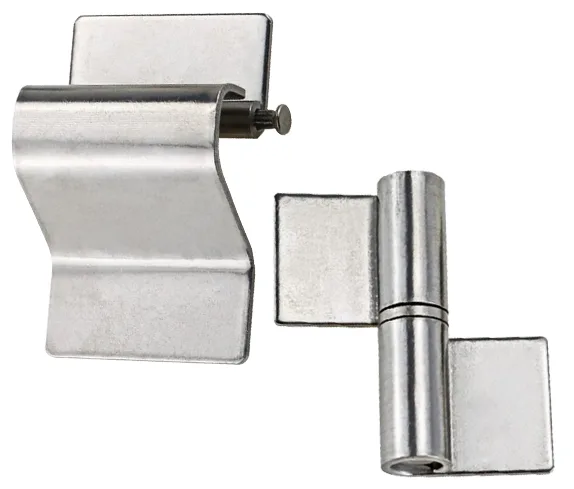
What Are Weld-On Hinges?
Weld-on hinges lack bolt holes. During installation, the hinge leaf is directly welded to the metal door frame or door body, creating a robust, non-removable connection. Common configurations include cylindrical or track-style designs, with materials ranging from carbon steel to 304/316 stainless steel and aluminum alloy. They are frequently used in heavy-duty industrial doors, steel gates, trailer tailgates, equipment hatches, and other applications requiring high strength and security.
Advantages
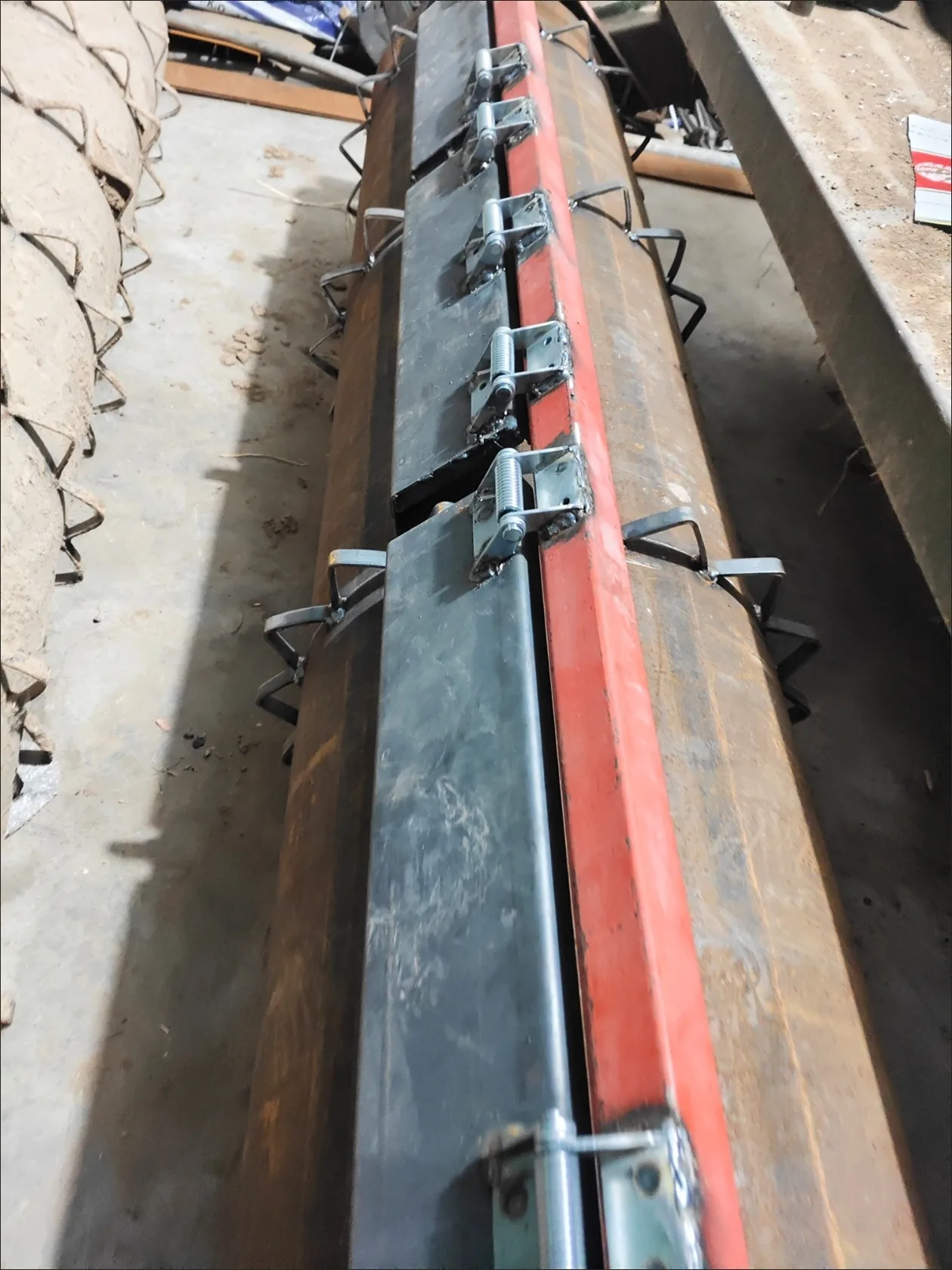
- Exceptionally high load capacity, effortlessly supporting tens of kilograms of heavy door panels
- No exposed bolts for a cleaner appearance and superior anti-pry resistance
- Stable weld points requiring minimal maintenance, with lifespans reaching decades
Disadvantages
- Installation requires professional welding equipment and expertise
- Once welded, disassembly or fine-tuning is virtually impossible, leading to high repair costs
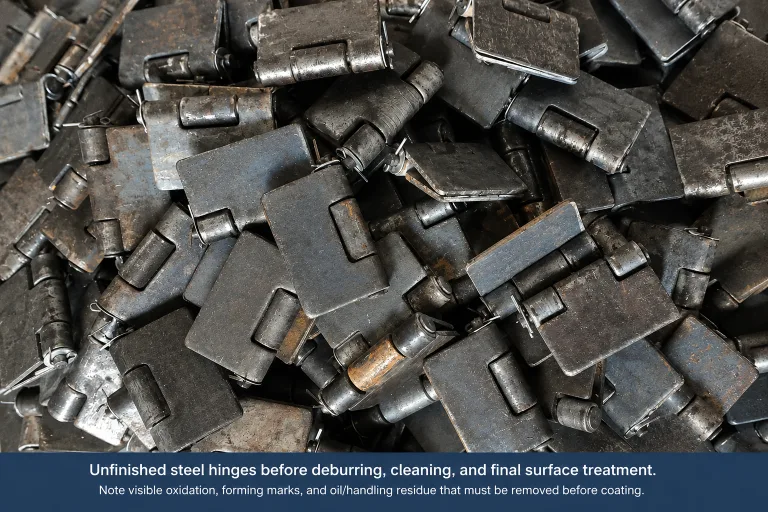
- Welded areas require grinding and rust-proof coating due to high temperatures, otherwise corrosion is likely
Overall, Weld-on hinges suit one-time installation for long-term, stable heavy-duty applications.
Materials
- Carbon steel (high strength, low cost)
- 304/316 stainless steel (corrosion-resistant)
- Aluminum alloy (lightweight)
Types
- Tubular (cylindrical), pin-type
- Wide-throw hinges provide greater opening angles
Common Weld-On Hinge Subtypes
- Barrel / Tubular hinges — Cylindrical body welded directly to frame; the most common format in industrial enclosures and heavy steel doors. Offers clean appearance with no exposed fasteners.
- Bullet hinges — Compact rounded-tip design optimized for high-load gate and trailer applications. See our bullet hinge load capacity guide for sizing calculations.
- Pintle hinges — Pin-and-socket design allowing vertical door removal without tools; commonly used on agricultural equipment and heavy machinery access panels.
- Flag / Weld-on lift-off hinges — Combine permanent welded mounting with a removable pin, enabling panel removal for maintenance while retaining structural integrity. Ideal for safety guard applications requiring fast MTTR.
Applications
Heavy-duty industrial doors, steel gates, trailer tailgates, container doors, and other scenarios emphasizing durability and security.
Limitations
- Requires professional welding; irreversible after welding
- Welds require grinding and rustproofing
- Demanding installation environment
What are Bolt-On Hinges?
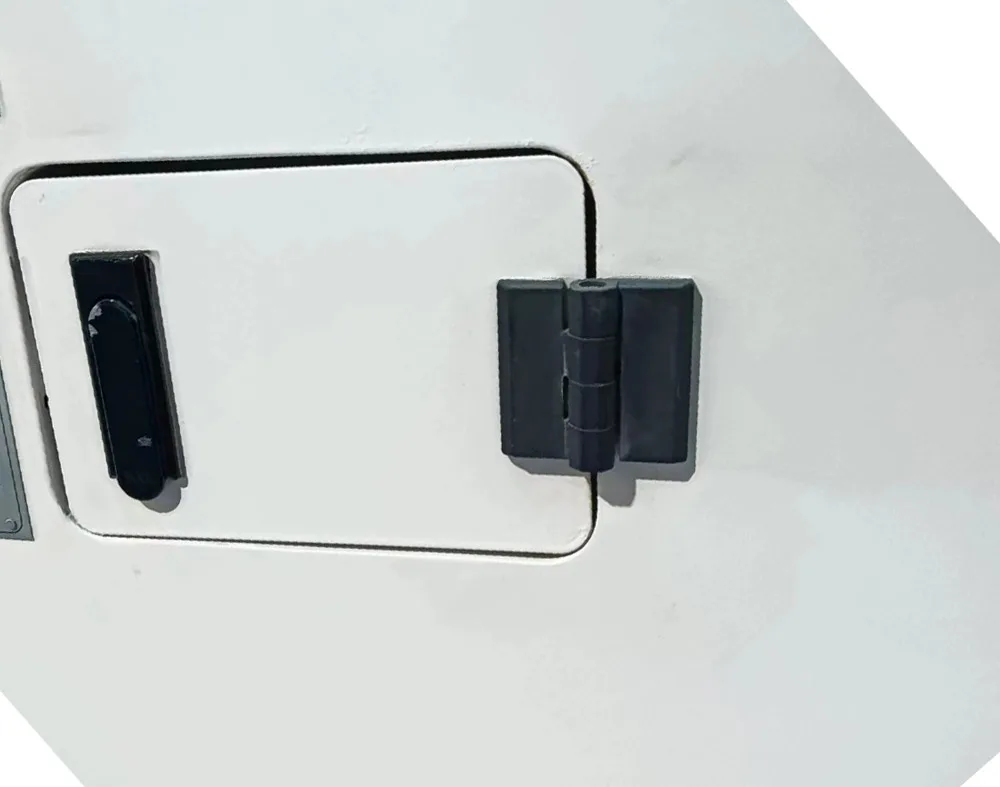
Applications of Bolt-On Hinges
Bolt-on hinges secure the hinge leaf to the door panel and frame using bolts or screws. Materials include steel, stainless steel, or aluminum alloy, suitable for wood, metal, or composite doors. Common types include T-plate hinges, continuous strip hinges, and adjustable hinges. Compared to Weld-on hinges, bolt-on hinges offer faster installation, easier disassembly, and greater suitability for applications requiring periodic maintenance, adjustments, or rapid construction. On-site installation requires only positioning, drilling, and bolting—no welding needed—making them preferable when construction conditions are constrained.
Bolt-On Hinge Types by Duty Rating
Not all bolt-on hinges are equal. Selecting the wrong duty class is one of the most common procurement mistakes in industrial projects:
- Light-duty (residential grade) — 2-ball-bearing (2BB) hinges; door weight typically ≤25 kg. Suitable for interior wooden doors and lightweight aluminum panels.
- Medium-duty (commercial grade) — 4-ball-bearing (4BB) hinges; door weight 25–80 kg. Common in commercial storefronts and office partitions with high-frequency cycling.
- Heavy-duty (industrial grade) — Roller bearing or thick-leaf designs (leaf thickness ≥4 mm); door weight 80–500+ kg. Required for industrial enclosure doors, electrical cabinet panels, and cold storage access.
Procurement tip: Always specify duty class and cycle life requirement — not just hinge dimensions — when sourcing from manufacturers. A heavy-duty bolt-on hinge rated for 200,000 cycles costs significantly more than a light-duty version with identical dimensions.
Advantages
- Rapid installation without welding equipment
- Post-installation micro-adjustment of door panel position via nuts or slot holes
- Easy maintenance—simply tighten or replace loose bolts
- Greater flexibility for removable structures like wooden doors, lightweight doors, trailers, and mobile display cabinets
Limitations
- Load capacity constrained by bolt strength and substrate
- Bolts may loosen under heavy loads or intense vibration, requiring periodic inspection
- Exposed fasteners present lower security, necessitating anti-tamper measures
- Visible screws compromise aesthetic neatness compared to welding
Structure
Bolt/screw fastening, suitable for removable and on-site adjustable applications.
Materials
- Steel, stainless steel, aluminum alloy
- Commonly galvanized or coated; stainless steel preferred for outdoor use
Core Performance Metrics: Which is more stable, economical, and durable?
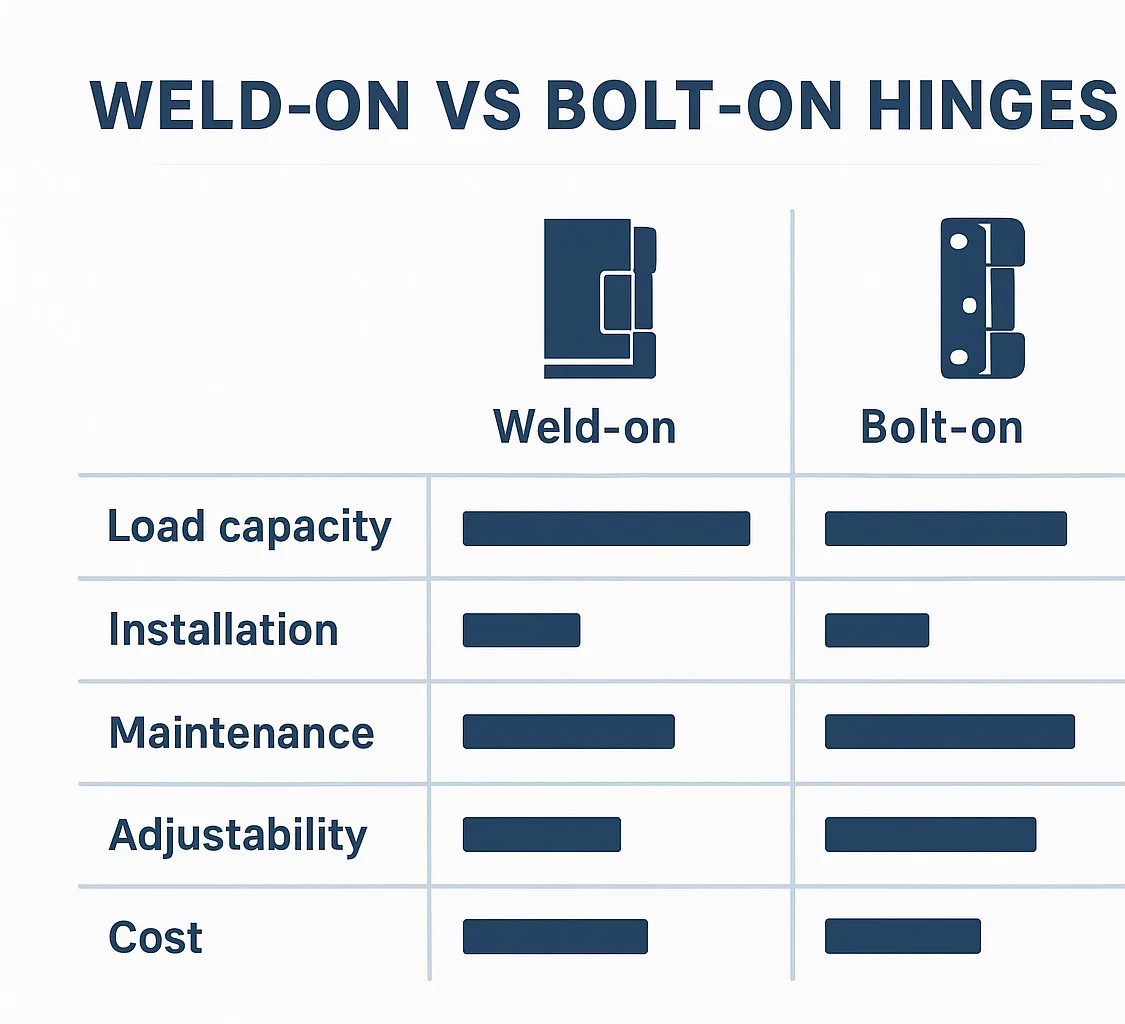
Infographic: Differences Between Weld-On and Bolt-On Hinges
Load-bearing & Strength
Weld-on hinges transmit forces directly to the door frame via welds, offering high structural integrity and withstanding extreme torque and shear loads. Bolted hinges distribute loads across bolts, with load capacity determined by bolt quantity, grade, and substrate hardness; bolts may pull out and fail under high loads. Prioritize Weld-on hinges for doors exceeding 100 kg.
Impact and Shock Resistance
Static load ratings tell only part of the story. In high-shock environments — forging floors, transport vehicles, blast-adjacent installations — dynamic impact resistance is the more relevant specification:
- Weld-on hinges distribute impact energy across the entire weld bead and into the parent structure. The absence of mechanical fastener interfaces means there is no single “weakest point” where stress concentrates during sudden loading. This is why weld-on designs are specified for armored vehicle hatches, blast-resistant enclosures, and heavy machinery access doors subject to vibration per MIL-STD-810.
- Bolt-on hinges concentrate dynamic loads at fastener hole edges. Under repeated impact, hole elongation occurs before visible deformation — meaning a bolt-on hinge can be structurally compromised without any obvious visual warning. Use backing plates and high-grade fasteners (Grade 10.9 minimum) to mitigate this risk in moderate-vibration applications.
Alignment Tolerance
Bolted hinges typically feature adjustment slots or nuts, allowing on-site fine-tuning for greater flexibility. Weld-on hinges require precise initial positioning and are difficult to adjust after welding.
Installation Time & Tools
Weld-on hinges involve a more complex process: surface preparation, jig alignment, spot welding, filler application, and grinding. A professional welder may take 10–20 minutes or longer per hinge. Bolted hinges require marking, drilling, bolting, and torqueing—typically completed in 3–5 minutes. Bolting saves time but demands precise hole alignment.
Long-term maintenance
Weld-on hinges are virtually maintenance-free and won’t loosen. Bolted hinges require periodic tightening checks and lubrication of pins, with higher maintenance frequency in vibrating environments.
Fatigue Life: What the Cycle Data Actually Shows
Maintenance frequency is directly tied to fatigue life — and the gap between weld-on and bolt-on designs is larger than most engineers expect:
- Weld-on hinges — Welded joints eliminate mechanical play at the mounting interface. Under standardized cycle testing per ANSI/BHMA A156.1, quality weld-on hinges sustain 500,000+ open/close cycles without structural degradation. Primary failure mode is weld fatigue or base metal cracking — both detectable through visual inspection before catastrophic failure.
- Bolt-on hinges — Fastener interfaces introduce micro-movement under load. In vibrating environments (machinery, vehicles, HVAC-adjacent installations), bolt-on designs typically require re-tightening or component replacement after 50,000–100,000 cycles. Primary failure modes: loose fasteners, worn bearing surfaces, stripped threads in the substrate.
Practical implication: For a door cycled 20 times per day in a manufacturing facility, a bolt-on hinge may require its first maintenance intervention within 7–14 years. A comparable weld-on hinge may reach end-of-life at the same facility without ever requiring re-fastening. See our industrial hinge cycle-life testing guide for full methodology details.
Corrosion Resistance
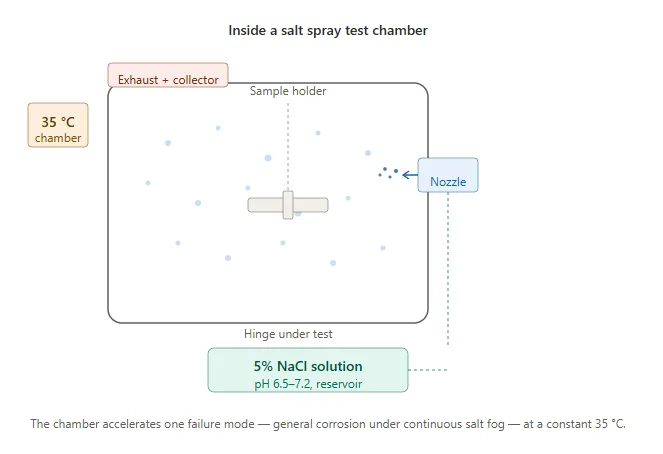
Both require protection. For outdoor or chemical environments, Weld-on hinges are recommended in 304/316L stainless steel or hot-dip galvanized steel; bolted hinges commonly use galvanized or coated steel plates. 316L stainless steel Weld-on hinges withstand over 1,000 hours of salt spray testing (ASTM B117) without corrosion, far exceeding standard galvanized coatings (approx. 100–300 hours).
Performance at Temperature Extremes
- High-temperature environments (ovens, furnaces, fire-rated assemblies): Steel weld-on joints maintain structural strength up to 800°C+. The absence of threaded fasteners eliminates thermal-expansion-induced loosening. Post-weld heat treatment (PWHT) may be required for critical applications per ASTM A240.
- Low-temperature environments (cold storage, cryogenic, outdoor winter): Bolt-on hinges risk fastener loosening as differential thermal contraction acts on bolt-substrate interfaces across temperature cycles. Lubricant viscosity also increases, raising operating torque. For cold chain applications below −20°C, specify low-temperature-rated lubricants and consider weld-on construction to eliminate fastener-loosening risk entirely.
Aesthetics and Security
Weld-on hinges allow grinding of weld seams and painting for a seamless appearance. Hidden fasteners enhance tamper resistance. Bolt hinges expose screws; security caps or spot welding can be added for tamper resistance.
Pin Configuration and Anti-Tamper Design
Pin configuration is a critical but often overlooked security variable:
- Weld-on hinges typically use non-removable (staked or peened) pins. Because the hinge leaf is permanently welded to the frame, there is no accessible fastener for an intruder to attack. This design is mandatory for banks, detention facilities, and military installations.
- Bolt-on hinges typically use removable pins to facilitate maintenance and panel replacement. On the exposed side of a door, removable pins represent a potential attack vector. Mitigation options include set-screw pin retention, security-tip pins, or installing the hinge on the secure side of the door frame.
For high-security applications, consider concealed hinge designs that eliminate the pin exposure problem entirely by mounting inside the door structure.
Smoothness and Noise
Both can use bearings or bushings and require periodic lubrication to reduce friction. Ball bearing hinges operate more quietly but cost more. For either type, keeping the pivot pin clean and oiled is crucial.
Total Cost of Ownership
Weld-on hinges have higher initial labor costs but lower maintenance expenses. Bolt hinges are cheaper initially but require ongoing maintenance. Choose bolt hinges for tight budgets; Weld-on hinges are often more cost-effective over their lifecycle.
Selection Criteria for Different Scenarios
- Heavy-duty steel doors and industrial equipment: Prioritize Weld-on hinges for maximum strength and anti-pry performance due to high load-bearing and security requirements.
- Wooden or composite doors: When welding is impractical, use bolt hinges directly—e.g., interior wood doors, container conversions, lightweight fence gates.
- Movable/removable structures: Trailers, portable fences, exhibition equipment requiring frequent disassembly benefit from bolt hinges for efficiency.
- High-security/vandal-resistant settings: Banks, prisons, military facilities, etc., should use Weld-on hinges embedded within door panels or columns for enhanced tamper resistance.
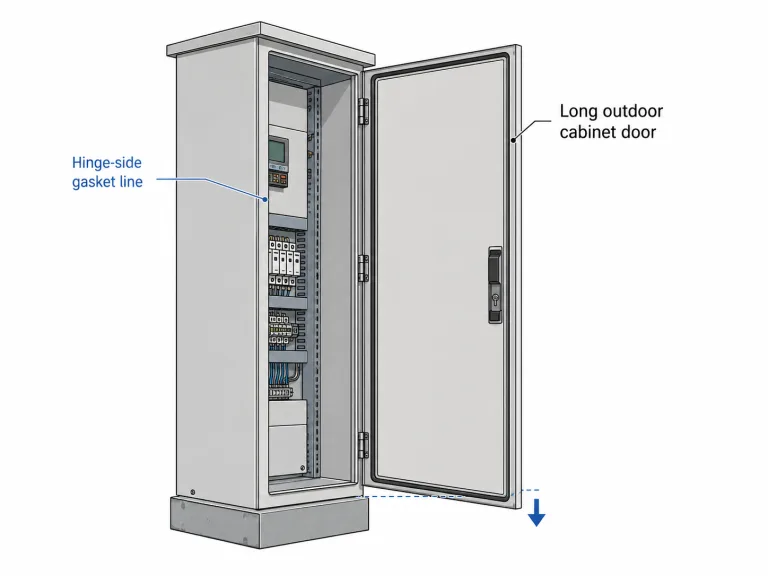
- Outdoor or highly corrosive environments: Prioritize corrosion-resistant materials (e.g., 316L stainless steel), then select installation methods based on door material and maintenance plans. Extreme corrosion zones like coastal areas or chemical plants require heavy-duty protection.
- Frequent adjustments and maintenance: Bolt-on hinges are more convenient for furniture, cabinet doors, and other applications requiring repeated fine-tuning.
- Fire-rated doors and emergency exit routes: Steel weld-on hinges maintain structural integrity at temperatures exceeding 800°C, meeting requirements for fire-rated door assemblies. Bolt-on hinges risk fastener loosening and lubricant failure under sustained high heat — verify local fire code requirements before specifying bolt-on designs on fire-rated assemblies.
Application Scenarios: Quick-Reference Tables
The following tables summarize common application types and the corresponding recommended hinge type based on real-world performance requirements.
| Application Type | Recommended Type | Primary Reason |
|---|---|---|
| Industrial machinery doors | Weld-On | High vibration, no maintenance access, long service life required |
| Electrical cabinet enclosures | Weld-On or Heavy-Duty Bolt-On | Weld-on for permanent field installation; bolt-on where panel replacement is planned |
| Cold storage / walk-in freezer doors | Weld-On (316L SS) | Thermal cycling causes bolt loosening; stainless resists condensation corrosion. See cold storage hinge guide |
| Residential and commercial gates | Bolt-On | Style flexibility, periodic adjustment, no welding required on site |
| Refrigerated transport vehicles | Hybrid (Weld-On frame + Bolt-On access) | Permanent structural hinge at main door; bolt-on at inspection panels for serviceability |
| Security / detention facilities | Weld-On with non-removable pin | No exposed fasteners; eliminates pin-attack vector |
| Medical device enclosures | Bolt-On (adjustable type) | Requires frequent panel access for servicing; position control often needed |
| Outdoor coastal / marine installations | Weld-On (316L SS) | Salt spray resistance; no crevice corrosion risk at fastener holes |
Decision Matrix: Match Your Requirement to the Right Hinge
| Primary Requirement | Best Option | Notes |
|---|---|---|
| Door / panel weight >100 kg | Weld-On | Bolt-on load capacity limited by fastener grade and substrate |
| Frequent disassembly or maintenance | Bolt-On (Heavy-Duty) | Specify 4BB or roller bearing grade for industrial use |
| Marine / coastal / chemical environment | Weld-On (316L stainless steel) | 1,000+ hr salt spray resistance vs 100–300 hr for zinc-plated bolt-on |
| High security / anti-tamper | Weld-On with staked pin | No accessible fasteners; consider concealed hinges for maximum security |
| Low initial installation budget | Bolt-On | Factor in 10-year maintenance cost before final decision |
| Fire-rated assembly | Weld-On (steel) | Maintains integrity at 800°C+; verify against local fire code |
| Welding not feasible on site | Bolt-On | Wooden substrates, retrofit projects, or constrained site conditions |
| 500,000+ cycle service life | Weld-On | Bolt-on designs typically require maintenance at 50,000–100,000 cycles |
How Materials and Specifications Influence Your Decision
Material differences
- Carbon steel offers high strength at low cost but requires coating for rust prevention
- 304 stainless steel provides better corrosion resistance at a higher price
- 316 stainless steel performs best in marine and acidic environments
- Aluminum alloy is lighter and rust-resistant but has limited load capacity, suitable for medium to light loads
Plate Thickness and Pin Diameter
Load-bearing capacity directly correlates with plate thickness and pin size. Weld-on hinges typically use ≥6mm thick steel plates and thicker pins for higher shear strength. Bolted hinges often use 2–5mm plates and require high-grade bolts. Match material thickness to expected loads during installation.
Surface Treatment
Hot-dip galvanizing, electrophoretic coating, epoxy paint, and powder coating all enhance rust resistance. Cold galvanizing or phosphating suffices for standard environments; choose hot-dip galvanizing or fluorocarbon coating for heavy-duty corrosion protection. Construction quality determines lifespan—strict adherence to specifications is mandatory.
Fastener Grade
Use Grade 8.8 or 10.9 high-strength bolts. Grade 10.9 offers higher tensile strength for heavy-duty applications. Apply nylon lock washers, spring washers, or threadlocker for anti-loosening. Match fasteners to hinge material (e.g., stainless steel hinges with stainless steel bolts).
Installation Essentials & Best Practices
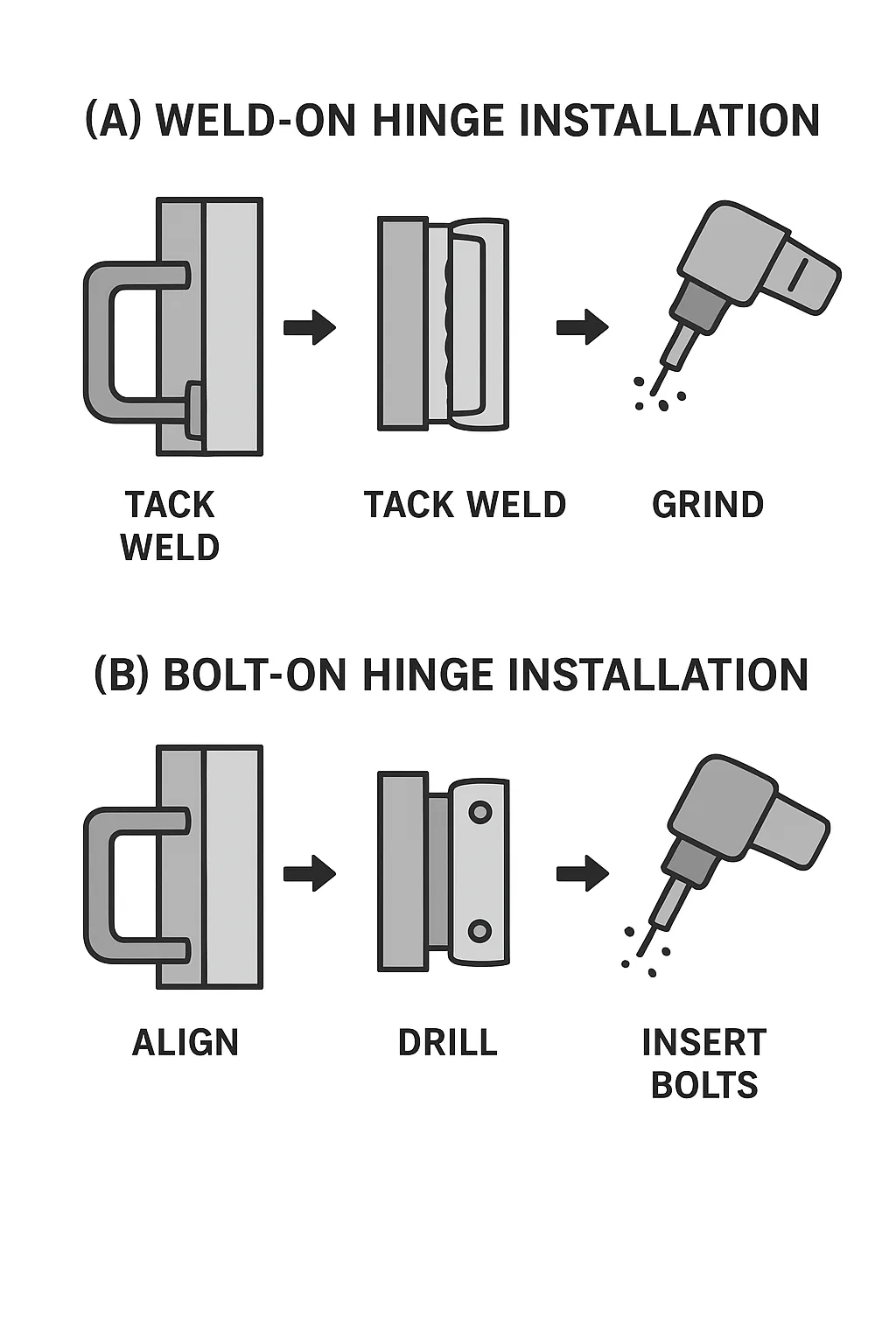
Installation Essentials & Best Practices
Weld-on hinges
- Clean the weld surface and precisely position using clamps
- Test open/close after tack welding to ensure no binding before completing the weld fill
- Alternate welding left and right to minimize distortion
- Grind weld slag and spatter post-weld, then apply rustproofing or galvanized coating
- Apply grease to bearing surfaces for enhanced smoothness
Bolt-Fastened Hinges
- Use a level and straightedge to determine hole positions; maintain verticality and precision when drilling pilot holes
- Install with metal washers or backing plates to distribute load and prevent wood splitting
- Tighten to recommended torque; recheck all fasteners for looseness post-installation
- Allow appropriate expansion gaps for thermal movement
General principles
- Maintain concentric hinge axes and ensure door panels remain flat without misalignment
- Conduct multiple opening/closing tests post-installation and perform simulated load verification for reliability
- Perform regular tightening and lubrication checks to extend service life
Common mistakes
- Neglecting door weight and dimensions: Insufficient hinge quantity or inaccurate load assessment leads to prolonged overload and sagging.
- Misalignment errors: Off-center drilling or welding causes door jamming and pulling.
- Inadequate corrosion protection: Failure to grind welds or apply rustproofing allows hinge joints to rust and seize, especially in humid environments.
- Inadequate fastening: Using low-strength screws or lacking anti-loosening measures (nylon washers, thread sealant) increases loosening under vibration or heavy loads.
- Lack of maintenance plan: Irregular tightening and lubrication leads to bolt loosening, pin wear, poor operation, and reduced lifespan.
Step-by-Step Selection Checklist for Quick Decisions
- Define load requirements: Determine load rating based on door weight and opening frequency.
- Base material and construction conditions: Confirm door frame material and on-site welding feasibility. Consider Weld-on hinges for weldable metal frames; choose bolted hinges for wood or non-weldable surfaces.
- Environmental assessment: Select materials and protection based on corrosion level. Prioritize 316 stainless steel for marine environments.
- Maintenance and adjustability needs: Choose bolted hinges for frequent disassembly or adjustments; opt for Weld-on hinges for long-term maintenance-free operation.
- Cost calculation: Compare material, processing, labor, and long-term maintenance expenses; conduct economic evaluation by weighing hinge price, labor hours, and future repairs.
- Prototype Testing: Conduct small-batch trial installations to measure load-bearing capacity and adjustment effectiveness; validate solutions through load and endurance opening/closing tests.
Advanced Strategy: Combining Both Types in One Installation
In complex installations — refrigerated warehouses, industrial machinery, EV charging stations with enclosures — engineers increasingly specify a hybrid approach rather than forcing a single hinge type across all access points:
- Main structural doors (high load, high security, infrequent access): Weld-on hinges. Maximizes structural integrity and eliminates tamper risk at primary access points.
- Service / inspection panels (moderate load, frequent access): Heavy-duty bolt-on hinges — or lift-off bolt-on hinges for panels requiring complete removal during maintenance cycles.
- Removable covers on weld-on frames: Use weld-on flag hinges (with removable pin) to combine the structural permanence of a welded leaf with the convenience of pin-removal access.
This hybrid strategy is standard practice in food processing facilities, pharmaceutical manufacturing, and data center cabinet systems — any environment where structural security and rapid serviceability must coexist.
Clear Conclusions: When to Choose Welded vs. Bolted
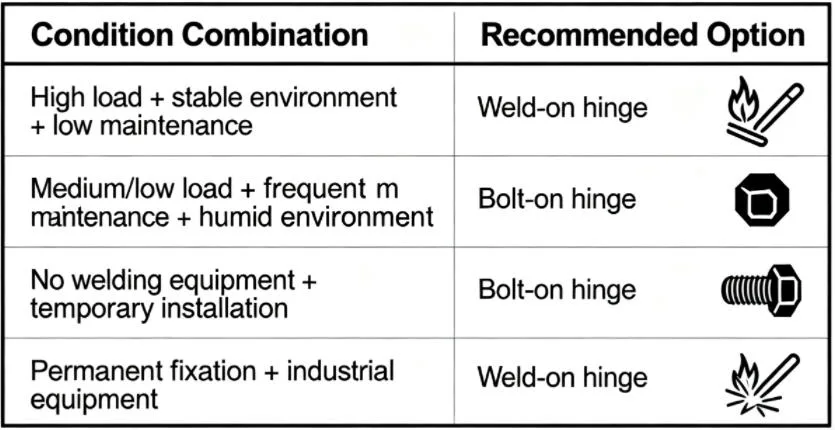
A decision flowchart showing how to pick between weld-on and bolt-on hinges based on load, maintenance needs, and environment.
One-Sentence Decision: Select Weld-on hinges when extremely high load-bearing is required and welding is feasible during installation; choose bolted hinges when flexible adjustments, frequent maintenance, or installation constraints are present.
Select Weld-on hinges:
Suitable for heavy-duty loads, high-security, and concealed installations, such as steel gates, armored doors, and high-security facilities.
Select bolted hinges:
Suitable for applications requiring future adjustments/maintenance or substrates unsuitable for welding, such as wooden doors, equipment access panels, and demountable structures; also ideal for rapid installation or projects with potential future replacements.
FAQ
Can Weld-on hinges be used outdoors? How to prevent rust?
Yes. Select 316L stainless steel or hot-dip galvanizing, and apply post-weld protection (cold zinc spray, epoxy paint, hot-dip galvanizing). Remove weld slag, grind the surface smooth, and apply rust-proof coating to prevent weld oxidation. Regular inspection and reapplication of rust inhibitors extend service life.
How to estimate the maximum load capacity of bolt-mounted hinges?
Refer to the product manual or rated capacity. For example, a single hinge rated for 500 kg can theoretically support about 1,000 kg when using two hinges. Actual calculations should include a safety factor. Ensure the bolt grade matches the substrate strength; for doors weighing 500 kg, use at least two hinges rated for 250 kg or more and select high-grade bolts.
What distinguishes adjustable hinges from standard hinges?
Adjustable hinges feature built-in adjustment bolts, allowing post-installation fine-tuning of door panel alignment (horizontal or vertical). Standard hinges lack internal adjustment mechanisms, requiring shims or repositioning for correction.
How to quickly correct sagging doors?
First, tighten all bolts. Then, address the specific issue:
- For bolt-on hinges: Add or replace the shims with higher-strength versions to enhance support points.
- For Weld-on hinges: Weld a reinforcement plate beneath the top hinge or install height-adjustment plates to restore levelness.
- For excessively tall doors: Install a third hinge to better distribute the weight.
Keep in mind that some hinges feature their own height-adjustment screws for quick corrections.
Is 316 stainless steel worth the premium cost near the coast?
Yes. Coastal salt spray corrosion is severe, and 316L significantly extends service life. Though 20–30% more expensive than 304 or carbon steel, it reduces replacement and maintenance costs, making it more economical long-term.
Does painting after welding affect hinge performance?
No. Proper painting or galvanizing enhances corrosion resistance. Ensure clearance around pivot pins to prevent paint film jamming; apply grease before and after installation for smooth operation. Use high-quality rust-proof paint with multiple thin coats and thorough drying for optimal results.
What are the most common failure modes for each hinge type?
Knowing failure modes in advance allows you to design appropriate inspection intervals and maintenance protocols:
- Weld-on hinge failures: Weld fatigue cracking (typically at weld toe, detectable by visual or dye-penetrant inspection before catastrophic failure); base metal cracking adjacent to the heat-affected zone (HAZ) in improperly welded joints; galvanic corrosion at weld-to-stainless interfaces if dissimilar metals are used without isolation.
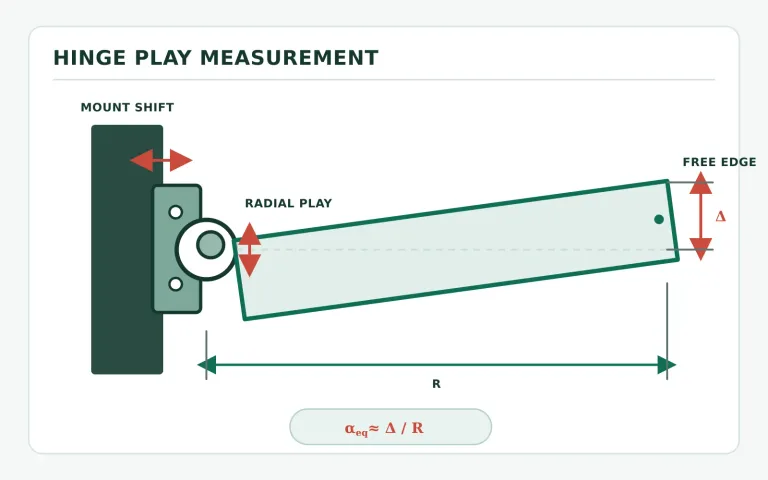
- Bolt-on hinge failures: Fastener loosening under vibration (most common, preventable with thread-locking compounds or nylon-insert nuts); bearing surface wear leading to hinge play and door sag; substrate thread stripping in thin sheet metal applications; crevice corrosion under bolt heads and washers in wet environments.
For a complete failure analysis framework applicable to both types, see our 7 key indicators for hinge inspection guide used by our procurement engineering team.
What is driving the shift toward weld-on hinges in industrial applications?
The global door hinge market was valued at approximately $9.5 billion in 2024 (Grand View Research) and continues growing, driven by increased demand in industrial automation, EV infrastructure, and cold chain logistics. Within this market, weld-on hinges are gaining share in heavy industrial segments for three primary reasons: tightening equipment reliability standards, rising labor costs that make maintenance-free designs more economical, and stricter physical security requirements in critical infrastructure. Bolt-on designs retain dominance in residential, light commercial, and applications where serviceability is a hard requirement.
Conclusion
Selection must balance application, load capacity, and installation feasibility: prioritize Weld-on hinges for heavy-duty, high-security environments; choose bolted hinges when adjustability and maintenance ease are required. We recommend evaluating each item against the checklist above and confirming material and specifications with suppliers. Precise selection reduces future risks while enhancing durability and cost-effectiveness. Correct hinge selection is the foundation for long-term reliable operation of doors, windows, or equipment. For custom specifications or technical consultation, contact the HTAN engineering team directly.

 English
  한국어
한국어  Русский
  Español
  Italiano
  Deutsch
  Français
  Português