

Why Outdoor Hinges Fail First at Knuckles and Fasteners
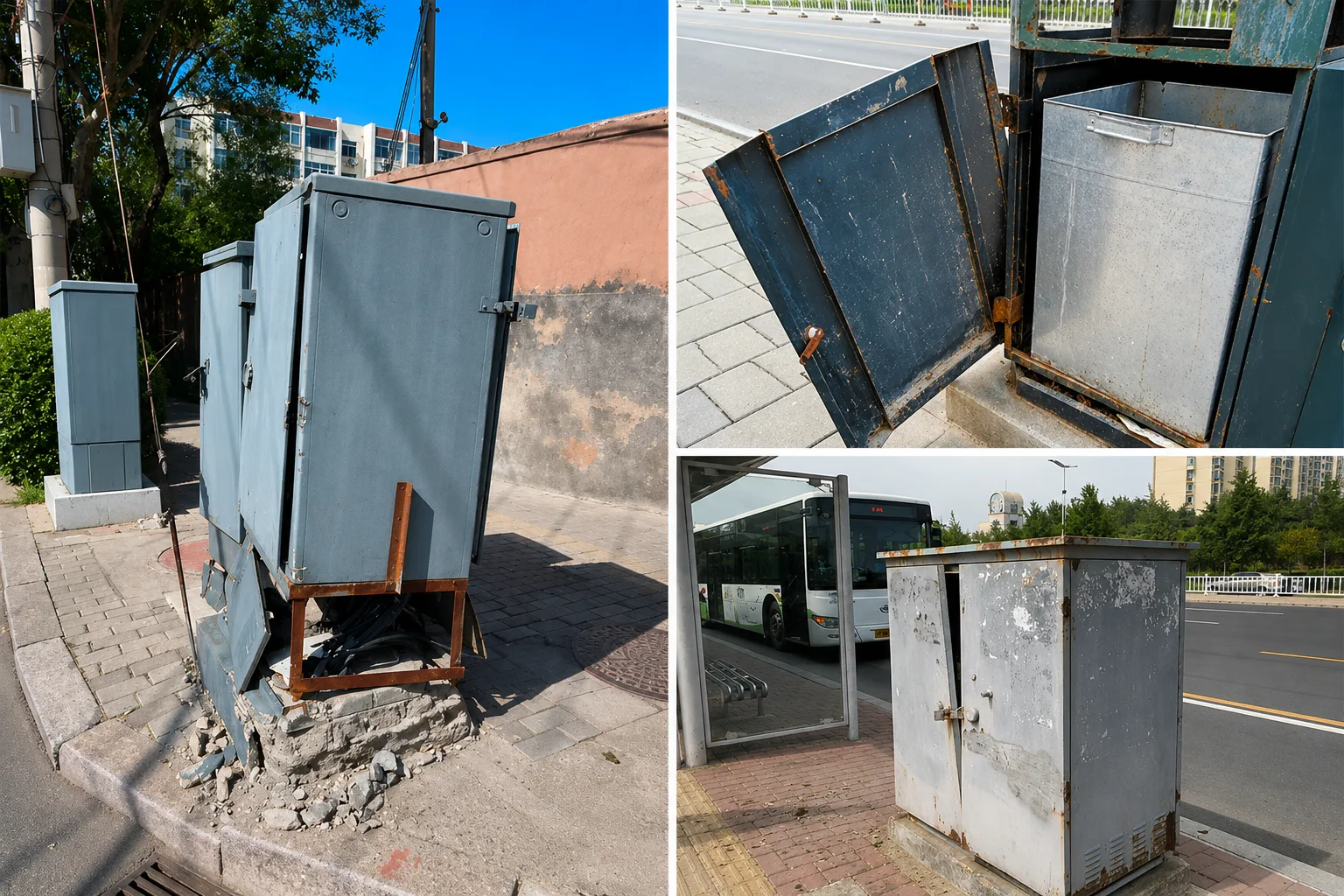
When an outdoor hinge fails, the damage is almost never spread evenly across the part. Pull a corroded hinge off a weathered cabinet and you will usually see the same picture: the flat leaf still looks fine, the paint on the door panel is intact, but the knuckle is seized and weeping rust — brown staining bleeding out of the pin gap — and the screws have rotted in their holes. The hinge did not fail as a whole. It failed at two specific places first — the knuckle and the fasteners — and understanding why those two spots go first is the key to catching the problem before the door drops.
This is a failure-location question, not a material question. The same 304 stainless hinge can look perfect on the leaf and be destroyed at the knuckle. If you only judge a hinge by the condition of its flat surfaces, you will miss the failure that is actually happening. This guide explains the mechanism at each location, gives you an inspection sequence, and tells you how to decide between repair and replacement.
Quick Answer: Why Those Two Spots Go First
Outdoor hinges fail first at the knuckle and the fasteners because both are geometric traps that hold water and concentrate stress, while the flat leaf sheds water and spreads load. The knuckle is a tight gap between moving parts where moisture sits, oxygen is starved, and micro-movement rubs away any protective film — the exact recipe for crevice corrosion and fretting. The fastener holes break the protective coating, mix two metals, and carry the highest pull-out load on the part. The flat leaf has none of these problems, which is why it still looks healthy long after the working parts are gone.
| Symptom | Likely Failure Spot | What It Means |
|---|---|---|
| Rust weeping from the barrel ends | Knuckle | Crevice corrosion inside the pivot |
| Stiff or squeaking movement | Knuckle | Fretting or corrosion in the pin gap |
| Vertical play in the door | Knuckle / pin | Pivot wear has started |
| Rust blooming from the screw holes | Fasteners | Coating break or galvanic corrosion |
| Screw turns but does not tighten | Fastener hole | Holding power is lost |
| Leaf lifting away from the frame | Fasteners | Mounting failure is advanced |
Failure Spot 1: The Knuckle
The knuckle — the rolled barrel where the pin runs through the interlocking leaves — is the single worst place on a hinge for outdoor survival. Three things happen there at once, and they reinforce each other.
Water gets in and cannot get out. The clearance between the pin and the barrel is a capillary gap. Rain, dew, and washdown water wick into it and stay there long after the outer surfaces have dried. A flat leaf sheds water in minutes; the inside of a knuckle can stay wet for hours or days.
Trapped water starves the metal of oxygen, which triggers crevice corrosion. Stainless steel resists corrosion because oxygen keeps rebuilding a thin passive film on its surface. Inside the tight, water-filled knuckle gap, oxygen cannot reach the metal to maintain that film. The film breaks down locally, and the metal in the crevice corrodes even when the exposed surfaces around it stay bright. This is why a stainless hinge can look spotless on the leaves and still be pitted and seized inside the knuckle — the failure is hidden in the gap.
Every door movement rubs the protective film away. As the door opens and closes, the pin and barrel slide against each other under load. That micro-movement is fretting: it mechanically scrubs off any oxide film or lubricant, exposes fresh metal, and lets corrosion restart with every cycle. Fretting and crevice corrosion feed each other — the rubbing exposes metal, the trapped water corrodes it, the corrosion products are abrasive and increase the rubbing. The end state is a knuckle that is both rusted and worn loose, which shows up as play, stiffness, squeak, and finally a door that sags because the pivot itself has worn out.
Failure Spot 2: The Fasteners
The fastener holes are the second failure zone, and they fail for completely different reasons than the knuckle — which is exactly why a hinge can be attacked at both ends while the middle stays intact.
The hole is where the coating is broken. Whatever protects the hinge — powder coat, plating, passivation — is continuous across the flat leaf but interrupted at every drilled or countersunk hole. The cut edge of a hole, and the metal scratched by driving a screw, is bare. On an outdoor part, corrosion always starts where the coating is broken, so the screw-hole edges rust first while the coated faces around them stay protected. This is why you see rust blooming out of the screw holes specifically.
Two different metals meet at the fastener. If the screw and the hinge are not the same alloy — a zinc-plated screw in a stainless hinge, or vice versa — the joint becomes a galvanic cell as soon as it gets wet. The less noble metal corrodes faster than it would alone, and the corrosion concentrates right at the contact point. Mismatched fasteners are one of the most common reasons an otherwise good hinge fails early at the mounting points.
The fastener carries the highest concentrated load. The weight of the door tries to pull the top fasteners straight out of their holes. That pull-out force is concentrated on a few threads. Add corrosion thinning the screw and enlarging the hole, and the holding power drops until the screw strips, the hole elongates, and the leaf lifts away from the frame. Once one fastener lets go, the rest are overloaded and follow quickly.
The Failure Chain, Start to Finish
These two failure spots do not stay separate. They combine into a predictable chain, and recognizing where a given door sits on this chain tells you how urgent the repair is.
| Stage | What’s Happening | What You See or Feel |
|---|---|---|
| 1. Initiation | Coating broken at holes; water trapped in knuckle | Faint rust streaks from screw holes; nothing obvious at the knuckle yet |
| 2. Local attack | Crevice corrosion inside knuckle; galvanic/edge corrosion at fasteners | Stiffness or squeak when opening; rust weeping from the barrel ends |
| 3. Mechanical loss | Fretting wears the pivot; fasteners lose holding power | Play in the hinge; door starts to shift; screws turn but don’t tighten |
| 4. Failure | Pivot worn loose and/or fastener pulled out | Door sags, binds, or hangs from remaining hinges; seal leaks |
The important takeaway is that stages 1 and 2 are silent on the flat surfaces. By the time you notice the door has dropped (stage 4), the knuckle and fasteners have been failing for a long time. The inspection below is designed to catch the problem at stage 2, while it is still cheap to fix.
Inspection Checklist: Catching It Early
Because the failure hides in the working parts, a useful inspection ignores the healthy-looking leaf and goes straight to the knuckle and the fasteners. For many outdoor equipment applications, a 3- to 6-month interval is a practical starting point; coastal, washdown, high-humidity, or safety-critical locations may need more frequent checks based on the maintenance plan.
- Knuckle, by feel: Open and close the door slowly. Stiffness, grinding, or squeak means the pivot is corroding or fretting inside — not just “needs oil.”
- Knuckle, by sight: Look at the ends of the barrel for rust weeping out of the pin gap. Rust coming from inside the knuckle is a crevice-corrosion signal, even if the leaves are clean.
- Knuckle, by play: Lift the door edge near the hinge. Any vertical play or knocking means the pivot has already worn — this is mechanical loss, stage 3.
- Fasteners, by sight: Look for rust blooming specifically out of the screw holes, and for any gap opening between the leaf and the mounting surface.
- Fasteners, by touch: Try to tighten each screw with the correct tool. A screw that turns but never tightens has stripped its hole — the holding power is gone.
- Mismatch check: Confirm the screws are the same material as the hinge. A magnet helps — a stainless hinge with a magnetic plated screw is a galvanic mismatch waiting to corrode.
Repair or Replace? How to Decide
The decision hinges on which spot has failed and how far it has gone. Fastener problems are often repairable; knuckle problems usually are not.
| Condition | Verdict | Why |
|---|---|---|
| Rust at screw holes, hinge still moves freely, holes still hold | Repairable | Clean, treat the bare edges, and re-protect; correct any fastener mismatch |
| One or two holes stripped, knuckle still sound | Repairable | Restore the holes (larger fastener or thread repair) and re-protect |
| Knuckle stiff, squeaking, or weeping rust from inside | Usually replace | Crevice corrosion inside the barrel can’t be reversed by surface cleaning or oil |
| Play or knocking in the pivot | Replace | The pivot is worn out; shimming or tightening won’t restore it |
| Multiple holes stripped and leaf lifting | Replace | Holding power is gone across the part; piecemeal repair won’t hold |
The general rule: if the failure is at the fasteners and the pivot is still sound, repair is usually worthwhile. If the failure is inside the knuckle, the hinge has reached the end of its service life and should be replaced — surface treatment cannot reach the corrosion that lives in the gap. For doors that take real load, a quick look at how pivot pins and bushings are rated in our heavy-duty hinge selection guide helps you choose a replacement that will not repeat the same failure.
Specifying a Replacement That Lasts
If you are replacing a hinge that died at the knuckle or the fasteners, the replacement should attack those two weak points directly rather than just buying “a stainless hinge” and hoping. The failure locations tell you exactly what to specify.
- For the knuckle: favor designs that keep the pivot out of the corrosion trap — sealed or bushed pivots, or a maintenance routine that keeps the barrel clean and lubricated rather than letting water sit in it.
- For the fasteners: match the fastener material to the hinge material to kill galvanic corrosion, and re-protect any bare metal exposed by drilling. More mounting points spread the pull-out load so no single hole is overstressed.
- For the whole part: in coastal, marine, or washdown exposure, the material grade matters — but note that the right grade only delays the knuckle and fastener failure, it does not prevent the mechanism. Maintenance still wins or loses the part.
This is also where outdoor weld-on and heavy hardware are often the better answer, because eliminating exposed fasteners removes one of the two failure zones entirely. The trade-offs of that approach are laid out in our look at the common issues with weld-on hinges.
If a weld-on replacement is the direction you land on, the full outdoor-rated range lives on the weld-on hinge category page, where you can match a part to the door size and exposure.
What to Send a Supplier for a Replacement
If the failed hinge needs replacing and you want the new one to fit and last, give the supplier enough to match the geometry and fix the failure cause. The most useful package is: the mounting hole pattern and spacing, the leaf and knuckle dimensions (or a photo of the old hinge next to a ruler), the door weight and size, the exposure (coastal, washdown, inland), and a photo of how the old one failed. That last item matters — a photo of rust weeping from the knuckle versus rust at the screw holes tells the engineer which failure to design against. With those details, our team can recommend a corrosion-appropriate replacement that targets the spot that actually failed. Send the details here to start.
FAQs
Why does my stainless steel outdoor hinge rust at the knuckle but not on the flat parts?
Because the knuckle is a tight gap that traps water and starves the metal of oxygen. Stainless steel relies on oxygen to maintain its protective film; inside the water-filled knuckle gap that film breaks down and the metal corrodes there, even while the open, oxygen-rich flat surfaces stay bright. This is crevice corrosion, and it is why the knuckle can be destroyed while the leaves look perfect.
Why do the screw holes on an outdoor hinge rust before the rest of the hinge?
Because the protective coating is broken at every hole. The cut edge of a drilled or countersunk hole is bare metal, and corrosion always starts where the coating is interrupted. If the screw is also a different alloy than the hinge, the joint corrodes even faster through galvanic action. The coated flat faces around the holes stay protected, so rust appears to bloom out of the holes specifically.
Can I fix a hinge that is stiff and rusty at the knuckle, or do I have to replace it?
If the stiffness is just dirt and dry pivots, cleaning and lubrication may help. But if rust is weeping from inside the barrel or there is play in the pivot, the corrosion lives in the gap where surface treatment cannot reach, and the pivot is already worn. In that case the hinge has reached the end of its service life and should be replaced rather than repaired.
Does using 316 stainless instead of 304 stop knuckle and fastener corrosion?
It delays it, but does not change the mechanism. A higher-grade material resists corrosion longer, but the knuckle is still a water-trapping crevice and the fastener holes still break the protective surface. The failure locations stay the same; a better grade buys time, while correct fastener matching, re-protecting bare edges, and keeping the knuckle clean are what actually control the failure.
How often should I inspect outdoor hinges for this kind of failure?
Every 3 to 6 months for typical outdoor equipment, and more often in coastal, high-humidity, or washdown locations. The inspection should focus on the knuckle and the fasteners rather than the flat leaf: check for stiffness, rust weeping from the barrel, play in the pivot, rust at the screw holes, and screws that turn without tightening.




 English
  한국어
한국어  Русский
  Español
  Italiano
  Deutsch
  Français
  Português