

Solar Inverter Enclosure Hinges: Heat & Outdoor Guide
A solar inverter enclosure has a problem most outdoor cabinets do not: the equipment inside generates heat on a daily cycle that follows the sun. The inverter warms up as production ramps in the morning, runs hot through peak irradiance, and cools at night — and the door, hinge, gasket, and fasteners ride that thermal cycle every single day for the life of the plant, on top of direct outdoor exposure.
That daily expand-and-contract duty, combined with frequent ventilation and filter service, is why solar inverter enclosure hinges deserve a separate review instead of a generic outdoor-cabinet hinge choice. The hinge has to keep the door aligned and the gasket sealing through years of thermal cycling, hold up to desert dust or rooftop wind, and still let technicians open ventilation and service doors cleanly.
This guide is written for PV inverter OEMs, combiner-box and skid builders, EPC procurement teams, and O&M groups sourcing hinges for string, central, and rooftop inverter enclosures. It focuses on what is specifically different about inverter doors, not generic weatherproofing.
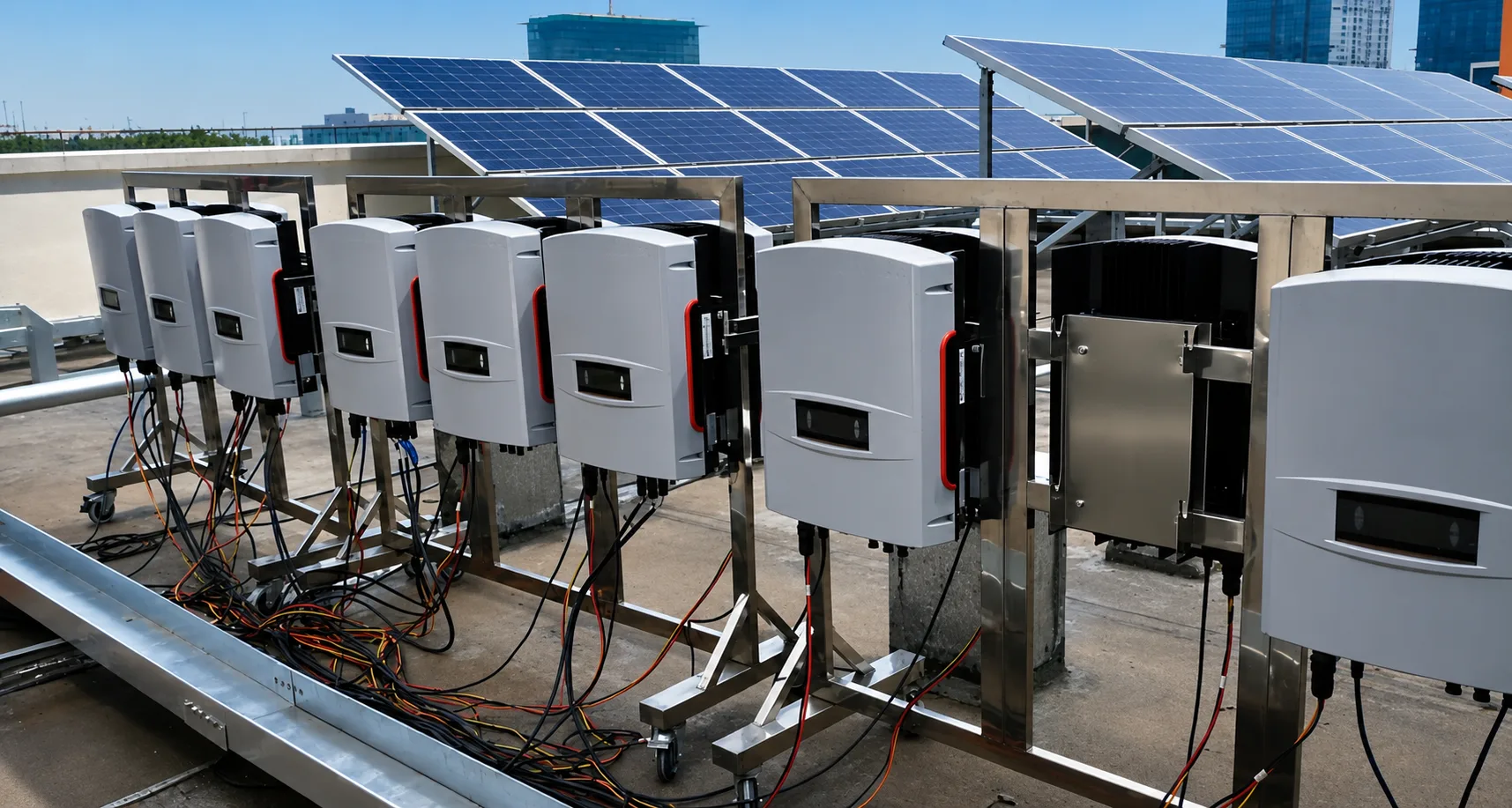
Caption:Rooftop solar inverter enclosures face outdoor exposure, heat cycling, service access limits, and wind conditions that should be considered when selecting hinges.
What Makes Solar Inverter Enclosures a Distinct Hinge Problem
Most outdoor enclosures are heated mainly by the sun. A solar inverter enclosure is heated by the sun and from the inside, on a cycle that tracks power production. That changes what the door hardware has to tolerate. Four conditions make it distinct:
- Internal heat on a daily cycle. Power electronics dissipate heat whenever the inverter runs. The door and hinge see a thermal rise-and-fall every day, not just seasonal change.
- Ventilation and filter service. Many inverter enclosures have cooling air paths and filters that need routine access, so some doors are opened far more often than a sealed electrical cabinet.
- Harsh siting. PV plants sit in deserts, on rooftops, on agricultural land, and in coastal zones — each adding dust, wind load, UV, or salt to the thermal duty.
- Long unattended life with sealing requirements. The enclosure must hold its protection rating for the life of the plant while being opened only periodically for service.
The hinge should be reviewed as part of the full door system — hinge, fasteners, frame, latch, gasket, thermal position, and site exposure. Inverter enclosures also sit alongside batteries in many projects; the related guide on hinges for battery energy storage enclosures covers the storage side of the same outdoor energy system.
String vs Central vs Rooftop: How Inverter Format Drives Door Design
Inverter format changes the door, and therefore the hinge, more than most buyers expect.
| Inverter format | Typical door situation | Hinge implication |
|---|---|---|
| String inverter | Smaller wall- or rack-mounted units, compact access covers | Lighter doors, but high unit count means consistent, low-maintenance hinges matter |
| Central inverter | Large cabinet or skid with big service and ventilation doors | Heavy, tall doors with gasket lines; load distribution and alignment are critical |
| Rooftop / C&I inverter | Wind-exposed, hard-to-access mounting, limited service clearance | Secure pin retention, wind-load handling, stable open angle for safe service |
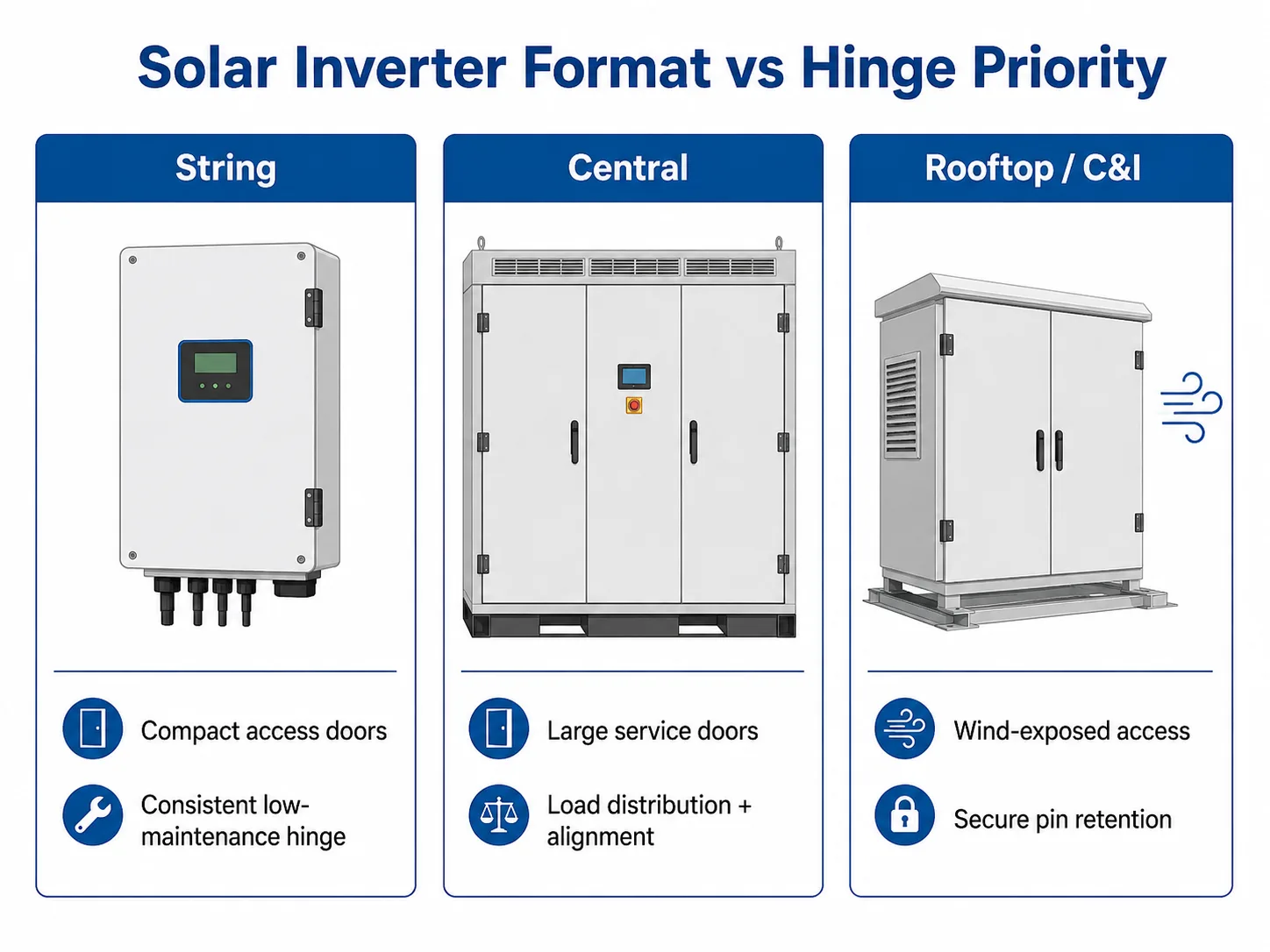
Central inverter doors behave most like other heavy gasketed enclosures — door weight, width, and hinge spacing drive the decision, and the heavy-duty hinge selection process based on door weight and width should be applied before catalog matching. String and rooftop units shift the priority toward consistency, pin retention, and service safety rather than raw load.
Thermal Cycling: The Daily Load the Hinge Must Absorb
This is the defining difference between an inverter enclosure and a passive outdoor cabinet. Because the inverter is an active heat source, the door assembly expands as the equipment heats during production and contracts as it cools — every day, for 20+ years of plant life. Add the outdoor day-night swing and the hinge sees two overlapping thermal cycles.
Three consequences follow for hinge selection:
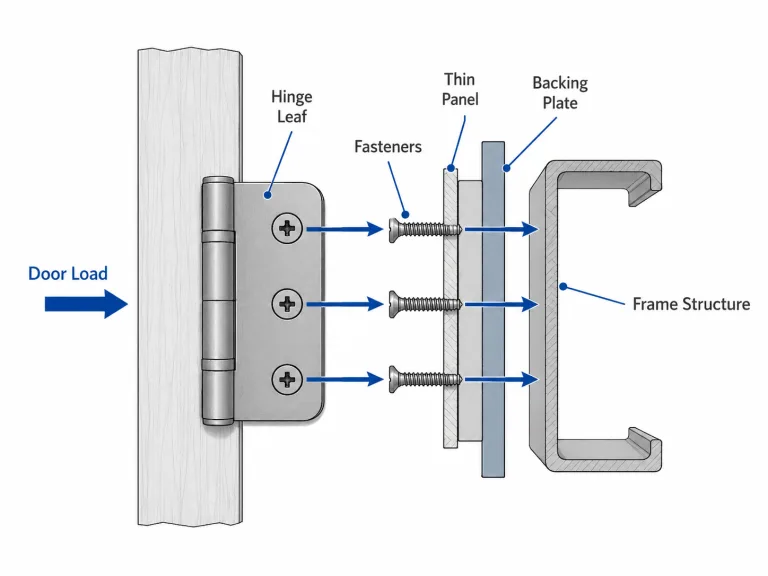
- Fastener fatigue. Repeated expansion and contraction works on the mounting joint. A fastener strategy with locking features, backing plates, or thread-locking compound matters more here than on a cabinet that only sees seasonal change.
- Material movement at dissimilar interfaces. An aluminum door, steel frame, and stainless hinge all expand at different rates. Over thousands of cycles this can loosen fasteners or open small gaps unless the stack-up is reviewed.
- Gasket set under cycling. A gasket held by a door that shifts slightly with temperature can take a compression set unevenly, reducing sealing over time even if the hinge itself is sound.
Selecting a hinge only against static door weight misses this entirely. The right question is how the hinge, fasteners, and door behave after thousands of daily thermal cycles, not how they behave on the assembly line.
Ventilation Door vs Sealed Compartment Hinges
A single inverter enclosure often has doors with very different jobs, and treating them all the same is a common sourcing mistake.
- Ventilation / filter doors are opened routinely for filter changes and airflow inspection. They prioritize smooth repeated access, stable open angle, and easy reassembly without losing gasket position.
- Sealed power-electronics compartments are opened rarely but carry high-energy equipment behind a tight gasket. They prioritize long-term alignment retention, corrosion resistance, and consistent sealing over service frequency.
- DC / combiner access panels are opened at commissioning and for faults, around live DC. They prioritize safe, stable opening and clearance for tools.
Standardizing one hinge across all three usually over-specifies one door and under-specifies another. Two or three hinge specifications mapped to access frequency is a better fit. Where any of these doors carries an IP or NEMA target, the IP-rated enclosure hinge checklist can verify alignment, latch force, and sealing continuity.
Desert, Rooftop, and Agrivoltaic Sites: Environment-Driven Hinge Choice
PV plants sit in some of the harshest places hardware can be deployed, and each site type stresses the hinge differently.
- Desert. Extreme day-night temperature swings amplify thermal cycling, and fine abrasive dust can work into pins and knuckles, causing wear and gritty operation. Pin design, sealing around the knuckle, and dust tolerance matter.
- Rooftop and C&I. Wind load on the door, limited service clearance, and difficult access make secure pin retention and a stable open angle a safety issue, not just a convenience.
- Agrivoltaic and rural. Humidity, organic dust, fertilizer or ammonia exposure, and irrigation moisture add corrosion drivers that a generic stainless choice may not fully address.
For coastal PV and salt-exposed sites, material and fastener selection should follow the same logic as other marine-adjacent outdoor hardware; the NEMA 4X hinge specification for coastal projects covers the material side of that decision.
Compliance Context: IEC 62109 and the Enclosure
PV inverters are designed and tested against IEC 62109-2, the safety standard for power converters used in photovoltaic power systems, which addresses electric shock, fire, mechanical, and enclosure protection. The hinge is not a tested safety component on its own, but it affects whether the enclosure door, guarding, and gasket line stay consistent with the configuration the inverter was approved against.
In practice: door geometry should remain consistent with the reviewed configuration; mechanical guarding and ingress protection that depend on a closed, sealed door should not be undermined by a hinge that lets the door drift; and any field hinge replacement should be documented against the original specification, not substituted with whatever hardware is on the service truck.
Material and Corrosion Review
Inverter enclosures combine aluminum, coated steel, stainless hardware, and mixed fasteners, then sit outdoors for the plant’s life. Thermal cycling plus moisture plus dissimilar metals is exactly the condition that produces galvanic and crevice corrosion at the hinge interface — often years into service, not at commissioning.
Before locking in a material combination, buyers should understand why stainless steel hinges can still corrode when moisture is trapped or dissimilar metals are not isolated. The hinge leaf, pin, and fasteners should be reviewed as a compatible set against the actual site, with isolation where the stack-up requires it.
What to Send a Hinge Supplier for a PV Inverter Project
To get a hinge matched to inverter duty rather than a catalog match, provide the application conditions before finalizing the design:
- Inverter format: string, central, or rooftop / C&I
- Door type: ventilation/filter, sealed power compartment, or DC/combiner access
- Door height, width, thickness, material, and approximate weight
- Door position relative to the hottest internal components (thermal exposure)
- Frame material and hinge mounting surface thickness
- Mounting method: screws, bolts, rivet nuts, weld nuts, or welding
- Gasket type and required compression, plus IP / NEMA target
- Required opening angle and service clearance
- Site type: desert, rooftop, agrivoltaic, coastal, or industrial
- Service frequency for ventilation and filter access
- Pin retention requirement: staked, swaged, captured, or project-specific
- Required documentation: drawing, material certificate, sample report, or test evidence
A supplier that asks about thermal position, site type, and ventilation service frequency is reviewing the application; one that only quotes a part number is not.
Final Recommendation
For solar inverter enclosures, hinge selection should be driven by daily thermal cycling, ventilation-door service frequency, inverter format, and site exposure — not by static door weight alone. Central inverter doors need load distribution and alignment stability; string and rooftop units need consistency, pin retention, and safe service access; every format needs a fastener and material stack-up that survives thousands of heat cycles.
Treat the hinge as part of the door system and specify it against the inverter’s real thermal and site conditions. Share inverter format, door type and position, thermal exposure, gasket and protection target, site type, and service frequency so the hinge, pin retention, fastener strategy, and material can be matched to the application.
FAQ
What hinges are best for solar inverter enclosures?
There is no single best hinge for all inverters. Central inverter doors usually need heavy-duty or continuous hinges for load distribution and alignment, while string and rooftop units prioritize consistent low-maintenance hinges with secure pin retention. The choice depends on inverter format, door thermal position, site type, and service frequency.
Why does inverter heat matter for hinge selection?
A solar inverter is an active heat source, so the door and hinge expand and contract on a daily cycle that follows power production, on top of the outdoor day-night swing. This repeated thermal cycling can fatigue fasteners, loosen dissimilar-metal joints, and cause uneven gasket set, so the hinge and fastener stack-up must be chosen for cyclic duty, not just static load.
Do ventilation doors and sealed compartments need different hinges?
Often yes. Ventilation and filter doors are opened routinely and prioritize smooth repeated access and easy reassembly, while sealed power-electronics compartments are opened rarely and prioritize long-term alignment and corrosion resistance behind a tight gasket. Two or three hinge specifications mapped to access frequency usually fit better than one forced standard.
What hinge issues are common on desert PV sites?
Desert sites combine extreme day-night temperature swings, which amplify thermal cycling, with fine abrasive dust that can work into hinge pins and knuckles and cause wear or gritty operation. Pin design, sealing around the knuckle, and dust tolerance are key, along with a fastener strategy that survives the large temperature range.
What should I send a supplier before choosing solar inverter hinges?
Send inverter format; door type and position relative to internal heat; door size, weight, and material; frame material and mounting method; gasket and IP/NEMA target; site type such as desert, rooftop, agrivoltaic, or coastal; ventilation service frequency; and pin retention requirement. This lets the supplier recommend a hinge based on the application rather than a catalog match.
Need Help Selecting Solar Inverter Enclosure Hinges?
If your project involves string, central, or rooftop PV inverter enclosures, combiner boxes, or inverter skids that must survive daily thermal cycling and years of outdoor exposure, HTAN can help match door positions to hinge specifications. Share the enclosure drawing, inverter format, door type and thermal position, gasket and protection target, site type, and service frequency, and our engineering team can recommend a hinge type, pin retention method, fastener strategy, and material direction for your application.


 English
  한국어
한국어  Русский
  Español
  Italiano
  Deutsch
  Français
  Português