

Hinges for Battery Energy Storage Enclosures: BESS Door Guide
Battery energy storage system enclosures are not standard outdoor cabinets with a battery inside. They are integrated fire-safety, thermal-management, and high-voltage equipment shells that often ship across oceans, sit on project sites for many years, and are opened only a few times per year — but when they are, the door has to work the first time and the seal has to be exactly where the engineer drew it.
That changes how OEM teams should think about hinges for battery energy storage enclosures. The decision is less about catalog appearance and more about whether the hinge can survive transport vibration, hold gasket compression on a large container door, support cooling-system service intervals, and stay consistent with the enclosure configuration that was reviewed for fire safety.
This guide is written for BESS OEMs, integrators, and procurement teams sourcing hinges for container-format, cabinet-format, and rack-format energy storage products. It focuses on what is specifically different about BESS doors — not generic outdoor enclosure advice.
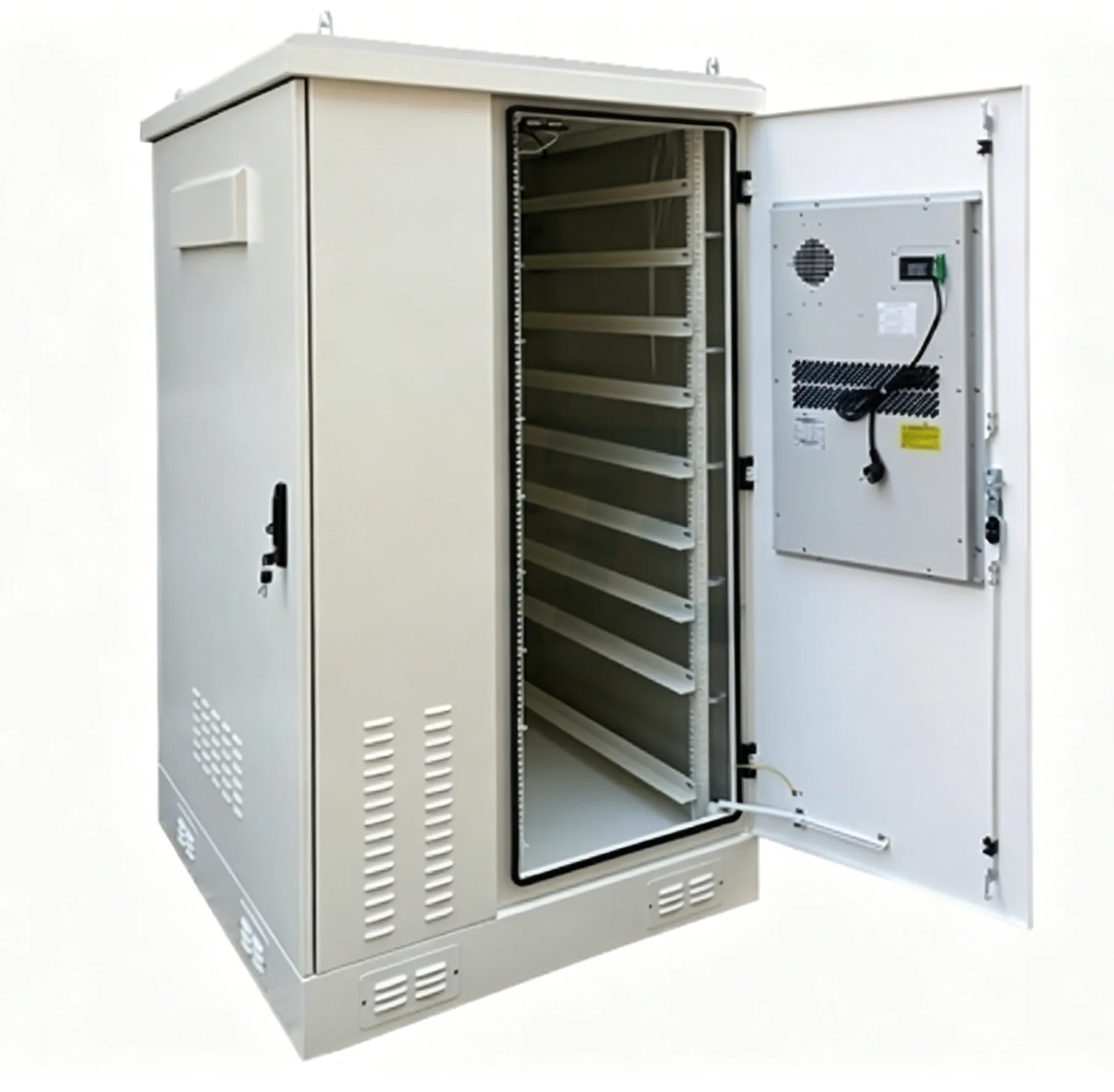
What Makes BESS Doors Different from Standard Outdoor Cabinets
A weatherproof junction box and a battery storage container have similar-looking doors but operate under different conditions. BESS doors typically carry three constraints that ordinary outdoor enclosures do not:
- Fire-safety integration. The enclosure is part of a thermal runaway containment strategy. Door alignment, gasket continuity, and pressure-relief paths matter to the system safety case, not only to weather protection.
- Long service intervals with high consequences. A BESS door may only be opened on a scheduled service cadence or for unscheduled service, but when it is opened, the technician is working around live DC busbars, liquid-cooling lines, or high-energy battery modules. A binding door or a misaligned latch is not a minor inconvenience.
- Asset lifetime measured in years of largely unattended duty. Multi-year project lifetimes mean the hinge has to hold its position long after commissioning.
The hinge does not need to solve fire safety on its own. But it should not introduce variation in the door geometry that the rest of the safety case assumes. A door that no longer closes evenly after years of vibration cycling can complicate inspection, gasket integrity, and the validity of the original design assumptions.
This page focuses on BESS-specific door hardware. If the project is an EV fast-charging cabinet rather than a battery storage enclosure, the related guide on hinges for EV charging station enclosures covers the public-site, frequent-access scenarios that follow different selection logic.
Liquid-Cooled vs Air-Cooled BESS: How Cooling Format Changes the Door
Many utility-scale BESS projects now use liquid-cooled PACK designs, especially where higher energy density and thermal consistency are required. Air-cooled designs are still common in smaller cabinet-format and rack-format products. The choice is invisible from the outside, but it changes what the door has to support.
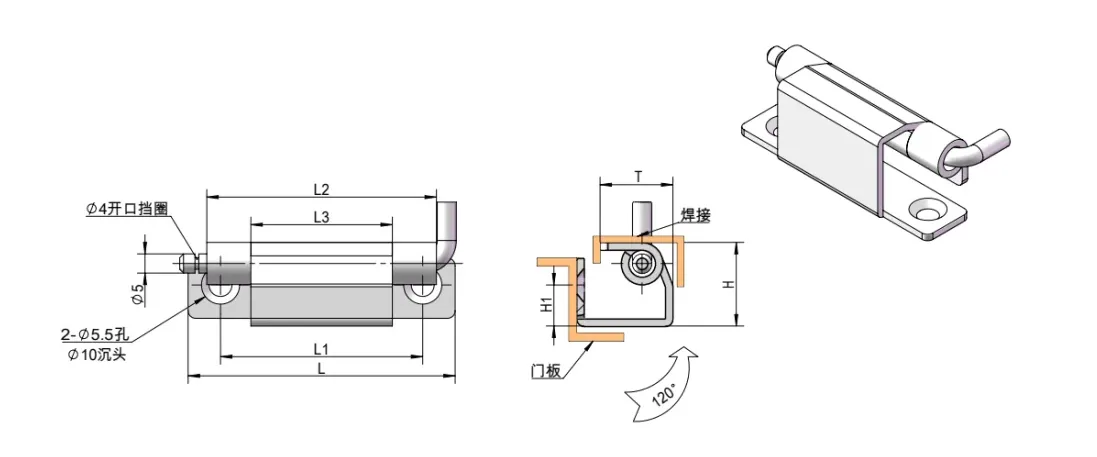
| Cooling format | What the door has to support | Hinge implication |
|---|---|---|
| Air-cooled BESS | Filtered air paths, periodic filter access, generally lower door weight | Standard service-frequency hinge, plan for filter-change cycles |
| Liquid-cooled BESS (PACK) | Coolant manifold service, leak inspection, tight clearance around piping | Stable opening angle, no rebound, clearance for tools and hose access |
| Hybrid (liquid PACK + air-cooled control) | Different access frequencies for different compartments on the same unit | Different hinge specifications per door, not one-size-fits-all |
Liquid-cooled designs also raise the practical weight of any door that covers a coolant distribution area, because the technician may need to inspect, top up, or sample coolant without removing the door entirely. A hinge that holds the door open at a stable angle — without drifting back under wind load — becomes a workflow requirement rather than a luxury feature.
Container BESS Service Doors: 20-ft and 40-ft Format Realities
Container-format BESS is common in utility-scale projects, and many systems use service doors that are much larger than standard electrical cabinet doors. These doors sit on a steel container shell that flexes during transport and site handling, which makes hinge selection more complicated than a fit check against a flat panel would suggest.
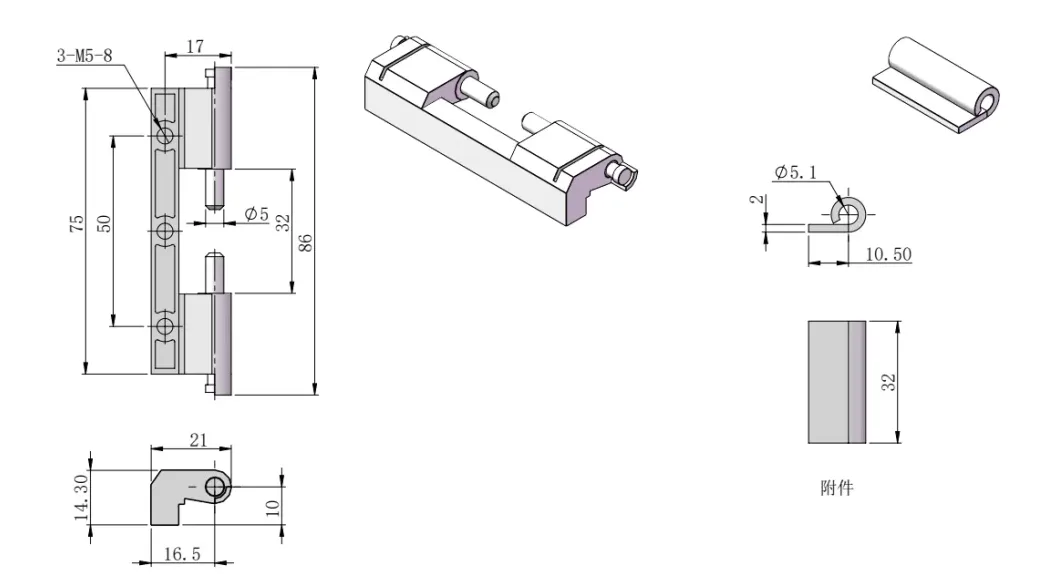
Three things follow from that:
- Door leverage can exceed door weight. A relatively light sheet-metal door becomes a long lever arm. The hinge sees more bending moment than a door-weight calculation alone suggests, and hinge spacing matters as much as hinge count.
- Container twist is real. ISO containers flex during lifting, transport, and stacking. A hinge that is rigid in isolation can still see misalignment if the frame it bolts to moves a few millimeters during the journey.
- Reinstallation on site cannot rely on factory conditions. The hinge has to be approved against the door as it arrives at the project site, not as it left the factory floor.
For cabinet-format and rack-format BESS, the door is smaller and the frame is stiffer, so hinge-side leverage is less of an issue. But the trade-off is that smaller cabinets often have less mounting depth, which constrains the hinge structure that can be used. The selection logic for general heavy access doors — door weight, hinge count, hinge spacing, mounting strength — is documented in the heavy-duty hinge selection process based on door weight and width, and should be applied to BESS doors before catalog matching.
Battery PACK Compartment vs BMS Cabinet vs HVAC Door Hinges
One of the most common procurement mistakes in BESS projects is treating every door on the same unit as the same door. A single container BESS may have five or six distinct door types, each with different access frequency, different gasket pressure, and different consequence-of-failure.
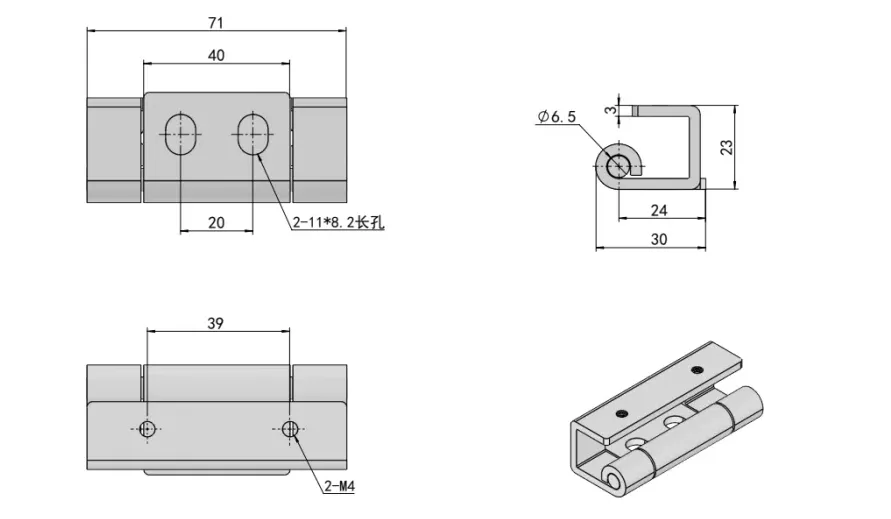
| Compartment | Access frequency | Primary hinge requirement | What to verify |
|---|---|---|---|
| Battery PACK compartment | Low — scheduled service or incident only | Long-term gasket retention, vibration survival, no maintenance access bias | Compression set of mounting interface, fastener pre-load, alignment after years of service |
| BMS / control cabinet | Higher — commissioning, firmware updates, fault diagnosis | Stable repeated opening, no drift, clearance for laptop/tooling | Open-angle stability, wear on pin/bushing, cable interference |
| HVAC / thermal-management door | Routine — filter change, coolant inspection | Fast service access, tool-light handling, no loose parts near equipment | Removal procedure, reassembly alignment, gasket reuse |
| Cable / busbar termination compartment | Commissioning + incident only | Safe stable opening around high-current connections | Door retention at open angle, clearance for torque tools, no rebound |
| Fire-suppression compartment | Inspection only | Confirmed-closed sealing, tamper evidence support | Latch consistency, gasket continuity, hinge-side seal pressure |
Standardizing one hinge across all of these positions is attractive from a purchasing standpoint, but it usually means at least one of the doors is over-specified and one is under-specified. The reasonable middle ground is two or three hinge SKUs across the BESS, mapped to access frequency tiers.
UL 9540A and NFPA 855: What Hinges Must Not Compromise
For many BESS products targeting the North American market, test data from UL 9540A, the test method for evaluating thermal runaway fire propagation in battery energy storage systems, may be requested as part of thermal runaway and fire propagation review. NFPA 855 is often used by Authorities Having Jurisdiction (AHJ) and project teams when evaluating energy storage installations. Specific requirements vary by region, project size, system type, and AHJ.
The hinge is not tested as an independent safety component. But it can affect whether the door, gasket line, and enclosure geometry remain consistent with the configuration that was reviewed for the project. Practical implications:
- Door geometry should remain consistent with the reviewed configuration. If the original review assumed a specific door, frame, and gasket arrangement, a hinge change that alters door gap or compression line should be documented and re-evaluated.
- Pressure-relief paths should not be obstructed. Some BESS designs incorporate deflagration vent panels or directional venting. A hinge selection that affects panel release behavior is a safety-case change, not a hardware swap.
- Replacement during service should be traceable. If a hinge is replaced in the field, the replacement should be documented against the original specification — not picked from whatever the maintenance contractor had on the truck.
None of this turns the hinge into a safety component. It does mean that the OEM’s hinge decision should be made once, documented, and respected throughout the product lifecycle.
Ocean Freight Vibration: Hinge Survival from Factory to Site
BESS products that are built in one region and deployed in another may spend weeks in ocean transit, days on a flatbed truck, and additional time in site handling before commissioning. The hinge sees that entire journey while bolted to a door that has nothing to hold it closed except its latch.
Three failure modes commonly appear after transport:
- Fastener back-out. Continuous low-amplitude vibration can loosen fasteners that were correctly torqued at the factory. Locking patches, secondary locking features, or thread-locking compound should be specified, not assumed.
- Pin or bushing wear before first use. If the door rattles in its hinges throughout the voyage, the pin and bushing can wear before the equipment is ever commissioned. Sample evaluation should include a representative vibration profile, not only a static fit check.
- Alignment shift after container deflection. The container shell flexes during stacking and crane handling. A hinge that was perfectly aligned in the factory may sit a few millimeters off after the unit lands on its foundation. Adjustable mounting or post-installation alignment procedures should be part of the design.
For coastal projects and ocean transit, corrosion exposure compounds the vibration story. Salt aerosol can reach the hinge through ventilation paths long before the unit is energized. Material and fastener compatibility should be reviewed against this reality — and not just against the on-site operating environment. For projects where coastal exposure is the dominant concern, the dedicated NEMA 4X hinge specification for coastal projects covers material and fastener decisions in more depth.
Long Service Life: What Hinges Must Survive
Many utility BESS contracts target multi-year operational service, often with augmentation plans extending beyond the initial term. The door may only be opened a few dozen times across that period, but the gasket sits compressed continuously, the hinge holds its mounting load continuously, and the fasteners experience daily thermal cycling between night-low and afternoon-peak temperatures.
Three long-horizon failure mechanisms matter more on a BESS door than they would on a short-cycle industrial cabinet:
- Permanent compression set on the mounting interface. If the hinge mounting face uses any compressible element, that element has to recover after years of load. A gasketed mounting that flattens reduces door alignment over time.
- Galvanic and crevice corrosion at the hinge–frame interface. Stainless steel hinge on a coated steel frame with mixed fasteners is a galvanic cell waiting for moisture. This often appears years into service, not at commissioning. Buyers should review why stainless steel hinges can still corrode before locking in the material combination.
- Thermal cycling fatigue at the mounting fasteners. Daily expansion and contraction loosens marginal joints. This is not a hinge defect — it is a system-level pre-load problem that the hinge has to tolerate.
FAQ
What hinges are suitable for container BESS service doors?
Container BESS service doors are typically large and bolted to a steel container shell that flexes during transport. Suitable hinges should support hinge-side leverage, survive ocean-freight vibration, and tolerate small frame misalignment after the container is placed on its foundation. Hinge count and spacing usually matter as much as hinge load rating.
Does liquid-cooled BESS need different hinges than air-cooled?
Often yes. Liquid-cooled PACK doors may need stable open-angle support during coolant inspection or service, with clearance for tools and hose access. Air-cooled designs prioritize frequent filter-change access. A single hinge specification across both compartments is usually a compromise rather than a fit.
Are hinges in scope of UL 9540A testing?
Individual hinges are not tested as standalone components under UL 9540A. However, the enclosure geometry assumed in the test setup — door alignment, gasket continuity, and pressure-relief paths — depends on the hinge specification. A hinge change after the test was conducted may affect whether the field unit matches the configuration originally reviewed.
Can one hinge SKU be used for all doors on a BESS container?
It is possible but rarely ideal. Battery PACK compartments, BMS cabinets, HVAC doors, and cable termination areas have different access frequencies and different consequence-of-failure. Two or three hinge SKUs mapped to access tiers usually fits better than a single forced standardization.
What hinge issues commonly appear after ocean freight to a BESS project site?
The most common are fastener back-out from continuous low-amplitude vibration, pin or bushing wear from door rattle during transit, and alignment shift caused by container shell deflection during stacking and lifting. Sample evaluation should include vibration exposure, not only static fit.
Need Help Selecting BESS Door Hinges?
If your project involves container BESS, cabinet BESS, or rack-format energy storage products for utility, commercial, or industrial deployment, HTAN can help map door positions to hinge specifications across PACK, BMS, HVAC, and cable compartments. To get a useful review back, please share: the cabinet or container drawing, door size and weight, cooling format (air-cooled, liquid-cooled, or hybrid), target market and applicable scope (such as UL 9540A or other), transport route from factory to project site, mounting method (welded, bolted, concealed, or removable), corrosion environment, and any required documentation such as material certificate, sample report, or test evidence. With that information, our engineering team can recommend a hinge approach that fits both the factory and the project site.



 English
  한국어
한국어  Русский
  Español
  Italiano
  Deutsch
  Français
  Português