

Generator Enclosure Hinges: Vibration & Transport Guide
A generator enclosure door has a harder job than most equipment doors. It sits on a machine that vibrates every time the engine runs, it is often shipped fully assembled to a project site or rental yard, it lives outdoors for years, and it has to open cleanly for fuel, oil, filter, and control service — sometimes during an emergency, at night, in bad weather, when the generator is needed most.
That combination is why generator enclosure hinges should not be chosen from a catalog photo or a static door-weight number alone. The hinge has to survive engine vibration, transport shock, exhaust and radiator heat, outdoor corrosion, and repeated service access — and still keep the door aligned so the latch engages and the gasket seals.
This guide is written for genset OEMs, enclosure fabricators, rental-fleet operators, and procurement teams sourcing hinges for diesel and gas generator enclosures, sound-attenuated canopies, and containerized power units. It focuses on what is specifically different about generator doors, not generic outdoor cabinet advice.
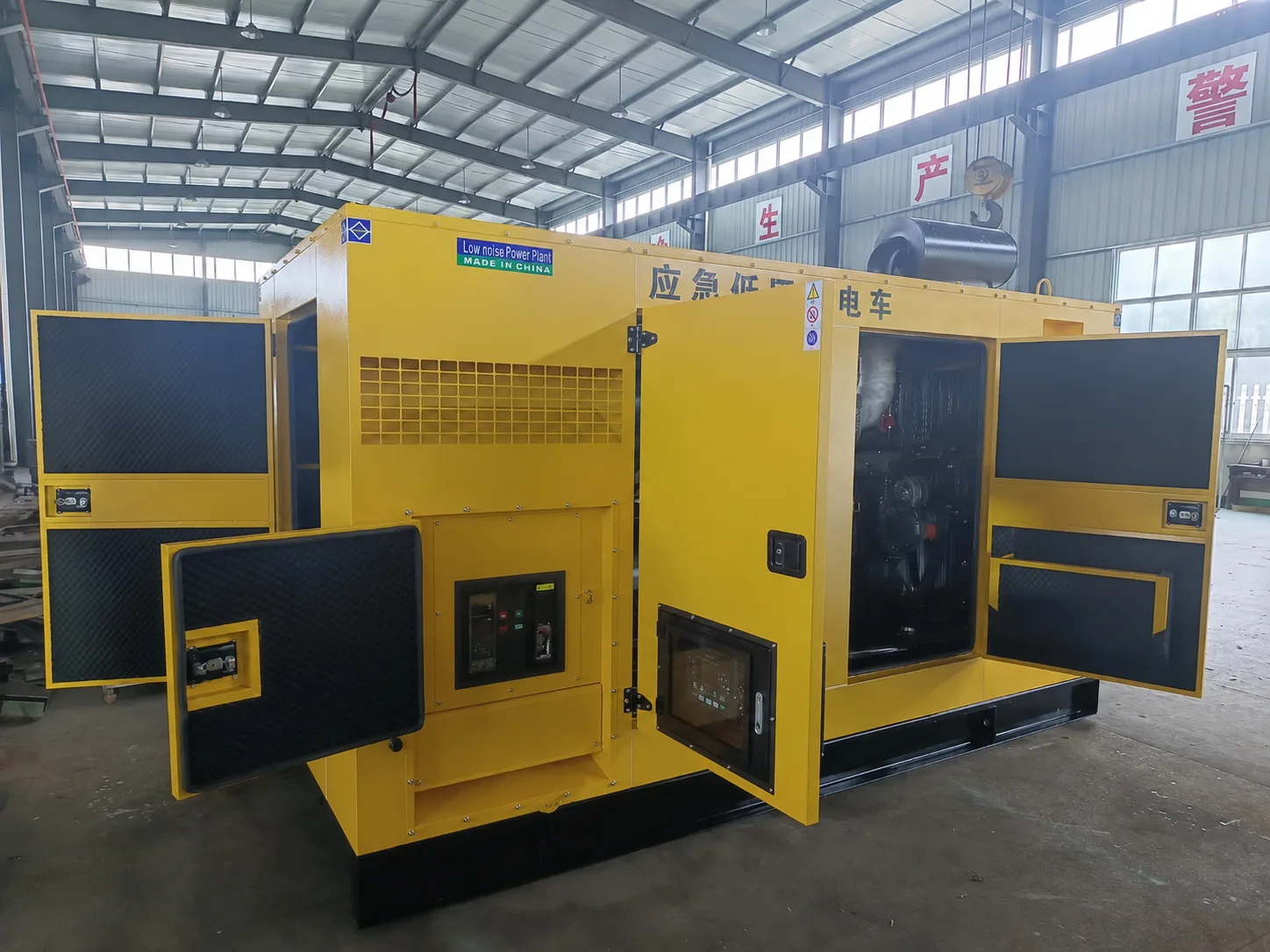
Why Generator Enclosure Doors Are a Distinct Hinge Problem
A stationary control cabinet door is mostly a weather and access problem. A generator enclosure door is a vibration, heat, transport, and access problem at the same time. Four conditions make it distinct:
- Continuous engine vibration. Every running hour transmits vibration into the door, hinge, fasteners, and latch. Clamp load that was correct at the factory can relax over time if the fastening method has no retention strategy.
- Transport to site. Gensets are usually shipped fully built — by truck, rail, or sea — then craned onto a foundation or skid. The door rides that whole journey held only by its latch.
- Exhaust and radiator heat. Doors near the engine, exhaust, or radiator side see elevated temperature and thermal cycling that ordinary cabinet doors do not.
- On-demand service access. The door may stay closed for long periods, then has to open immediately for service or fault response. Binding, sag, or a seized latch is not acceptable at that moment.
The hinge should therefore be reviewed as part of the full door system — hinge, fasteners, frame, latch, gasket, vibration profile, and transport route — not as an isolated catalog part. Generator enclosures also sit alongside other outdoor power assets such as battery storage; the related guide on hinges for battery energy storage enclosures covers the storage side of the same outdoor energy infrastructure.
What Engine Vibration Does to the Door and Hinge
Engine vibration is the defining load on a generator enclosure door. Unlike a transported cabinet that only sees vibration in transit, a genset door is vibrated every operating hour for its entire service life. That continuous cyclic load drives three failure paths.
Fastener Loosening
Repeated low-amplitude vibration can reduce fastener preload over time. Once the hinge leaf can move against its mounting surface, the door axis shifts, the latch stops aligning, and the gasket compresses unevenly. The fastening method should be specified intentionally — thread-locking compound, lock nuts, serrated flange nuts, rivet nuts, weld nuts, backing plates, or weld-on hinge structures where the enclosure is steel.
Pin Movement and Vertical Play
Loose-pin or removable-pin hinges are convenient for service, but under continuous vibration the pin can develop axial movement and the knuckle clearance can grow. Even a small change at the hinge axis becomes visible latch misalignment on a tall canopy door. For generator doors where alignment matters, pin retention — staked, swaged, crimped, or captured pins — should be part of the specification, not an afterthought. For the drawing callouts, end-play limits, and vibration-test evidence behind each retention method, see our guide on how to specify hinge pin retention for high-vibration equipment.
Frame Flex on the Skid
Generators sit on a steel skid or base frame that itself flexes under engine torque and transport handling. If the frame moves, the hinge axis moves with it. A rigid hinge cannot fully compensate for a flexing frame or a thin door skin, so the door structure and mounting interface have to be reviewed alongside the hinge.
Exhaust and Radiator Heat: The Thermal Side
Doors positioned near the engine block, exhaust manifold, turbocharger, or radiator discharge experience higher temperatures and daily thermal cycling. This matters for hinge selection in two ways.
First, thermal expansion and contraction cycle the fasteners and mounting interface every time the engine starts and stops. Marginal joints that survive a static test can loosen under repeated hot-cold cycling. Second, heat can affect lubricants, coatings, and any non-metallic bushing in the hinge. Material and finish should be reviewed against the temperature the hinge actually sees in its position on the enclosure — a door on the cool intake side has different requirements from one beside the exhaust outlet.
This thermal duty is one of the clearest differences between a generator enclosure door and a general outdoor cabinet door. A cabinet door is heated mainly by the sun; a generator door is also heated from the inside, on a cycle that follows engine operation.
Surviving Transport to Site
Most gensets are built complete and shipped to the project site, rental yard, or port. During that journey the door experiences road or sea vibration, handling shock, and frame racking when the unit is lifted or skidded. Three problems commonly show up on arrival.
- Latch feels tight or the door must be lifted to close. The hinge side has shifted during transit, usually from fastener back-out or pin movement.
- Uneven gasket line. A small door shift changes gasket compression, which can compromise the enclosure’s weather and dust protection before the unit is even commissioned.
- Alignment lost after craning. Lifting a heavy genset can rack the skid and frame a few millimeters, moving the hinge axis. Adjustable mounting or a post-installation alignment step should be planned.
For coastal delivery or sea freight, corrosion compounds the transport story — salt aerosol can reach the hinge through ventilation louvers before the generator is ever started. Material and fastener compatibility should be reviewed against the transit environment, not only the operating site.
Hinge Types for Generator Enclosure Doors
The right hinge family depends on enclosure size, door weight, vibration exposure, gasket requirement, material, and service strategy. The table summarizes how common structures behave on a genset.
| Hinge type | Where it fits on a genset | What to verify |
|---|---|---|
| Staked / swaged pin butt hinge | Moderate-weight control and access doors needing stable alignment | Pin retention, fastener strategy, hinge spacing |
| Continuous (piano) hinge | Long or gasketed canopy doors where point loading causes latch-side drop | Door and frame stiffness, straight mounting surface |
| Weld-on hinge | Steel canopies and high-vibration structures where fastener loosening is the main risk | Fixturing, weld control, post-weld alignment |
| Heavy-duty bearing hinge | Heavy doors, frequent service access, doors carrying control panels | Load rating, lubrication suited to heat, wear life |
| Adjustable hinge | Large custom enclosures needing post-install alignment correction | Load capacity, locking of the adjustment after setting |
Weld-on structures deserve particular attention on steel gensets because they remove the fastener-loosening path entirely. The trade-off is process control and harder field replacement — the choice between welded and bolted mounting is covered in the weld-on vs bolt-on hinge decision guide. When door weight, width, gasket force, or mounted components are uncertain, the heavy-duty hinge selection process based on door weight and width should be completed before approving a specification.
Compliance Context: ISO 8528 and the Enclosure
Generator sets are designed and tested against ISO 8528-13, the safety standard for reciprocating internal combustion engine driven generating sets, which addresses guarding, enclosure design, and protection of the user. The hinge is not a tested safety component on its own, but it affects whether the enclosure door, guarding, and gasket line stay consistent with the configuration the genset was approved against.
Practical implications: door geometry should stay consistent with the reviewed configuration; guarding and acoustic panels that rely on a closed, sealed door should not be compromised by a hinge that allows the door to drift; and any field hinge replacement should be documented against the original specification rather than substituted with whatever hardware is on hand.
Outdoor Corrosion and Material Choice
Generator enclosures live outdoors for years, often in coastal, humid, dusty, or industrial sites. The hinge material, pin, and fasteners must match that exposure. Mixed metals — a stainless hinge on a powder-coated or galvanized steel door with incompatible fasteners — can create galvanic and crevice corrosion that loosens the mounting interface long before the hinge body looks damaged.
Before locking in a material combination, buyers should understand why stainless steel hinges can still corrode when moisture is trapped or dissimilar metals are not isolated. If the enclosure has to hold an IP or NEMA protection target, the hinge decision also affects sealing; the IP-rated enclosure hinge checklist can verify door alignment, latch force, mounting holes, and hinge-side sealing continuity.
What to Send a Hinge Supplier for a Genset Project
A purchase line that only says “stainless hinges per door” does not let a supplier recommend a vibration- and transport-ready hinge. Provide the application conditions before finalizing the design:
- Door height, width, thickness, material, and approximate weight including mounted controls or panels
- Door position relative to engine, exhaust, and radiator (temperature exposure)
- Frame and skid material, and hinge mounting surface thickness
- Mounting method: screws, bolts, rivet nuts, weld nuts, or welding
- Gasket type and required compression
- Required opening angle and service clearance
- Transport profile: one-time shipment, rental relocation, or vehicle-mounted use
- Vibration exposure level and expected operating hours
- Environment: inland, coastal, humid, dusty, or sea-freighted
- Pin retention requirement: staked, swaged, captured, or project-specific
- Required documentation: drawing, material certificate, sample report, or test evidence
A supplier that asks for door weight, mounting material, vibration profile, and transport route is reviewing the application; one that does not is matching a catalog.
Final Recommendation
For generator and genset enclosures, hinge selection should be driven by engine vibration, transport to site, exhaust and radiator heat, outdoor corrosion, and on-demand service access — not by static door weight alone. Staked or swaged pin hinges improve alignment retention under vibration; continuous hinges reduce point loading on long canopy doors; weld-on hinges remove the fastener-loosening path on steel structures; bearing hinges help heavy or high-cycle doors; adjustable hinges fine-tune alignment where field conditions vary.
The safest approach is to treat the hinge as part of the door system and to specify it against the genset’s real operating and transport conditions. Share door dimensions, weight, gasket details, mounting material, thermal position, vibration profile, and transport route so the hinge, pin retention, fastener strategy, and material can be matched to the application.
FAQ
What hinges are best for generator enclosure doors?
There is no single best hinge for all gensets. Staked or swaged pin hinges suit moderate access doors that need stable alignment under vibration, continuous hinges suit long gasketed canopy doors, weld-on hinges suit high-vibration steel structures, and bearing hinges suit heavy or high-cycle doors. The choice depends on door weight, vibration, heat position, and transport profile.
Why do generator enclosure doors lose alignment after transport?
Gensets are usually shipped fully assembled, so the door rides road or sea vibration and handling shock held only by its latch. Fastener back-out, pin movement, and skid or frame racking during craning can shift the hinge axis, leaving the latch tight or the gasket line uneven on arrival.
Are weld-on hinges better for generator enclosures?
Weld-on hinges remove the fastener-loosening path, which is the main vibration risk on steel gensets, so they are often a strong choice. The trade-off is that they require accurate fixturing, weld control, and post-weld alignment checks, and they are harder to replace in the field.
Does exhaust heat affect hinge selection on a generator?
Yes. Doors near the engine, exhaust, or radiator see elevated temperature and daily thermal cycling that loosen marginal fastener joints and can affect lubricants, coatings, and non-metallic bushings. Material and finish should be matched to the temperature the hinge actually sees in its position on the enclosure.
What should I send a supplier before choosing generator enclosure hinges?
Send door height, width, thickness, weight, and material; the door’s position relative to engine and exhaust heat; frame and skid material; mounting method; gasket details; opening angle; transport profile; vibration exposure; environment; and pin retention requirement. This lets the supplier recommend a hinge based on the application instead of a catalog match.
Need Help Selecting Generator Enclosure Hinges?
If your project involves diesel or gas generator enclosures, sound-attenuated canopies, containerized power units, or rental gensets that must survive transport and years of outdoor vibration, HTAN can help match door positions to hinge specifications. Share the enclosure drawing, door size and weight, door position relative to engine and exhaust heat, mounting material, transport route, and environment, and our engineering team can recommend a hinge type, pin retention method, fastener strategy, and material direction for your application.


 English
  한국어
한국어  Русский
  Español
  Italiano
  Deutsch
  Français
  Português