

Truck and Trailer Door Hinges: How to Choose for Transport
The door hinges on a truck or trailer have one of the hardest jobs in the whole vehicle. They hold a heavy door on a structure that vibrates, twists, and gets slammed shut at every stop, through rain, road spray, de-icing salt, and dust, for years. When they fail, the result is not a minor annoyance — a rear door that drops or won’t latch can mean lost cargo, failed deliveries, and a vehicle taken out of service. Choosing the right hinge for a cargo body is a durability decision, not a hardware afterthought.
This guide covers how to choose hinges for general truck and trailer doors — box vans, flatbed headboards, cargo bodies, tool compartments, and swing or barn-style rear doors. It focuses on the transport conditions these doors actually face. If your body is a refrigerated unit, the cold-chain sealing and low-temperature side of the question is covered separately in our guide to refrigerated truck door hinges; here, the focus is the general cargo body.
Quick Answer: What Makes a Good Truck or Trailer Door Hinge
A good truck or trailer door hinge is sized for dynamic road load rather than the resting weight of the door, built from a corrosion-resistant material suited to road salt and weather, and mounted in a way that resists vibration loosening. The best choice depends on the door type: barn-style rear doors usually take long strap or T-style hinges with multiple fastening points; tool and side-access doors often use compact bolt-on or lift-off hinges for serviceability; and high-security or heavy structural doors favor weld-on hinges that remove exposed fasteners entirely. Across all of them, the failure to design against is the same — vibration loosening the mounting and corrosion attacking the pivot.
The practical rule is simple: size the hinge for the door in motion, not the door at rest.
Why Vehicle Doors Are Harder on Hinges Than Building Doors
A hinge on a building door lives a quiet life: the wall doesn’t move, the load is steady, and the weather is usually on one side only. A hinge on a moving vehicle deals with a completely different set of forces, and understanding them is the start of choosing correctly.
The first difference is continuous vibration. Every mile of road sends low-amplitude shaking through the body, and that vibration works at the fasteners constantly, trying to back them out. The second is shock load: a pothole or a hard dock approach hits the hinge with a force far higher than the door’s resting weight, because the door’s mass gets accelerated by the impact. The third is body flex: a long cargo body twists slightly as the vehicle crosses uneven ground, so the door frame is never perfectly square, and the hinge has to tolerate that movement without binding. The fourth is exposure: road spray, salt, grit, and weather hit the hinge from every direction, not just one face.
Put together, these conditions mean a hinge that would last decades on a building door can loosen, corrode, and wear out in a fraction of that time on a vehicle. The selection process below is really about defending against these four forces.
Match the Hinge to the Door Type
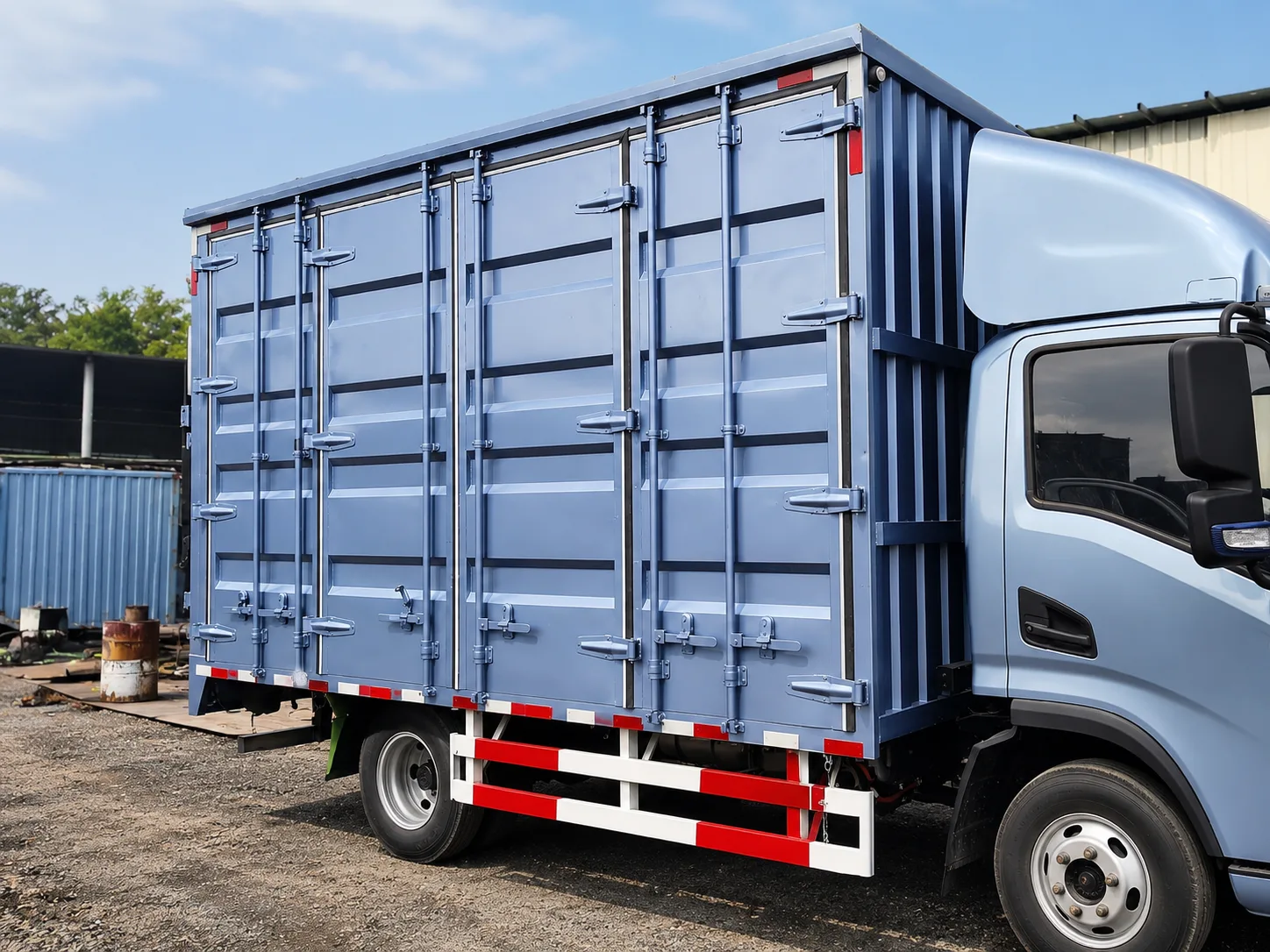
Truck and trailer bodies use several different door styles, and each one points toward a different hinge family. Getting this match right is the first and most important selection step, because a hinge that suits one door style can be wrong for another even at the same weight.
| Door Type | Typical Hinge Family | Why It Fits |
|---|---|---|
| Barn / swing rear doors | Long strap or T-style, multiple fasteners | Spreads load along a tall door and resists racking as the body flexes |
| Side-access / curtain-frame doors | Compact bolt-on or offset strap | Fits limited mounting face; offset clears the body panel step |
| Tool, battery, and access compartments | Bolt-on or lift-off hinges | Serviceable; lift-off allows quick panel removal for maintenance |
| Heavy structural or security doors | Weld-on heavy hinges | No exposed fasteners to loosen or pry; maximum strength |
| Flatbed headboards and gates | Heavy strap or weld-on | Handles high load and impact without fastener pull-out |
For compartments and access panels that get opened often for service, removable designs are worth a closer look, since they let a technician lift a panel off without unbolting the hinge. The trade-offs of that approach are covered in our guide to industrial lift-off hinges, which apply directly to cargo and hatch doors.
Sizing for Road Load, Not Resting Weight
The most common sizing mistake on a vehicle door is rating the hinge to the door’s static weight. On the road, the effective load spikes well above that resting weight every time the wheels hit a bump, because the door’s mass is accelerated by the shock. A door that weighs comfortably within a hinge’s rating when parked can momentarily overload that same hinge in transit.
For that reason, vehicle doors deserve a more generous margin than building doors. Size to the door weight with an allowance for dynamic shock, and within that band favor the heavier plate and the higher fastener count. Wider doors also load the top hinge harder than narrow ones of the same weight, because the leverage is greater — so door width matters as much as weight. The detailed load and torque method behind this is set out in our heavy-duty hinge selection guide; for a moving body, treat the resulting margin as a floor rather than a target.
Fastener Security: Designing Against Vibration
On a vehicle, vibration is constantly working to loosen the hinge mounting, and a loose mounting is one of the most common failure patterns seen on truck and trailer hinges in service. The door does not usually break the hinge — the fasteners back out until the door sags, the leaf elongates its holes, and the joint fails. Two design choices fight this directly.
First, more fastening points spread the load, so no single bolt carries enough stress to loosen quickly, and the door keeps its alignment longer. Second, locking hardware — thread-locking compound, locking washers, or self-locking nuts — keeps the clamp force from vibrating away. A practical install detail that matters as much as the part itself: re-torque the fasteners after the first few weeks of service, once the assembly has settled, then check them on the regular maintenance schedule.
This is also why welded mounting is often chosen for heavy or security-critical vehicle doors: a weld removes the fasteners entirely, so there is nothing to loosen. The trade-off is field-serviceability, since a welded hinge cannot be swapped without cutting. The full comparison of welded versus bolted mounting is laid out on our weld-on hinge category page, and the right answer depends on whether the body is built for service access or maximum permanence.
Corrosion: The Slow Killer on the Road
Road conditions are brutal on hinge corrosion resistance. De-icing salt, constant moisture, grit, and washing chemicals attack the metal from every direction, and the pivot and fastener areas are the first to go. A hinge that looks fine on its flat faces can be seized at the pivot and rusted at the screw holes while the rest still looks healthy.
The defense is matching the material and finish to the exposure: stainless steel for the harshest salt and washdown conditions, and properly coated steel where the duty is lighter. Two details matter more than the grade alone. Match the fastener material to the hinge to avoid galvanic corrosion at the mounting points, and keep the pivot clean and lubricated so grit and salt do not grind the protective film away. The mechanism behind why pivots and fasteners corrode first — and how to inspect for it — is covered in our look at why outdoor hinges fail first at the knuckles and fasteners, which applies directly to road exposure.
Working With the Latch and Seal
On a cargo body the hinge does not work alone — it sets the door position that the latch and seal depend on. If the hinge lets the door drift, the latch can miss its keeper and the seal loses compression, both of which get worse as the body flexes on the road. This is why hinge play matters more on a vehicle than on a fixed door: a small amount of wear in the pivot translates into a door that rattles, leaks, or won’t latch reliably in transit.
The practical implication is to choose a hinge with a tight, well-fitted pivot and to set the correct offset for the door overlay, so the door sits firmly against the seal and lines up with the latch through the body’s movement. A hinge that holds position is what keeps the latch and seal doing their jobs.
Common Mistakes When Choosing Truck and Trailer Door Hinges
Most hinge failures on cargo bodies trace back to a handful of selection errors made before the part was ever bolted on. Three come up again and again.
- Sizing only by static door weight. Rating the hinge to the door at rest ignores both the road shock that multiplies the load in transit and the door width that increases the leverage on the top hinge. The result is a hinge that is “rated correctly” on paper and overloaded in service.
- Using too few fasteners on tall rear doors. A long barn door needs its load spread across many mounting points; too few concentrates stress on each one, which accelerates vibration loosening, hole elongation, and sagging.
- Mismatching hinge and fastener materials. Putting a plated steel screw in a stainless hinge — or the reverse — creates a galvanic cell at every mounting point, so the fasteners corrode first and the door works loose long before the hinge body wears out.
A Practical Selection Sequence
Pulling it together, here is a sensible order to work through for a truck or trailer door, so nothing gets specified out of sequence:
- Identify the door type and body construction (barn, side-access, compartment, structural).
- Measure the door weight, width, and the mounting offset directly from the frame.
- Apply a dynamic-load margin for road shock, not just the resting weight.
- Pick the hinge family that matches the door type from the table above.
- Within that family, favor the thicker plate and the higher fastener count.
- Choose the material and finish for the road exposure, and match the fasteners to it.
- Decide bolt-on versus weld-on based on serviceability versus permanence.
- Specify locking fasteners and a re-torque check in early service.
Working in this order means the door type and body decide the hinge family first, and load, vibration, and corrosion decide the robustness within it — rather than buying a hinge by appearance and discovering the offset or load rating is wrong after it is mounted.
Custom Hinges for Truck and Trailer Bodies
If a standard hinge does not match the body’s door type, offset, or load, HTAN can develop transport-grade hinges to the specific build. The fastest way to a usable recommendation is to provide the door type, the door weight and width, the measured mounting offset, the exposure environment, and a photo or drawing of the current hinge position. With that, our engineering team can match the hinge family, material, and load rating to the vehicle rather than forcing the door to fit a generic part. Send the details here to start an evaluation.
FAQs
What type of hinge is best for truck and trailer rear doors?
Barn-style rear doors usually use long strap or T-style hinges with multiple fastening points, because they spread the load along a tall door and tolerate the racking that happens as the body flexes on the road. For heavy or security-critical rear doors, weld-on hinges are often chosen because they remove exposed fasteners that can loosen or be pried.
Why do truck door hinges loosen over time?
Road vibration is constantly working to back the mounting fasteners out. Rather than the hinge breaking, the bolts gradually loosen until the door sags, the leaf elongates its holes, and the joint fails. More fastening points, locking hardware, and re-torquing after the first few weeks of service prevent most of it.
Should trailer door hinges be stainless steel or coated steel?
It depends on the exposure. Stainless steel suits the harshest road salt and washdown conditions, while properly coated steel can be enough for lighter duty. In all cases, match the fastener material to the hinge to avoid galvanic corrosion at the mounting points, and keep the pivot clean and lubricated so grit and salt do not wear the protective film away.
How much load margin should I allow for a moving vehicle door?
More than for a fixed door. On the road the effective load spikes well above the resting door weight whenever the wheels hit a bump, because the door’s mass is accelerated by the shock. Size to the door weight with an allowance for dynamic shock, then favor the heavier plate and higher fastener count within that band. Wider doors load the top hinge harder, so width matters as well as weight.
Are refrigerated truck door hinges different from standard cargo door hinges?
Yes. A refrigerated body adds low-temperature material behavior and gasket sealing on top of the general transport conditions, so the selection has extra factors. The shared part is the transport duty — vibration, shock, and corrosion. For the cold-chain side specifically, see our dedicated guide to refrigerated truck door hinges.


 English
  한국어
한국어  Русский
  Español
  Italiano
  Deutsch
  Français
  Português