

Refrigerated Truck Door Hinges: Vibration, Load, Seal Guide
A hinge on a fixed cold room door spends its whole life standing still. A hinge on a refrigerated truck door does not. It travels thousands of miles, absorbs road shock, vibrates continuously, and gets slammed open and shut many times a day at loading docks. Those are two very different jobs, and a hinge selected only for low-temperature performance can still loosen, crack, or lose its seal once it is bolted onto a moving vehicle body.
This guide focuses on what makes a transport-duty hinge different: vibration fatigue, dynamic load while driving, impact at the dock, fastener security, and keeping the gasket sealed while the body flexes on the road. If you are sizing hardware for fixed walk-in rooms instead, the material and sealing basics live with our cold storage hinge range. Here, the road is the problem.
Quick Answer: What Hinges Work Best for Refrigerated Truck Doors?
Refrigerated truck and trailer doors need transport-duty hinges sized for dynamic road shock, vibration, fastener security, door offset, and gasket seal retention — not static door weight alone. A fixed cold room hinge may handle the low temperature and still fail on a moving body if the plate is too thin, the fasteners loosen, the pin develops play, or the offset lets the gasket lose compression. For refrigerated bodies, prioritize stainless or corrosion-resistant construction, a tight pin-and-knuckle fit, enough mounting points, locking fasteners, and a hinge geometry that keeps the insulated door sealed while the body flexes.
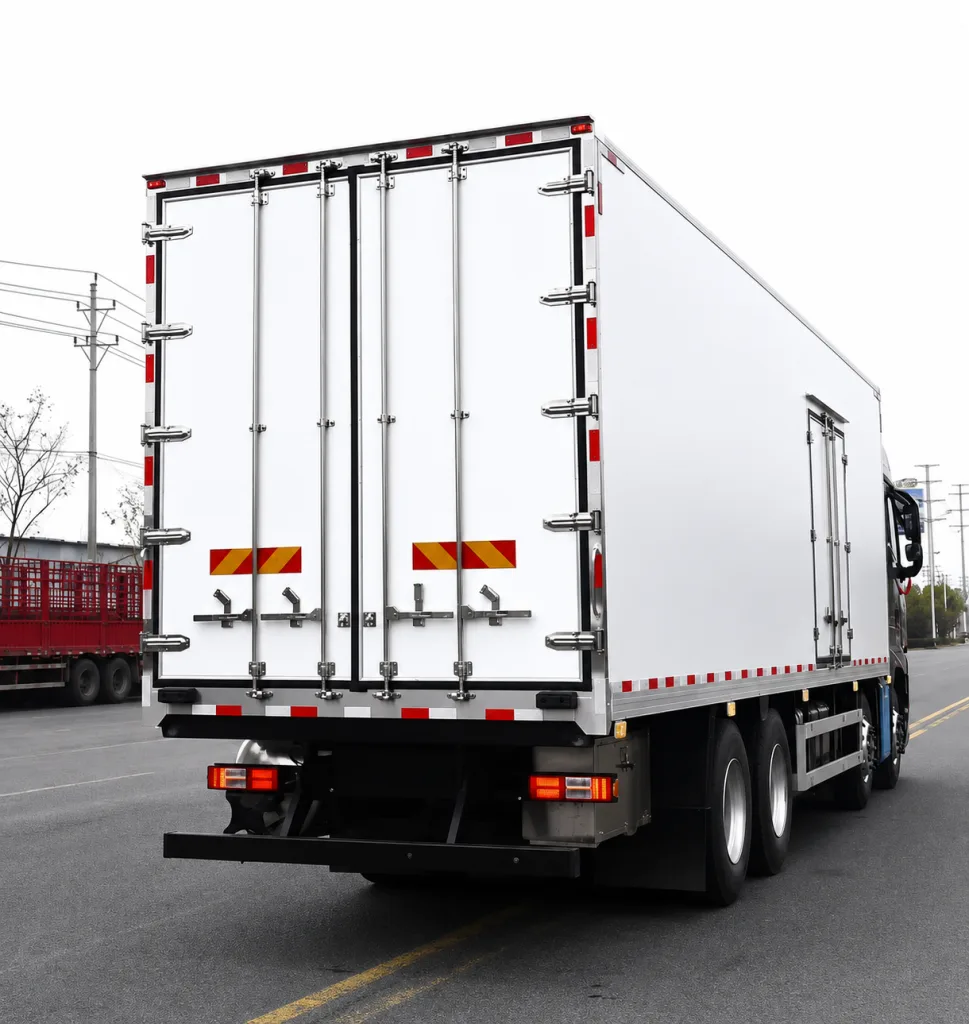
Why a Moving Body Changes Everything
On a stationary cold room, the load on a hinge is mostly static: the weight of the insulated door, plus the cycles from people opening it. On a refrigerated truck or trailer, that same door is mounted to a structure that twists, bounces, and vibrates every second the vehicle moves. The hinge is no longer just holding a door — it is holding a heavy panel that is being shaken continuously while the body frame itself flexes underneath it.
This produces three failure modes you rarely see on fixed doors. First, vibration fatigue: continuous low-amplitude shaking works hardens material and loosens fasteners over time. Second, dynamic and impact load: a pothole or a hard dock approach hits the hinge with forces far above the static door weight. Third, seal drift: as the body flexes, door alignment shifts slightly, and a hinge that cannot hold position lets the gasket leak — exactly the cold-chain failure the refrigeration unit is fighting to prevent.
The Transport Duty Cycle, Decoded
Before choosing a hinge, it helps to break the vehicle’s day into the distinct stresses each part of it places on the hardware. They are not the same, and a hinge that survives one can still fail another.
| Phase | Stress on the Hinge | What It Threatens |
|---|---|---|
| Driving on smooth road | Continuous low-amplitude vibration | Fastener loosening, fatigue micro-cracks |
| Rough road / potholes | Sudden high-magnitude shock load | Pin deformation, plate cracking |
| Cornering / braking | Lateral and inertial load on the door mass | Hinge knuckle wear, door shift |
| Dock loading | Frequent hard open/close cycles | Cycle wear, slam impact at full swing |
| Parked, doors open | Door held at full extension, wind load | Permanent set if under-rated |
The takeaway: a refrigerated truck hinge has to be specified for the worst case across all five phases, not the average. A hinge sized only for the static door weight will meet the “parked” condition and fail the pothole.
Fastener Security: The Failure Most People Miss
On a fixed door, you bolt the hinge once and it stays tight for years. On a vehicle, vibration is constantly trying to back the fasteners out. This is the single most common reason transport-body hinges fail in service — not the hinge breaking, but the mounting working loose until the door sags, the seal leaks, and the plate elongates its own holes.
This is where the mounting design of the hinge itself matters more than on a fixed door. A hinge with more fastening points spreads the load and reduces the stress on any single bolt, which slows loosening. Countersunk holes let the fastener head sit flush and seat firmly against a flat surface, giving a more stable clamp than a proud bolt head. As an example from our own range, the XG02-129-1 is a SUS304 brushed strap hinge with a 205 mm body and seven Ø6.5 mm mounting holes counterbored for Ø12 heads — that many seating points across a long plate is exactly the kind of distributed, flush-seated mounting that resists vibration loosening on a moving body. (Confirm hole pattern and fastener spec against the drawing for your specific door build.)
Whatever hinge you choose, the install detail is just as important as the part: use thread-locking compound or proper locking fasteners, seat every countersink fully, and re-torque after the first few weeks of service once the assembly has settled.
Matching the Hinge to the Door and Body
Refrigerated bodies are not all built the same way. Panel doors, side-access doors, and rear roll-up or swing doors all present a different mounting geometry, and the hinge has to match the body’s offset and the available mounting face. Below are real examples from our SUS304 transport-grade range to show how the geometry differs by door type — not as a fixed catalog, but to make the selection logic concrete.
| Door / Body Situation | Geometry That Fits | Example From Our Range |
|---|---|---|
| Flush rear or side door, flat mounting face | Straight strap hinge, countersunk holes | XG02-113 — 150 mm, SUS304, 6×Ø6.5 counterbored, Ø10 pin |
| Overlay / raised insulated door | Offset arm to clear the panel step | XG02-126 — 152 mm with a 28 mm offset arm, Ø8 pin |
| Heavy rear door, high load margin | Long heavy strap, many fastening points | XG02-129-1 — 205 mm, 7 mounting holes, 7 mm plate |
| Concealed / flush-line door requirement | Recess-mount concealed body | XG02-084 — SUS304 mirror or chromed ZDC variant |
The plate thickness numbers are worth pausing on. The 7 mm plate on the XG02-129-1 versus the 4.5 mm plate on the XG02-113 is not a small difference on a vehicle — a thicker plate resists the bending and permanent set that repeated shock load causes over time. For a heavy rear door that takes dock abuse, the extra material is doing real work.
Keeping the Seal While the Body Flexes
A refrigerated body is a long box, and long boxes twist. Going over uneven ground, the rear frame can rack slightly out of square. If the hinge cannot hold the door in consistent alignment through that movement, the gasket compression changes from corner to corner and warm, humid air leaks in — defeating the whole purpose of the refrigerated body and forcing the unit to work harder.
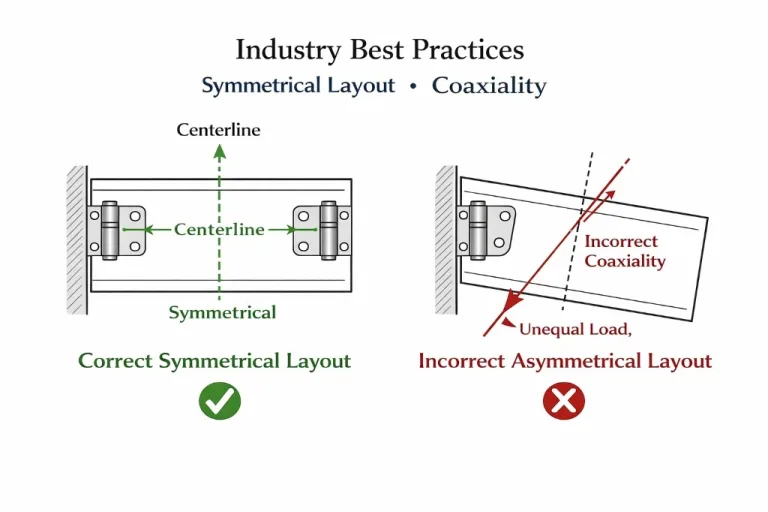
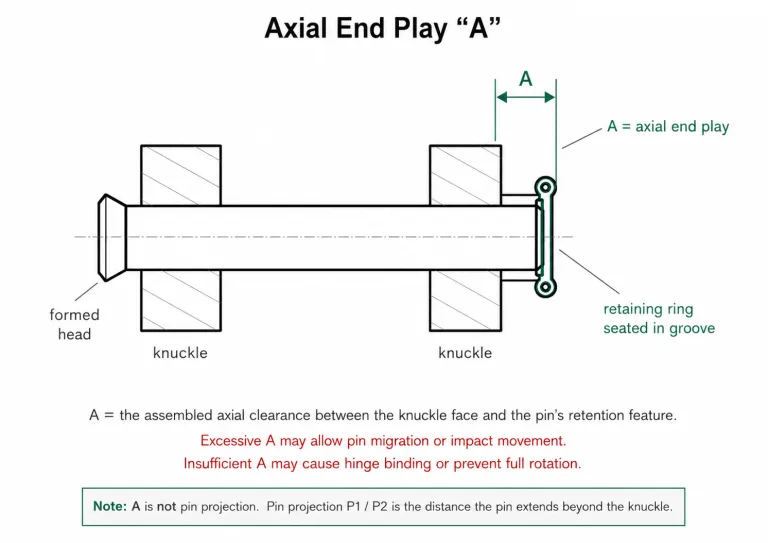
Two hinge characteristics help here. A tight, well-fitted pin and knuckle with minimal play keeps the door from wandering as the frame moves, so gasket compression stays even. And correct offset selection — matching the hinge geometry to the door’s overlay so the door sits firmly against the seal rather than binding or standing proud — is what actually delivers the gasket squeeze. Getting the offset wrong is a sealing problem, not just a fit problem: too little and it leaks, too much and the door binds and stresses the hinge every cycle.
This is also why the right hardware on a refrigerated body links back to the wider cold-chain picture. The hinge is one part of a door-and-seal system; the deeper logic on sealing, alignment, low-temperature material, and failure prevention is laid out in our engineer’s guide to cold storage hinges, and a transport body simply adds the vibration and impact layer on top.
Load Rating With a Transport Safety Margin
The biggest sizing mistake is rating the hinge to the static door weight. On the road, the effective load spikes well above the door’s resting weight every time the wheels hit a bump, because the door’s mass is accelerated by the shock. A door that weighs 40 kg standing still can momentarily load its hinges at a multiple of that when the trailer drops into a pothole.
For that reason, transport applications deserve a more generous safety margin than fixed doors. Rather than sizing to the door weight, size to the door weight times a margin that accounts for dynamic shock, then favor the heavier plate and the higher fastener count within that band. This is the same safety-factor discipline used in heavy-duty door hardware generally — if you want the full method for rating heavy doors, our heavy duty hinge range covers the load logic in depth. For a moving body, treat that margin as a floor, not a target.
Mounting Method: Bolt-On vs Weld-On for Vehicle Bodies
On a vehicle body, the mounting method is a real engineering choice, not a default. Bolt-on hinges with countersunk fasteners are serviceable — a damaged hinge can be replaced in the field without touching the body structure — and they are the common choice for insulated panel doors where you do not want to apply welding heat to the panel. The trade-off is that bolted joints need locking hardware and periodic re-torque to survive vibration.
Weld-on mounting gives a permanent, vibration-proof joint with no fasteners to loosen, which suits steel sub-frames and structural door frames. The trade-offs are field-serviceability and heat input near insulation. The decision usually comes down to the body construction: insulated composite panels lean bolt-on; steel structural frames can take weld-on. If you are weighing a welded approach, the considerations are covered in our weld-on hinge range. There is no universally correct answer — match the method to how the body is built.
A Practical Selection Sequence
Pulling it together, here is the order we recommend working through for a refrigerated truck or trailer door, so nothing gets specified out of sequence:
- Confirm the door type and body construction (flush, overlay, panel, structural frame).
- Measure the offset directly from the frame face to the door face — do not estimate it.
- Establish the static door weight, then apply a transport shock margin to set the load target.
- Choose the geometry that fits the offset (straight strap, offset arm, or concealed).
- Within that geometry, favor the thicker plate and the higher fastener count for vibration resistance.
- Decide bolt-on vs weld-on based on the body and serviceability needs.
- Specify locking fasteners and a re-torque check in early service.
Working in this order means the offset and the body decide the geometry first, and load and vibration decide the robustness within it — rather than picking a part by photo and discovering the offset is wrong after it is mounted.
Custom Hinges for Refrigerated Bodies
If a standard hinge does not match the body’s offset, mounting pattern, or load profile, HTAN can develop transport-grade hinges to the specific build. The fastest way to a usable recommendation is to provide the door weight, the door type, the measured offset, the available mounting face, and a photo or drawing of the existing hinge position. With that, our engineering team can match the geometry and load rating to the vehicle rather than forcing the door to fit a generic part. If you have a sample of the current hinge, sending it shortens the process further. Get in touch with those details to start an evaluation.
FAQs
Why can’t I just use a standard cold room hinge on a refrigerated truck?
A fixed cold room hinge is sized mainly for static door weight and low-temperature material behavior. A truck door adds continuous road vibration, shock load from bumps, and inertial load from braking and cornering. Those forces can loosen fasteners and crack under-rated plates even when the hinge handles the cold fine.
What is the most common failure on refrigerated truck door hinges?
Fastener loosening from vibration is the most common in-service failure. Rather than the hinge breaking, the mounting bolts gradually back out, the door begins to sag, gasket compression drops, and the plate can elongate its own holes. Locking fasteners and a re-torque check in early service prevent most of it.
Should refrigerated truck hinges be bolt-on or weld-on?
It depends on the body. Insulated composite panel doors usually use bolt-on hinges with countersunk fasteners, because they are field-serviceable and avoid welding heat near insulation. Steel structural frames can take weld-on hinges, which give a permanent vibration-proof joint with no fasteners to loosen. Match the method to how the body is built.
How much load margin should I allow for a moving vehicle?
More than for a fixed door. On the road the effective load spikes well above the resting door weight whenever the wheels hit a bump, because the door’s mass is accelerated by the shock. Size to the door weight times a margin that accounts for dynamic shock, then favor the heavier plate and higher fastener count within that band.
Why does my refrigerated trailer door leak air only when driving?
A long refrigerated body twists slightly over uneven ground, which can rack the rear frame out of square. If the hinge has play or the offset is wrong, gasket compression changes as the frame moves and warm air leaks in. A tight, well-fitted pin and a correctly matched offset keep the door sealed through that body flex.


 English
  한국어
한국어  Русский
  Español
  Italiano
  Deutsch
  Français
  Português