

Adjustable vs Constant Torque Hinges | How to Choose the Right Type
Choosing between adjustable and constant torque hinges is not simply a matter of “which one is better.” The real decision depends on whether your application needs field tuning and flexibility or factory-set consistency and low maintenance. In practical product design, adjustable torque hinges are usually better for prototypes, variable loads, and applications that may need recalibration after installation. Constant torque hinges are usually better for mass-produced products, standardized user feel, and applications where end users should not touch the hinge setting.
This guide compares the two hinge types from an engineering decision perspective, including consistency, maintenance, load variation, and production requirements. For the broader product family overview, start with our torque hinges page.
How to Choose: Adjustable vs Constant Torque Hinges
| If your application needs… | Better Choice | Why |
|---|---|---|
| Prototype tuning during development | Adjustable torque hinge | Torque can be changed during testing and validation. |
| Loads that may change after installation | Adjustable torque hinge | The hinge can be recalibrated instead of replaced immediately. |
| Mass-production consistency | Constant torque hinge | Factory-set torque is easier to standardize across units. |
| Low maintenance after installation | Constant torque hinge | No field adjustment is normally required. |
| User- or service-adjustable feel | Adjustable torque hinge | Technicians can fine-tune movement resistance. |
| Medical or tamper-sensitive products | Constant torque hinge | End users should not access the adjustment mechanism. |
Short answer: choose adjustable torque hinges when uncertainty and tuning flexibility matter more than uniformity. Choose constant torque hinges when repeatability, long-term consistency, and controlled factory behavior matter more than field adjustability.
What Adjustable Torque Hinges Do Best
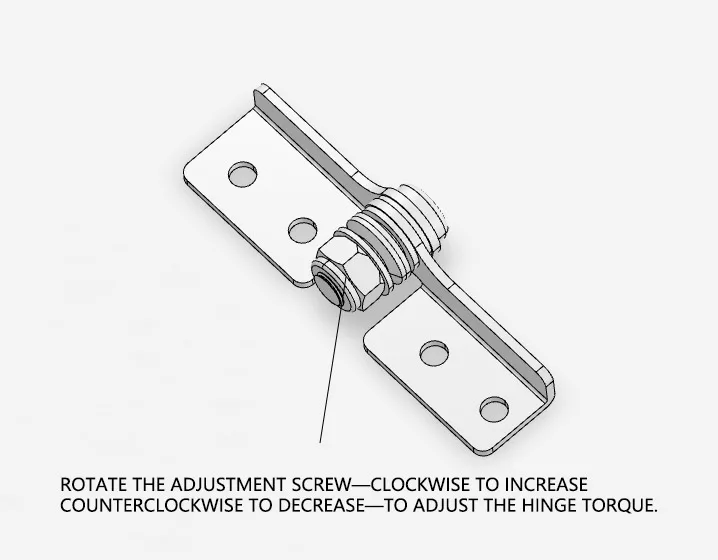
Adjustable torque hinges include an internal adjustment mechanism that changes the clamping force on the friction components. This lets technicians increase or decrease resistance after installation.
- Best for prototypes and R&D: engineers can tune hinge feel without changing the whole part.
- Best for changing loads: if accessories, covers, or mounted parts are added later, torque can often be recalibrated.
- Best for service-side tuning: useful where technicians may need to restore holding force after wear or load change.
For deeper product-level guidance focused specifically on this hinge family, see our adjustable torque hinges page.
Limitations of Adjustable Torque Hinges
- Adjustment usually requires tools and controlled procedure.
- Maintaining the same torque across multiple hinges is harder than with factory-set parts.
- Over-adjustment or repeated field intervention can reduce consistency.
- The adjustment feature adds complexity that may be unnecessary in stable, mass-produced products.
What Constant Torque Hinges Do Best
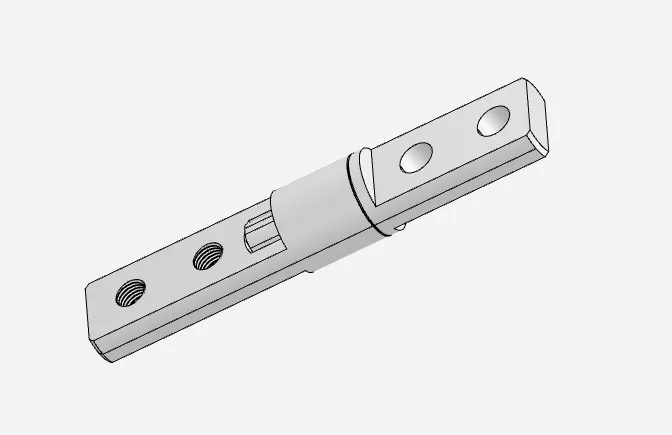
Constant torque hinges are preset at the factory and are not intended to be adjusted in the field. Their main advantage is repeatability: each hinge is designed to deliver a defined motion feel and holding behavior without later tuning.
- Best for mass production: easier to keep user feel consistent across finished products.
- Best for low-maintenance deployment: once installed correctly, no torque adjustment should be needed during normal use.
- Best for controlled end-use products: ideal where users should never access an adjustment screw.
- Best for standardized products: strong fit for laptops, appliances, medical instruments, and industrial doors with fixed load requirements.
Limitations of Constant Torque Hinges
- If the load changes significantly, the hinge usually has to be replaced rather than adjusted.
- Initial selection must be more accurate because there is less room for later correction.
- Not ideal for applications where torque needs may shift frequently over time.
Core Trade-Off: Flexibility vs Consistency
The real engineering trade-off is simple:
- Adjustable torque hinges offer more flexibility but less repeatability.
- Constant torque hinges offer more repeatability but less flexibility.
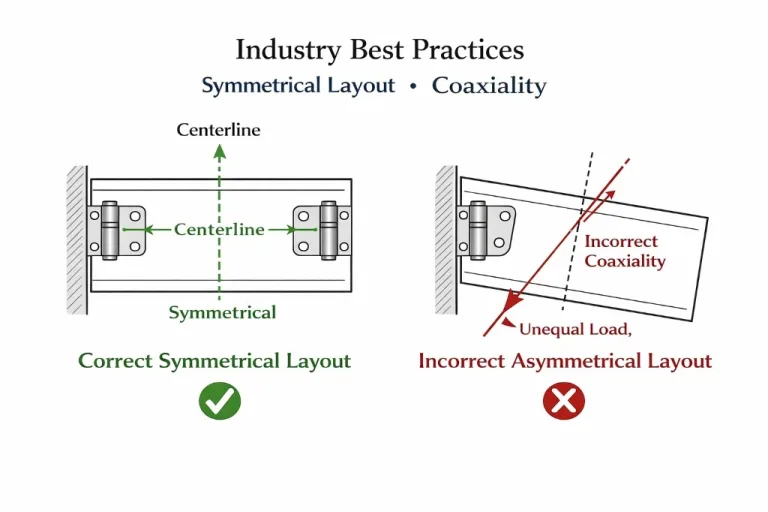
This matters especially in multi-hinge systems. Adjustable hinges may help solve variable-load problems, but achieving identical left-right feel across two hinges can be harder when torque is set manually. Constant torque hinges are generally easier to standardize when the design target is a uniform user experience across production units.
Application-Based Selection Guidance
Choose Adjustable Torque Hinges When
- The project is still in prototype or R&D stage.
- The mounted load may change over time.
- Service technicians may need to retune motion feel later.
- The product is customized or built in lower-volume configurations.
- The application behaves more like a monitor arm, photography support, or variable-load mechanism than a fixed consumer product.
Choose Constant Torque Hinges When
- The product is standardized and mass-produced.
- The brand requires consistent opening feel across every unit.
- The load and center of gravity are fixed and predictable.
- Users should not access or change the hinge setting.
- The application prioritizes low maintenance and long-term stability over field tuning.
For medical programs where users should not adjust internal mechanisms and documentation consistency matters, continue with our torque hinge selection for medical devices guide.
What Adjustable Torque Hinges Require in Real Use
Adjustable hinges are not just “more flexible.” They also create extra responsibilities in production and field service.
- Tool control: adjustment should be done with the correct tools and within the rated adjustment range.
- Calibration discipline: small changes can noticeably affect motion feel, so adjustment should be incremental and verified after each change.
- Consistency management: in paired or multi-hinge systems, manual adjustment can make left-right consistency harder to maintain.
- Service recordkeeping: if torque is changed in the field, the setting should be documented for future maintenance.
That is why adjustable hinges are excellent in development and controlled service environments, but not always the best choice for products that must behave identically across thousands of units.
Key Selection Parameters That Still Matter
Whichever type you choose, hinge selection still depends on torque requirement, cycle life, installation geometry, and environmental conditions. These factors should not be re-explained in full on this page because they belong to the broader product-family selection process. For deeper sizing and engineering criteria, continue with the torque hinge selection guide.
As a quick rule, use the real load, the true moment arm, and an appropriate safety factor when defining torque. Then confirm durability, installation space, and environmental compatibility before freezing the design.
Common Mistakes When Choosing Between the Two
- Choosing adjustable hinges when the product really needs consistency: this can create left-right feel variation and extra field maintenance.
- Choosing constant torque hinges when the load is likely to change: later design changes may force hinge replacement instead of recalibration.
- Treating torque value as the only decision factor: maintenance, user access, product volume, and calibration control matter just as much.
- Ignoring environment: humidity, corrosion, temperature, and vibration still affect both hinge families.
- Over-adjusting in the field: repeated manual correction can hide a deeper sizing or wear problem.
FAQ
Q1: Are adjustable torque hinges always better because they are flexible?
A1: No. They are better only when the application genuinely benefits from tuning or load change compensation. If the product needs repeatable factory behavior, constant torque hinges are usually the better choice.
Q2: Are constant torque hinges better for mass production?
A2: In most cases, yes. They are easier to standardize, easier to control in production, and usually easier to maintain as a fixed-spec product family.
Q3: What happens if torque declines over time?
A3: Adjustable hinges may allow partial compensation through recalibration, while constant torque hinges normally require evaluation for replacement when performance drops below the acceptable limit.
Q4: Which type is better for products that users should not tamper with?
A4: Constant torque hinges are usually the safer choice because the operating feel is factory-defined and there is no expectation of field adjustment.
Q5: Which type is better for medical instruments?
A5: In many medical applications, constant torque hinges are preferred because users should not access internal mechanisms and long-term consistency matters more than field tuning. For deeper medical criteria, review our medical torque hinge guide.
Conclusion
Adjustable torque hinges are the better choice when your application needs flexibility, retuning, or adaptation to changing loads. Constant torque hinges are the better choice when your application needs repeatable feel, low maintenance, and stable behavior across production units.
The right decision comes from understanding not just torque value, but also who will use the product, whether the load can change, whether field calibration is acceptable, and how important consistency is across the finished product line. That is the real difference between choosing for flexibility and choosing for control.

 English
  한국어
한국어  Русский
  Español
  Italiano
  Deutsch
  Français
  Português